Locale 3: Kyoto (Part 2)
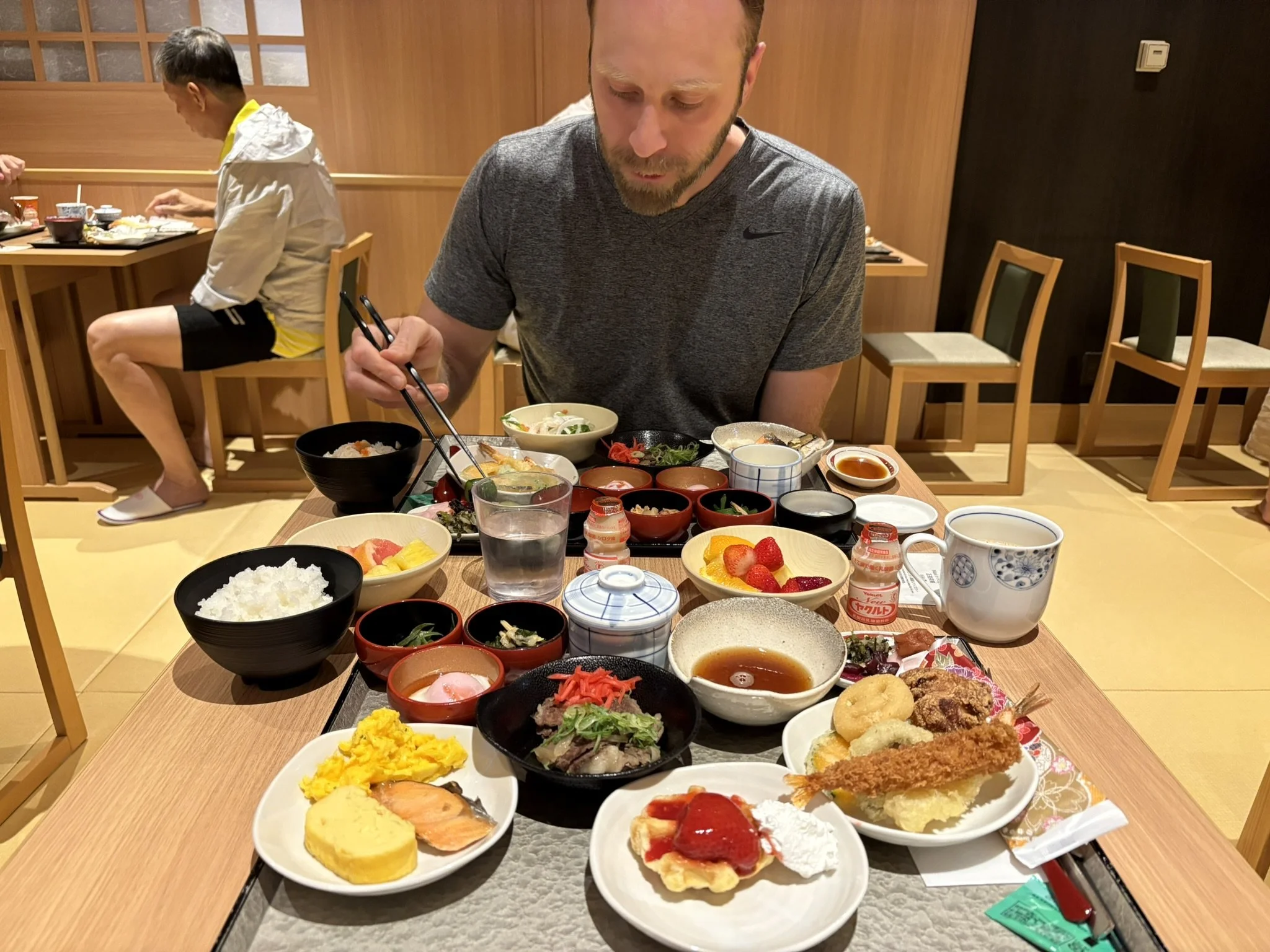
I loved that offerings were everything from waffles to fried shrimp to soup.
Day 6: Bears and Monkeys and Ducks, Oh My
May 14
Steps walked: 21,247
Flights of stairs climbed: 35
We started our day with a hearty hotel breakfast and headed off to Arashiyama in the Northwest corner of Kyoto.
The Arashiyama district is known for its bamboo forest, Tenryū-ji Temple, and a mountaintop park where you can visit with and feed Japanese macaque monkeys.
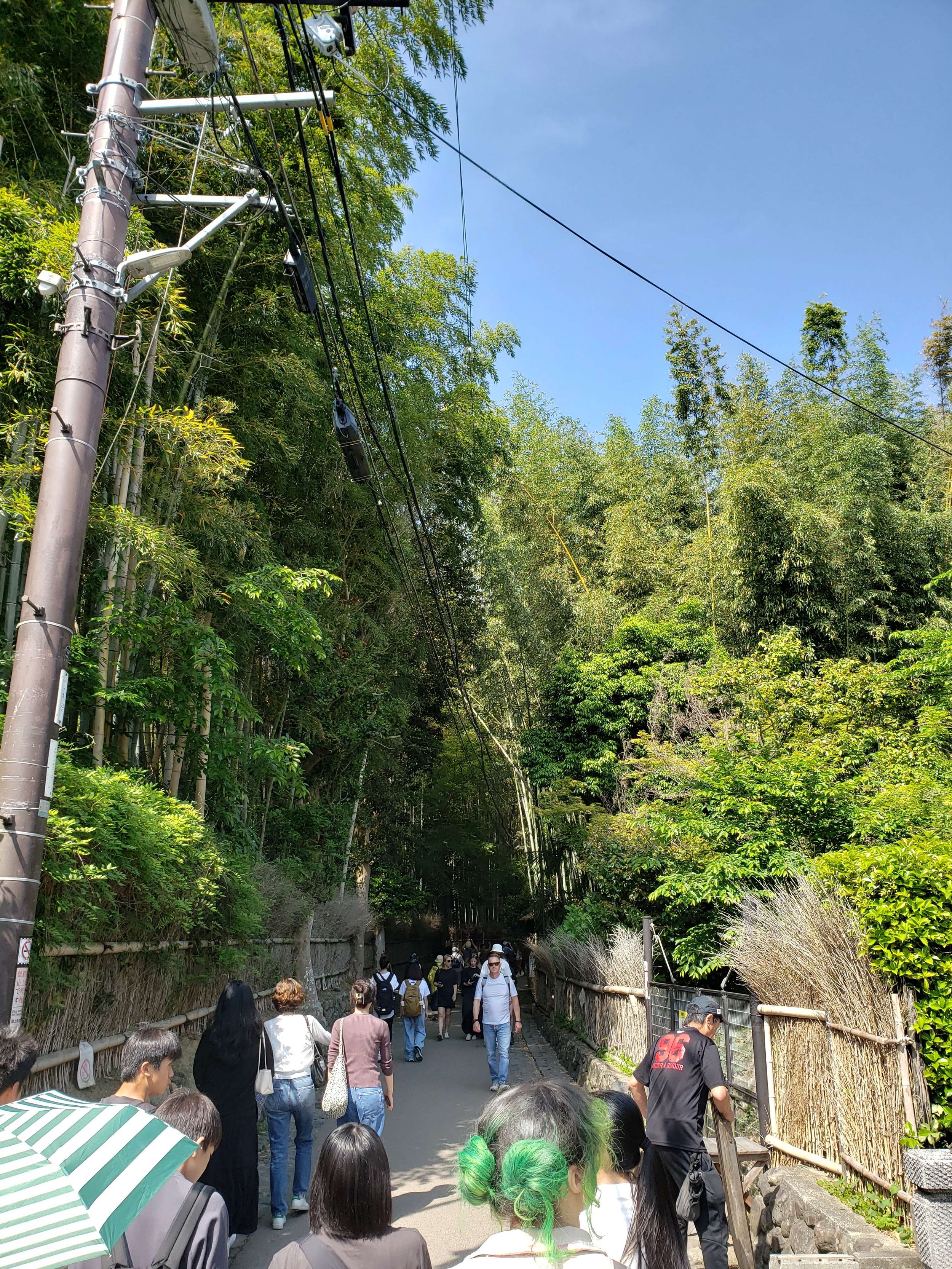
We started a little later this morning and the Arashiyama Bamboo Forest was already packed with people.
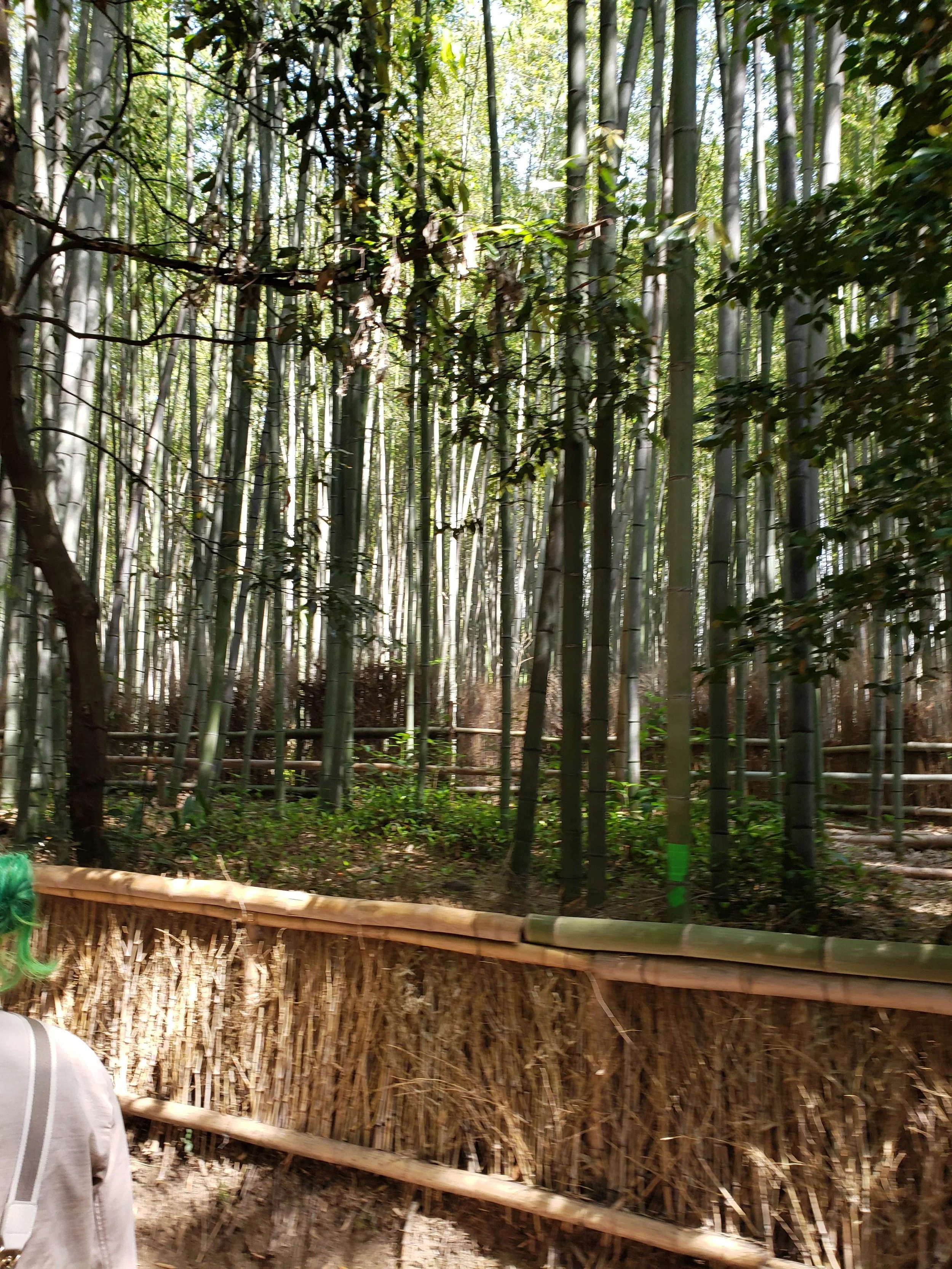
Bamboo makes for great shade, and boy, did we need it.
First up, we passed through the bamboo forest on our way to the temple. It’s a nice scenic spot for sure, but it was packed with people by 10AM, and I was antsy to get off the paths shortly after we arrived.
Tenryū-ji Temple
This zen temple was first built in the 1300s, and unlike every other temple we visited, it didn’t burn down once or twice: it actually burned down 6-8 (ish? I couldn’t get an exact number) times, and most of the buildings are reconstructions that only have hints of the original designs.
What it’s really known for is its expansive zen gardens, which are beautiful and vibrant in every season. I think there’s about 80 acres of garden in total, but only a few paths are open to visitors.
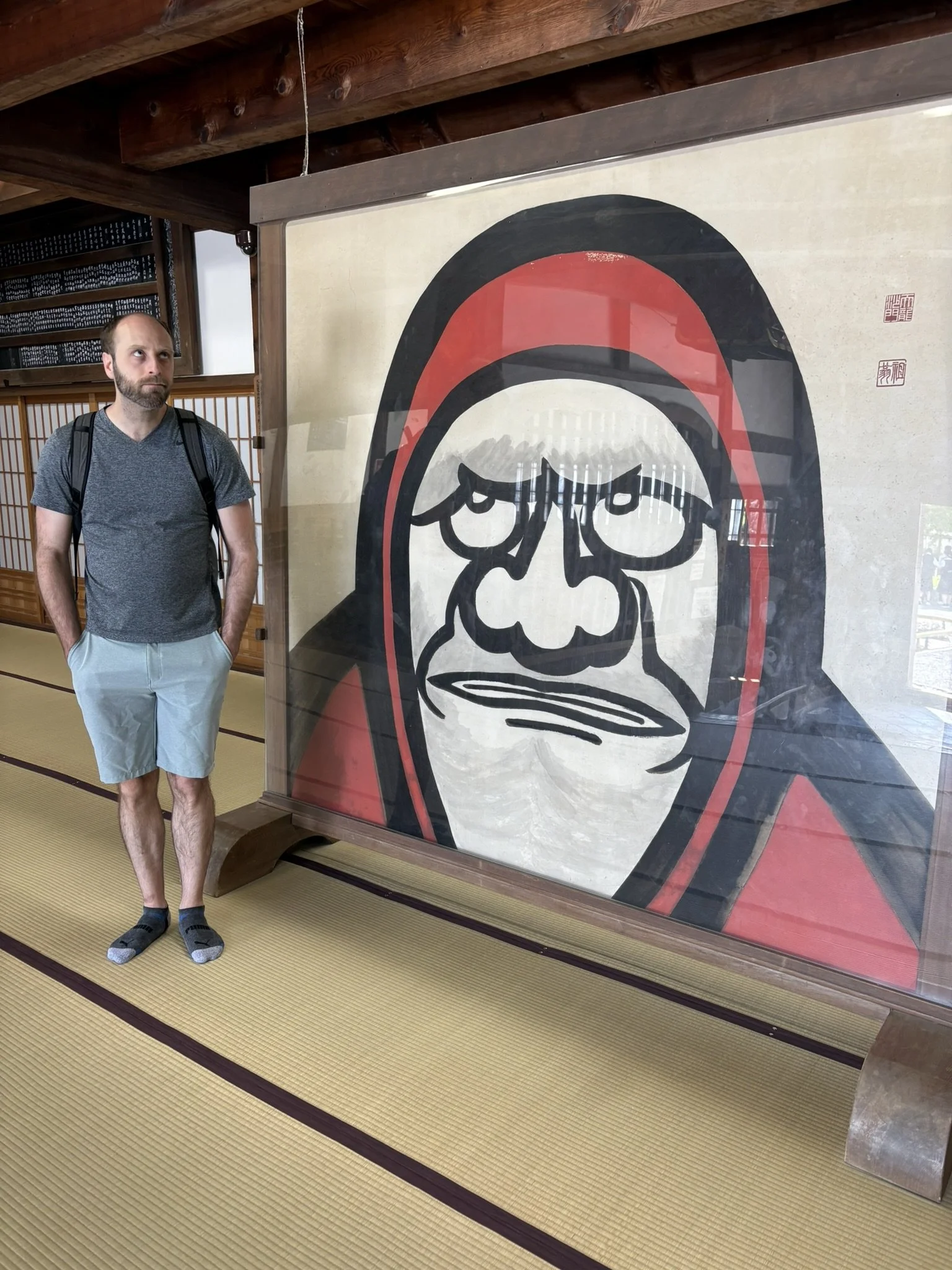
Jeff identified strongly with this art.
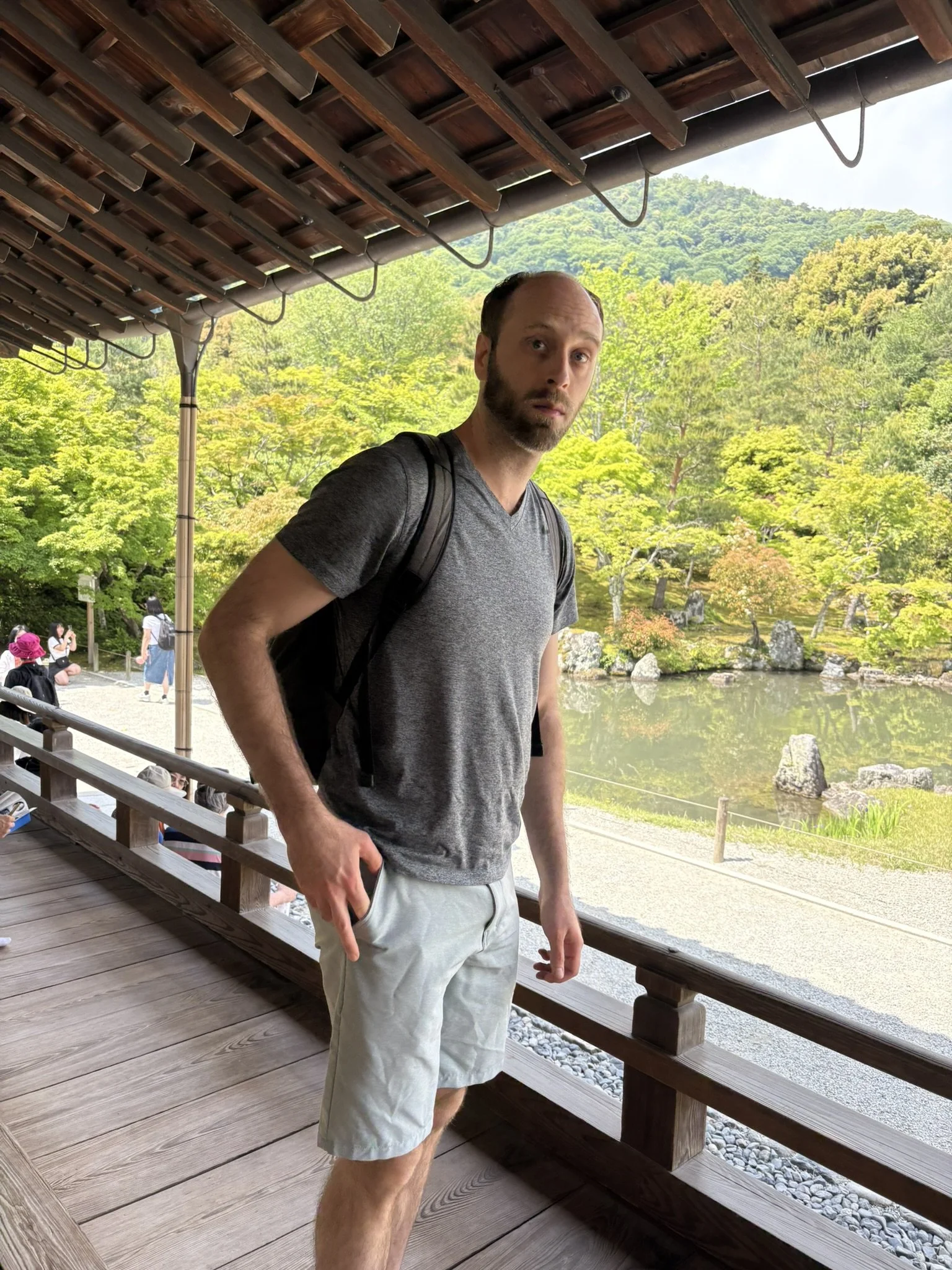
There was an outdoor area where you could walk around and a separate area where you had to remove your shoes and walk around in socks.
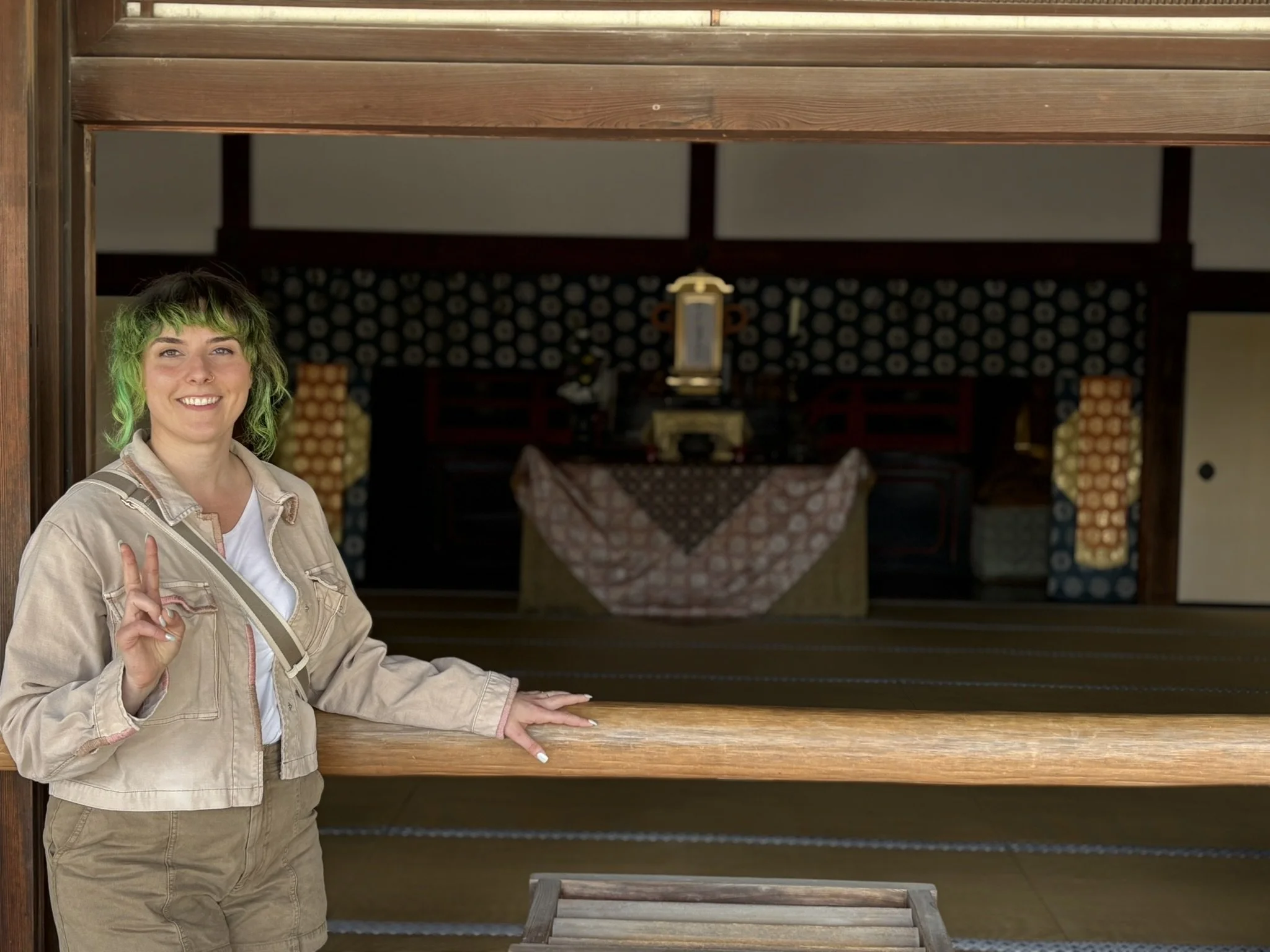
The temple is still used, so there’s lots of areas that are off-limits to visitors.
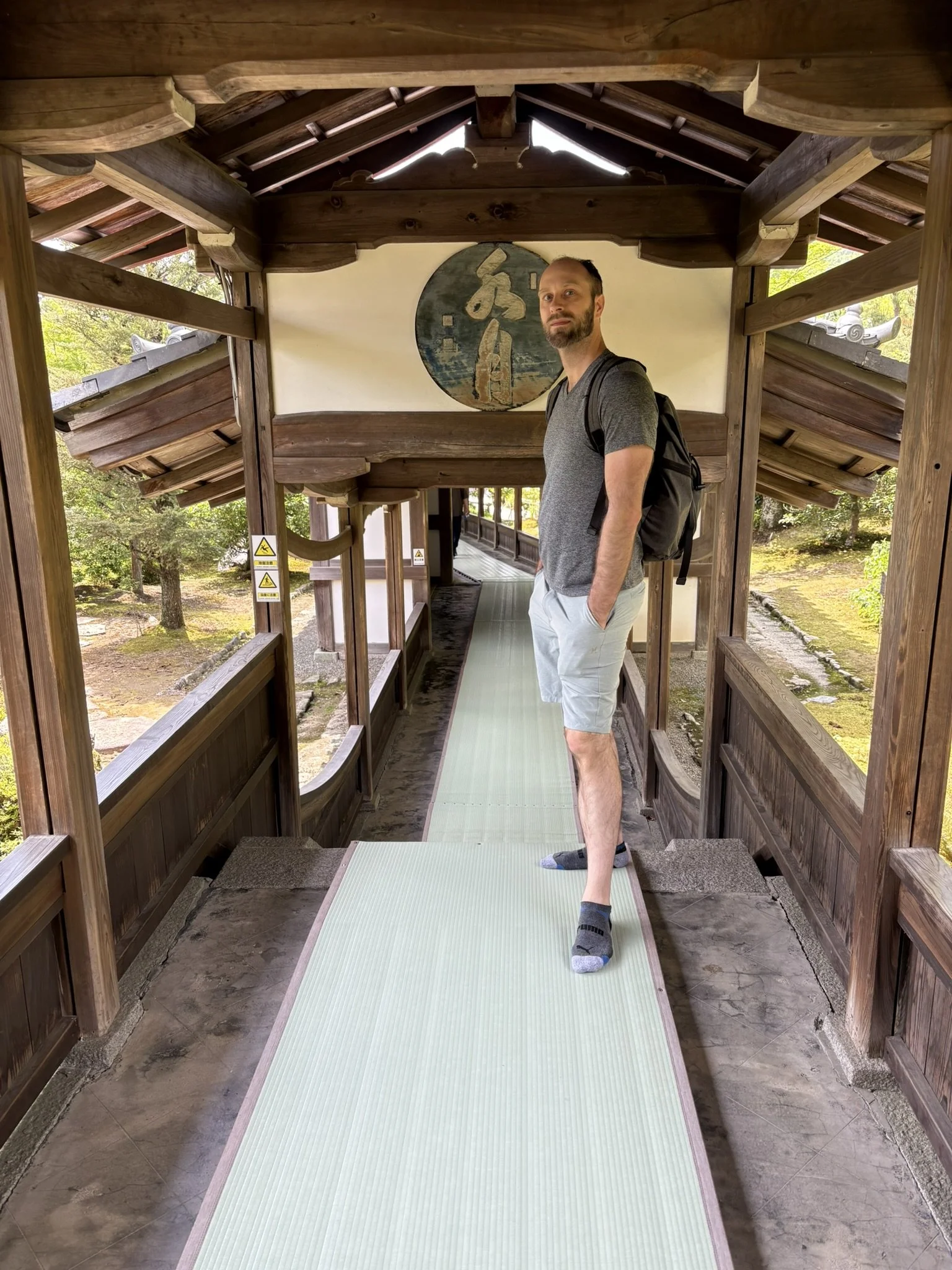
Another place where Jeff had to consistently duck to not give himself a concussion.
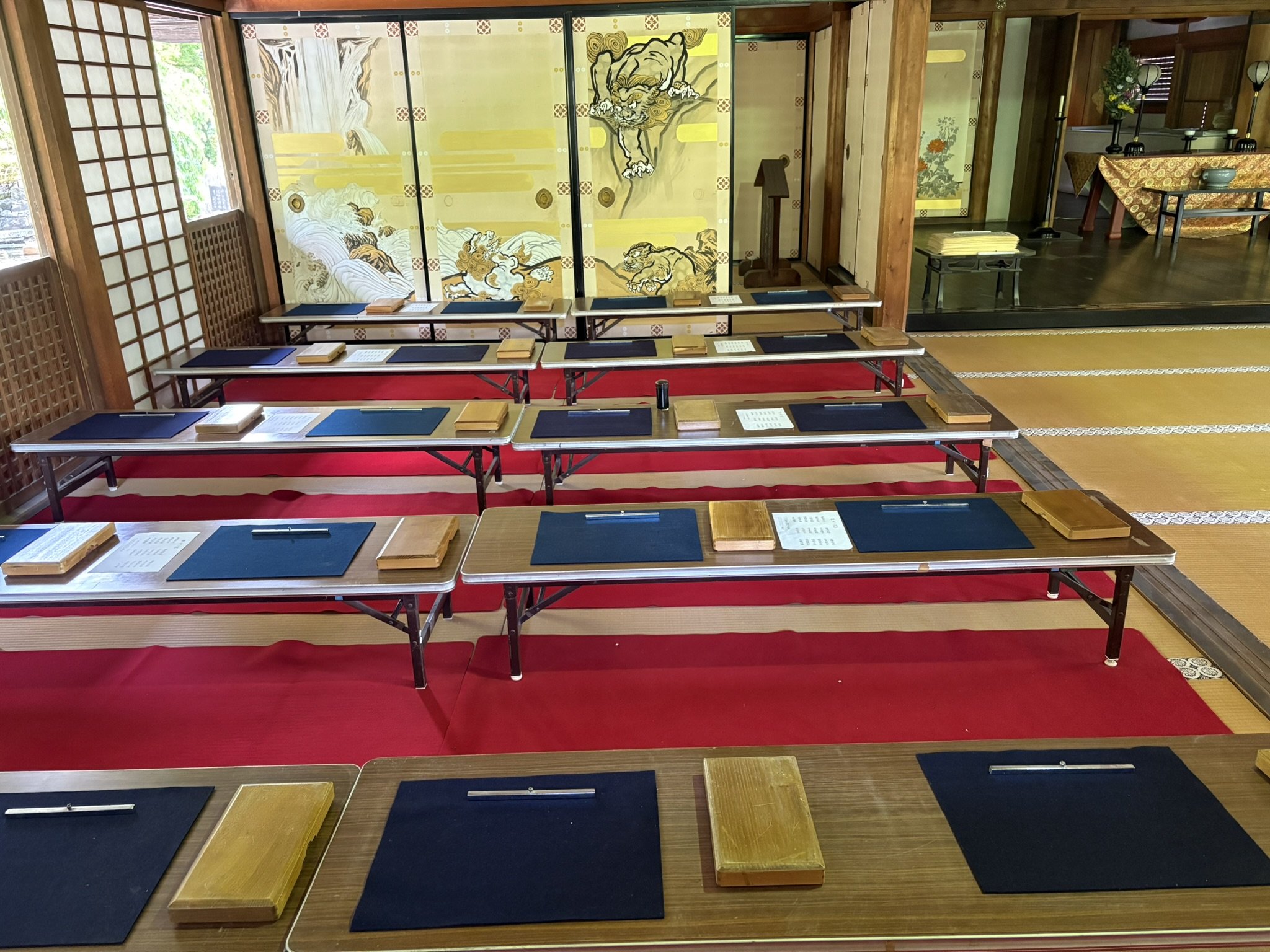
An area for students to practice their brushwork.
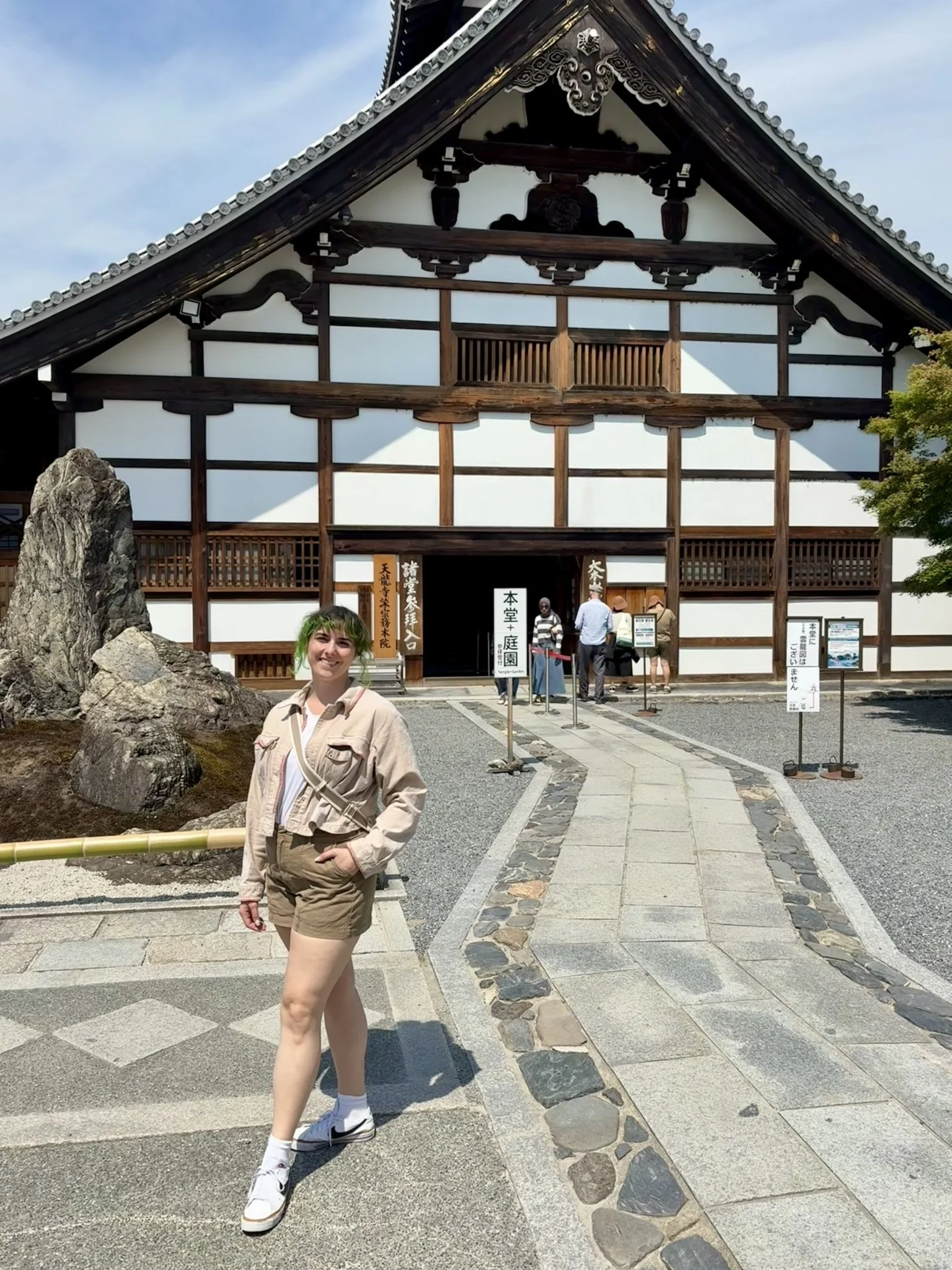
Outside one of the main halls.
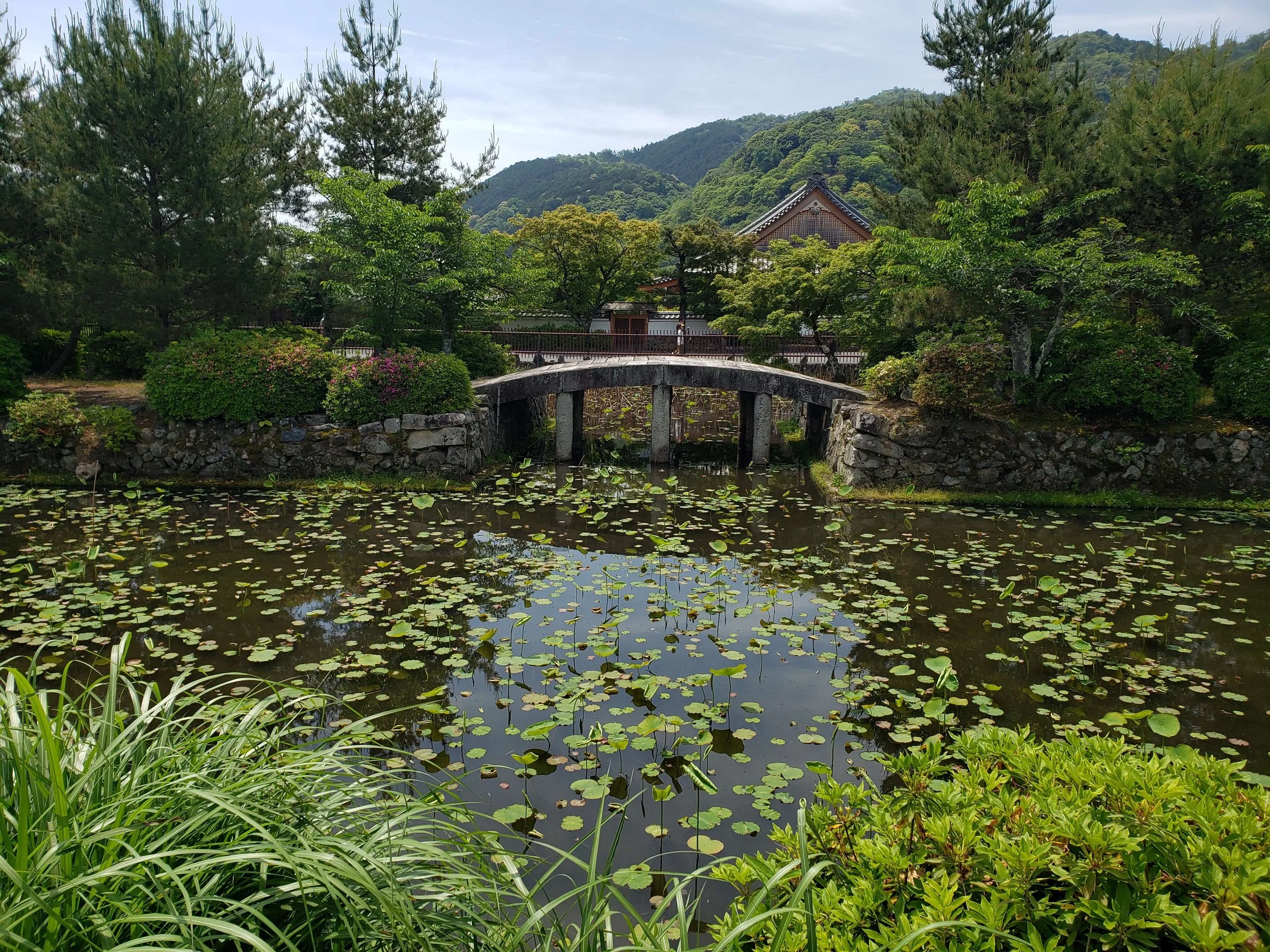
One of the beautifully landscaped ponds on the temple grounds.
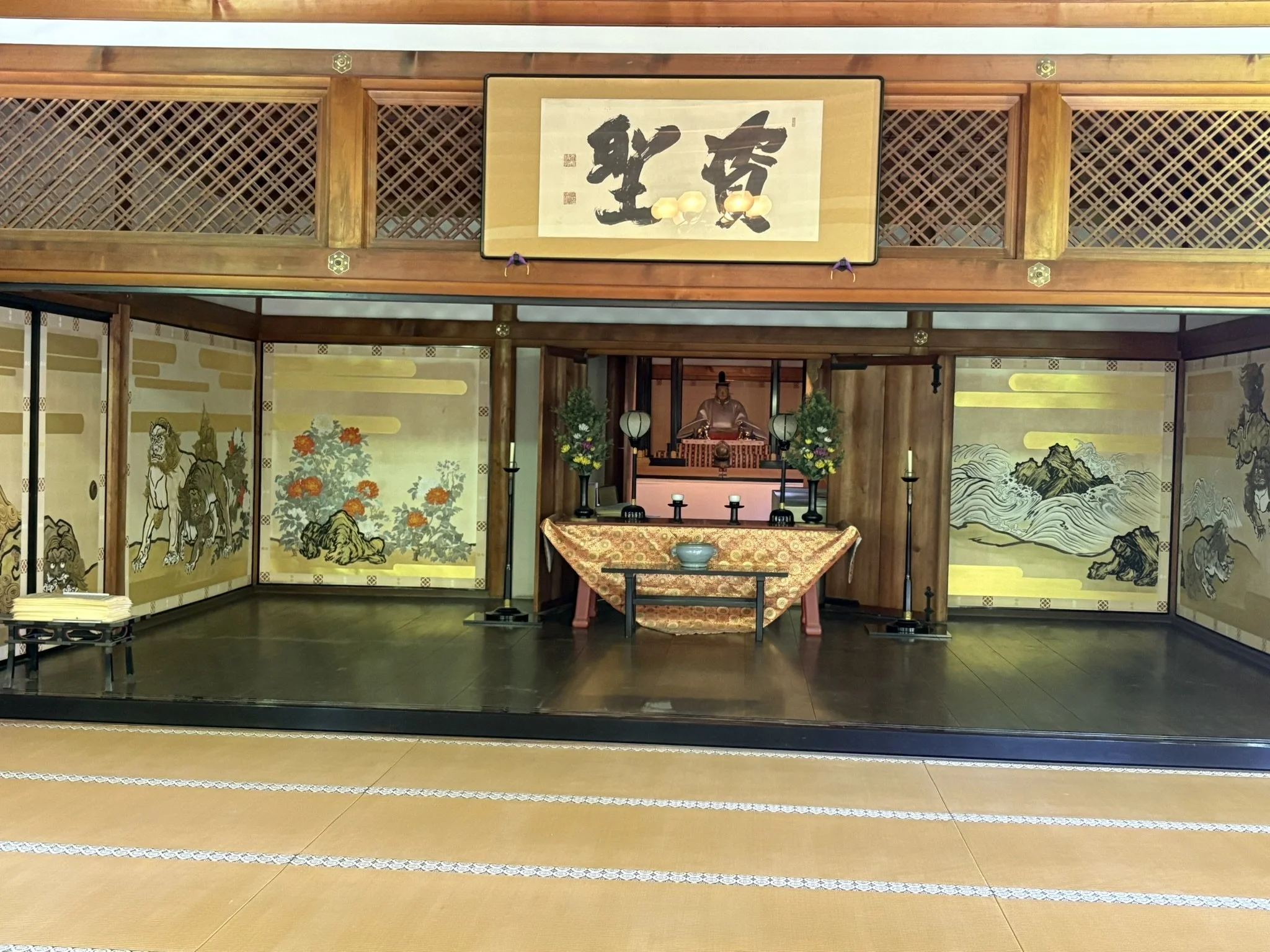
This was one of the first places where I noticed the classic painted screen walls we associate with Japan.
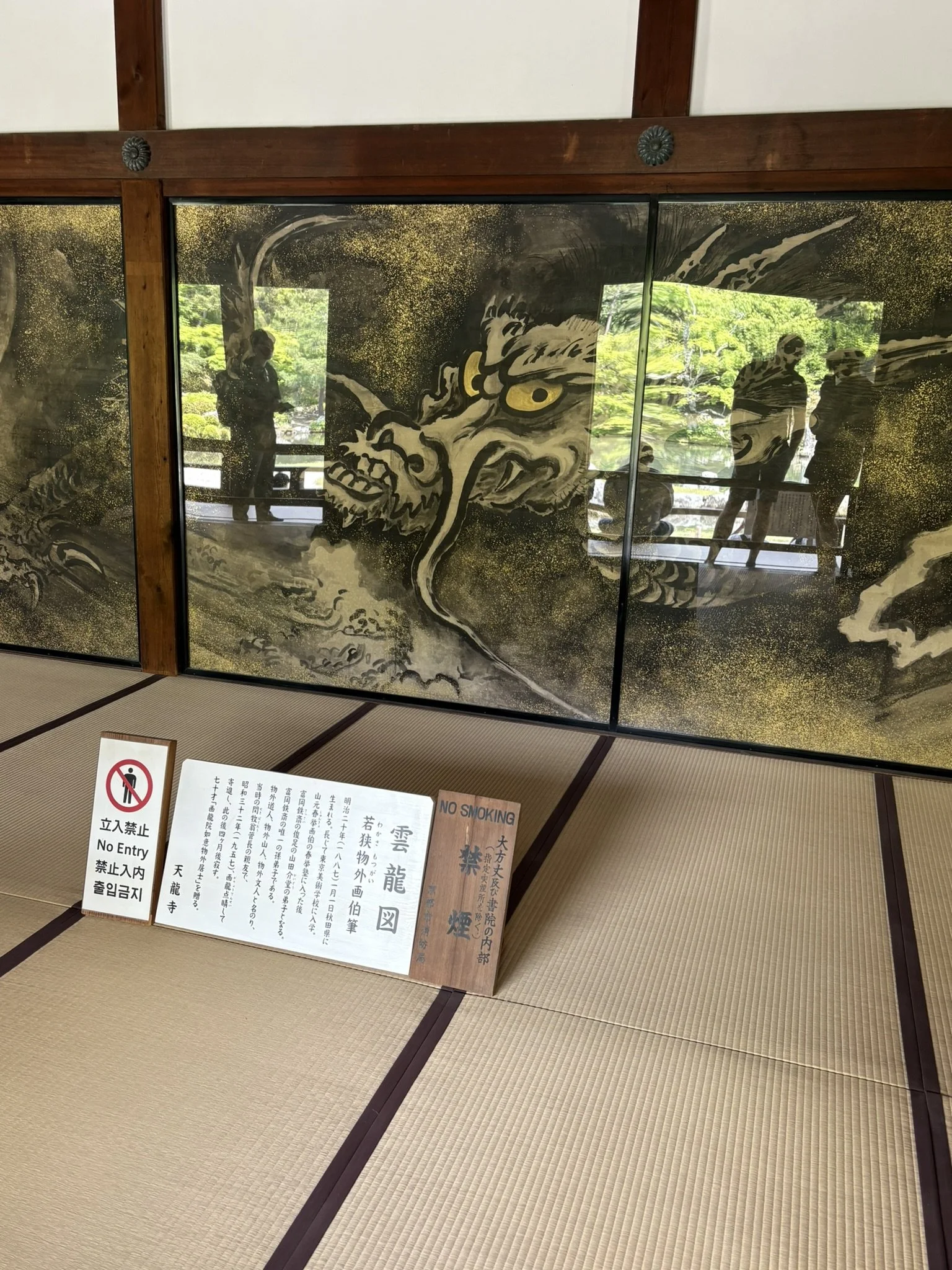
The temple has a famous painting of a dragon and clouds on the ceiling, but it’s not always available for visitors to view. There’s another cloud dragon painting on a screen wall if you miss out.
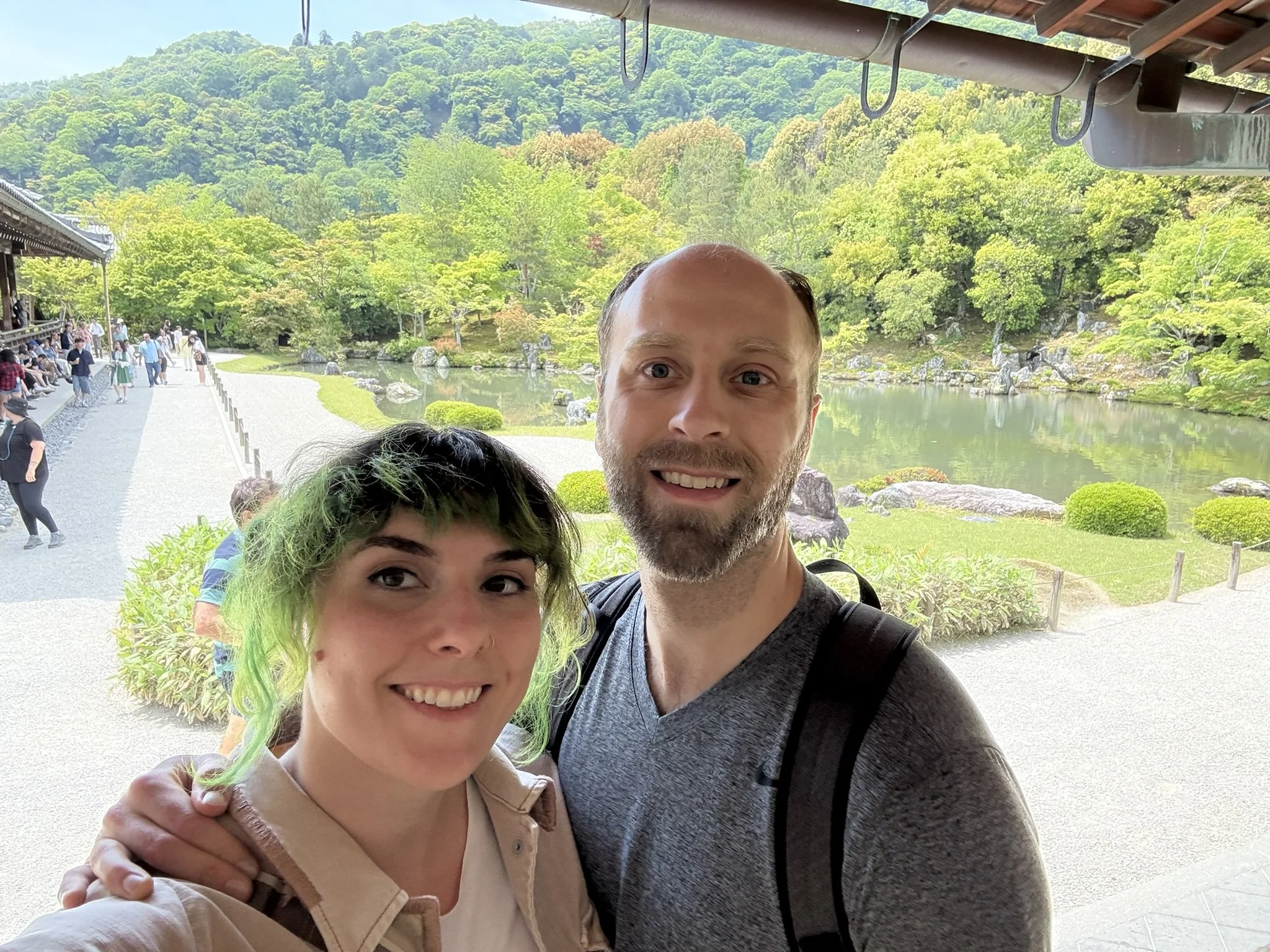
Overlooking the main pond on the grounds.
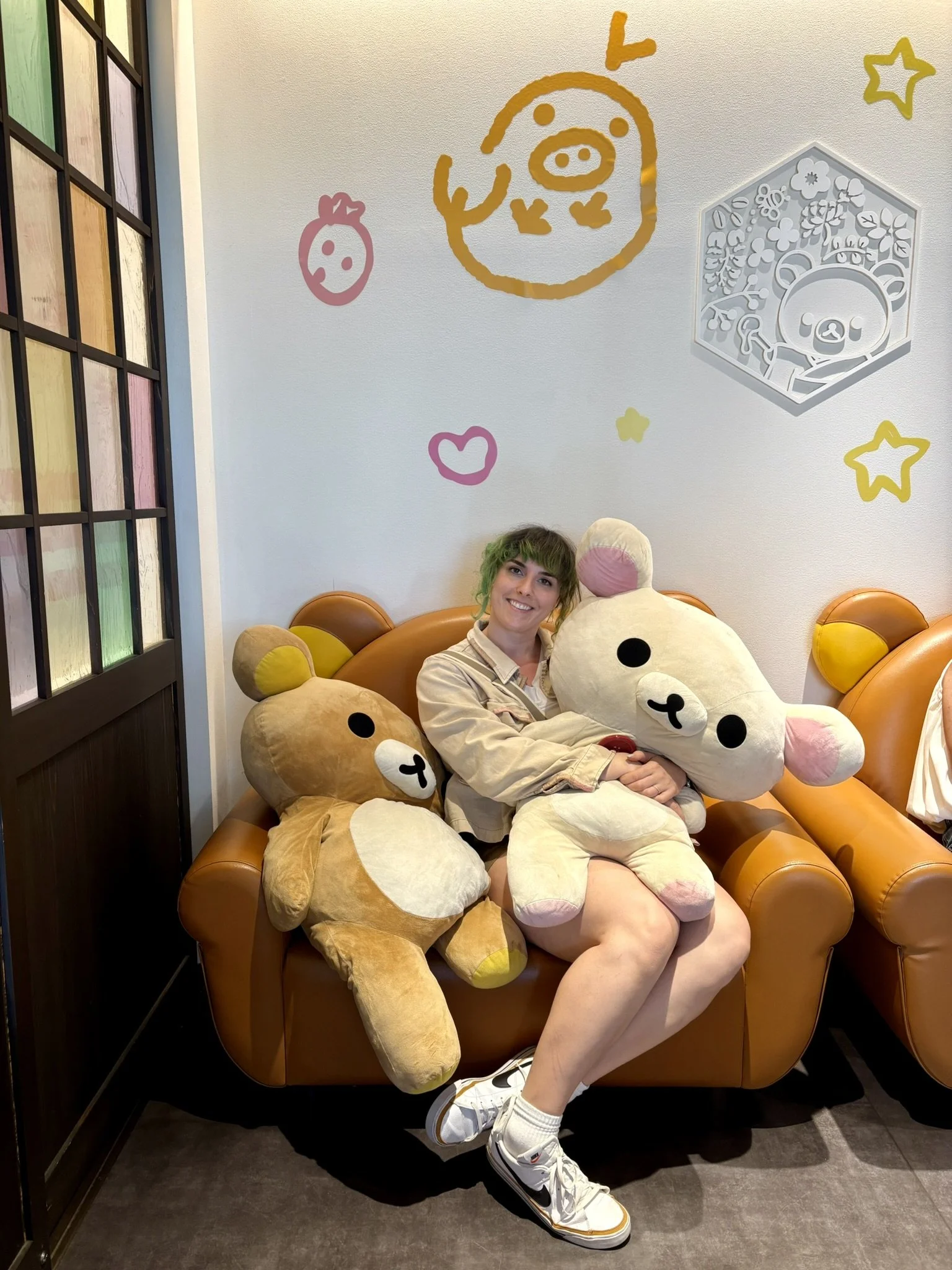
No one can ever accuse me of being a Real Adult™.
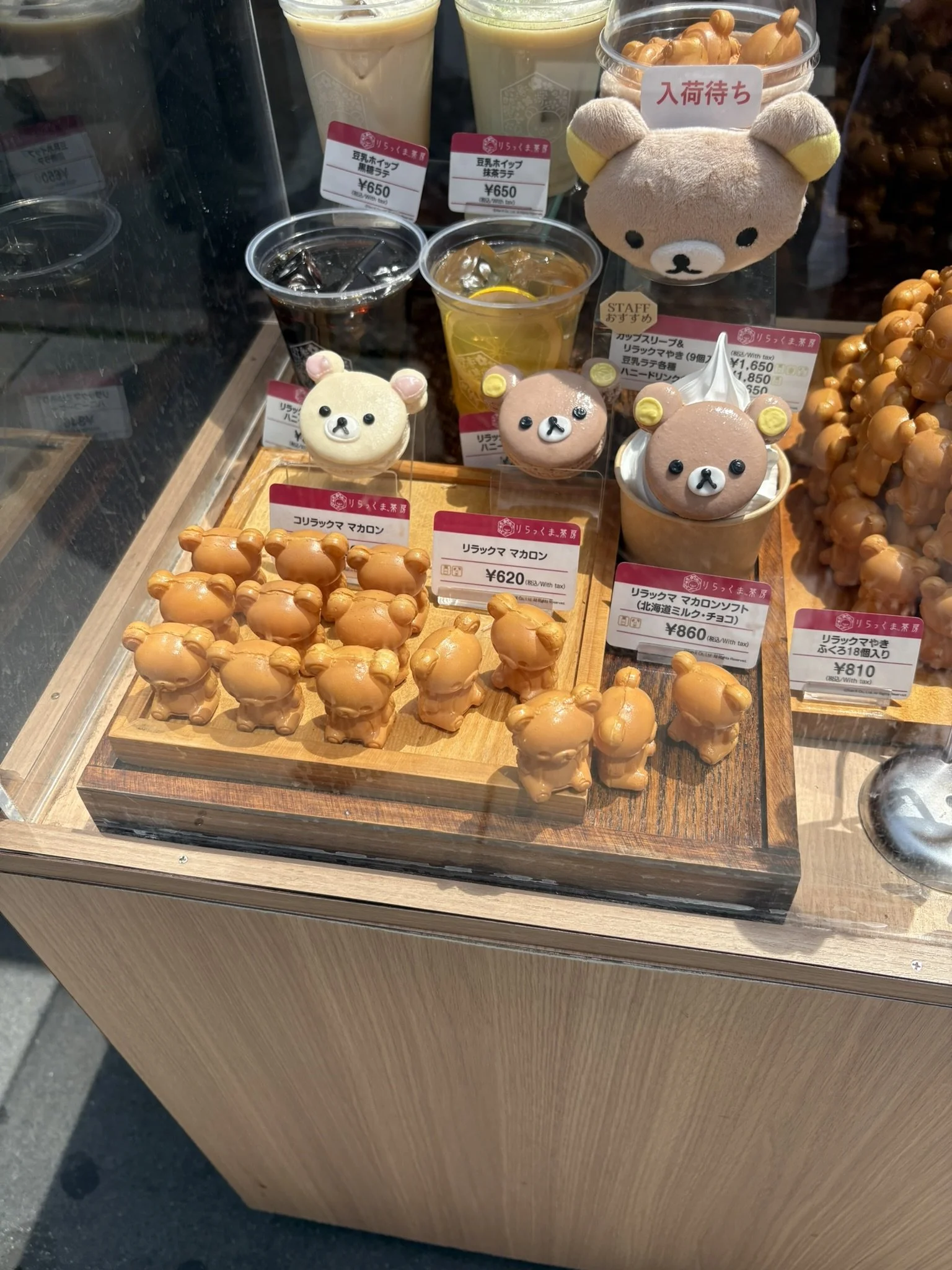
The display that caused a small sidewalk incident.
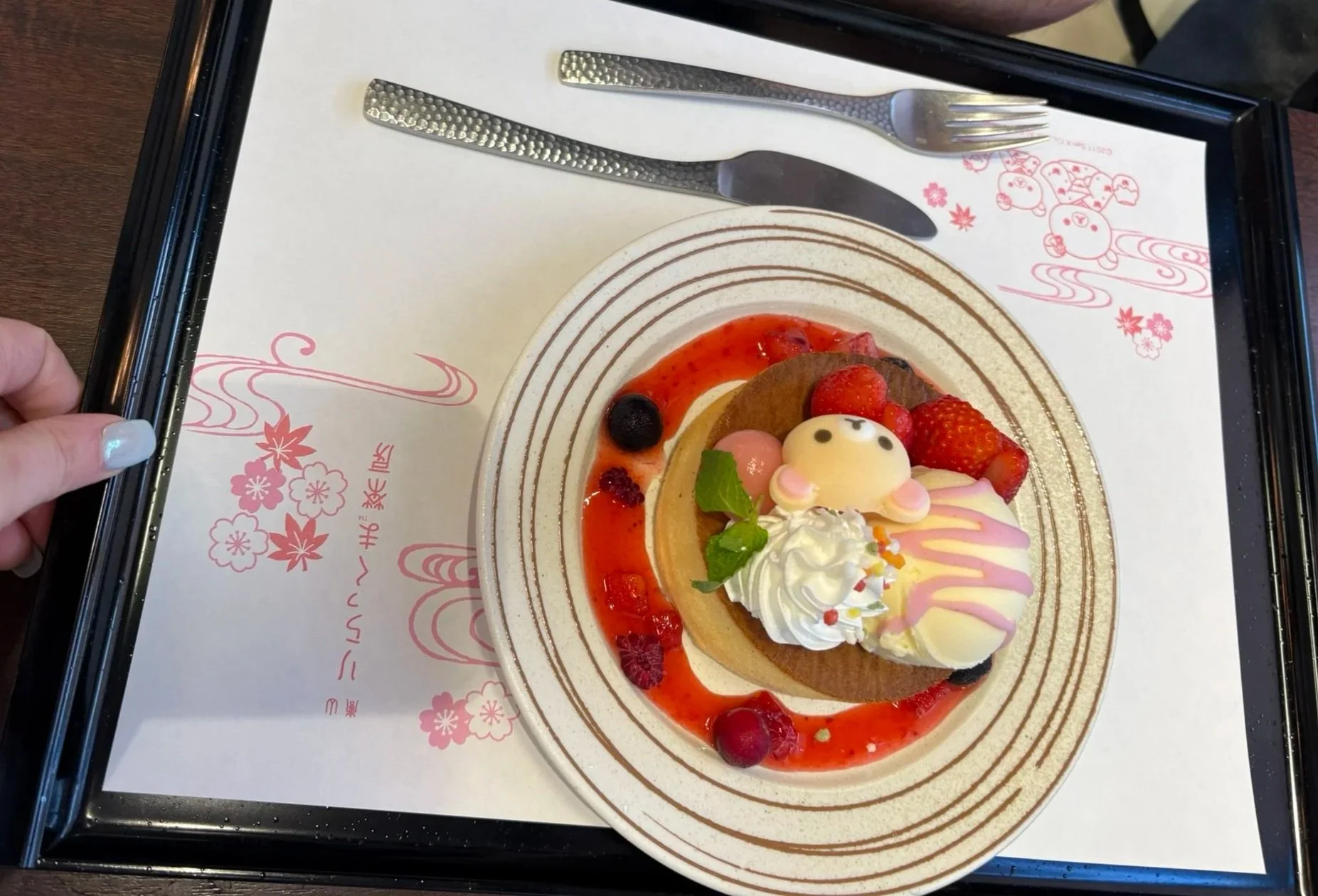
The world's cutest cake.
Lunch at the Rilakkuma Character Cafe
On the way back down the hill from the temple, we passed a row of shops and restaurants. I came to a dead stop in the middle of the sidewalk (like a jerk, and made an old man run into me) because I spotted a display of cute little desserts styled like Rilakkuma, which is one of the most well-known Japanese “cute characters.” Characters like Kitty White of Hello Kitty, Chiikawa, and Opanchu Usagi are everywhere in Japan.
My personal favorite is Rilakkuma, an anthropomorphized teddy bear who’s all about relaxing and being lazy.
I didn’t know Arashiyama had a cafe themed around the cute little guy—we literally stumbled into it by luck. Of course we had to stop and grab lunch there. I didn’t realize it until we were waiting, but character cafes are kind of a big to-do for some folks. Half the patrons were groups of girls all dressed up in kimonos or kawaii outfits from Japanese fashion subcultures!
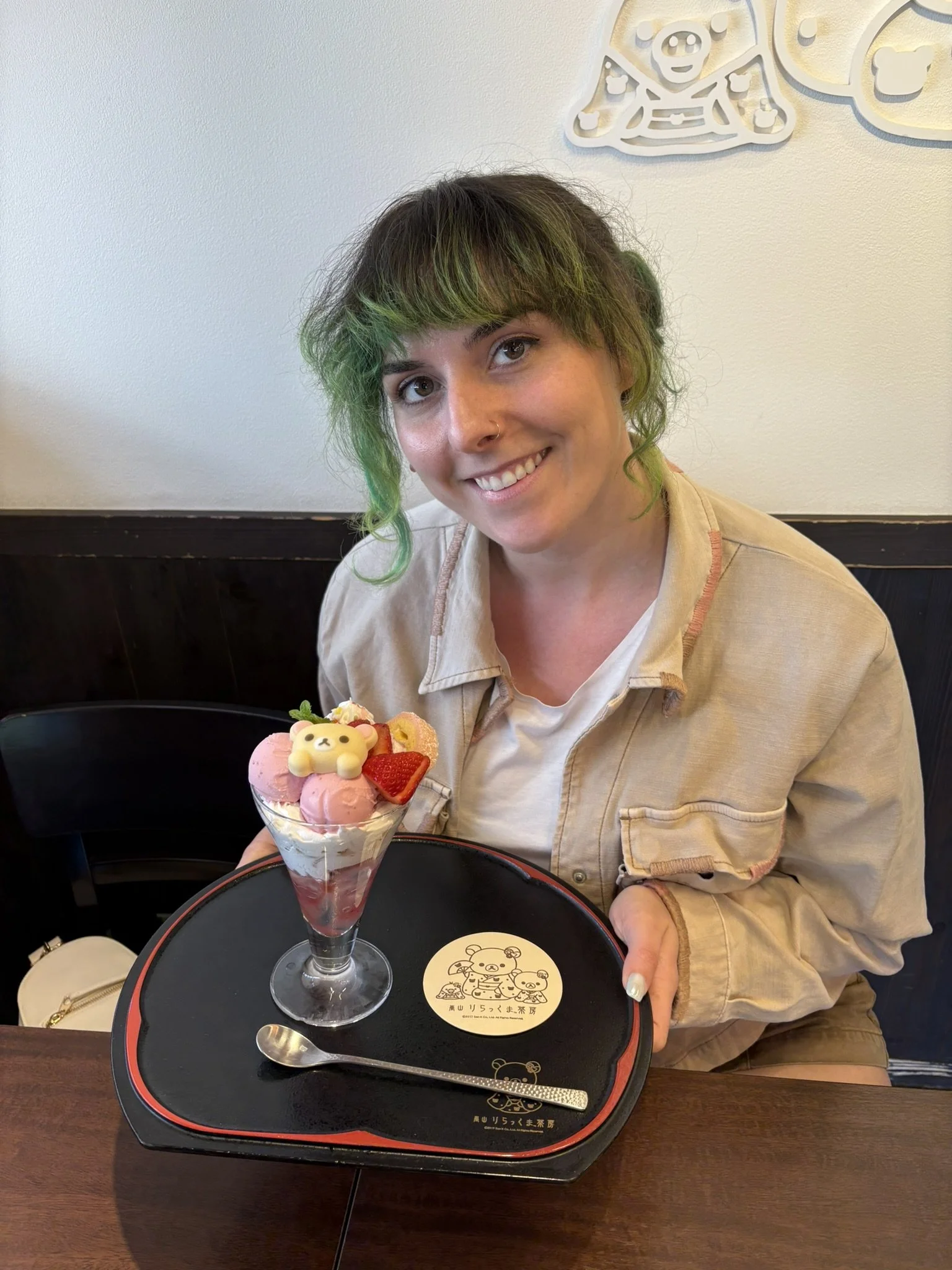
The world’s cutest parfait.

Everything was cute. Everything.
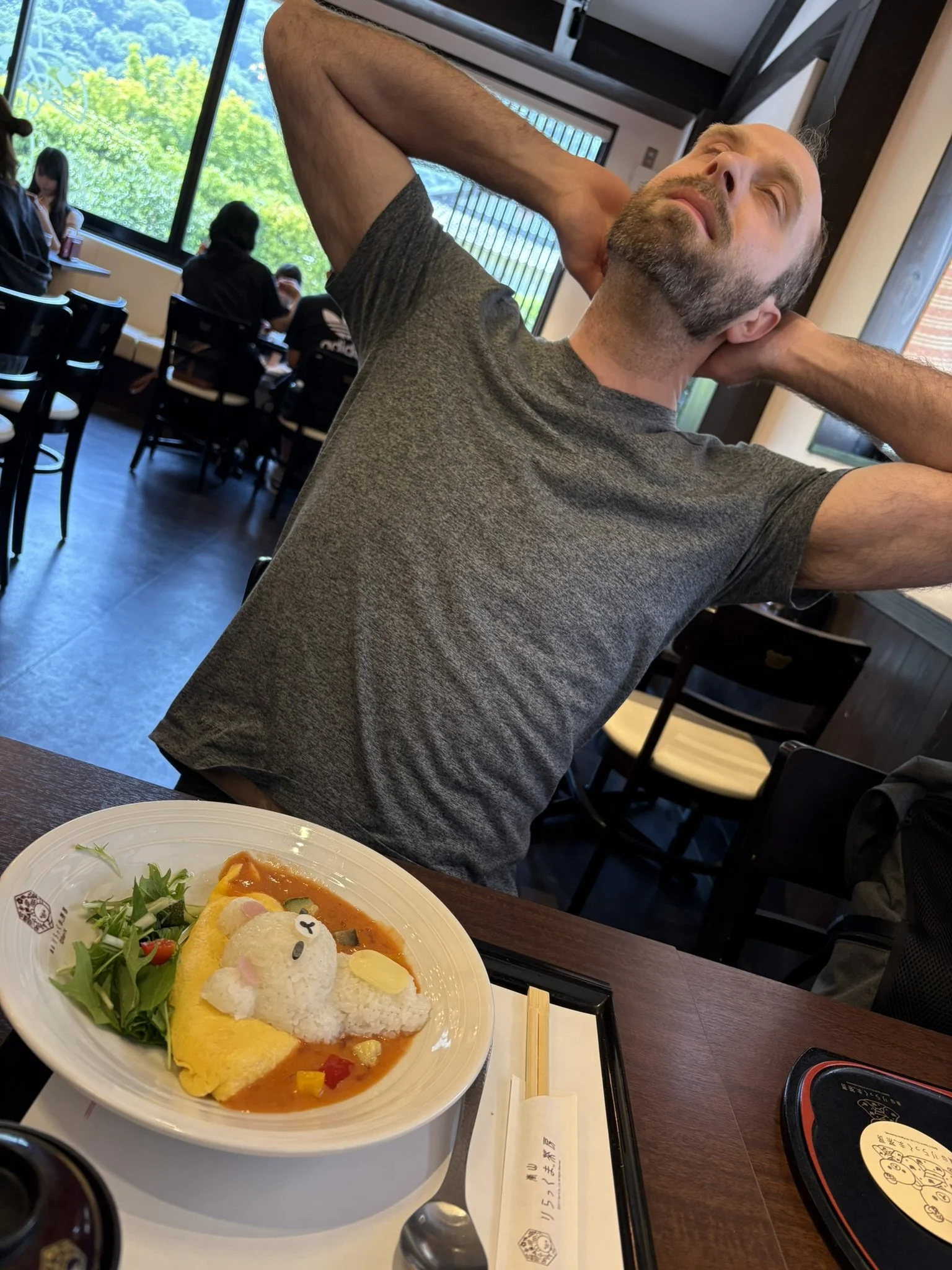
The world’s cutest omelet.
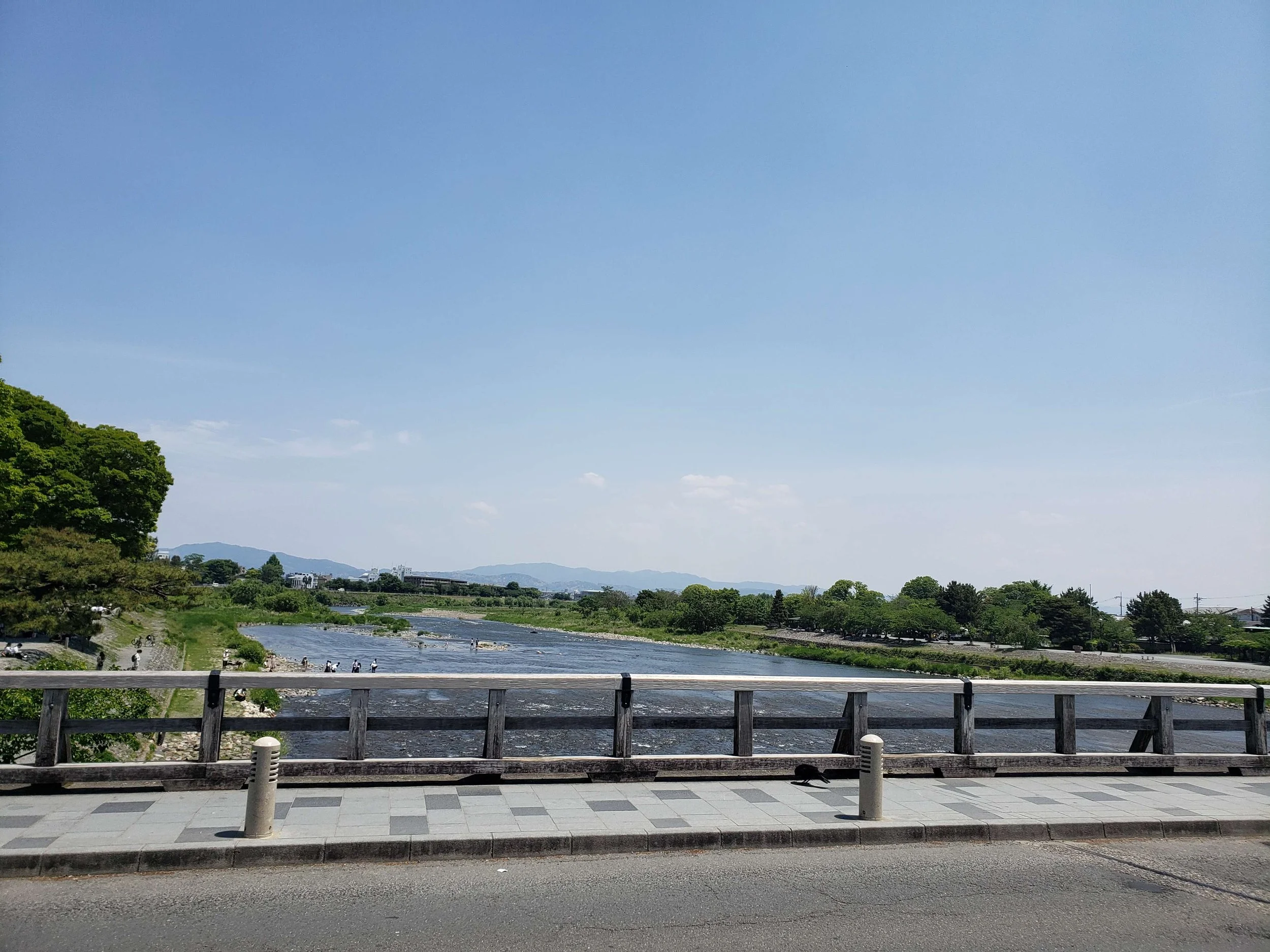
The Katsura River.
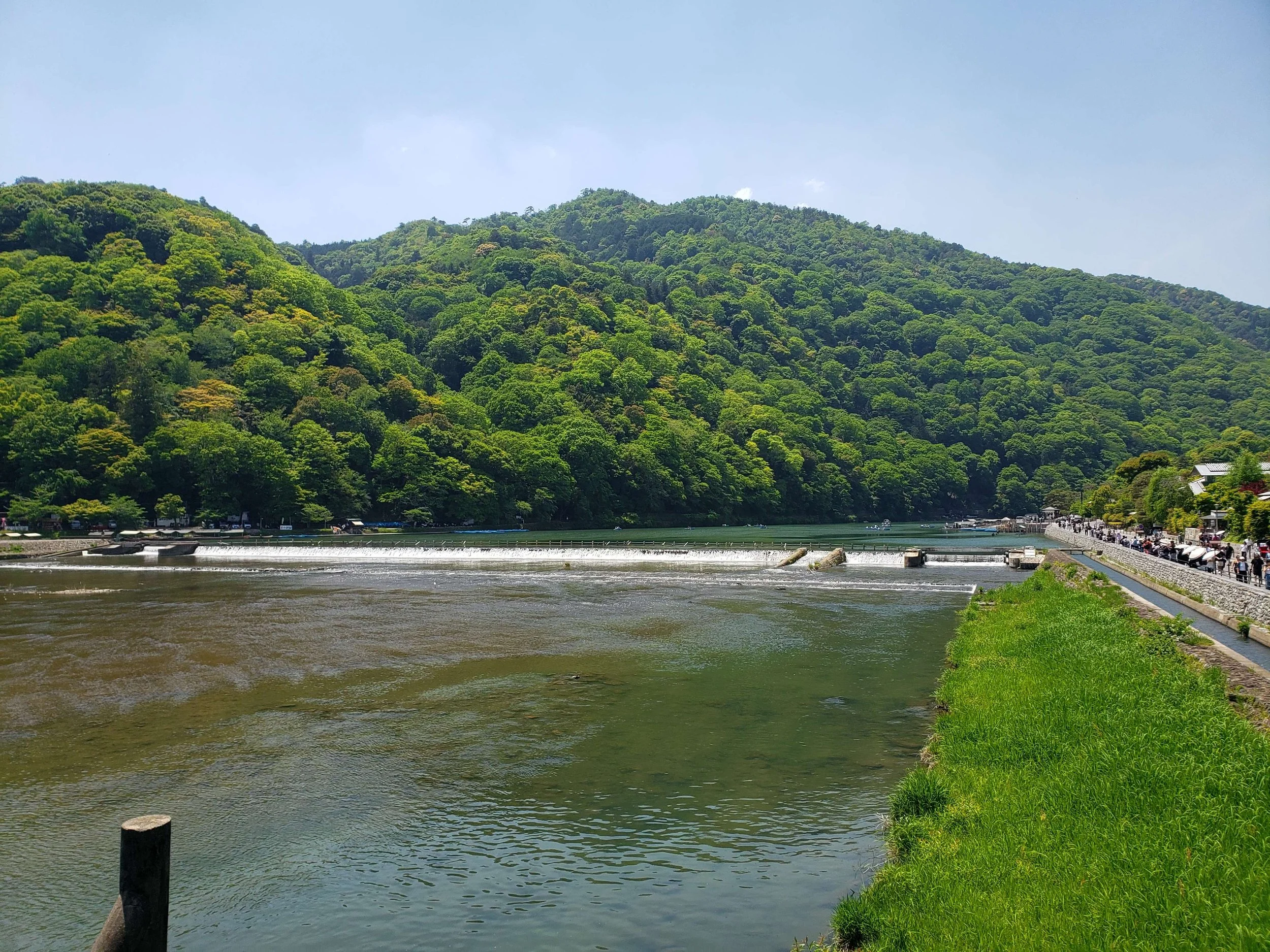
The river from the opposite side—you can see the boats in the distance.
Adventures Along the Katsura River
The path to the Iwatayama Monkey Park passes by a really nice river flanked by parks, food stalls, and even a little station where you can rent a rowboat and tool around for a bit. I hadn’t planned on renting a boat, but the prices for an hour rental were really reasonable, and I wanted a nice little arm workout, so I convinced Jeff we should go out and enjoy the water.
This turned out to be a mistake. I’m really good at using a rowing machine, and also good at kayaking, but absolutely terrible at rowing a double-oar boat. It was bad. Bad bad. I’m pretty sure Jeff thought we were going to end up stranded and he was going to die, because I could not steer the damn thing well.
It was pretty funny, though, because we were surrounded by tons of other couples with dudes like, rowing their girlfriends down the river, and they were all staring at us like, “What the hell?” and I just waved as we passed.
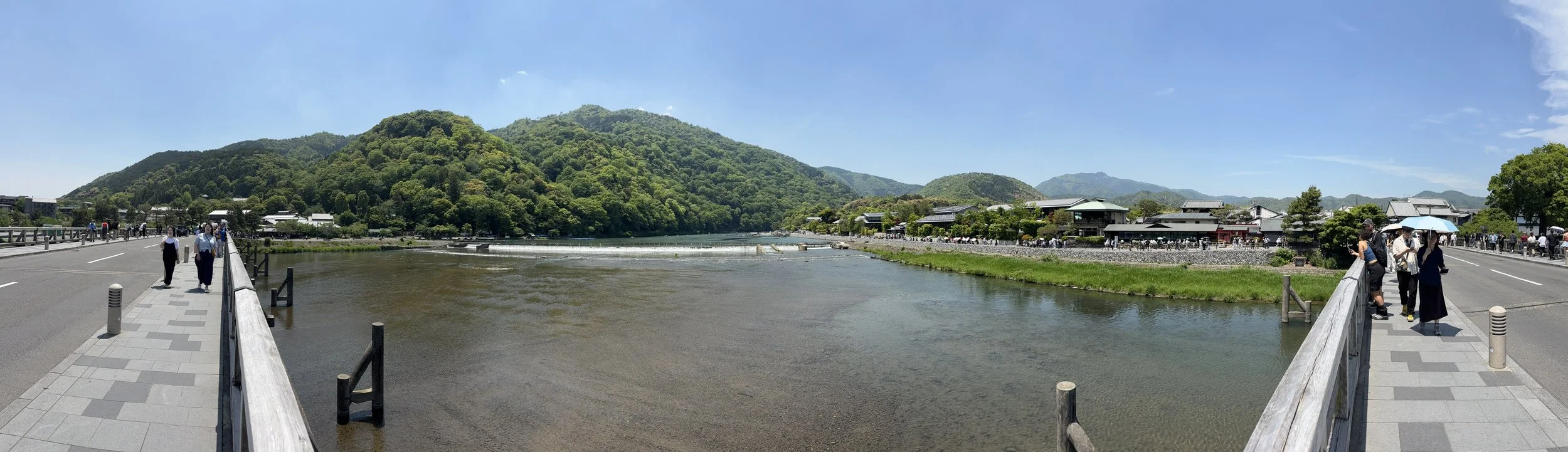
Great spot for a weird pano.
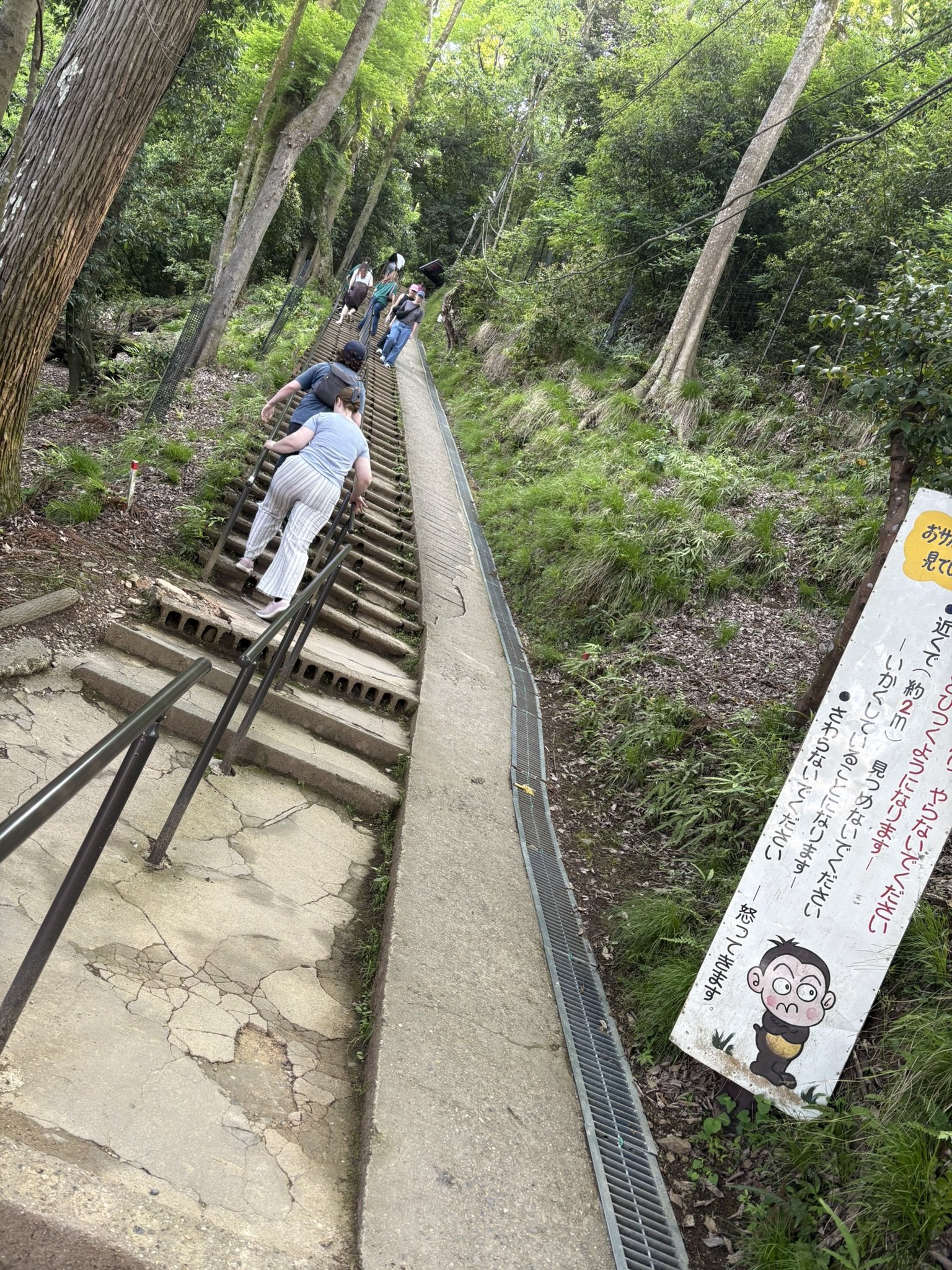
DEEPLY unserious wheelchair ramp.
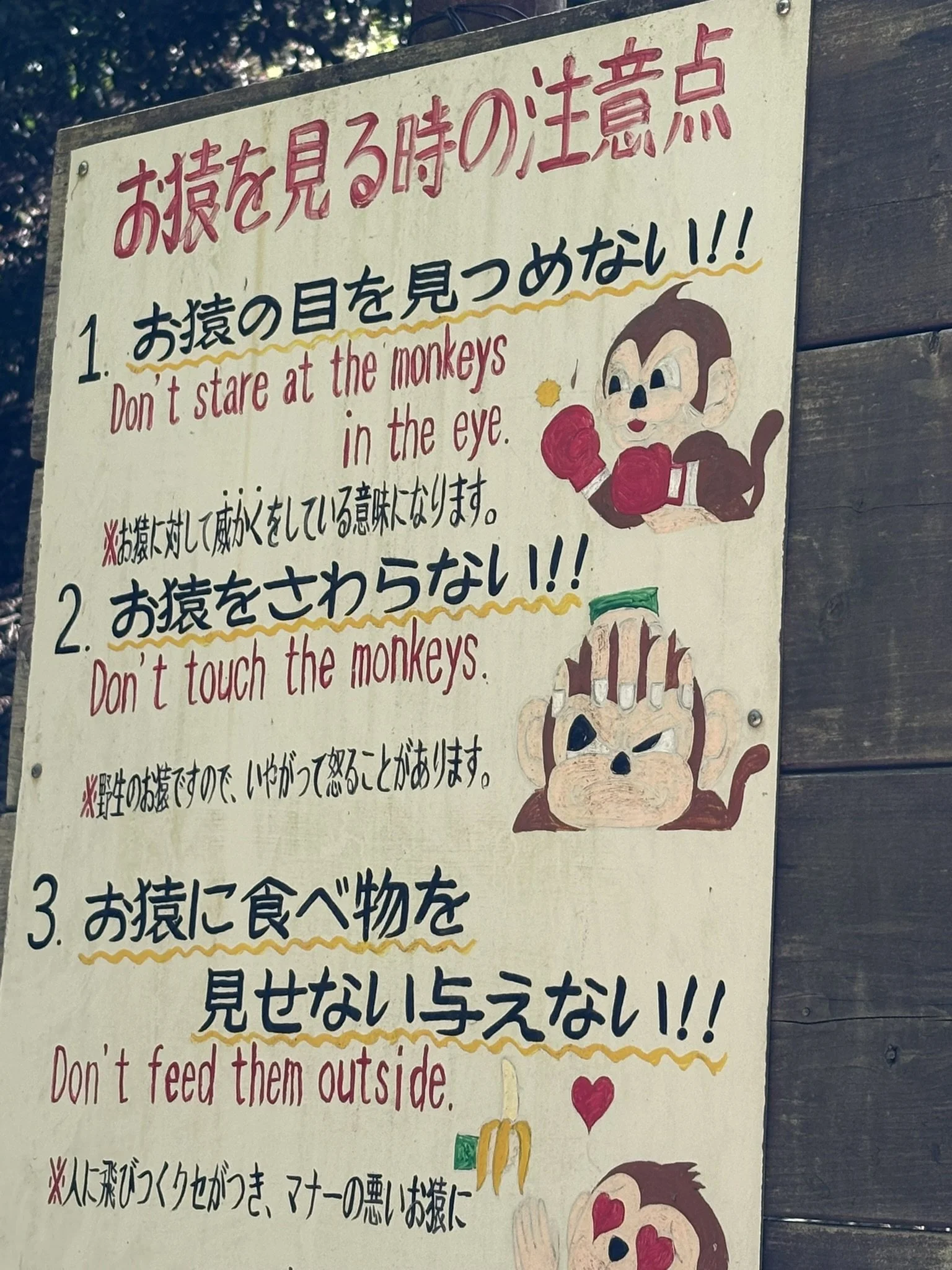
You always know you’re in for a good time when there’s warning signs posted everywhere.
Arashiyama Monkey Park Iwatayama
Eventually we made it back to dry land and started the process of hiking up another mountain to reach the monkey park. It is a BIT of a climb up a lot of steep paths, but it’s super worth it if you like animals. There’s a troop of several dozen monkeys up there in the park, and it’s so cute to see them just chilling and hanging out together.
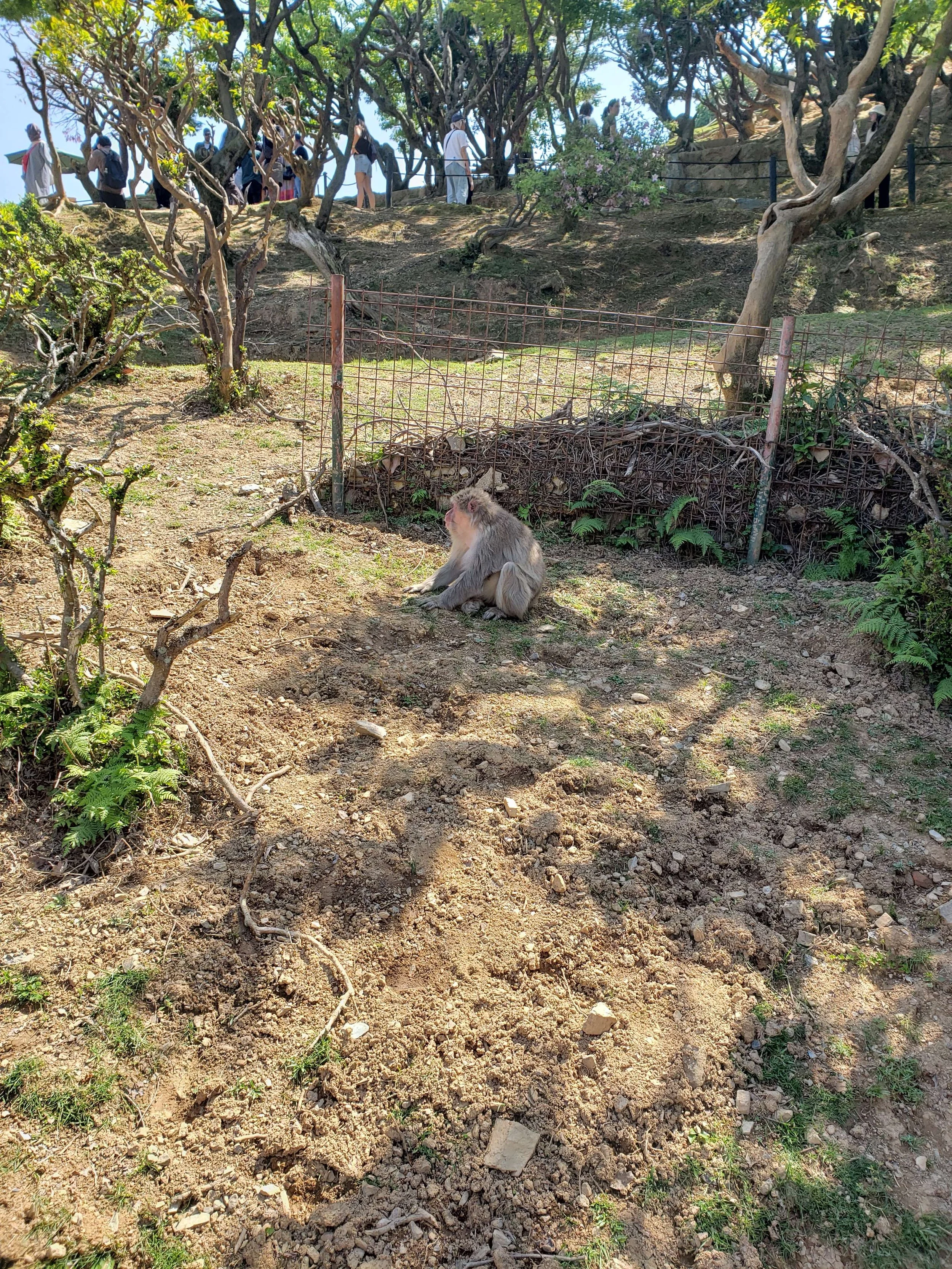
Up top, the monkeys walk around freely, with nothing separating them from you. They kinda just chill.
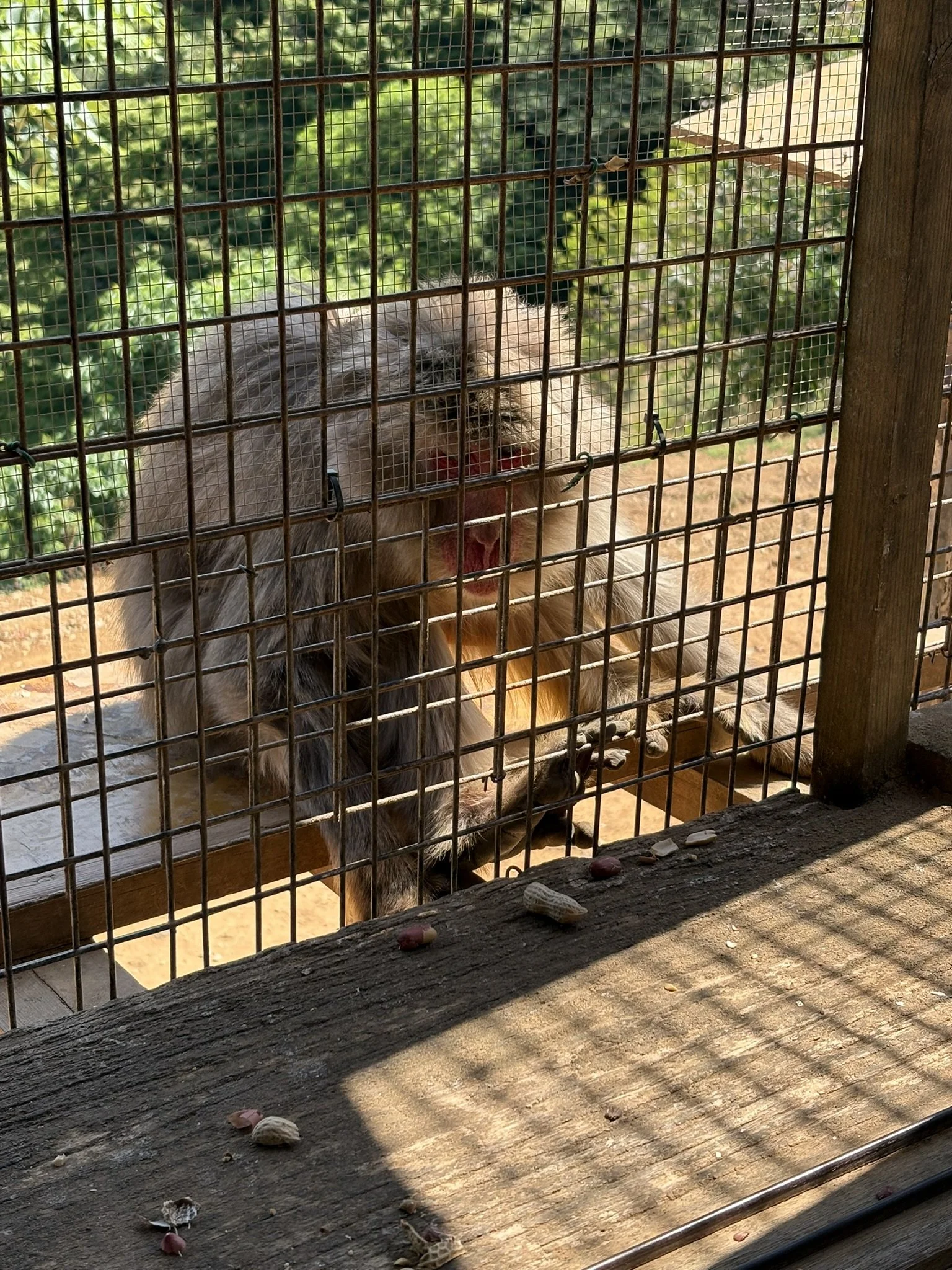
The best part was that you could go in this little hut and feed monkeys peanuts and apple slices through the bars.
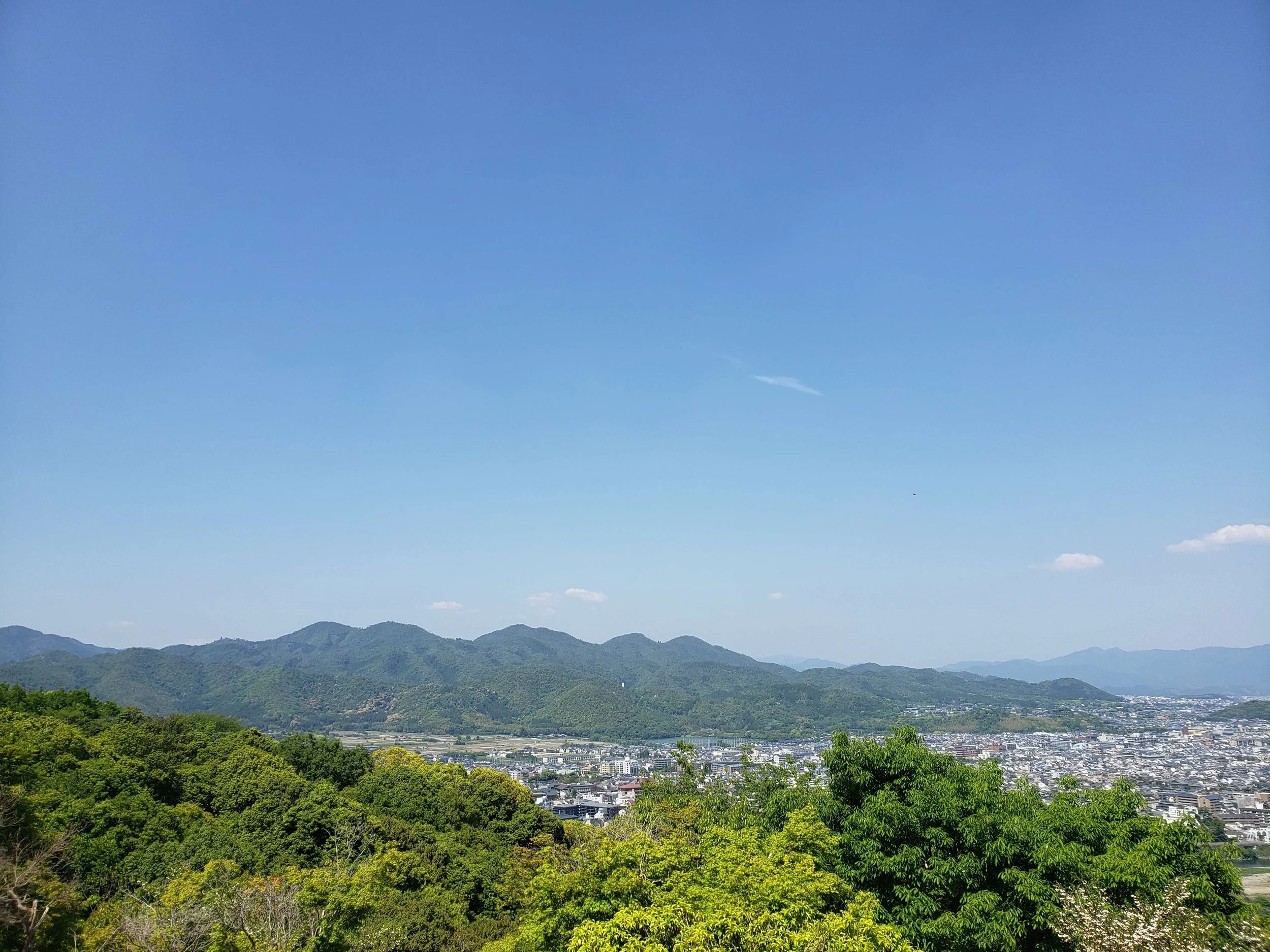
Nice views from the top.
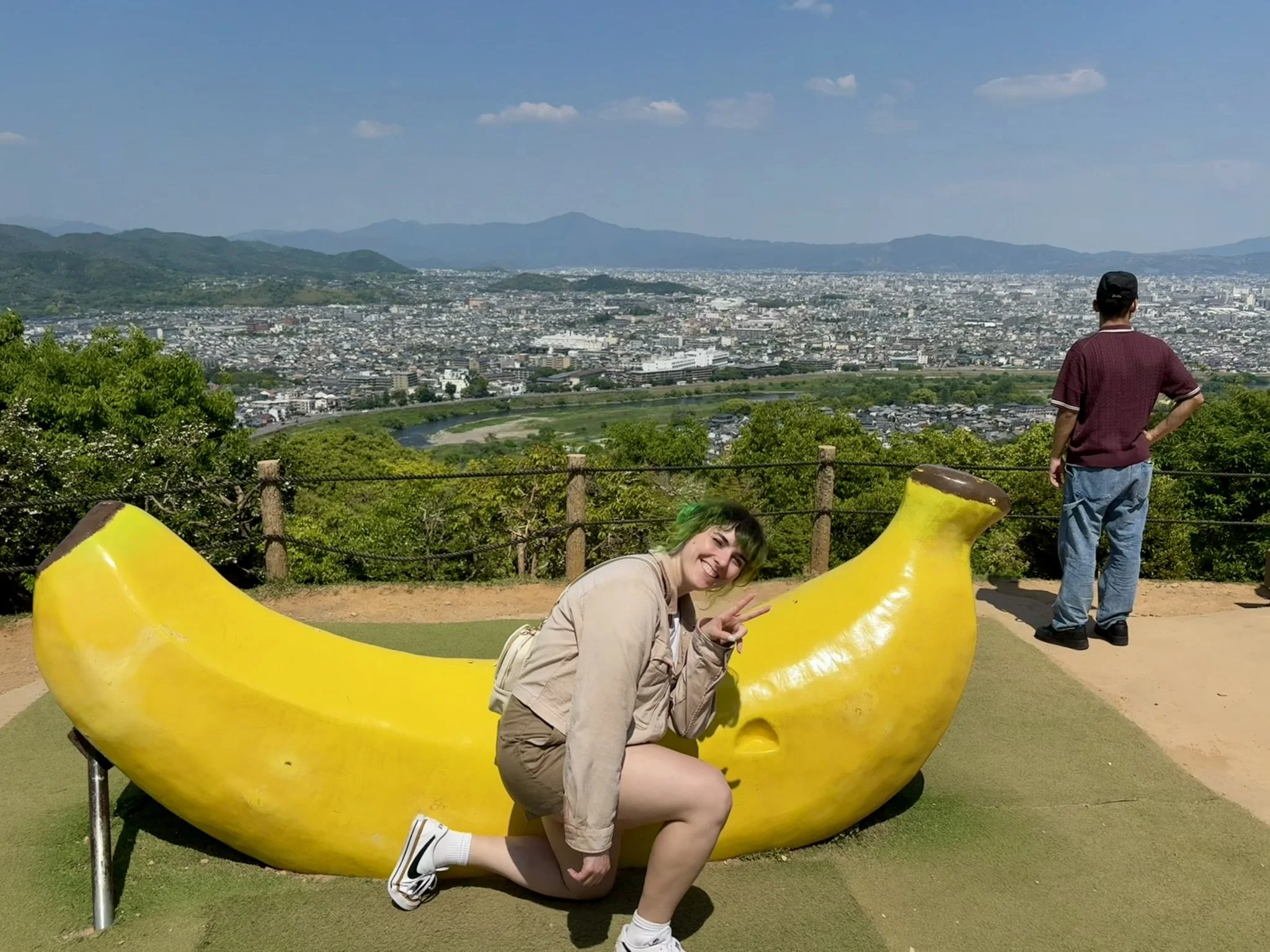
Great photo op spot tbh.
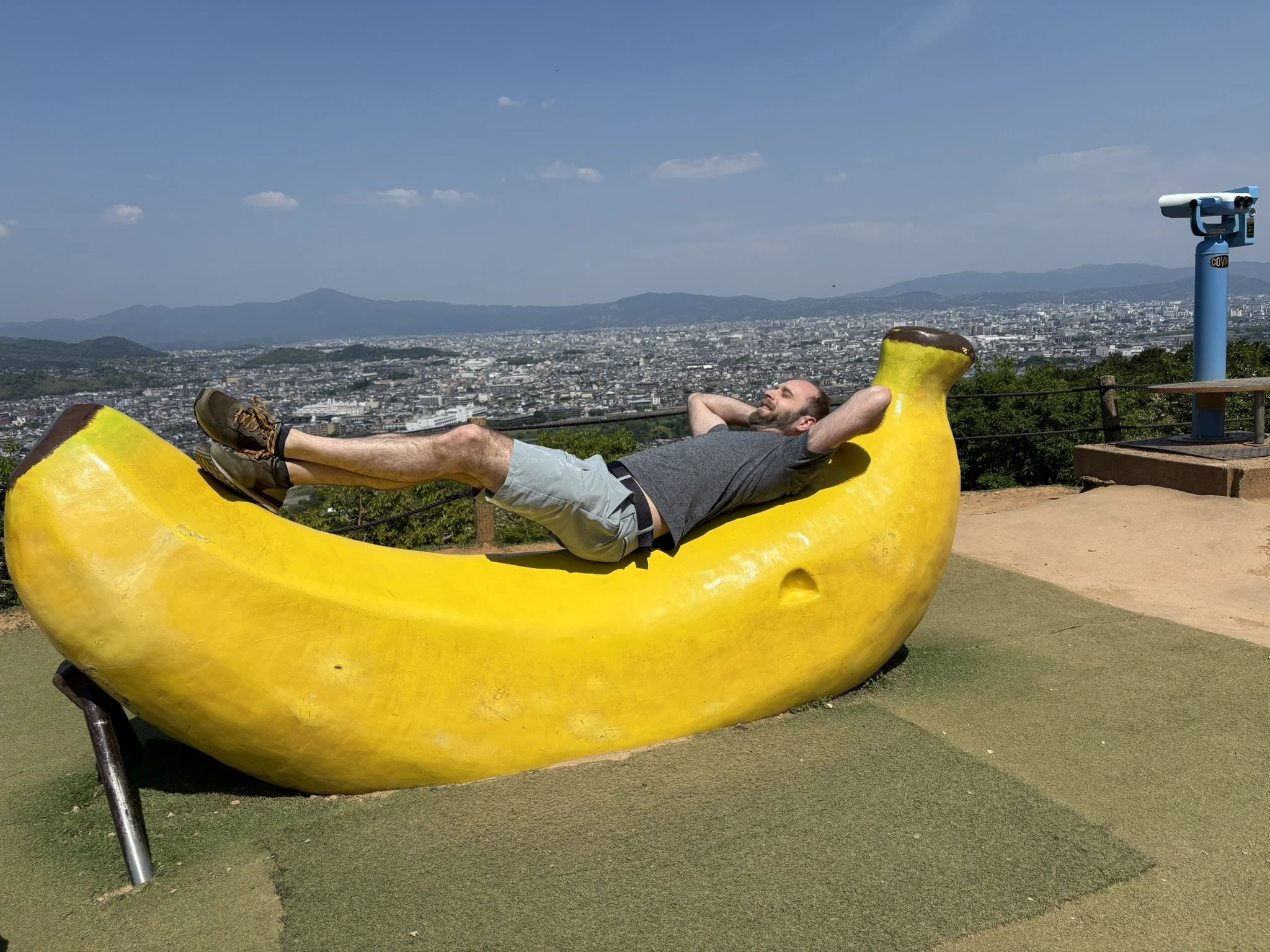
Monkeying around.
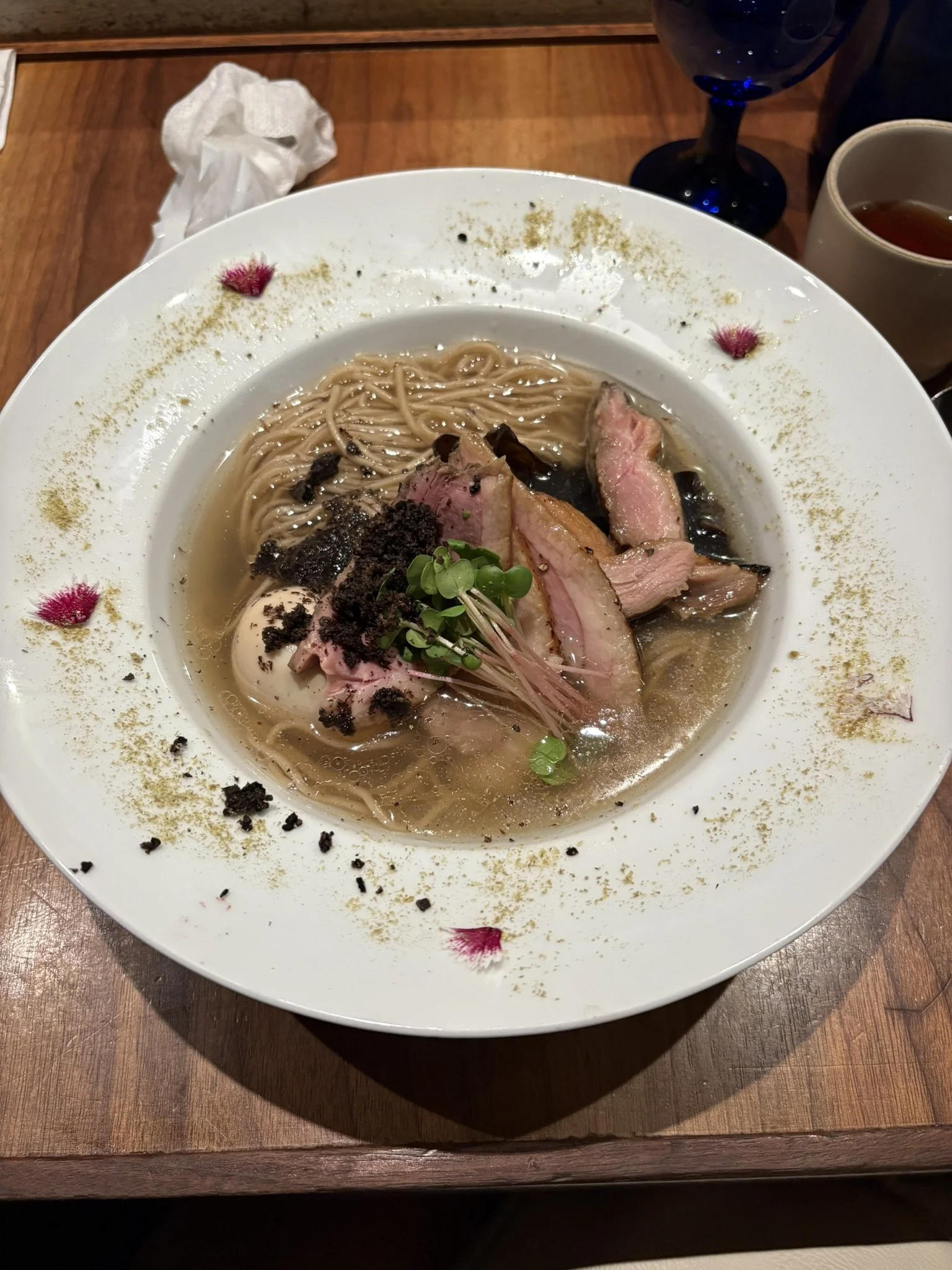
I got duck ramen, and Jeff got a dish with a thicker, savory broth mean to dip noodles and meat.
Back to the City
For our last full night in Kyoto we decided to check out a trendy little spot known for serving ramen with duck. After walking around the block like three times, we finally spotted the sign tucked down a tiny alley not even marked on Google maps.
Like a lot of other restaurants we’d seen so far, it had maybe 8-10 total seats inside. We ended up waiting in that little alley for about 45 minutes to eat.
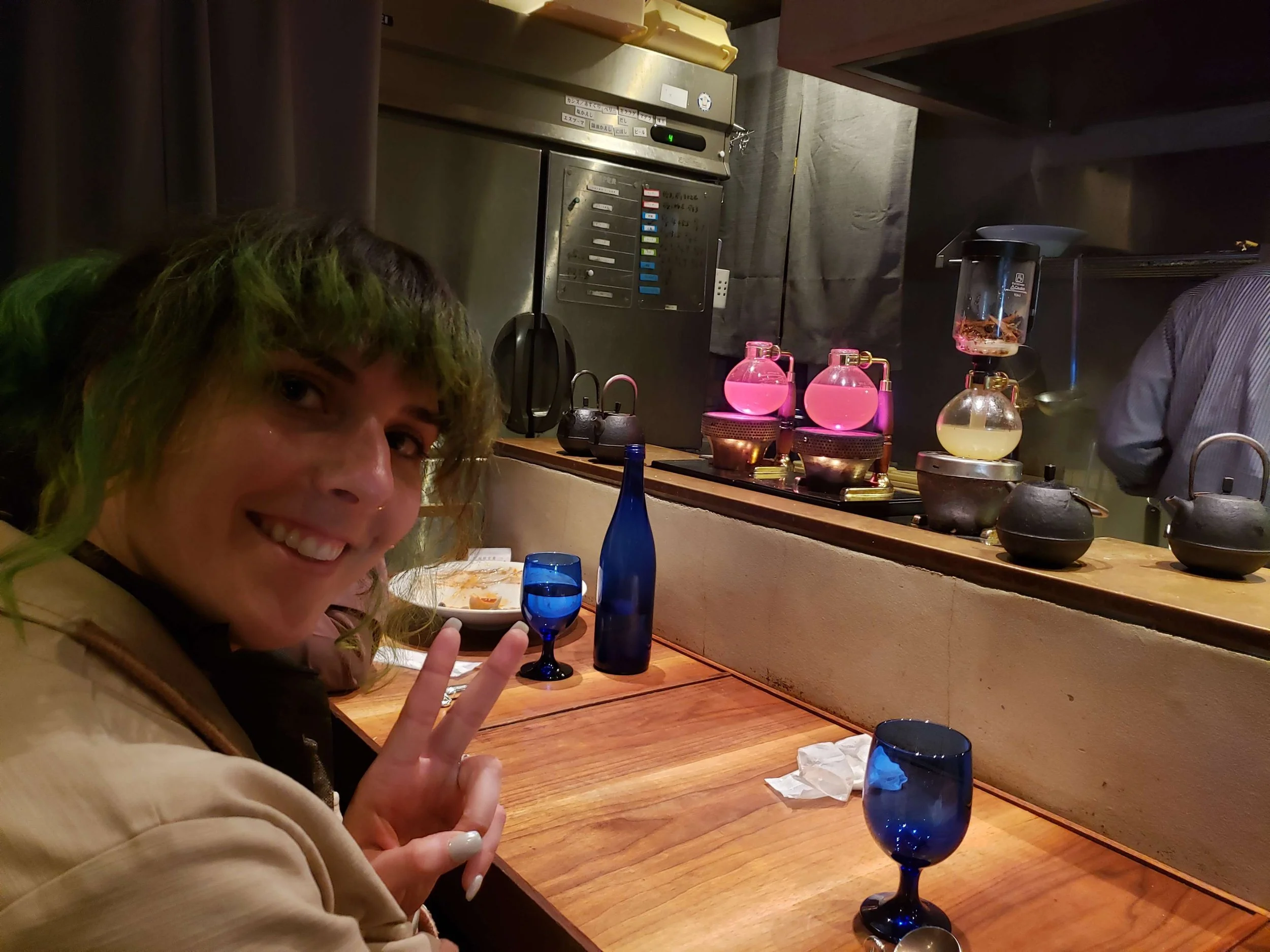
Very instagrammable tea servers in the background.
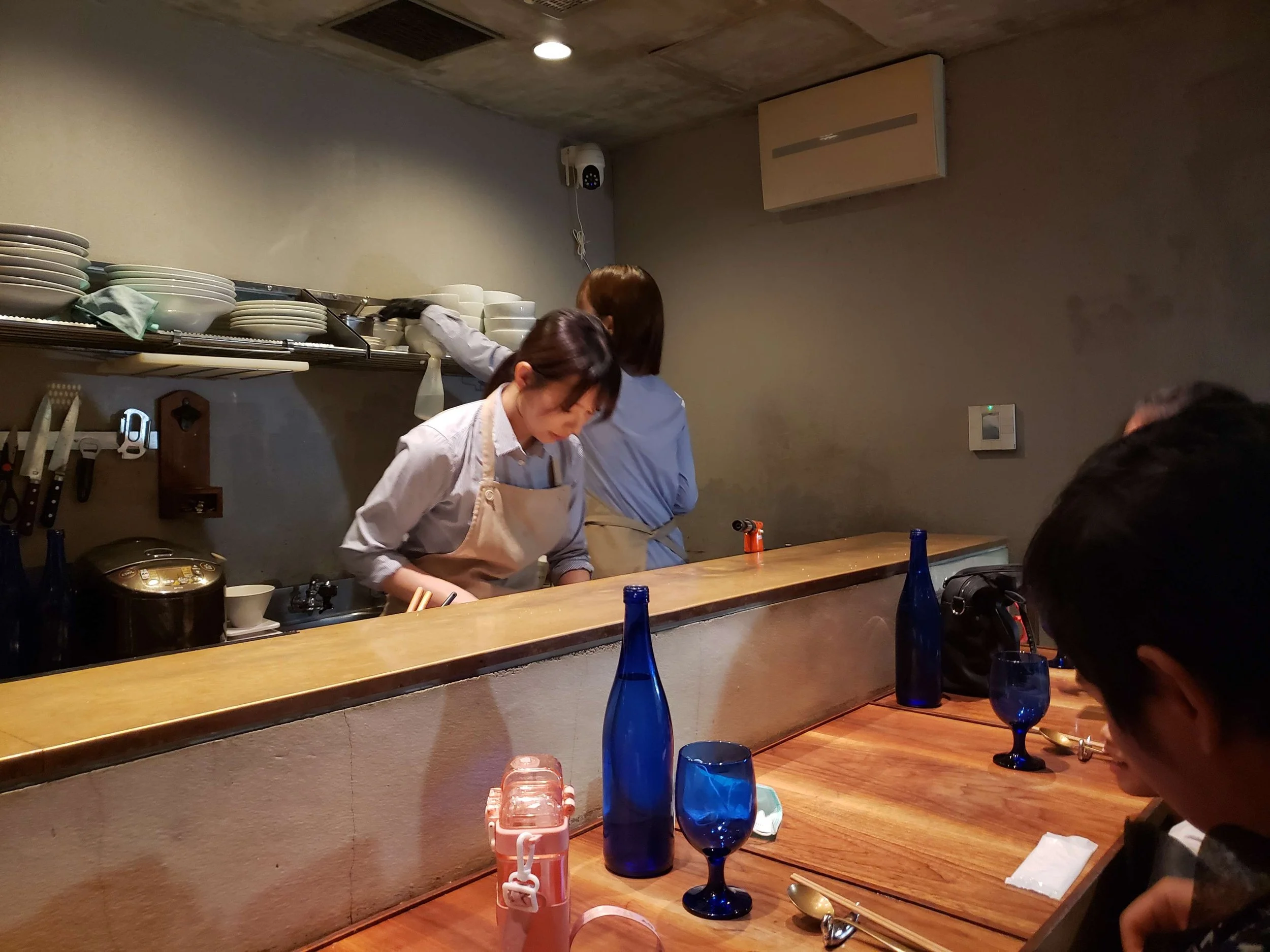
This restaurant was genuinely smaller than my living room at home, which is crazy.
Pro Traveler Tip #7: Know How to Interpret Google Reviews
The duck noodle spot was cute, and the food was fine, but after we got home, something kind of started to bother me. The one noodle dish was good, but the ramen was kind of overhyped, and I was having a hard time reconciling that this place had nearly the same exact average rating on Google as the sushi place we’d eaten the night prior (fresh, lovingly-made and authentic sushi prepared by a cute older couple). It was also throwing me off that I basically never saw a restaurant above a 4.5, which is practically my cutoff for trying out a random place in the US.
It was here that I discovered one of the most important parts about dining in Japan: Japanese people do not review things like tourists (and especially Americans) do, and this can skew your results if you’re looking for places to eat and stay. If you search for restaurants using Japanese and not English, or look at restaurants on Tablelog (which is one of the services Japanese people use to rate, review, and reserve spots at restaurants) you’ll start to see results like this:
“The meal was fantastic, probably one of the best I’ve had in this city. Food was affordable and service was prompt. I saw a dirty napkin on the sidewalk outside. Two stars.”
“Best okonomiyaki in all of Japan, and at a great price! The owner was so kind and welcoming, too. I cannot recommend it highly enough. Three stars.”
“Loved the food - perfectly cooked steak with an incredible flavor. Atmosphere was intimate and cozy. Will definitely visit again. There was a chair in the corner with a strange color. Two stars.”
I’m like genuinely not even exaggerating, either. Japanese people are almost comedically harsh, so it becomes difficult to parse out what is genuinely a top-tier experience and what is simply visited by a lot of tourists (who are more likely to rate things a 5 and bump the average up). So you actually do have to read reviews and look at pictures and decide from there. You’ll never really get a bad meal in Japan, mind you, but if you’re looking for certain things, or high quality restaurant experiences, it pays to do your research!

Day 7: A Mix of Traditional and Modern Japan
May 15
Steps walked: 27,551
Flights of stairs climbed: 18
Kyoto and Osaka are only 30-60 minutes apart by train (depending on the line you take) and they run pretty much all day, so I didn’t bother making a reservation for this leg. It ended up working out, because I decided I wanted to spend some extra time in Kyoto and visit Kinkaku-ji (the Golden Pavilion) and Nijō Castle before we left.
Kikaku-ji
Kinkaku-ji was originally built in the 14th century as a villa for a powerful aristocratic family and later converted into a Zen temple. It’s famous for being, well, gold—the upper floors of the pavilion are covered in real, actual gold leaf, which is stunning.
However, this is probably the first thing of the trip that felt like kind of a, “Been there, done that.” It was just soooooo crowded and even though it’s iconic, I found it a little underwhelming. I’d put it in the same bucket as the Mona Lisa at the Louvre. It’s cool and all, but there’s better and more interesting things to see.
Luckily, we turned things around at Nijō Castle, which ended up being really, really cool, and surprisingly not crowded at all.
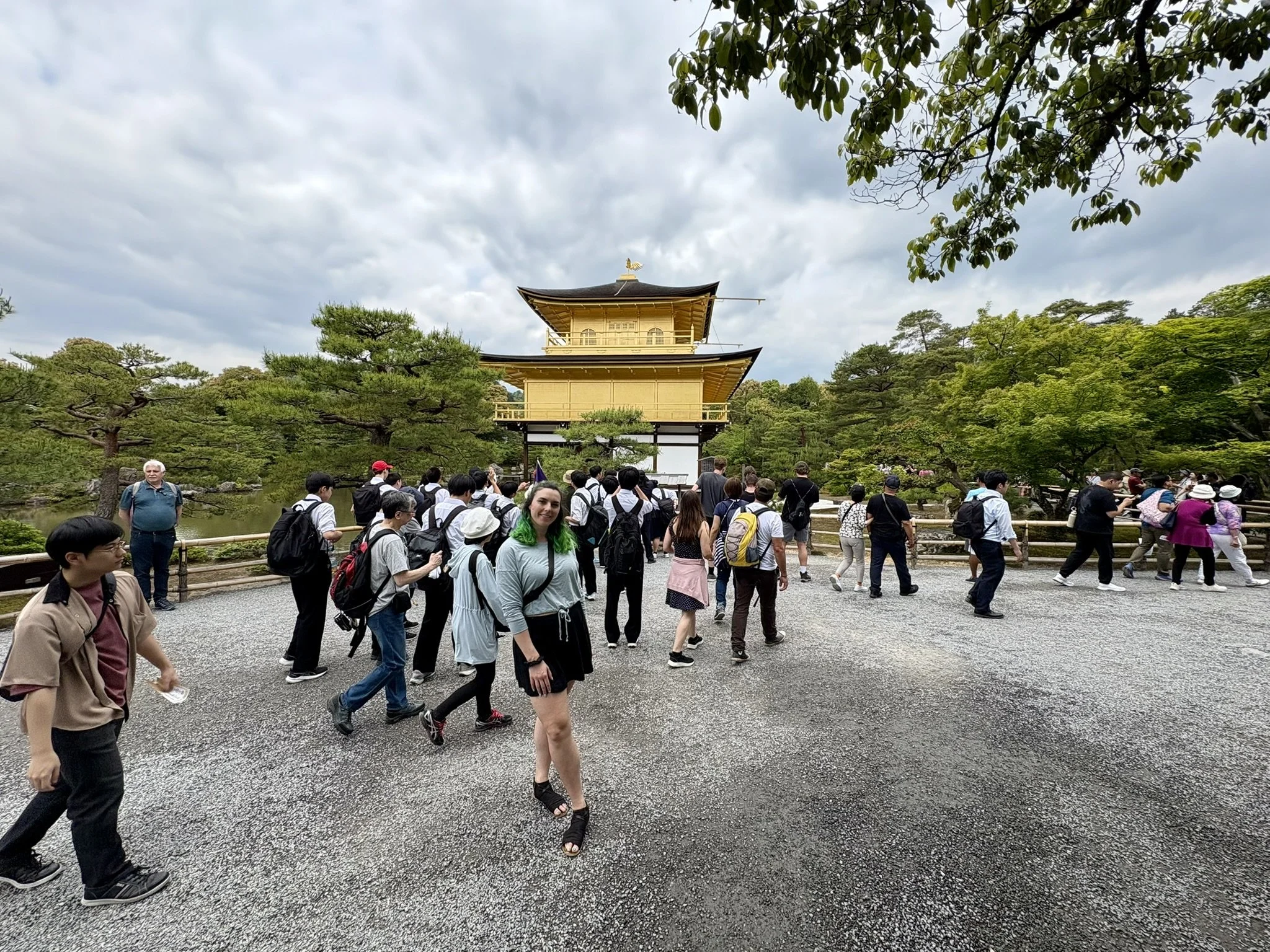
We dodged like three groups of school tours for this photo.
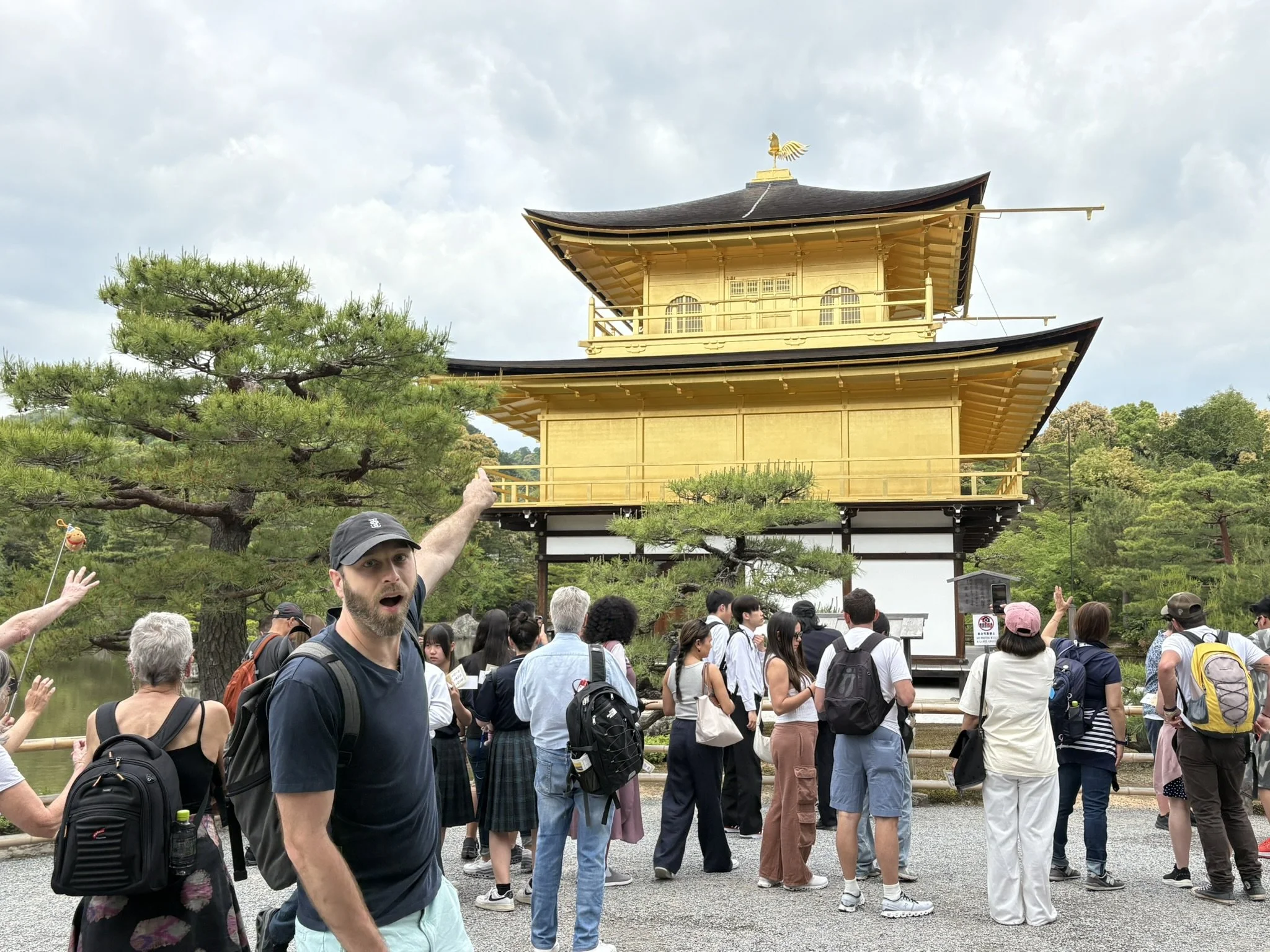
Wow!
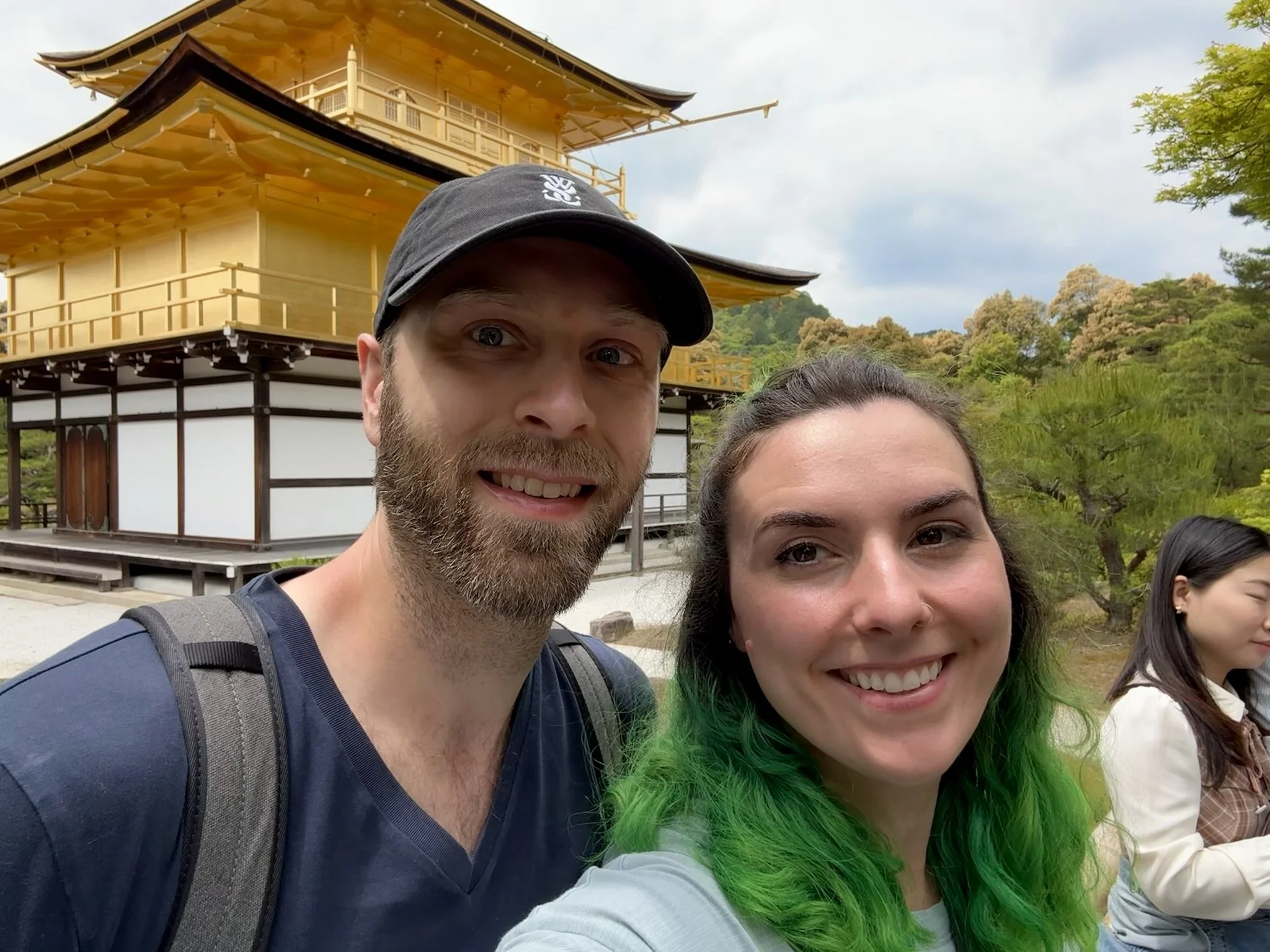
I think the sun had finally started to come out!
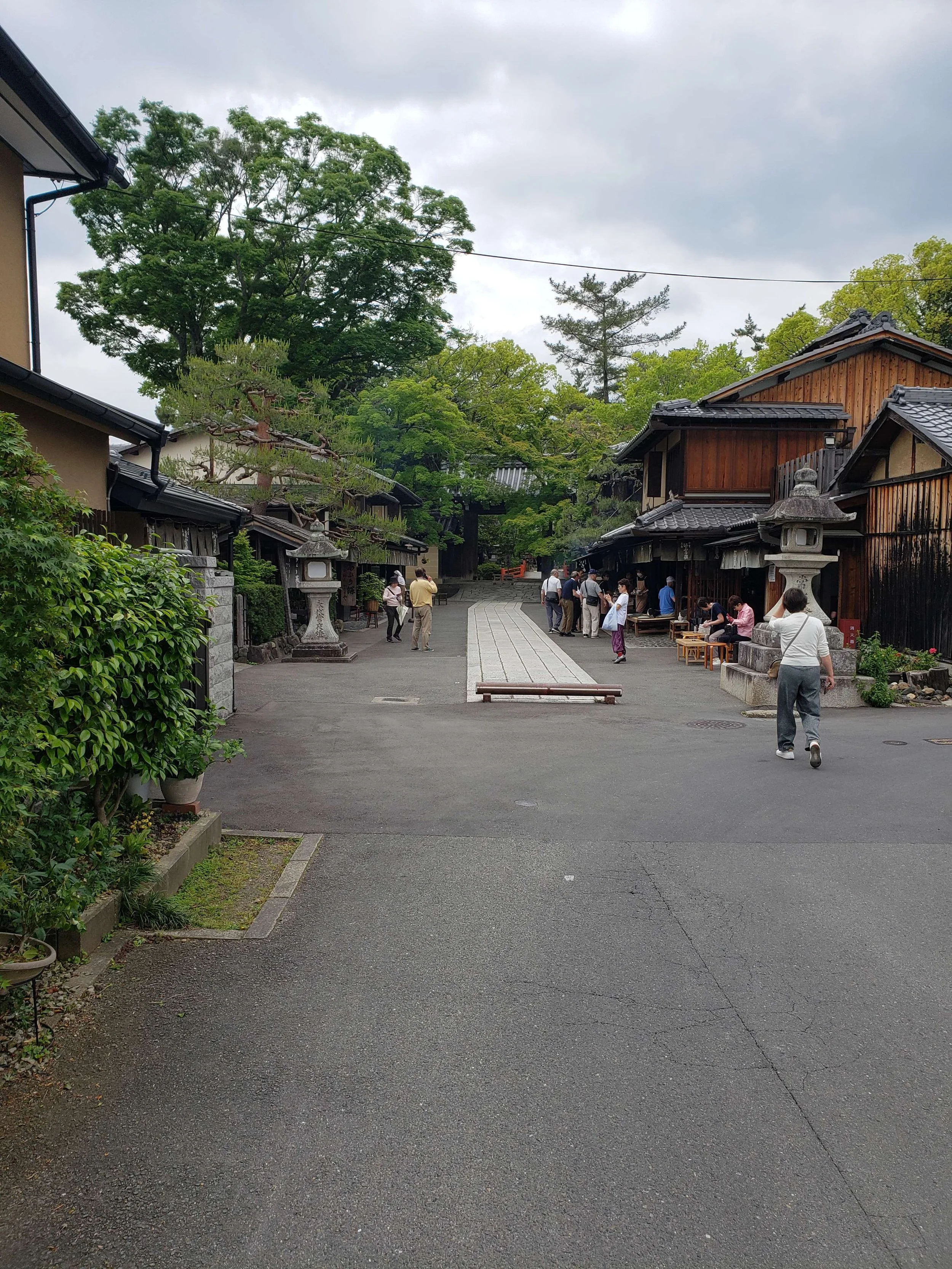
Hilariously there’s like two sweets shops selling these desserts right across from each other.
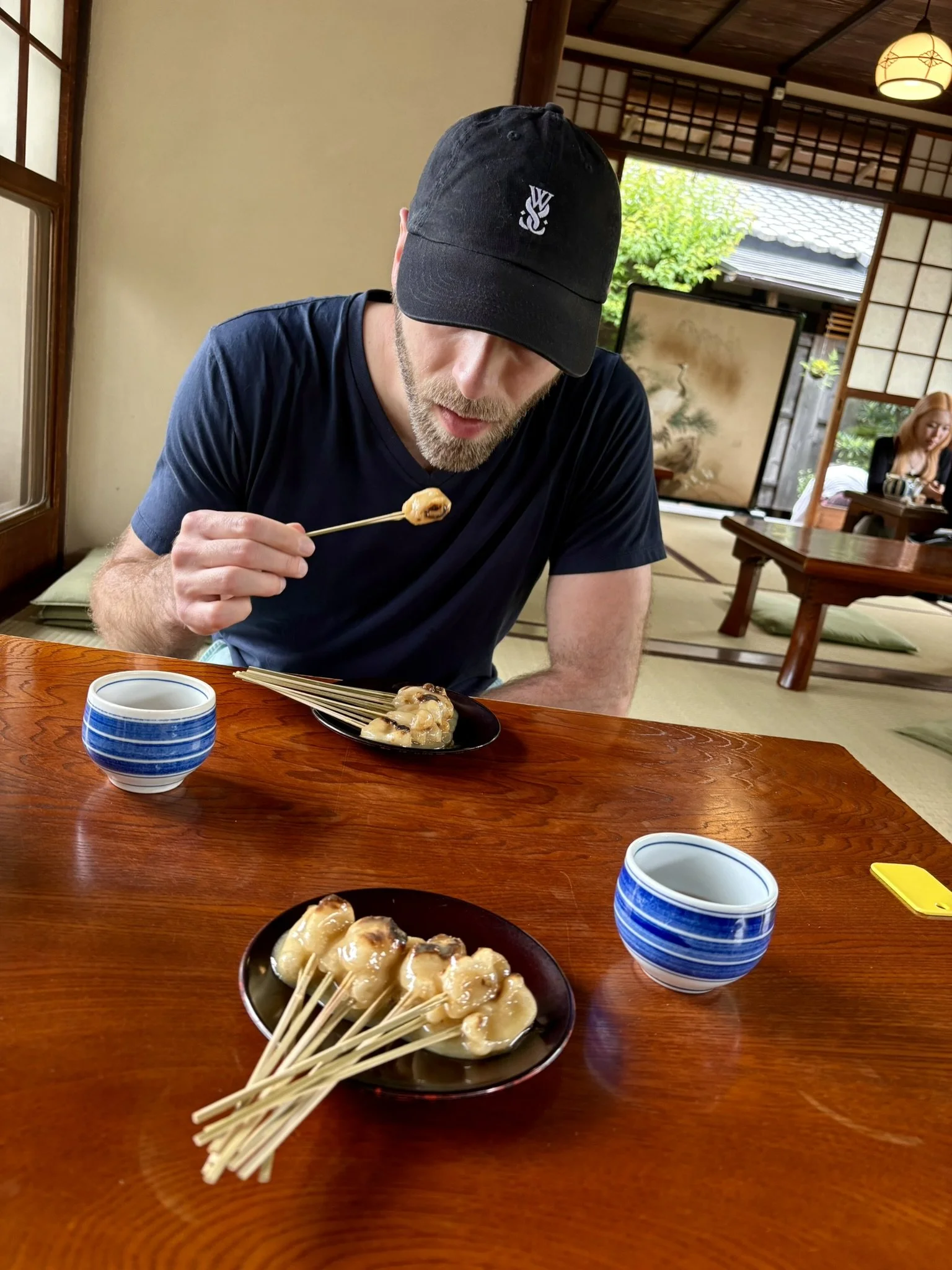
I’m looking at this photo so longingly. You have no idea.
The Oldest Confectionary in Kyoto
On our way back into Kyoto, we took a walk through some other historic neighborhoods and stopped by a famous sweets shop called Ichimonjiya Wasuke, which was established in the year 1000 and serves up exactly one food: aburi-mochi. These are grilled rice flour cakes served on skewers and dipped in a sweet and savory white miso glaze.
They were SO GOOD. 10/10. We wish we could’ve eaten more than one order, honestly, but we’d been eating a ton of sugar in Kyoto and we both knew it was time to stop, haha.
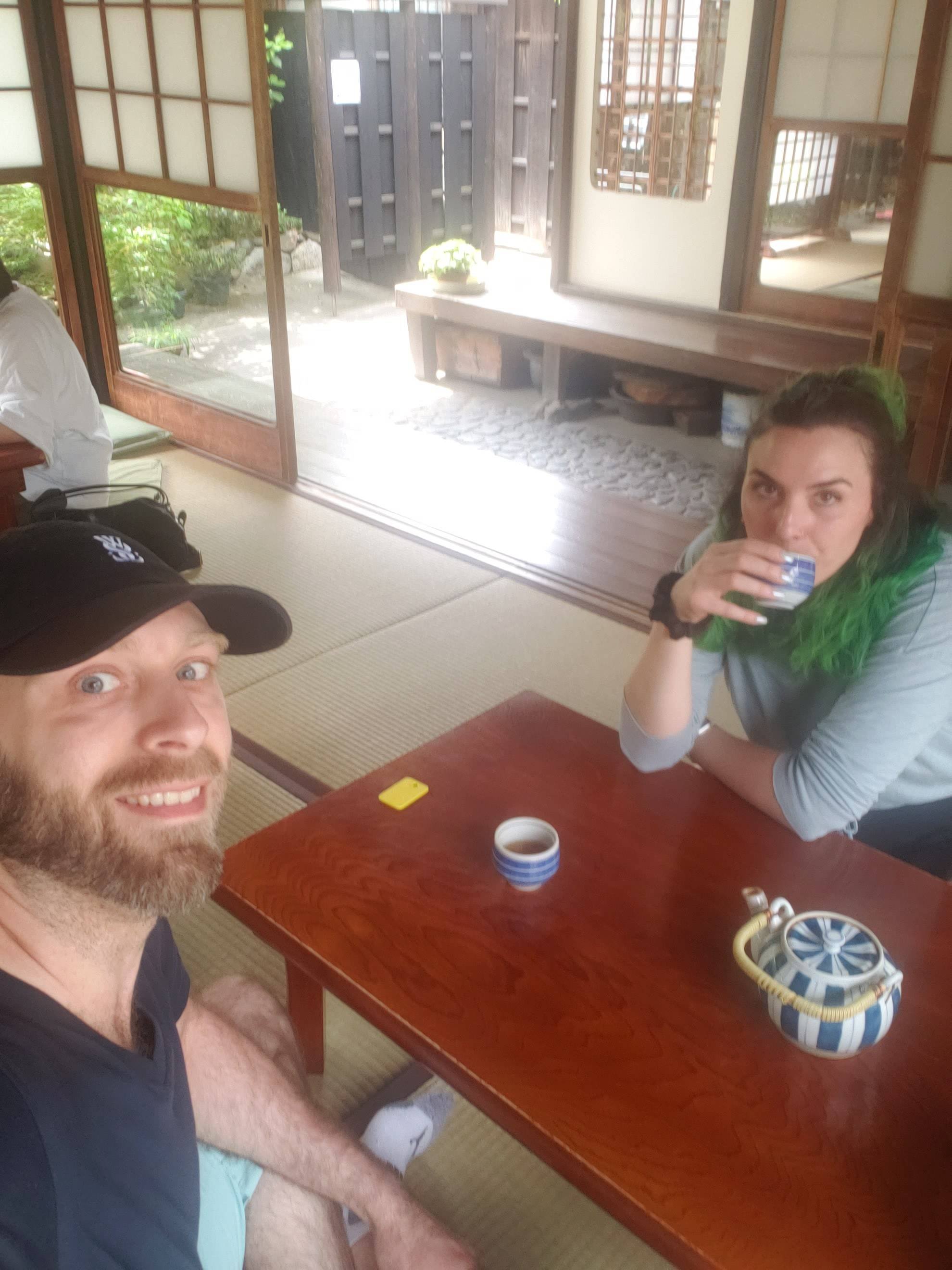
Tea and dessert in a traditional setting. Nothing better.
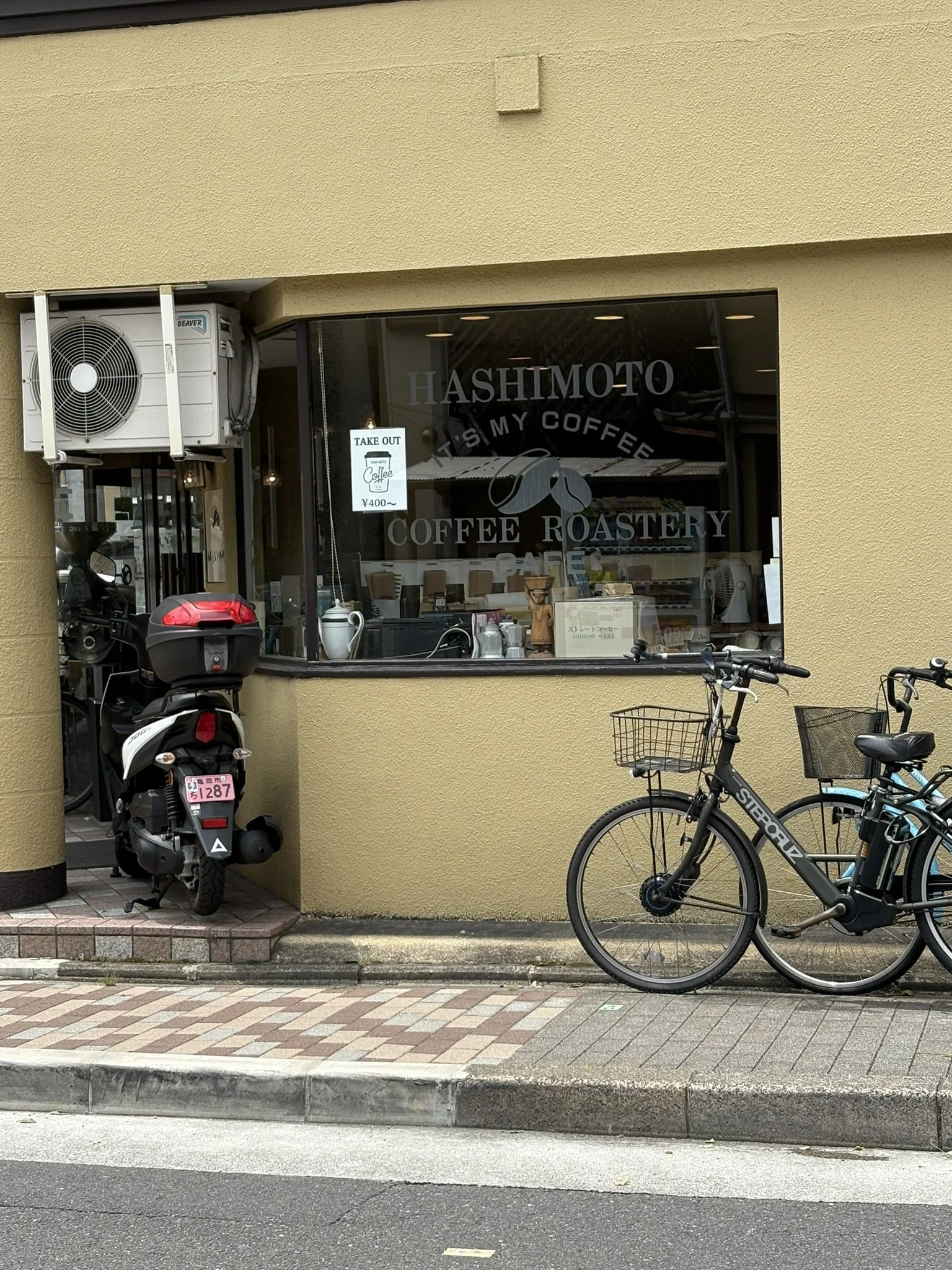
Bonus photo: this coffee shop that shares the same name as my thyroid disease. “It’s my coffee,” indeed.
Nijō Castle
Nijo Castle was originally built in 1603 and is one of the most famous Edo period imperial architecture (because only parts of it burned down, I guess, and not all of it, like everything else in Japan). The castle grounds span almost 70 acres, all surrounded by tall outer fortifications and a huge moat. Nijo has three main areas: the exterior gardens, fortifications, and grounds, the Ninomaru-goten palace, and the Honmaru-goten palace. The Honmaru is in the center and further protected by an additional moat.
One thing to know about visiting Nijo Castle is that each of the different sections require separate tickets, and the Honmaru actually requires advance registration to enter. I was VERY lucky to be able to snag a spot on the day we visited, because they’re usually sold out ahead of time (it was only opened to the public in like 2024 after years and years of extensive restoration).
I don’t have any pictures of Ninomaru or Honmaru Palace because they’re not allowed, so do yourself a favor and look them up if you want to get an idea of what the interiors are like. They are COOL—intricate wooden carvings in every beam and structure, gold accents, painted silk screens everywhere you look. This castle was one of my favorite places we visited on the entire trip, and I would highly recommend it to anyone visiting Japan.
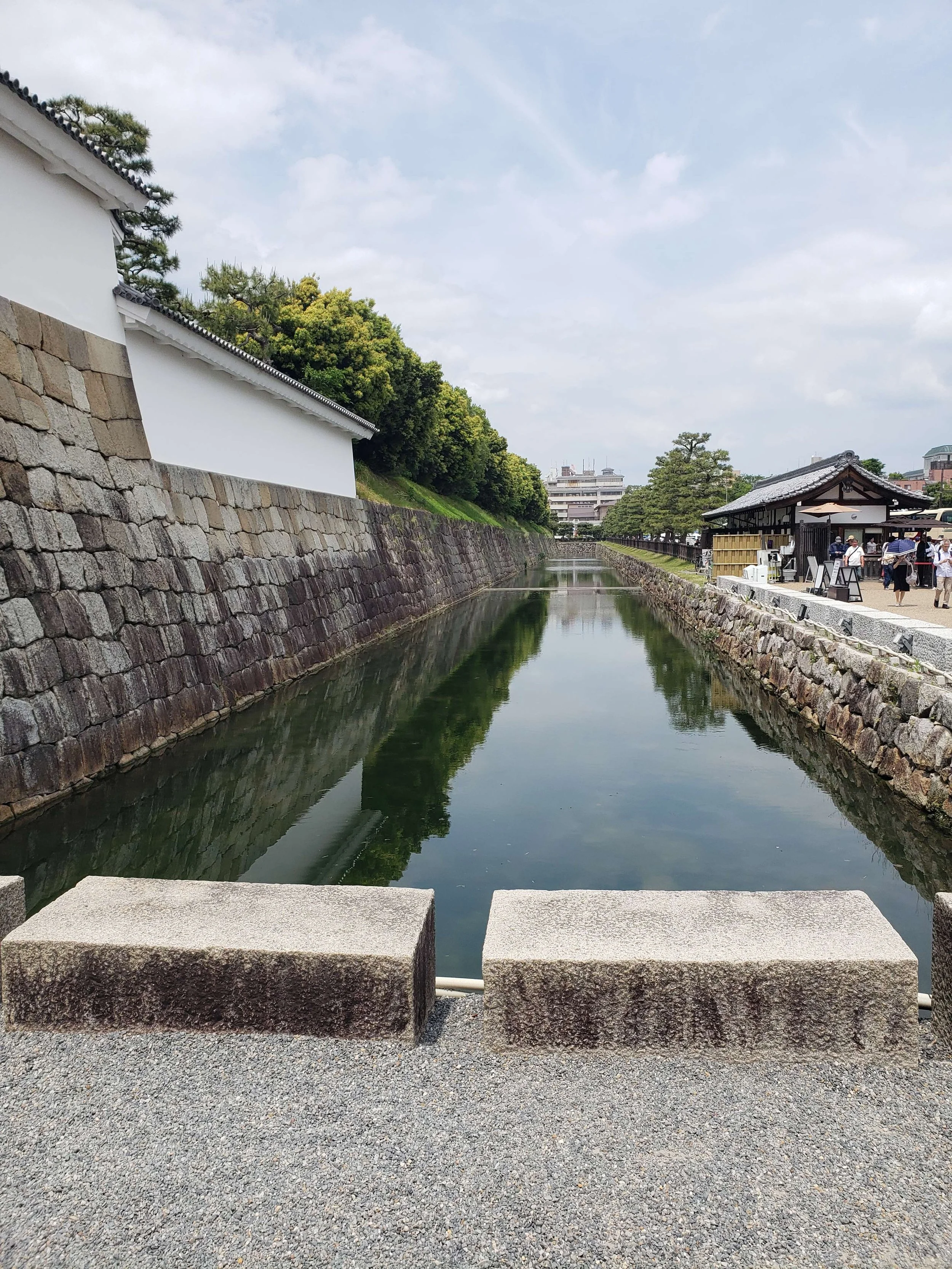
The outer moat and entrance area.
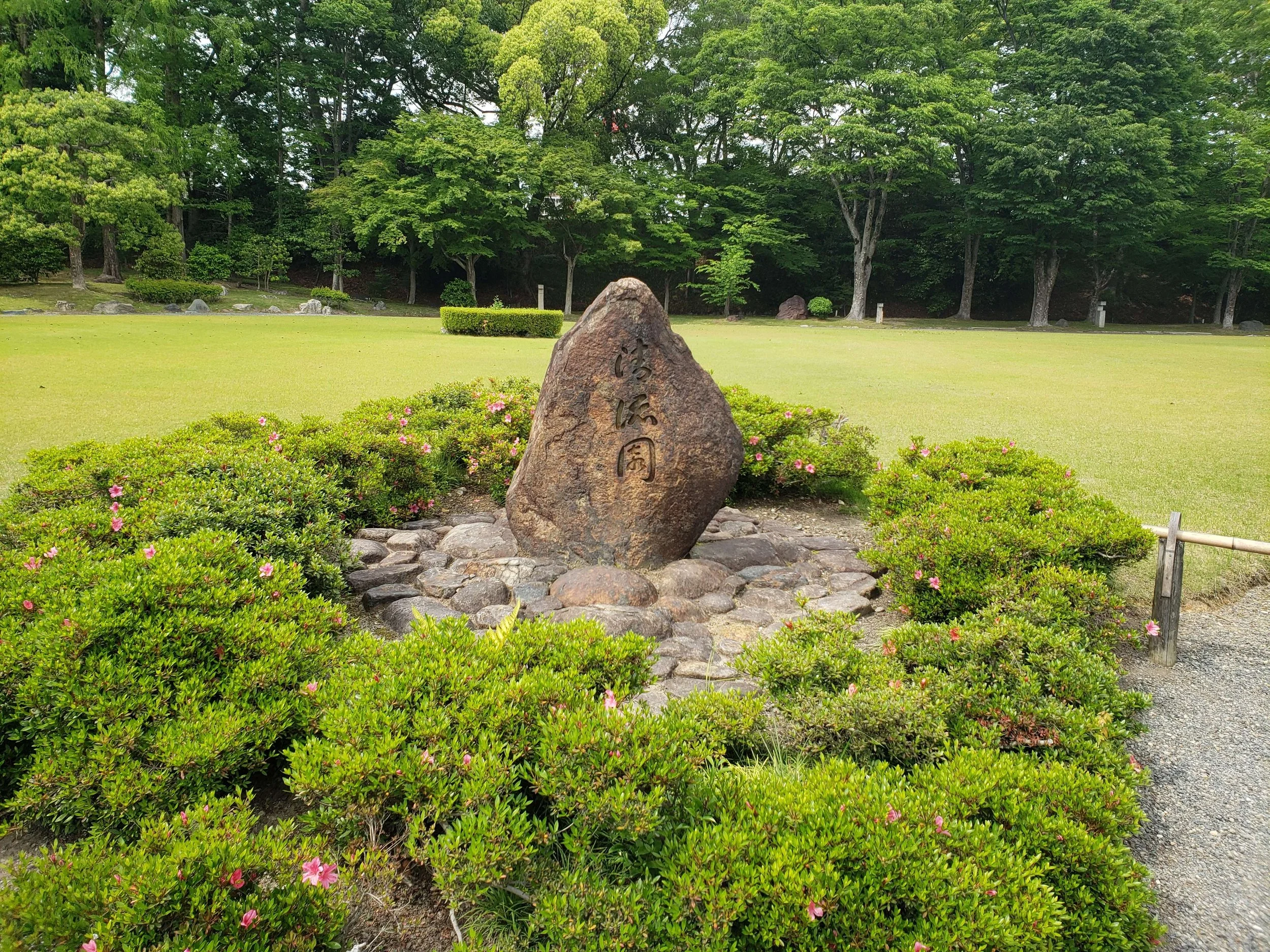
It’s not a boulder, it’s a rock (that I can’t read).
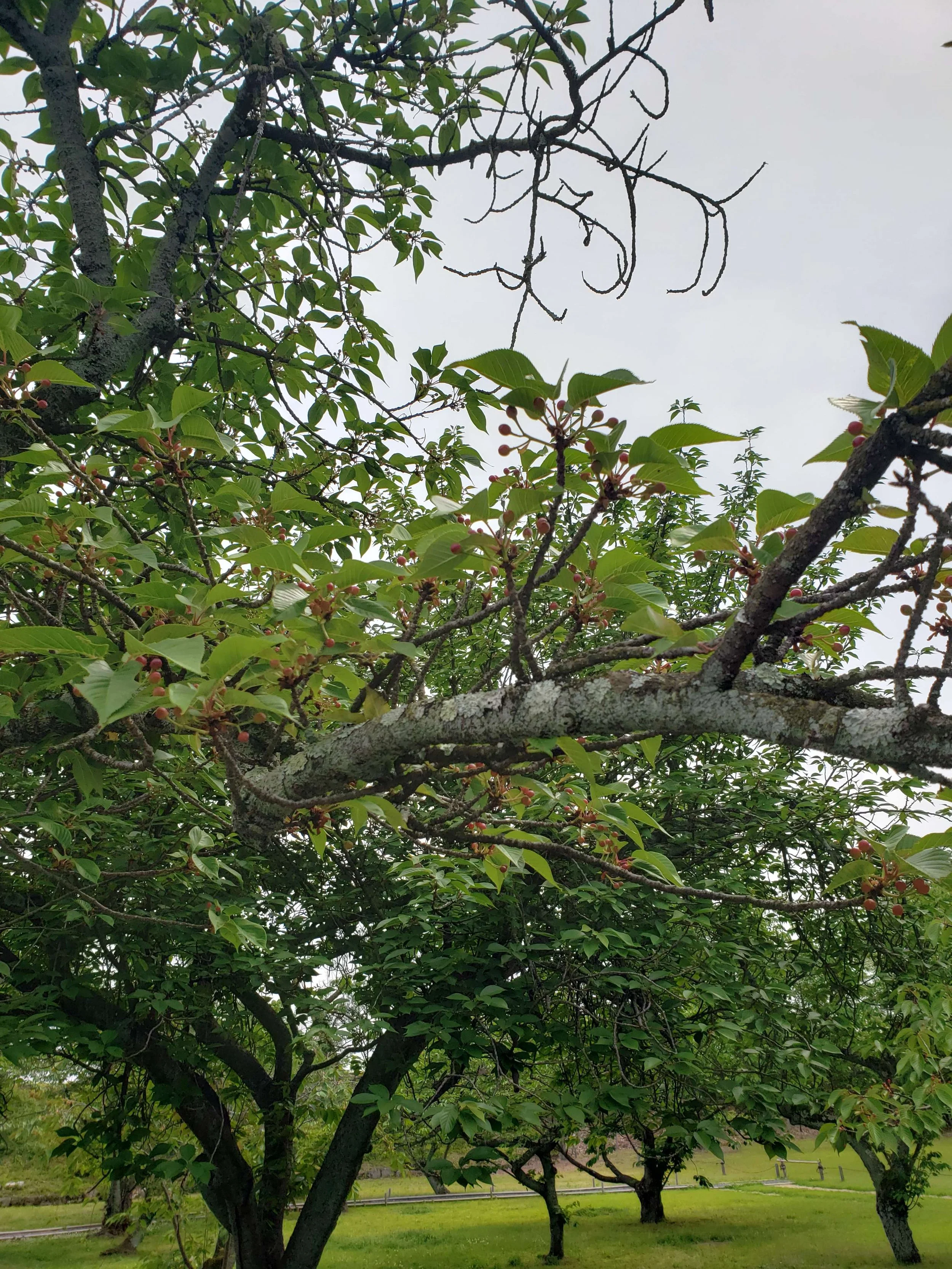
Cherry blossom season was over, which meant season for actual cherries.
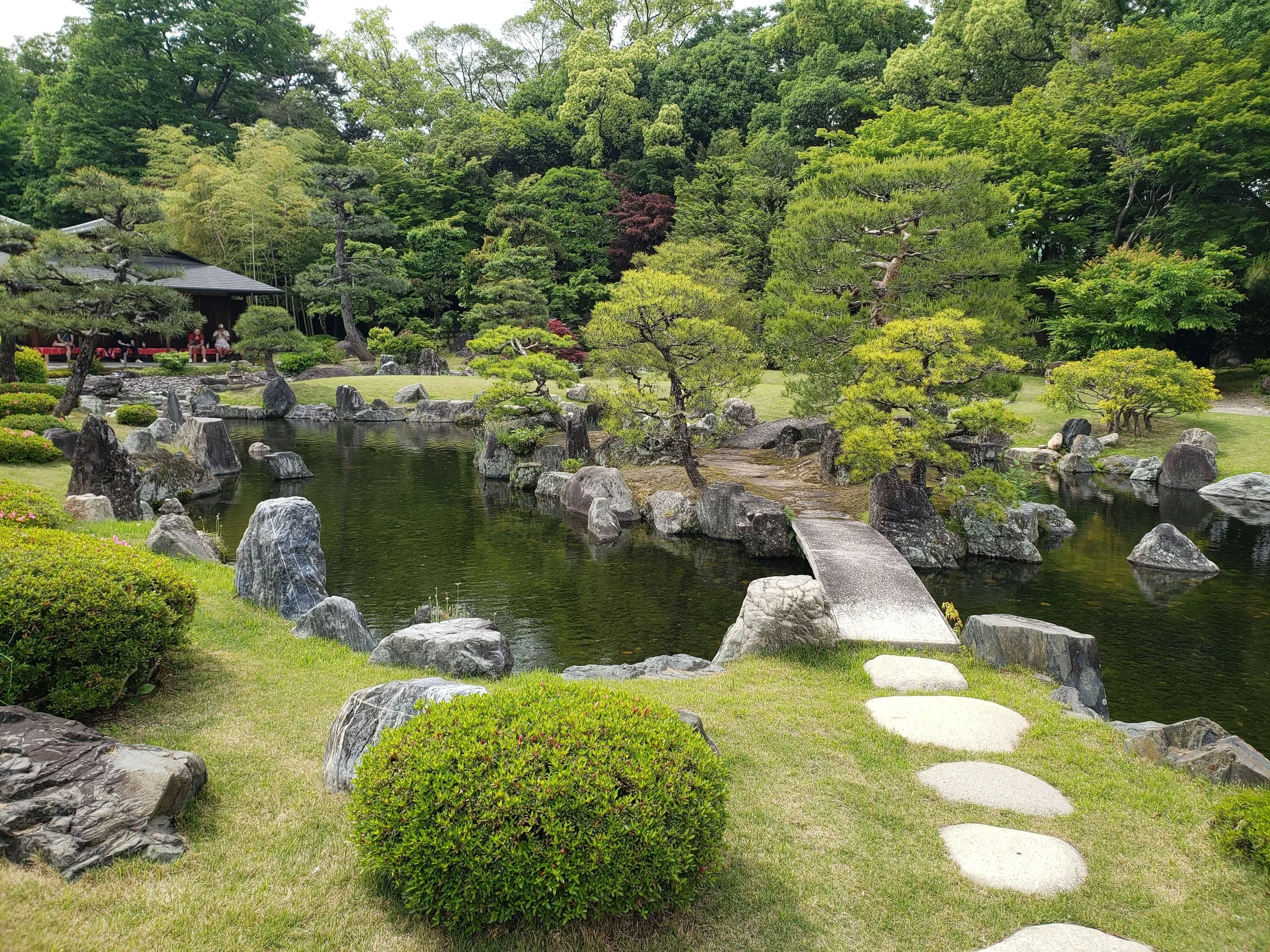
Japanese landscaping goes real hard.
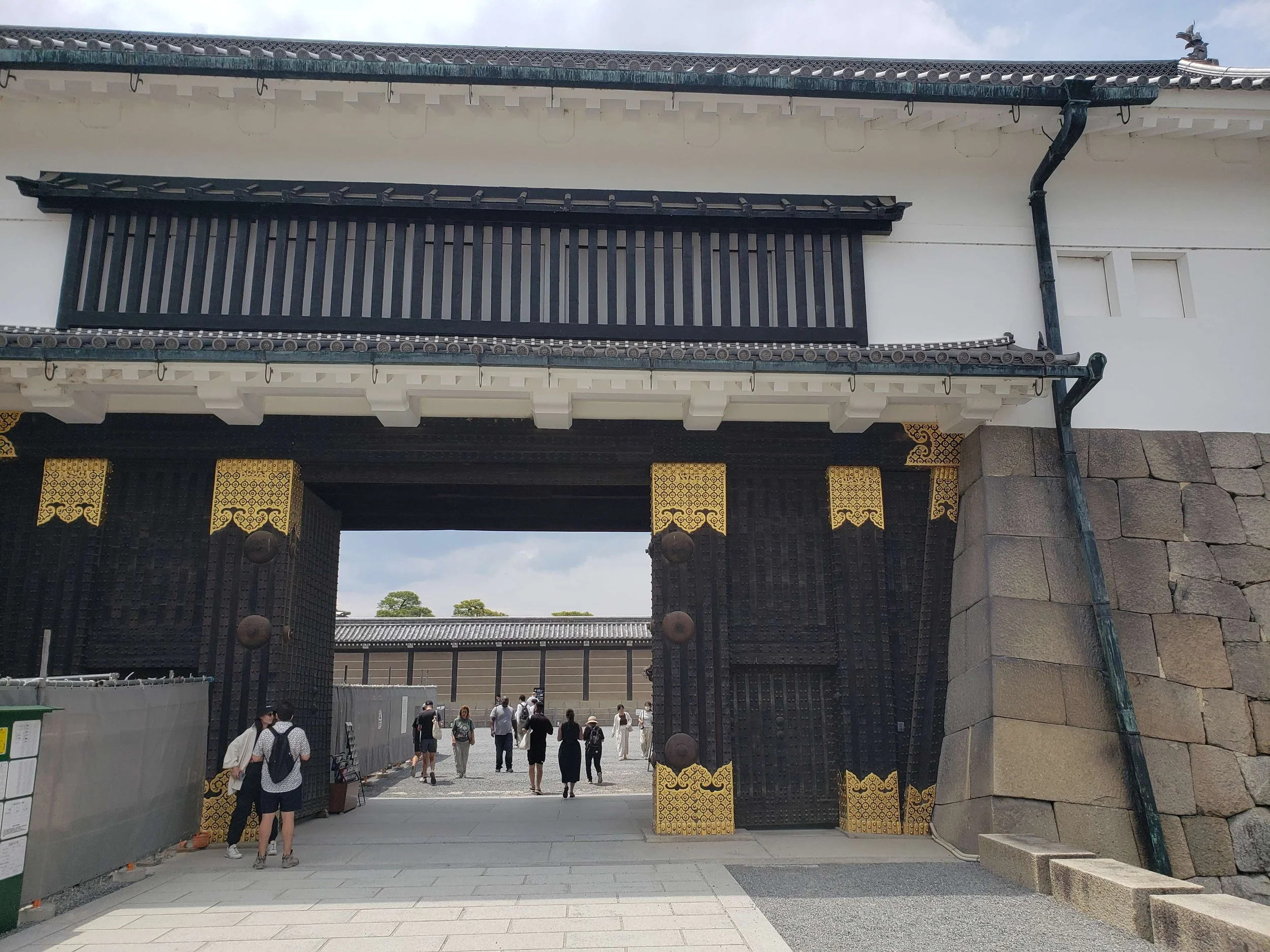
The entrance to the castle grounds.
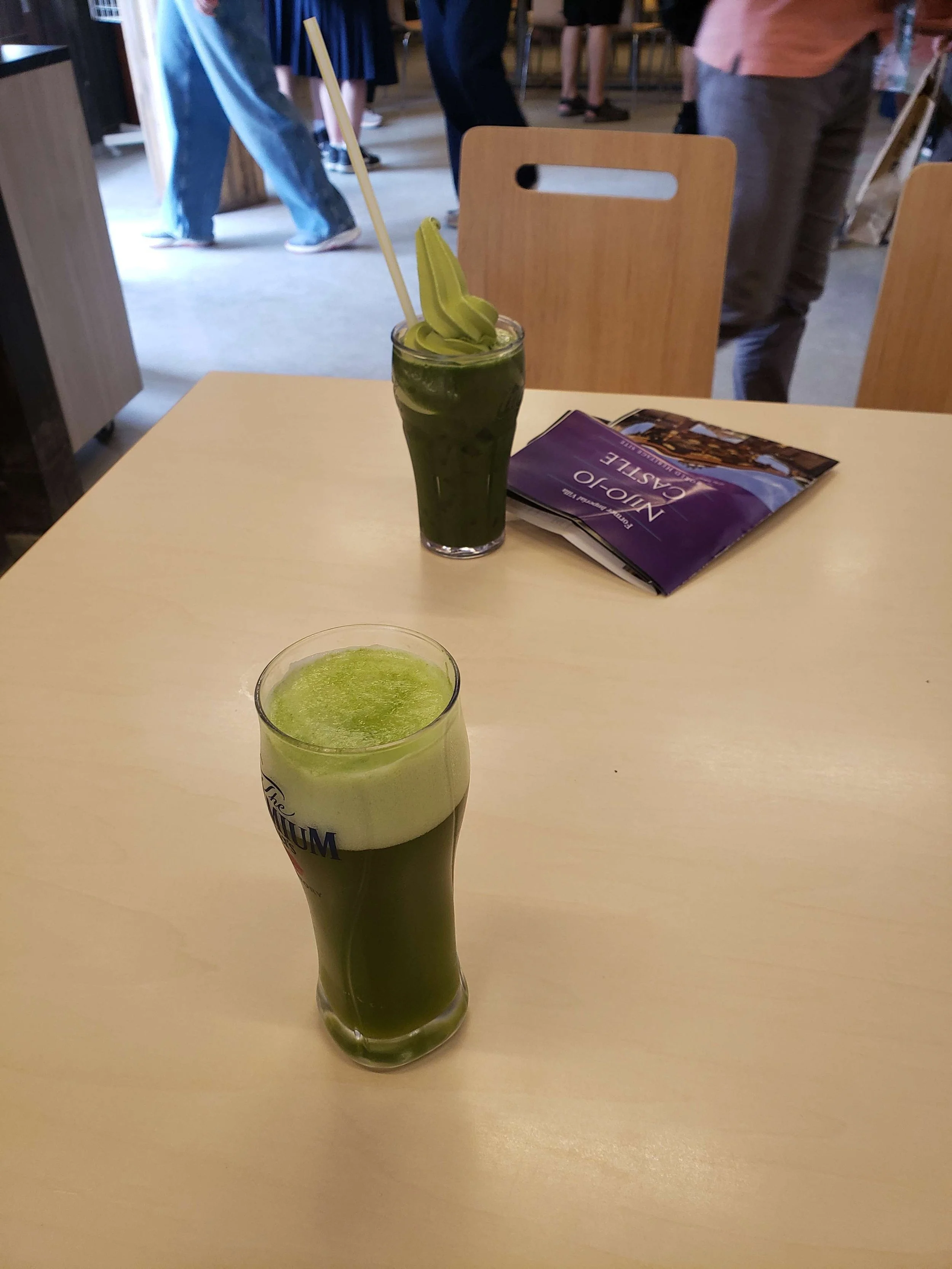
There was a cafe and gift shop where you could get novelty treats like matcha beer and floats. Solid 6/10.
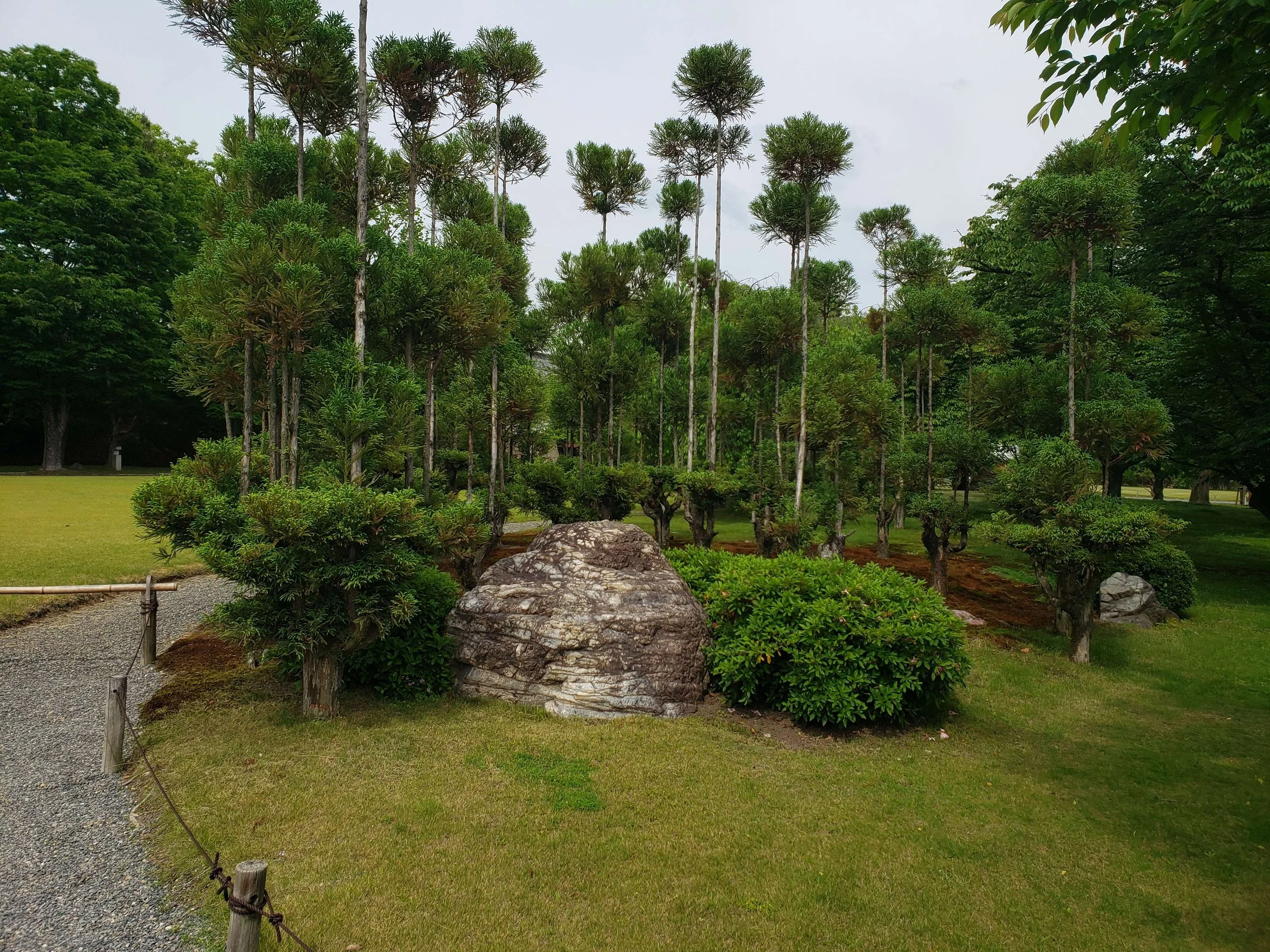
Japan is flush with really nice-looking rocks.
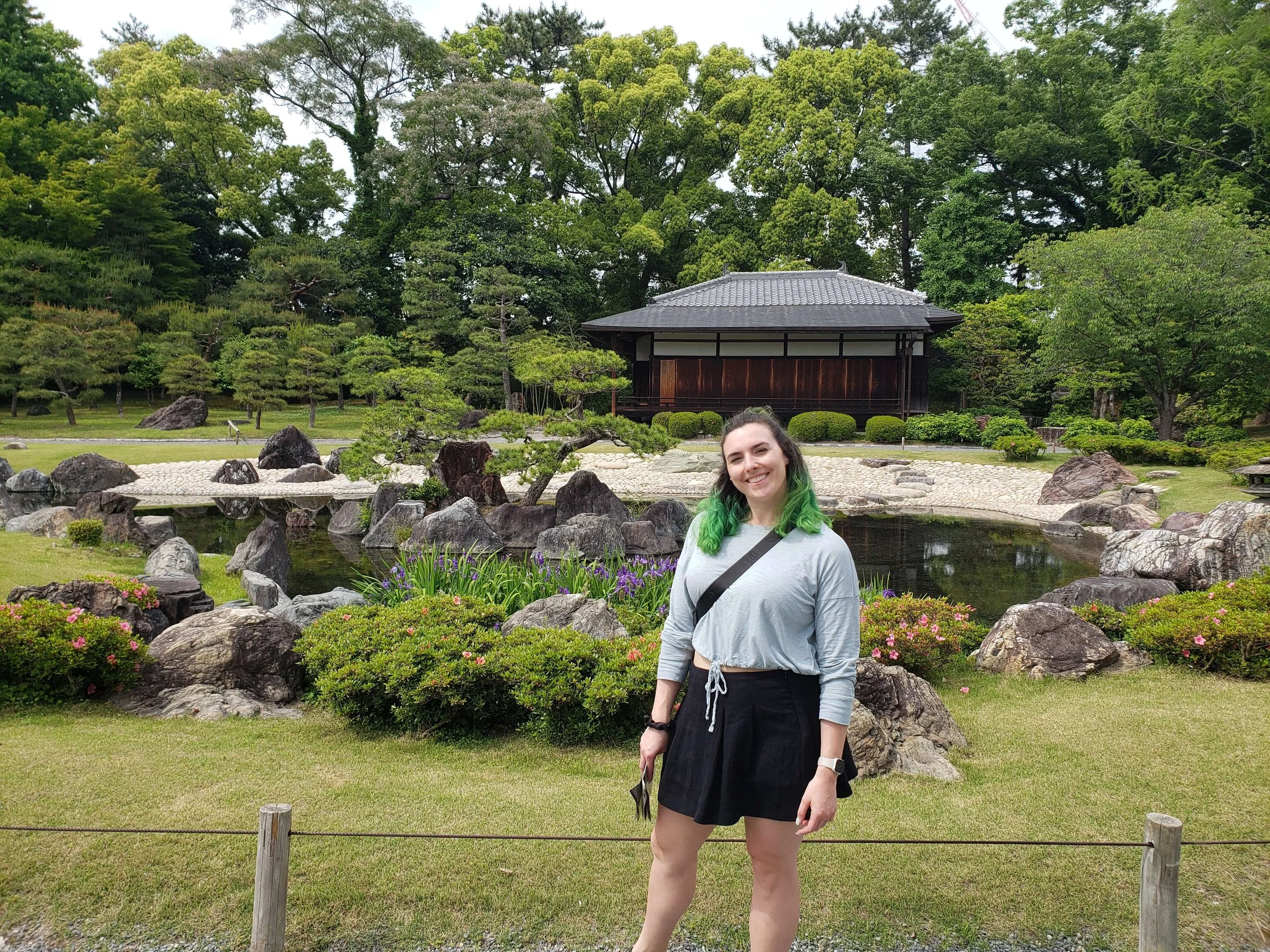
Cheesin’ in front of a building we weren’t allowed to see. I think it was a private tea house.
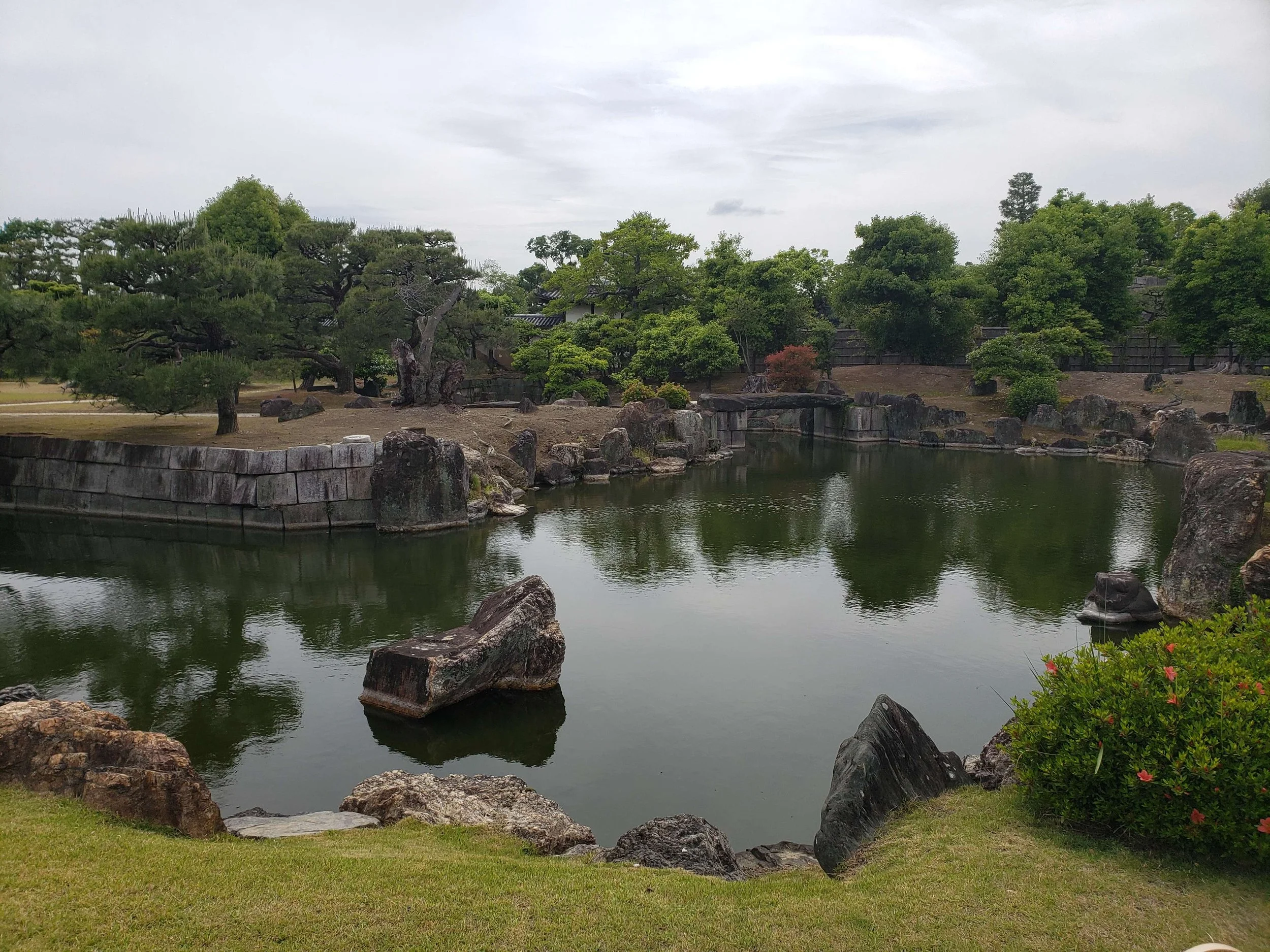
Exactly as peaceful as it looks. I could’ve sat by this pond all day if I didn’t have so many places to be.
Ninomaru Palace
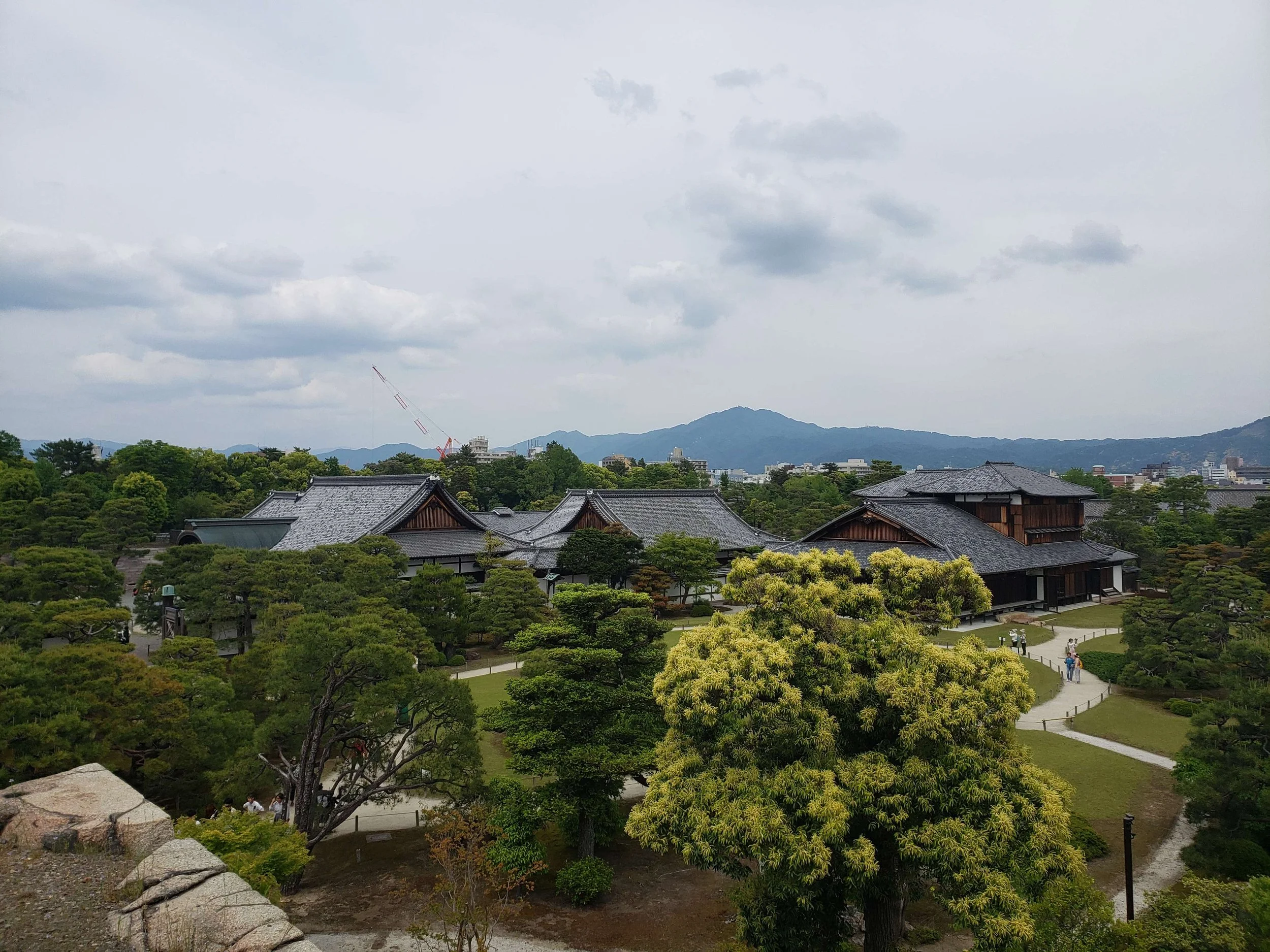
The view from one of the outer fortification walls.
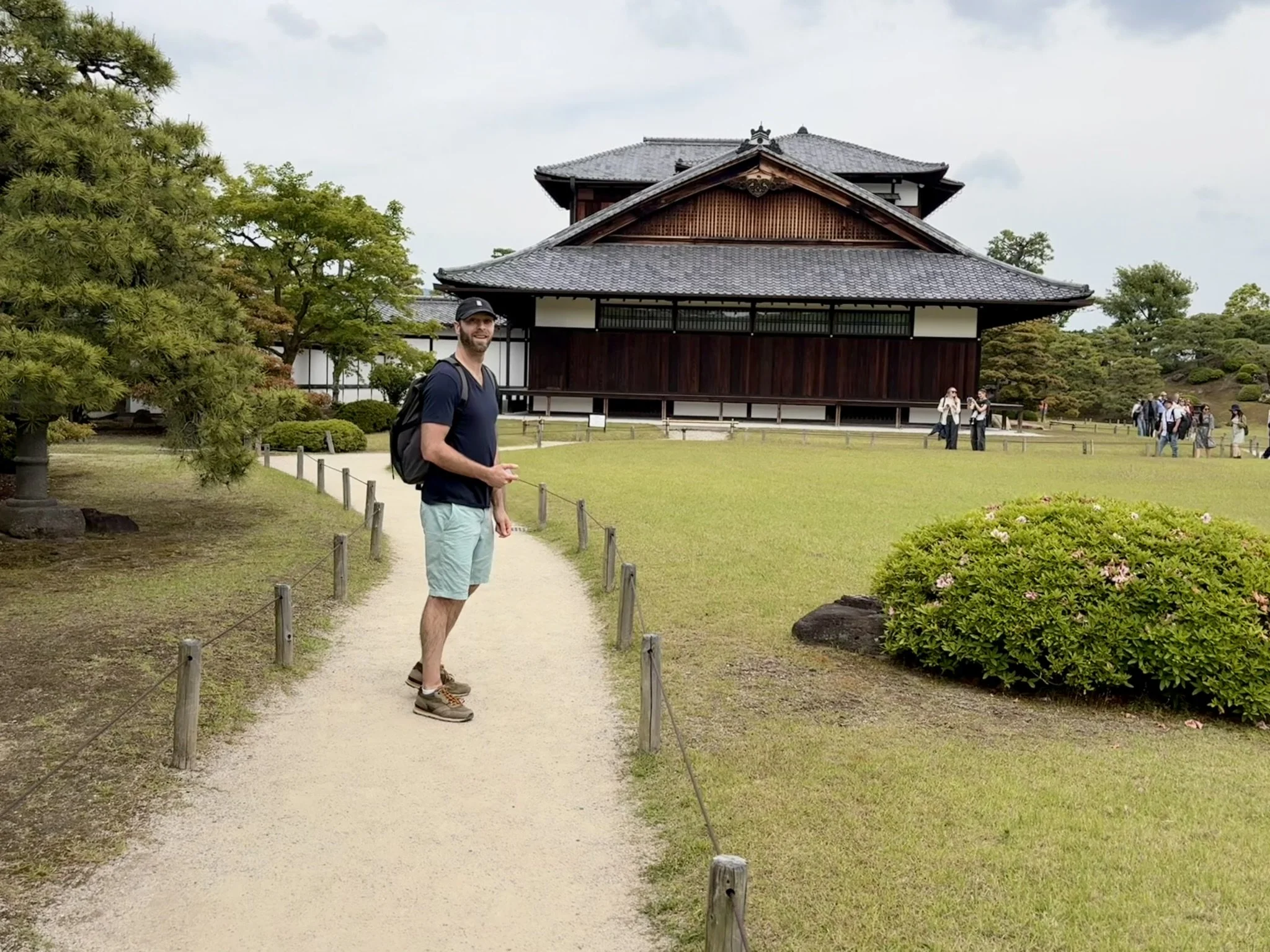
The back garden paths of Ninomaru.
Ninomaru Palace was the residence of the shogun during visits to Kyoto. One of the most notable things about the building are the so-called ‘nightingale floors’ that make a chirping sound when you walk on them. It’s often said the floors were made that way on purpose to guard against ninjas or something like that, but I read on all the guide signs that it’s actually just a consequence of a building flaw that caused the nail clamps to loosen in the wooden floors. Bless up for the contractor that managed to market their mistake as a security measure!
The other interesting thing about Ninomaru is the architectural design of the building. I’ve visited a lot of palaces, actually, and it’s always amusing to me how much space is reserved for receiving guests and housing staff—it’s something we peasants don’t even think about when we build our homes. In most palaces, receiving rooms are separated based on the importance of the guest, but at Ninomaru, they’re all kind of connected together so you can see and feel where you rank in importance based on the place you’re assigned to sit. The decorations in each were also meant to intimidate visitors to varying degrees. Literally the entire building screams, “You’re here at my mercy, and make sure you know your place, trash.” As it turns out, aura farming was sort of a big deal for the shogun.
I’ll be totally honest here and admit I actually didn’t really know how the government worked in the feudal era of Japan until we actually visited, other than knowing there was an emperor but also always a dude called the shogun who was also super important for some reason. So, for those of you who are equally ignorant, I’ll explain:
Feudal Japan
According to Japanese history, the nation was founded by Emperor Jimmu almost 3000 years ago. In modern day it’s agreed upon by scholars that Jimmu himself was actually more of a mythological figure, as were the first emperors following him, but this is roughly around the time when the imperial line of Japan was established. It worked pretty similarly to how monarchies were first established in Europe—tribes of people choose their biggest, toughest guy to guide them through some kind of crisis, and in return that guy decided to turn that power into an institution he could control.
If I had to guess, the reason Japan diverged from the model of absolute monarchy we know from Western history is because the religious counterpart to the emperor’s divine power (Shinto) wasn’t so aggressively militaristic as Christianity (you know, where Western monarchs had this habit of going, “God chose me to rule and to lead troops against our enemies, and if you’re not on board with that I’ll call the pope and he’ll send some knights to burn you at the stake, you godless, crown-hating heretic.”). In any case, diminishing imperial power created an opening for Japan’s most powerful military leaders to fill that void, and in 1192 Minamoto no Yoritomo seized control and established the first shogunate.
This transformed to a feudal military dictatorship—one that would persist until the Meiji Restoration in 1868. The imperial family remained in the picture as a theocratic, symbolic institution, but power of governance during this period was largely in the shogun’s hands.
And that’s a rough overview of feudal Japan. The more you know. ⭐
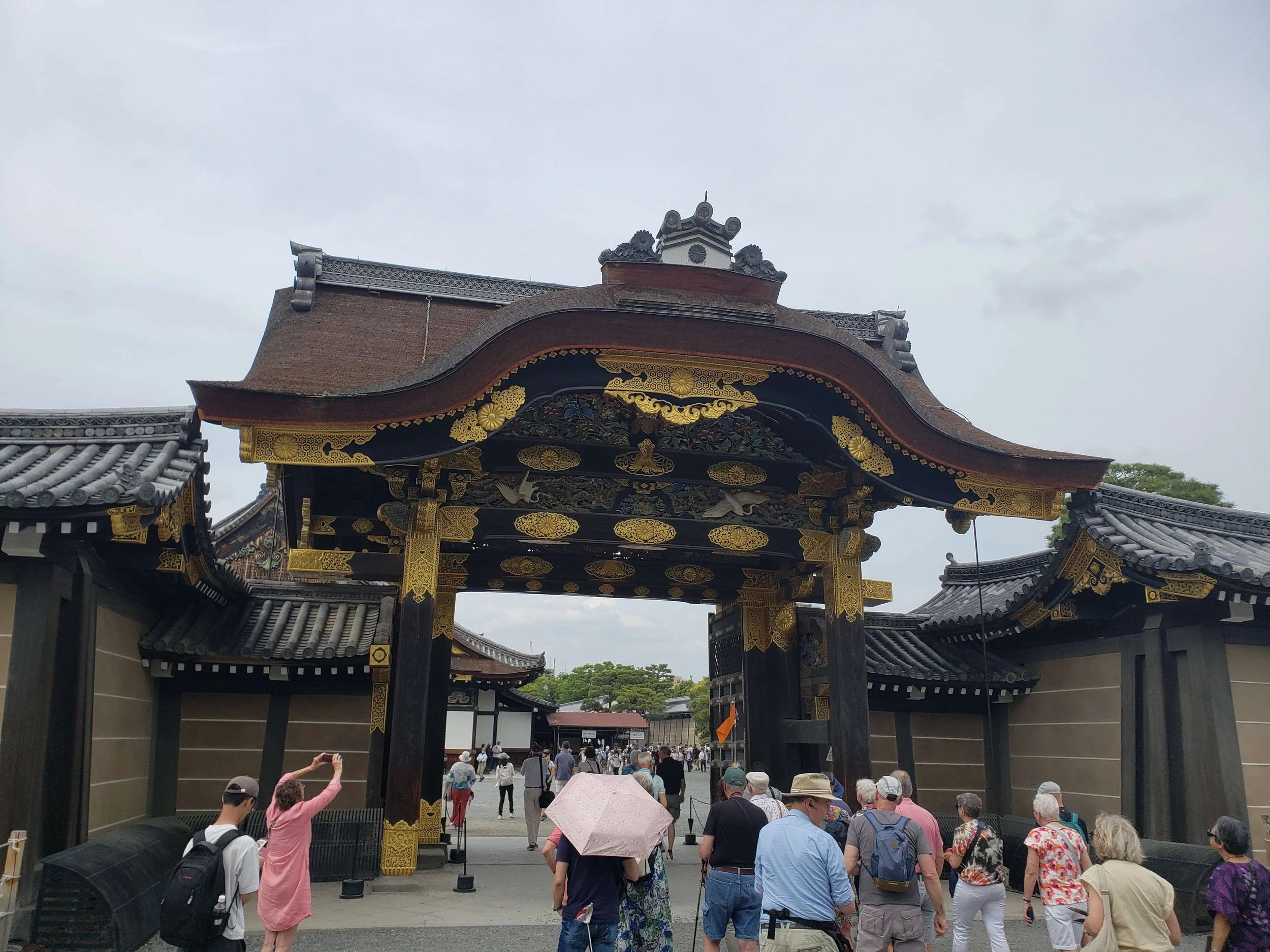
The famous Kara-mon gate.
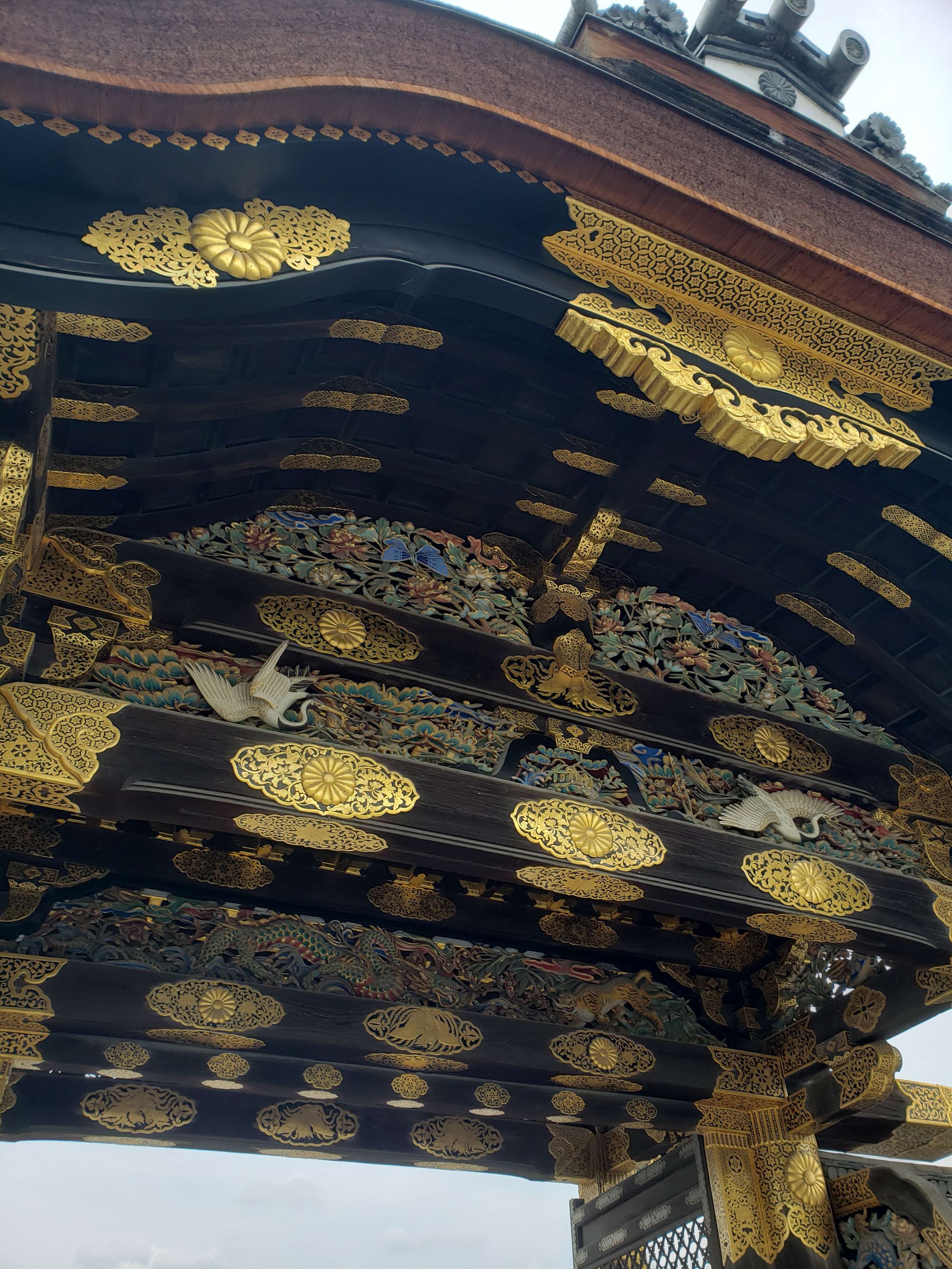
A close-up of the cranes, plums, and pine ornamenting the gate.
Honmaru Palace
After wandering around the grounds for a bit, it was finally time for us to see the Honmaru Palace! I figured out pretty quickly why we needed reservations to visit—the Japanese government has put a LOT of time and money into preserving the space, and only allowing small groups of 10-20 visitors at a time allows them to supervise the visits. It goes without saying we had to take our shoes off to enter (this is Japan, after all), but they also had markings taped on the tatami mat floors to indicate places we should step or not step. They also had sensors in every single room to measure temperature/humidity, sound, light, and vibrations.
Ninomaru was the residence of the shogun, but Honmaru a villa was for the emperor and the imperial family. The interiors are absolutely beautiful, with floor-to-ceiling gilded panels just about everywhere you look—just like with Honmaru, I couldn’t take pictures, so do yourself a favor and look up the interiors. It’s a really cool place.
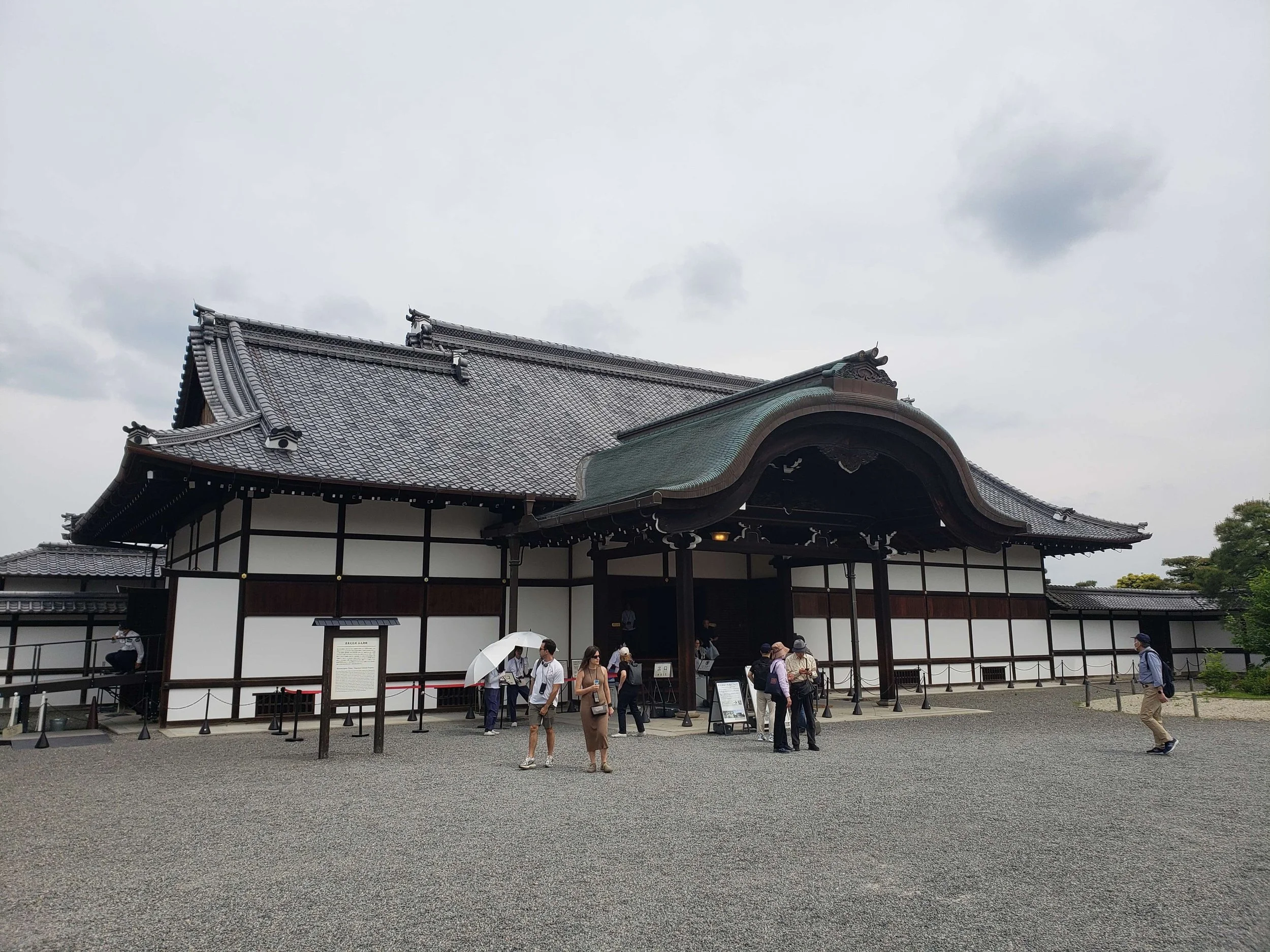
The entrance to Homnaru.
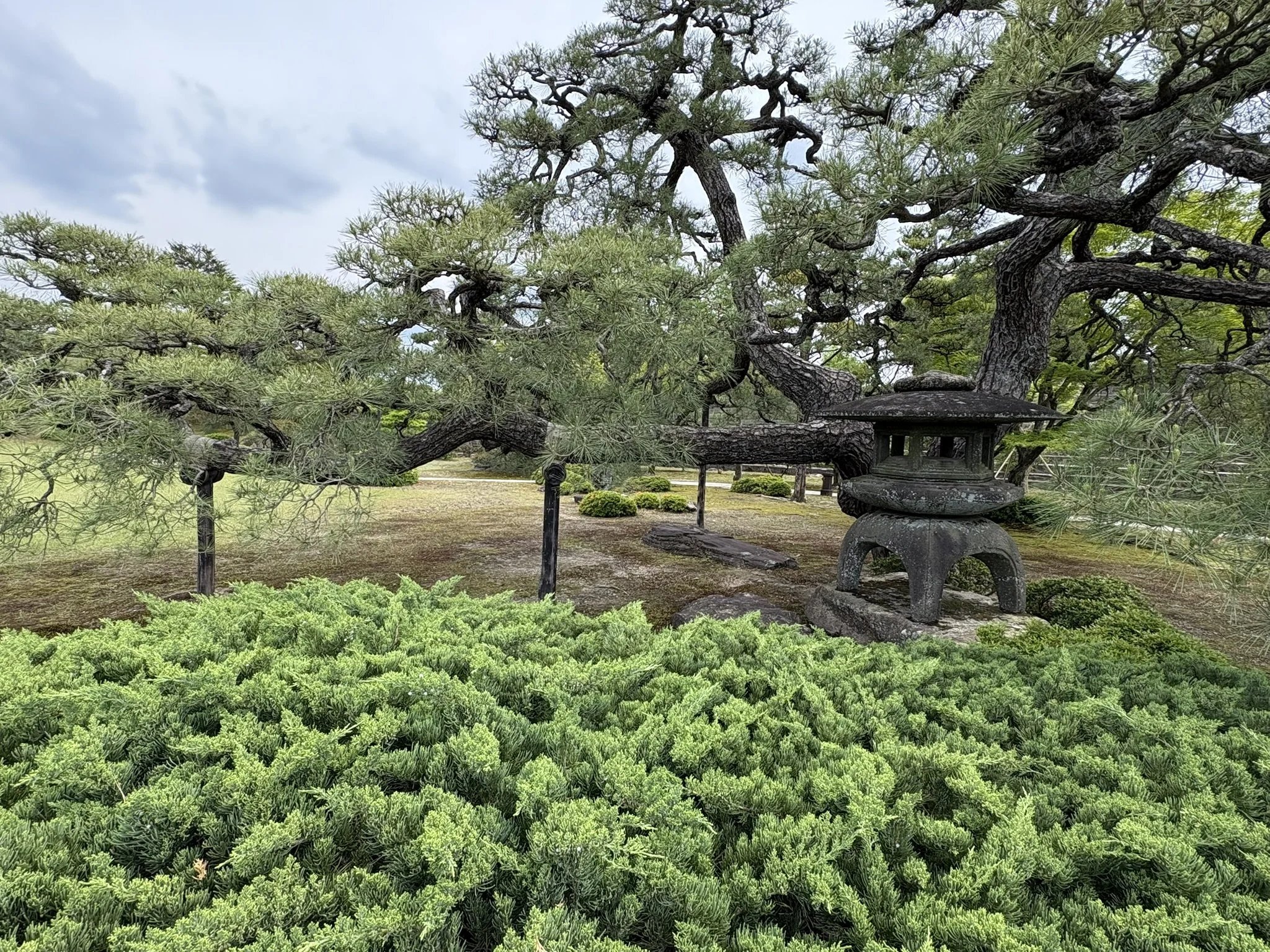
I loved the little crutches placed to help the tree grow in this horizontal shape.
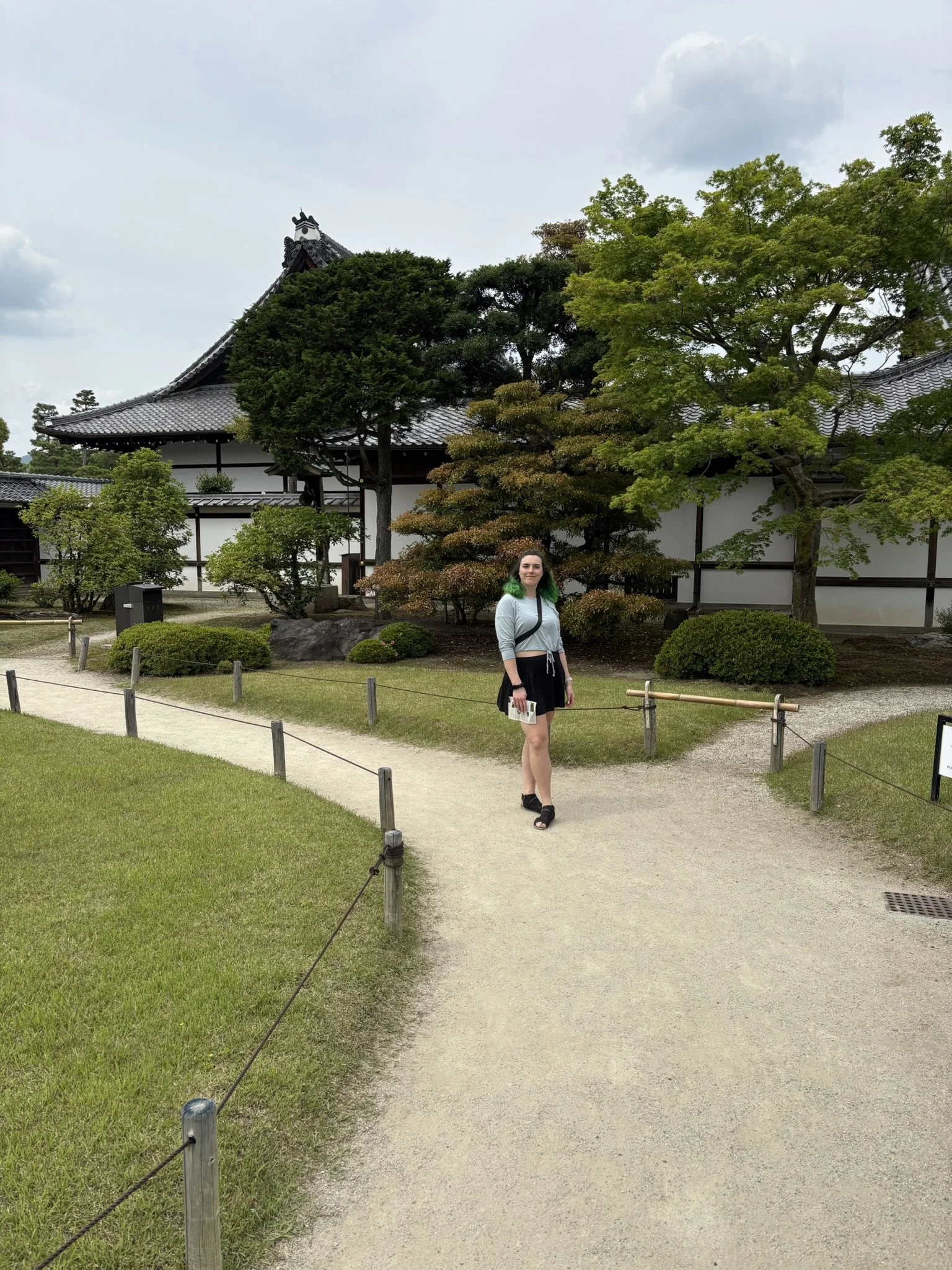
The paths behind Honmaru.
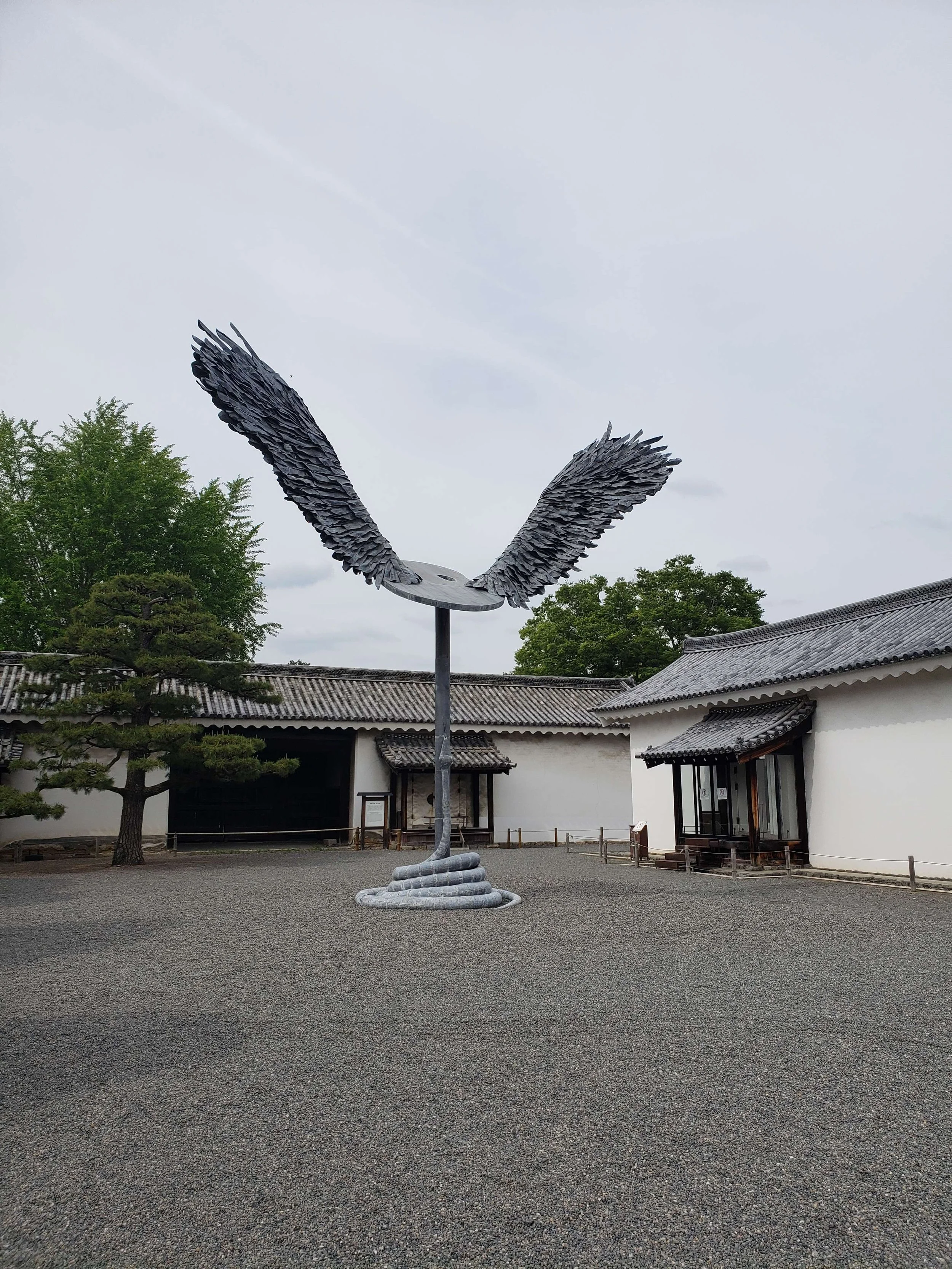
A Surprise Art Exhibit by Anselm Kiefer
When we first entered Nijo Castle, I noticed some advertisements for a special art exhibition for Anselm Kiefer, a famous contemporary painter and sculptor from Germany. I actually learned about him in art school, so of course we had to go check out his works!
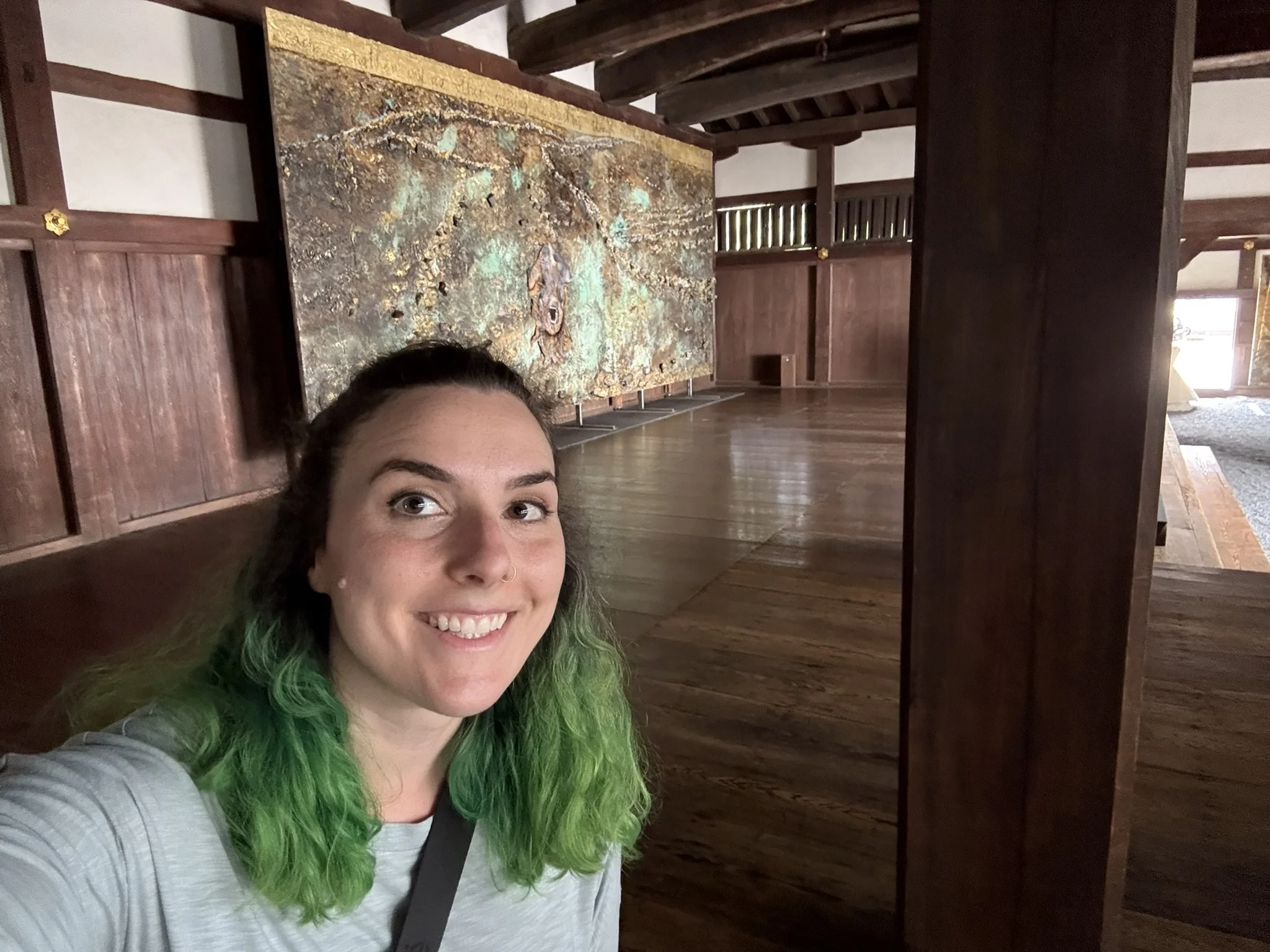
A really cool location for an art exhibit.
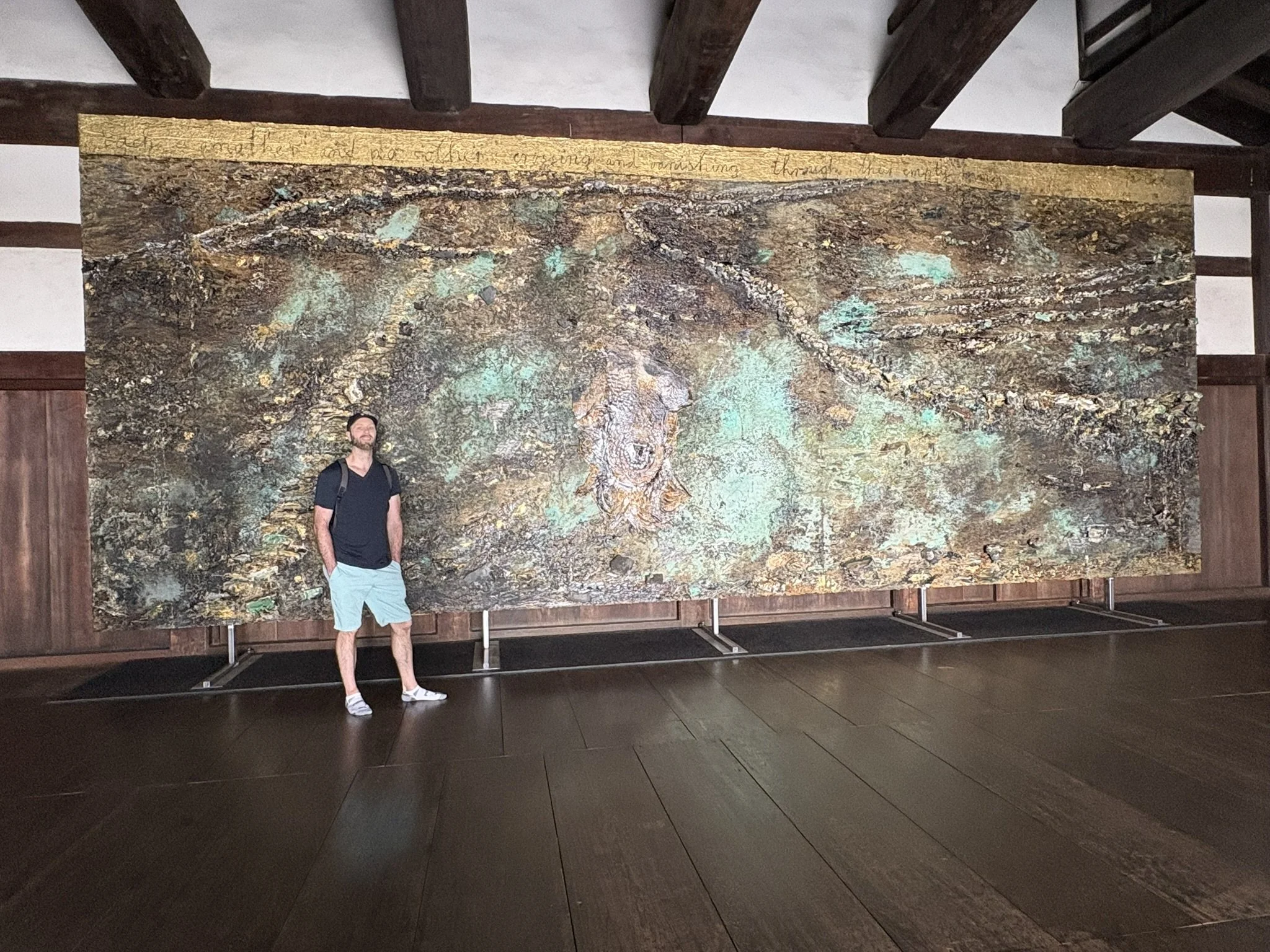
Jeff for scale.
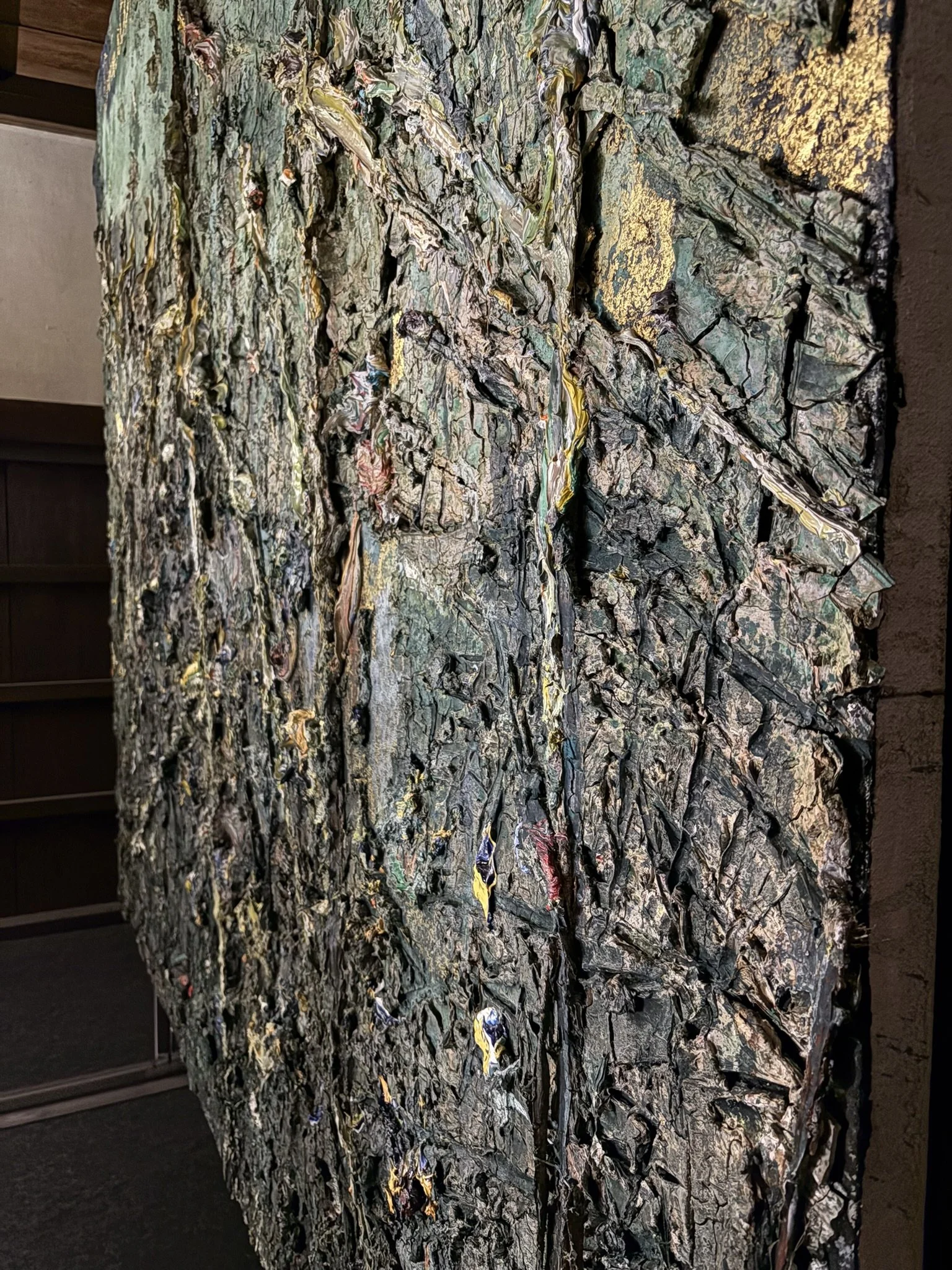
A close-up of one of the canvases. Fabulous texture.
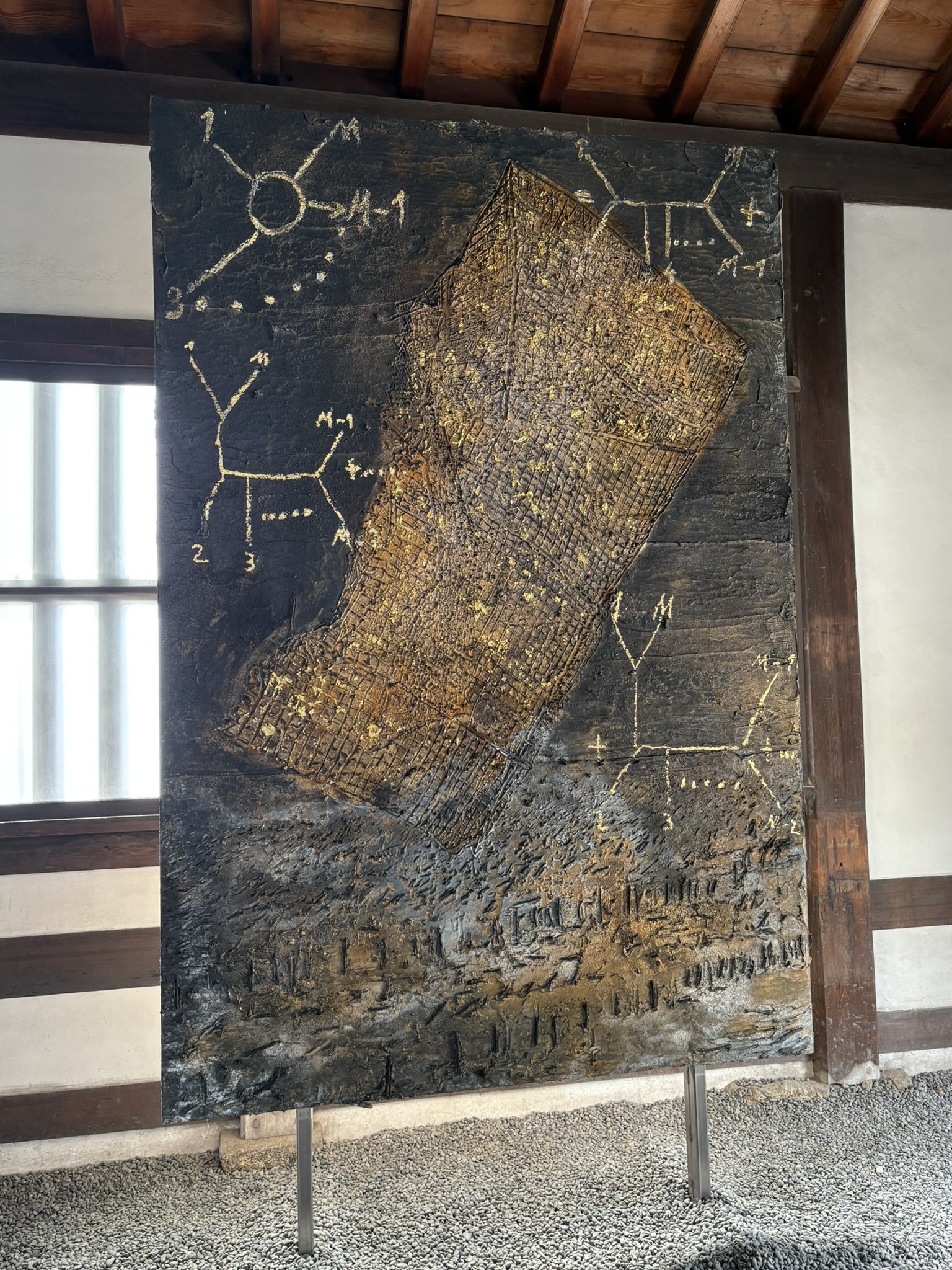
Art pieces for chemistry enthusiasts.
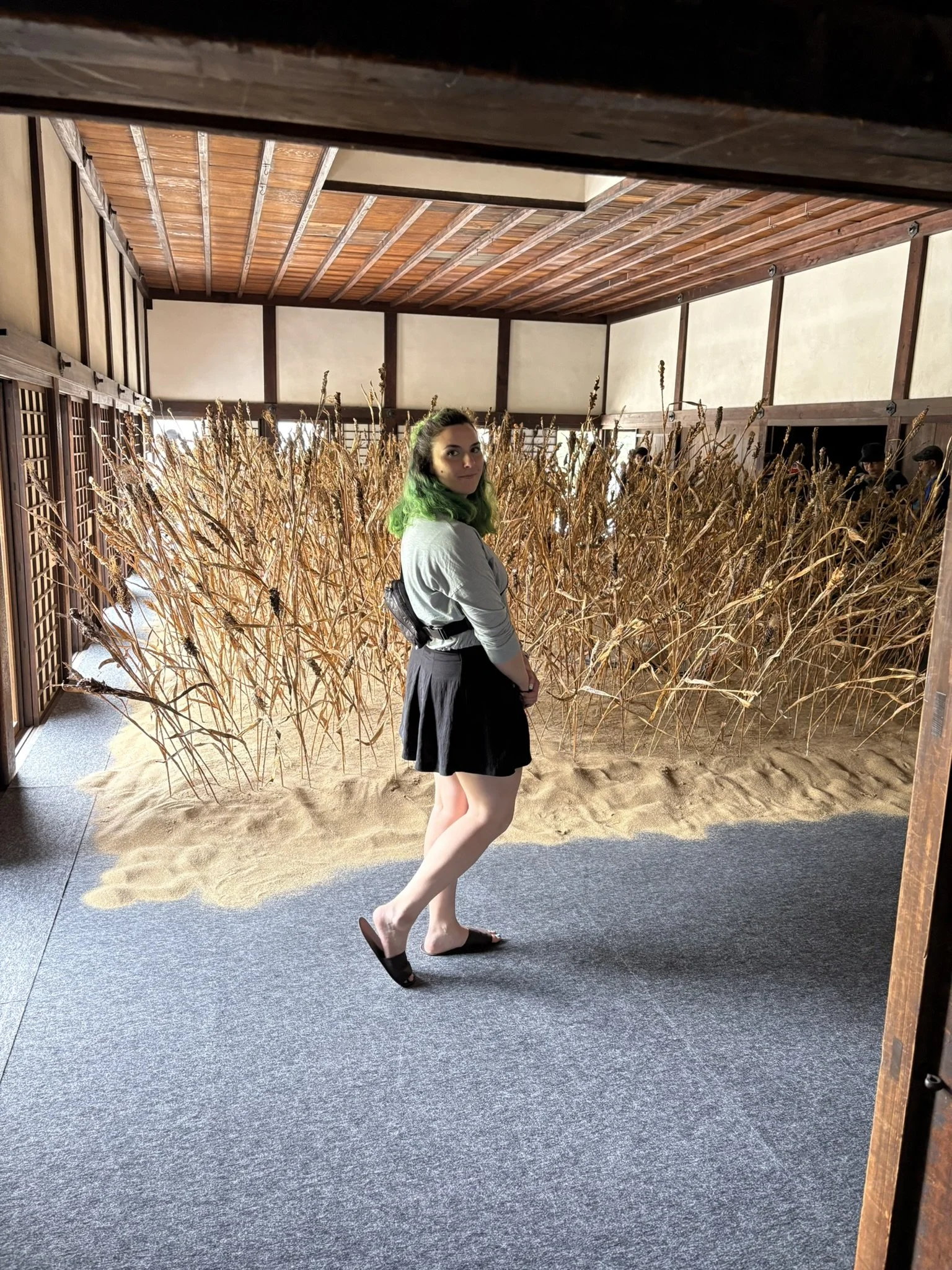
I loved this installation.
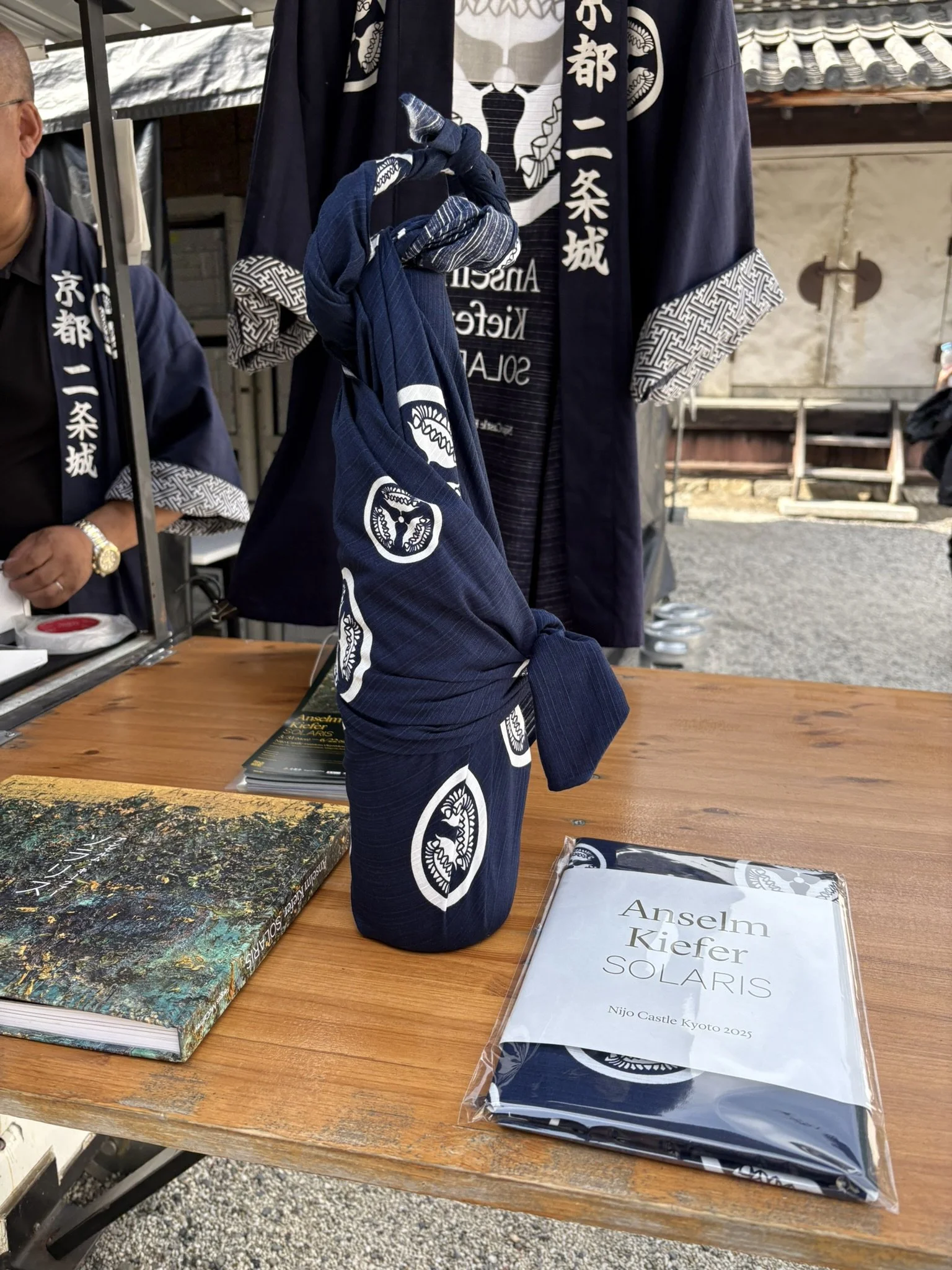
These are called furoshiki - traditional carrying cloths.
After checking out the art exhibit, it was finally time to head to our next locale: Osaka.