Locale Two: Izu
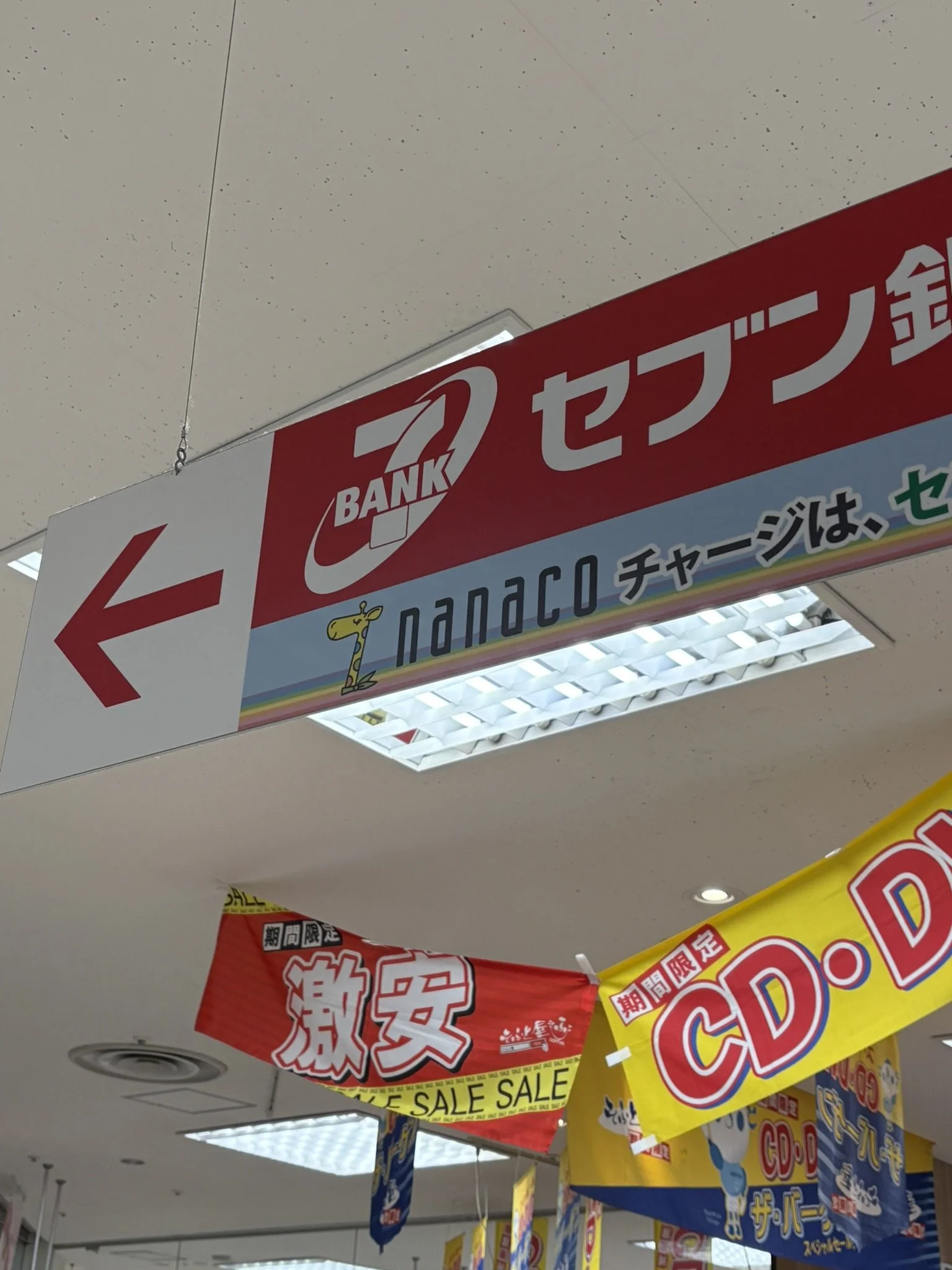
This is not your American 7/11.
Day 3: A Traditional Japanese Ryokan
May 11
Steps walked: 13, 776 (the lowest of our trip!)
Flights of stairs climbed: 6
This was one of my favorite days of the entire trip, by the way.
We woke up early on Sunday with plenty of time to kill before our planned 12:30PM train to the Izu Peninsula west of Tokyo.
This time, we did eat hotel breakfast (didn’t take any pictures of it, though, whoops). I noticed a lot of hotel chains offer both a Japanese and Western-style breakfast, which is nice for when you want to eat grilled mackerel, potato salad, and croissants all at the same time.
A traditional Japanese breakfast is savory and usually includes rice, a protein like fish, pickles, seaweed, miso soup, and a few other nutritious side dishes like nattō (fermented soybeans). Nattō is one of those foods that tends to be considered an acquired taste for Westerners due to the texture, smell, and strong flavor, but I really liked it (if you like stinky cheeses I promise you’ll probably like nattō). I did find it hard to eat because of the stickiness, and eventually gave up on using chopsticks and just spooned those little beans in.
After breakfast, we decided to check out the local Ito-Yokado, which is a supermarket/department store kind of similar to a full size Meijer. It’s actually owned by the same parent company that owns 7/11. It was hard enough for me to accept 7/11 having edible hot food, so we had a really hard time wrapping our heads around the idea that it is also a bank and department store chain in Japan. Seriously, if we had to use an ATM, we would go to a 7/11.
We took a nice leisurely route to get to the store, which presented some opportunities to pass some hilarious sights and signs:
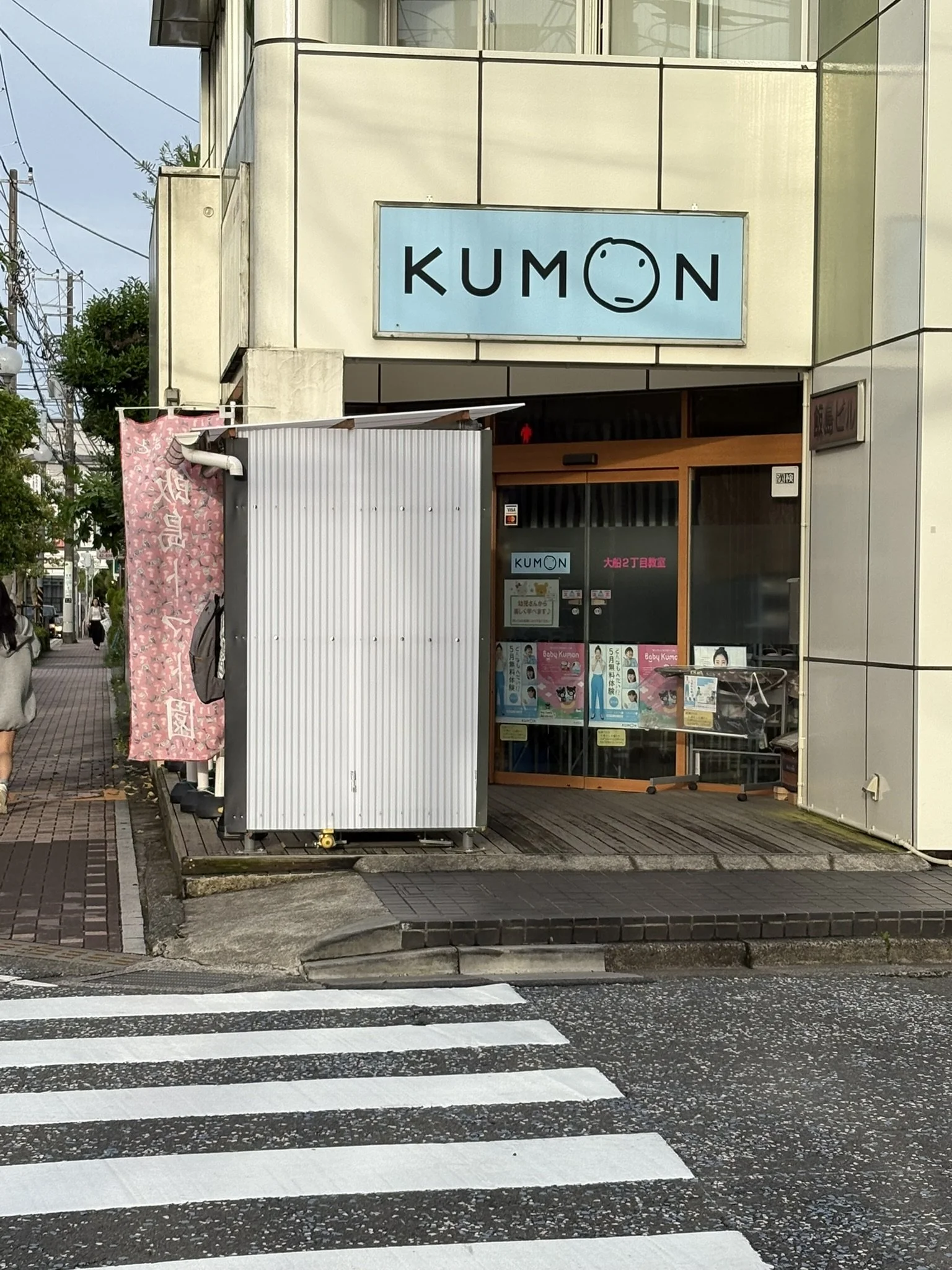
Spotted in the wild: Kumon math. Apparently it originally comes from Japan. One of my all-time favorite logos for how effectively it advertises that it’s not supposed to be fun.
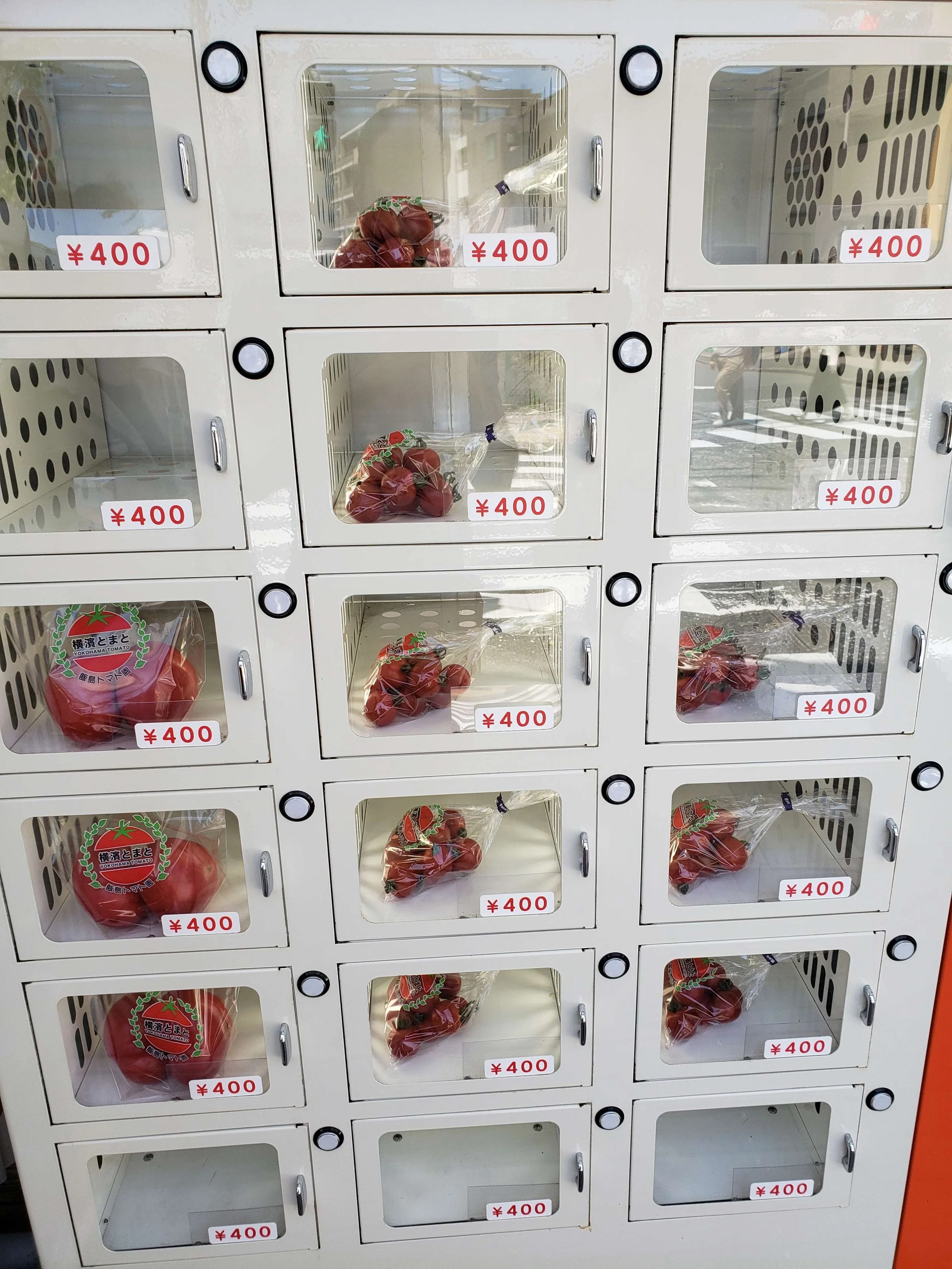
A vending machine full of fresh produce. They really do have vending machines for everything in Japan.
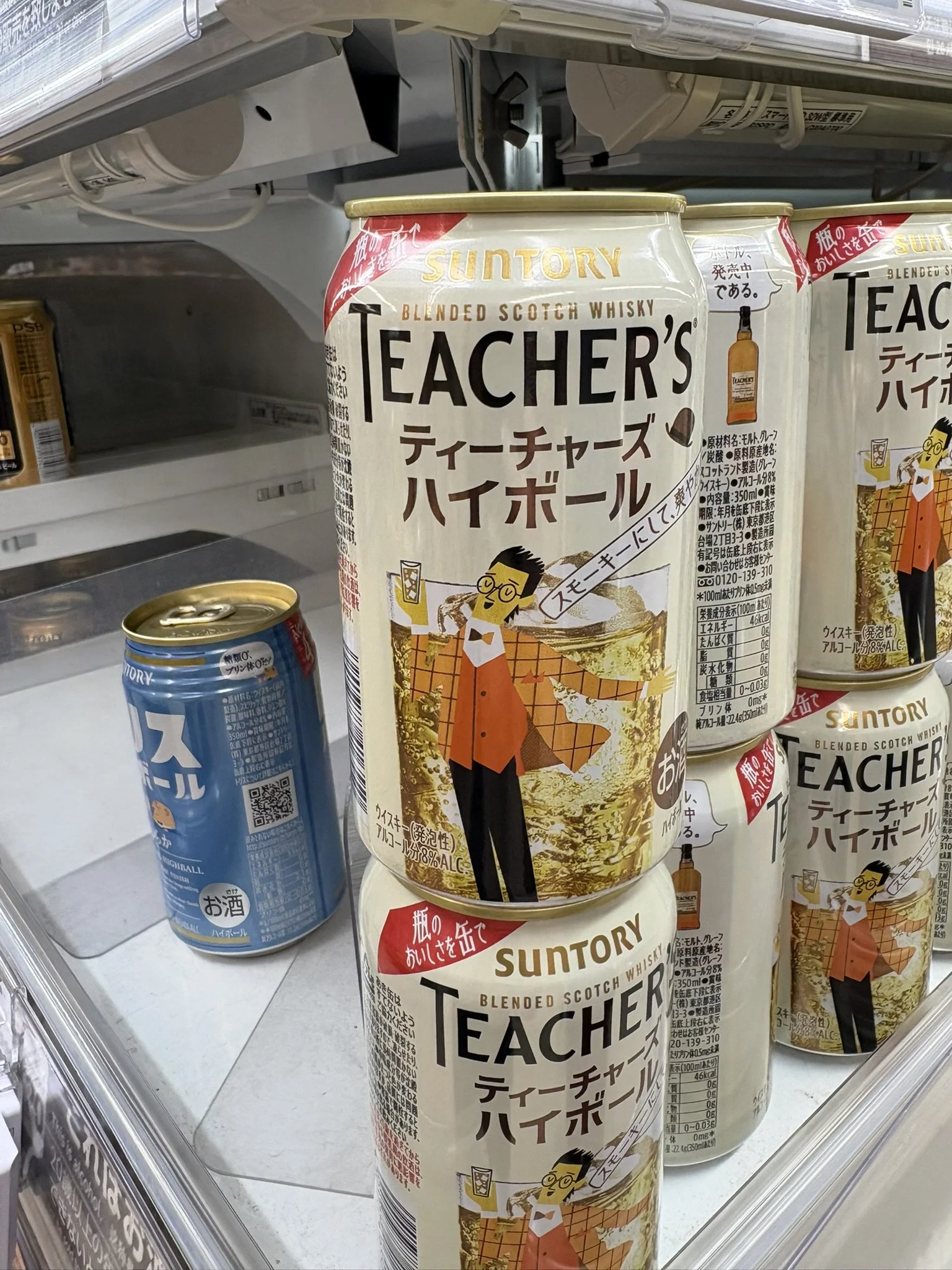
Presented without further comment.
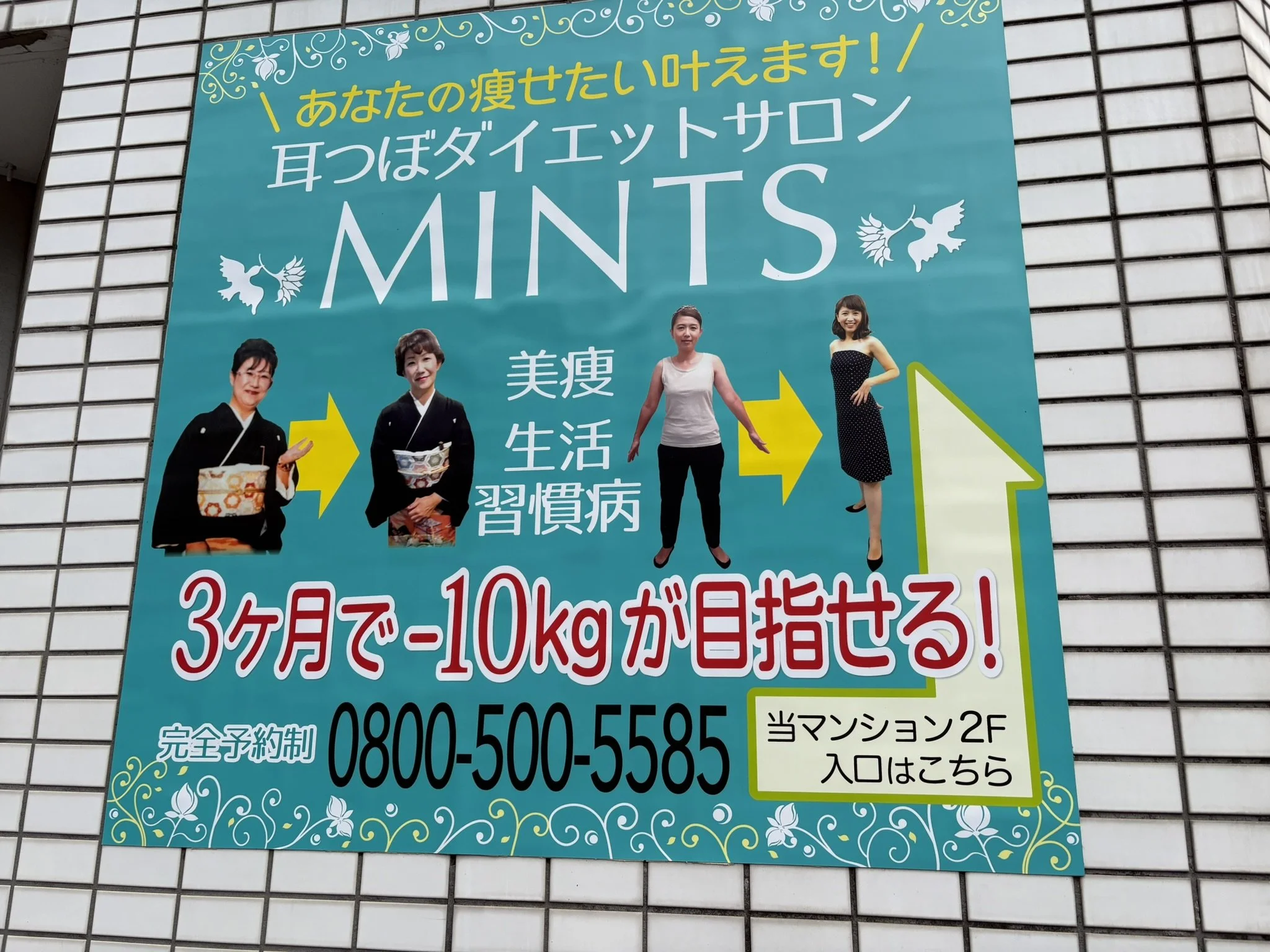
A weight loss clinic where the ‘before’ pictures look like the ‘after’ pictures in American ads. This took me OUT lol.
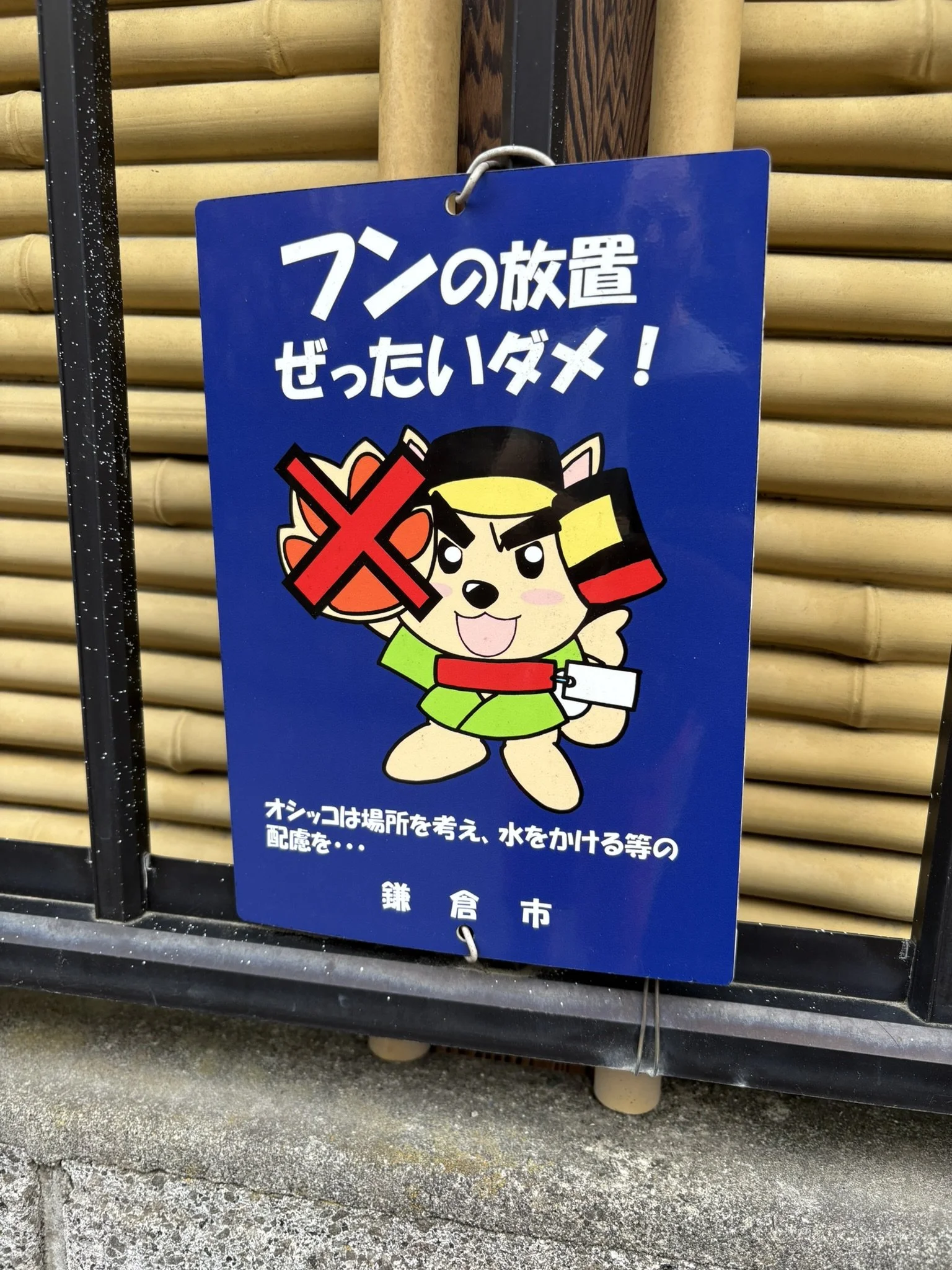
This sign, which was on a fence right next to an elementary school, basically translates to, “C’mon man, don’t pee against this fence.”
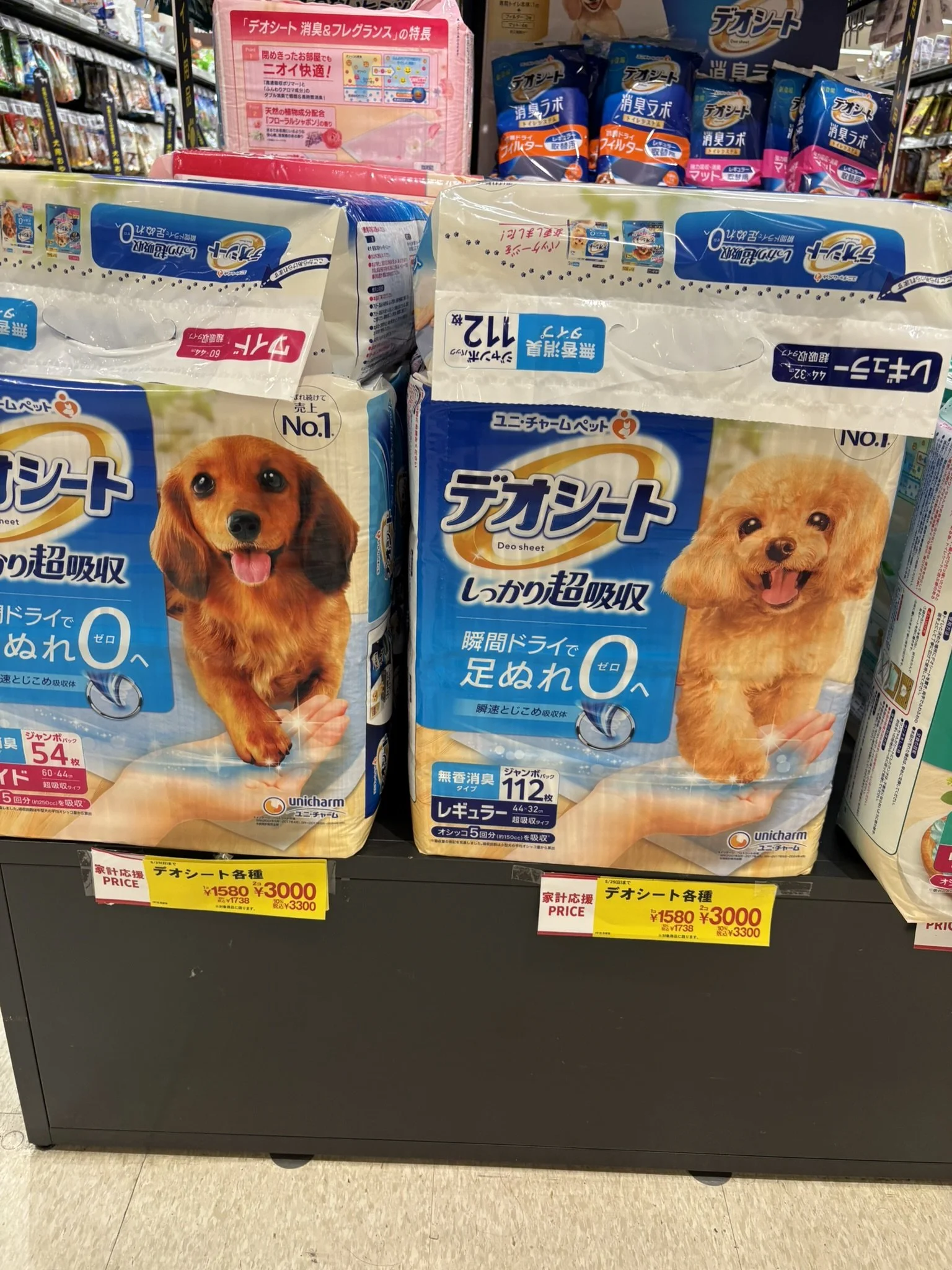
Another thing that took me out: the aggressive photoshopping of dogs’ eyes in advertising.
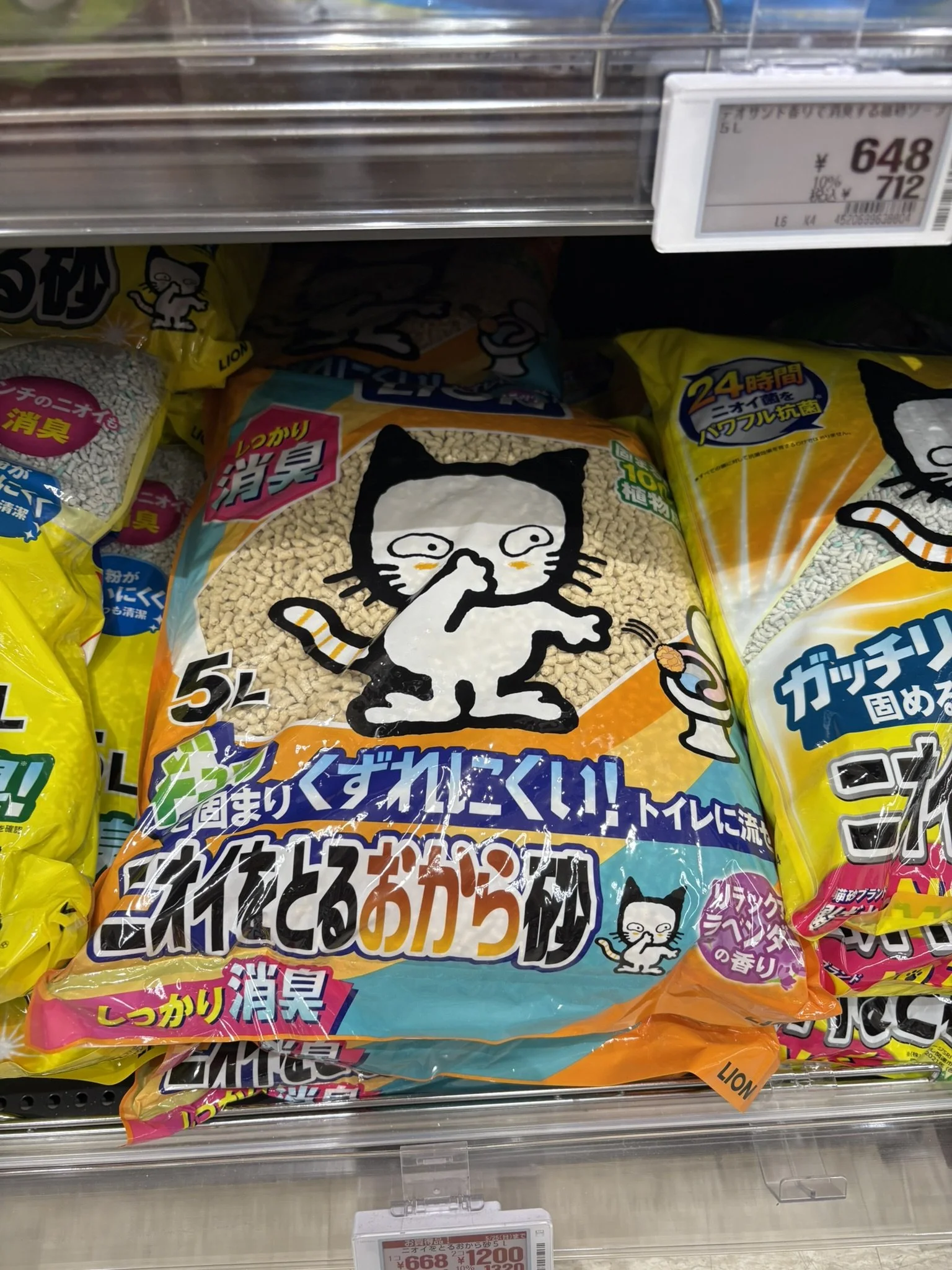
I’m just obsessed with Japanese product design in general. A lot of these pictures are of products and ads, and you all just have to deal with it.
A Quick Bite at the Tea House
Before we headed out of town, we hopped on a local train and stopped by a Tea House for snacks and sweets. We ordered dango (dumplings), which are made of glutinous rice and covered in a sweet soy sauce glaze (or other toppings, like red bean paste). Since it was a hot day, we also ordered a little red bean and berry sorbet dessert. Then, like absolute goobers, we decided to walk back to the main train station in the 85F° sunny heat, so we were good and sweaty by the time we headed out of town.
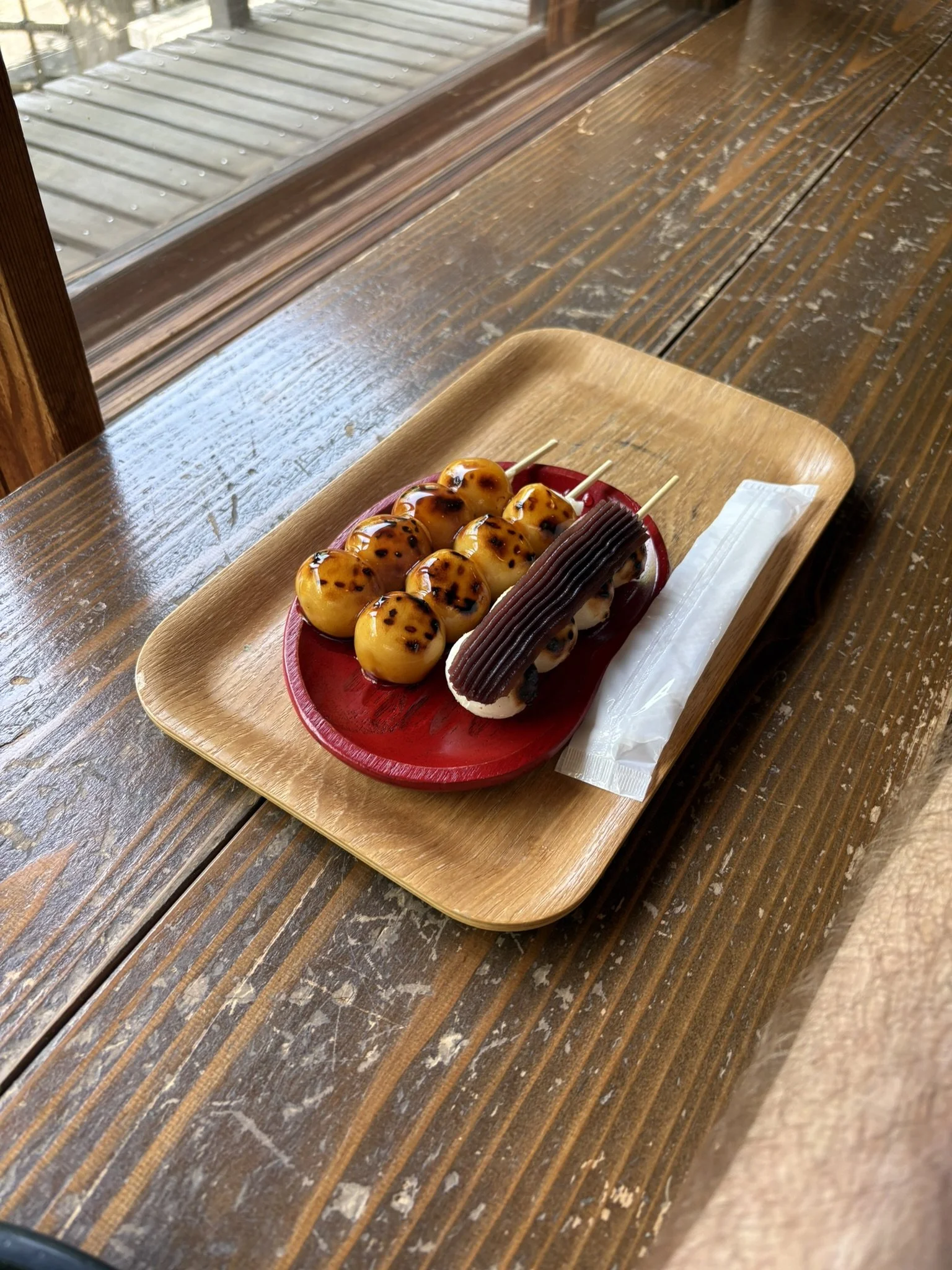
Dango with soy sauce glaze and red bean
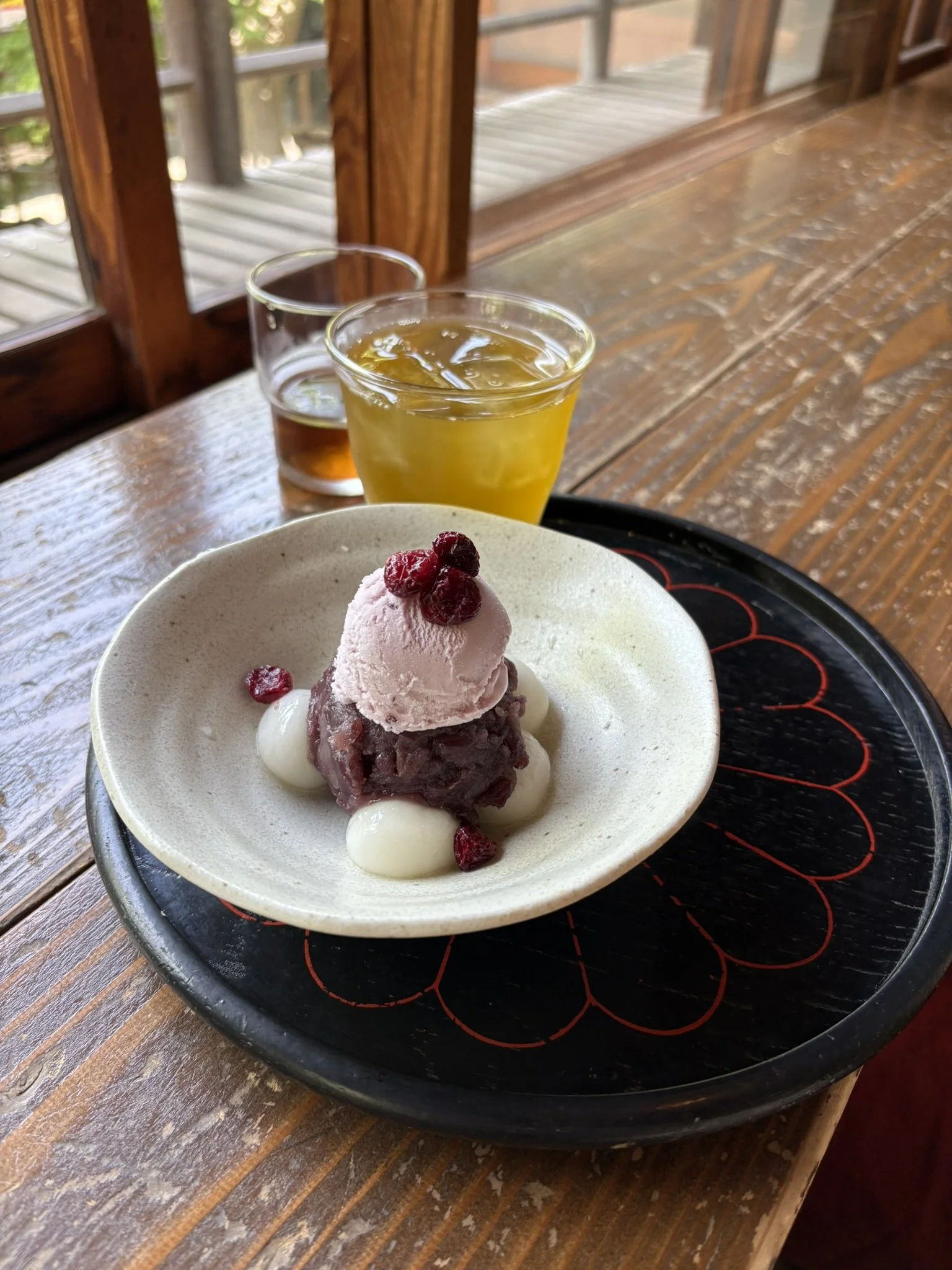
Berry sorbet, red bean sorbet, and glutinous rice
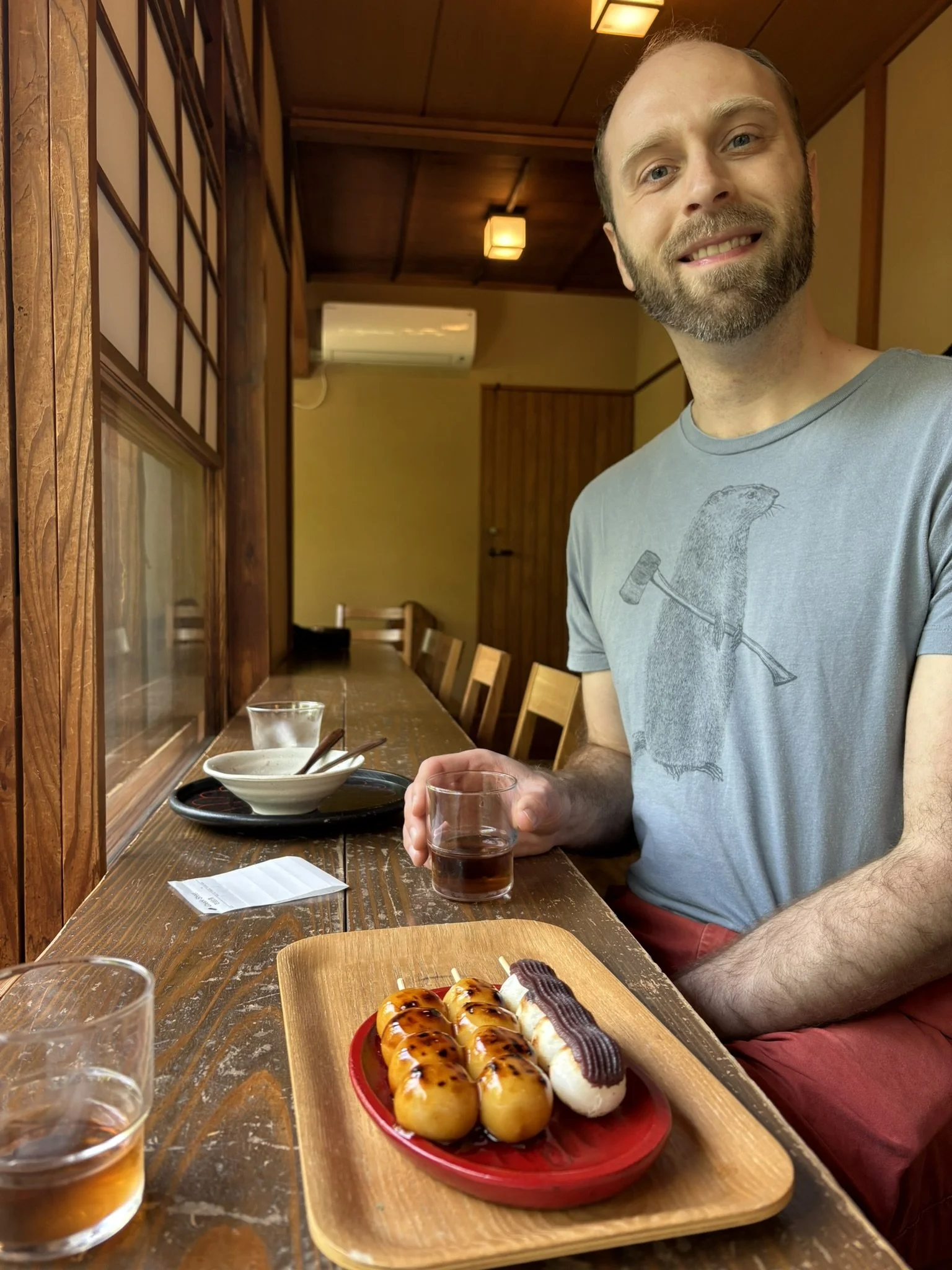
Jeff picked out this place for us. Good job, Jeff!!
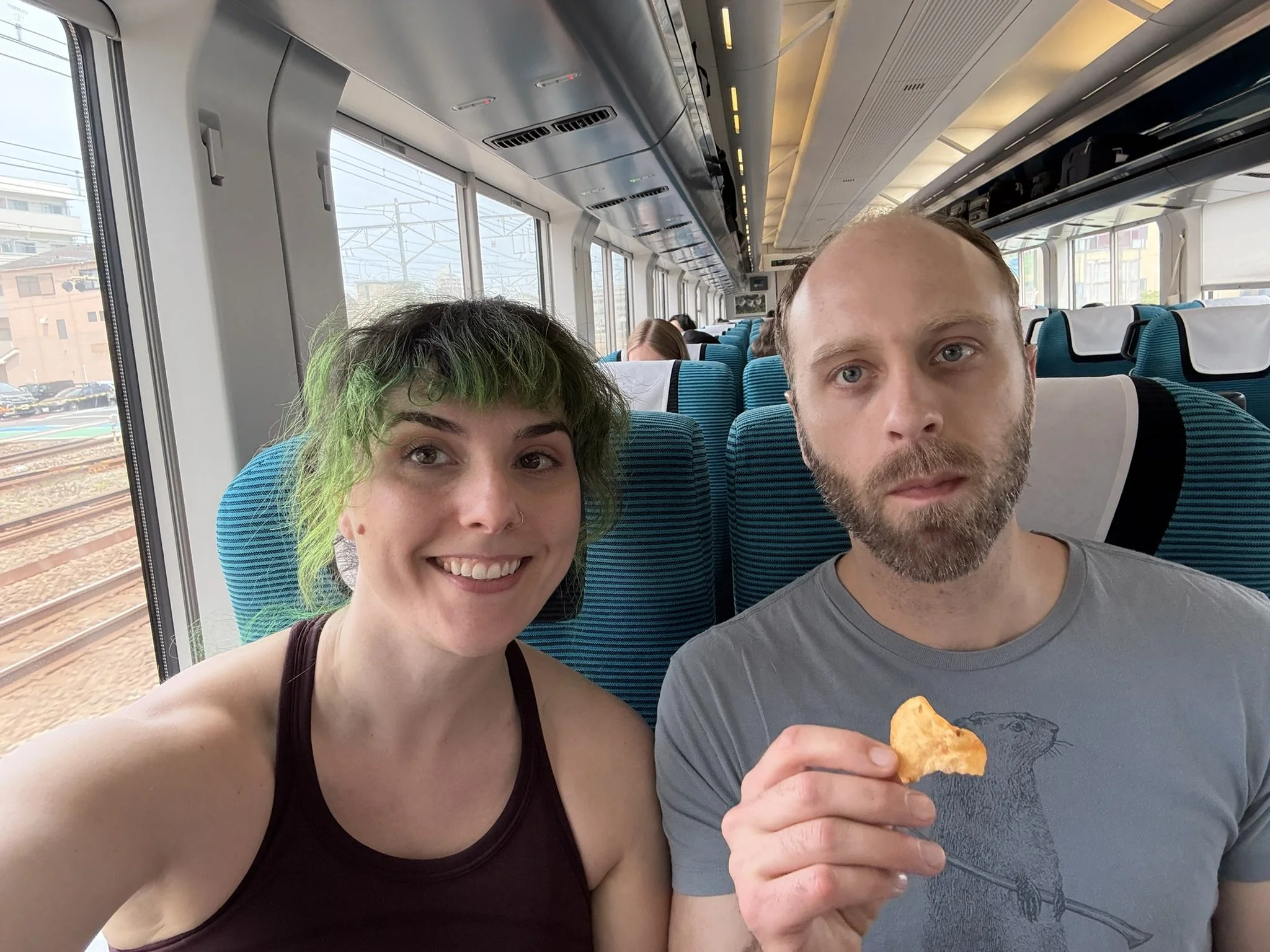
Jeff snacked through basically the entire 2-hour train ride, which I respect.
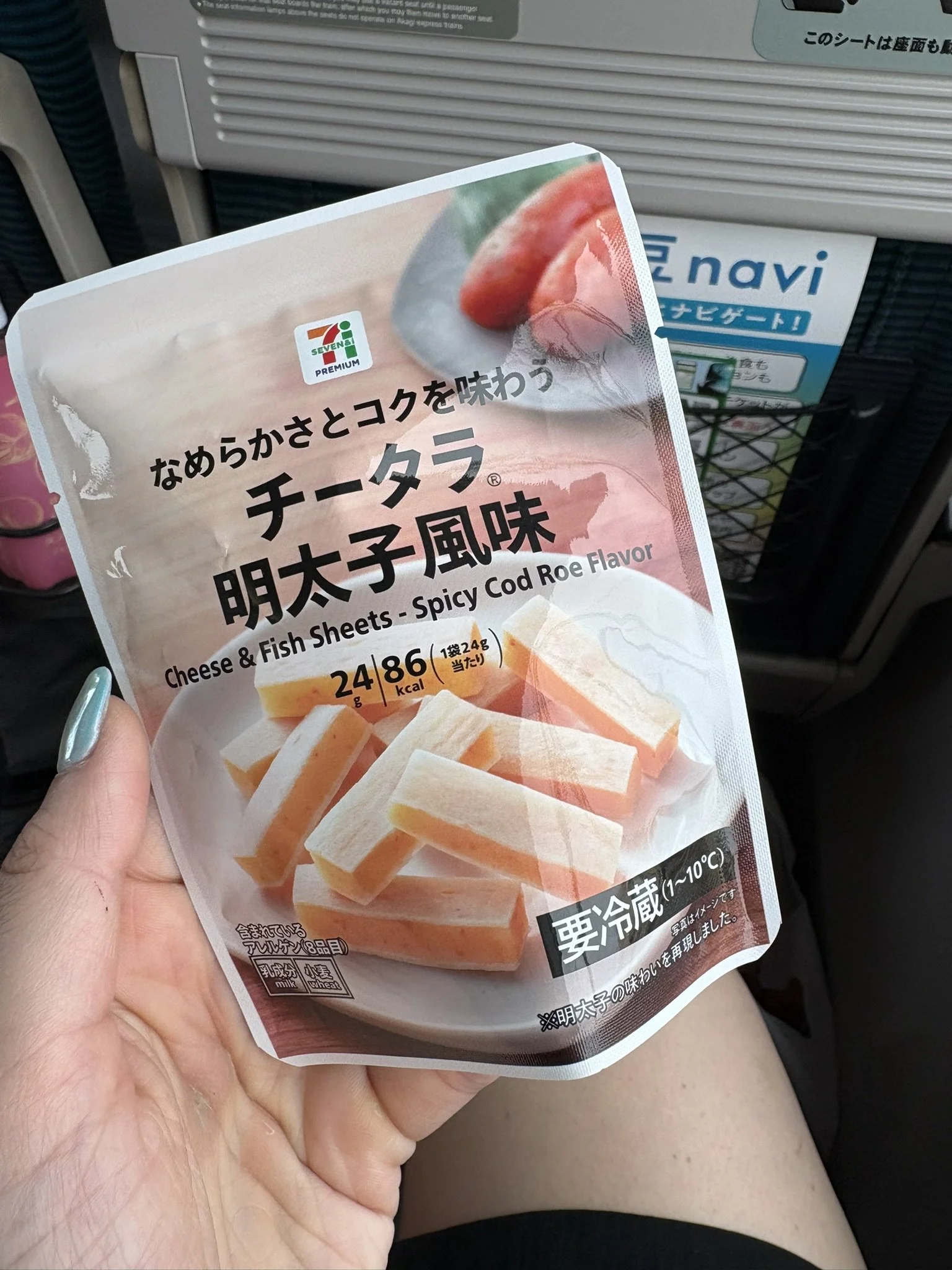
These were good but they were extra good when you put them in between two spicy chips to make a little sandwich. >:)
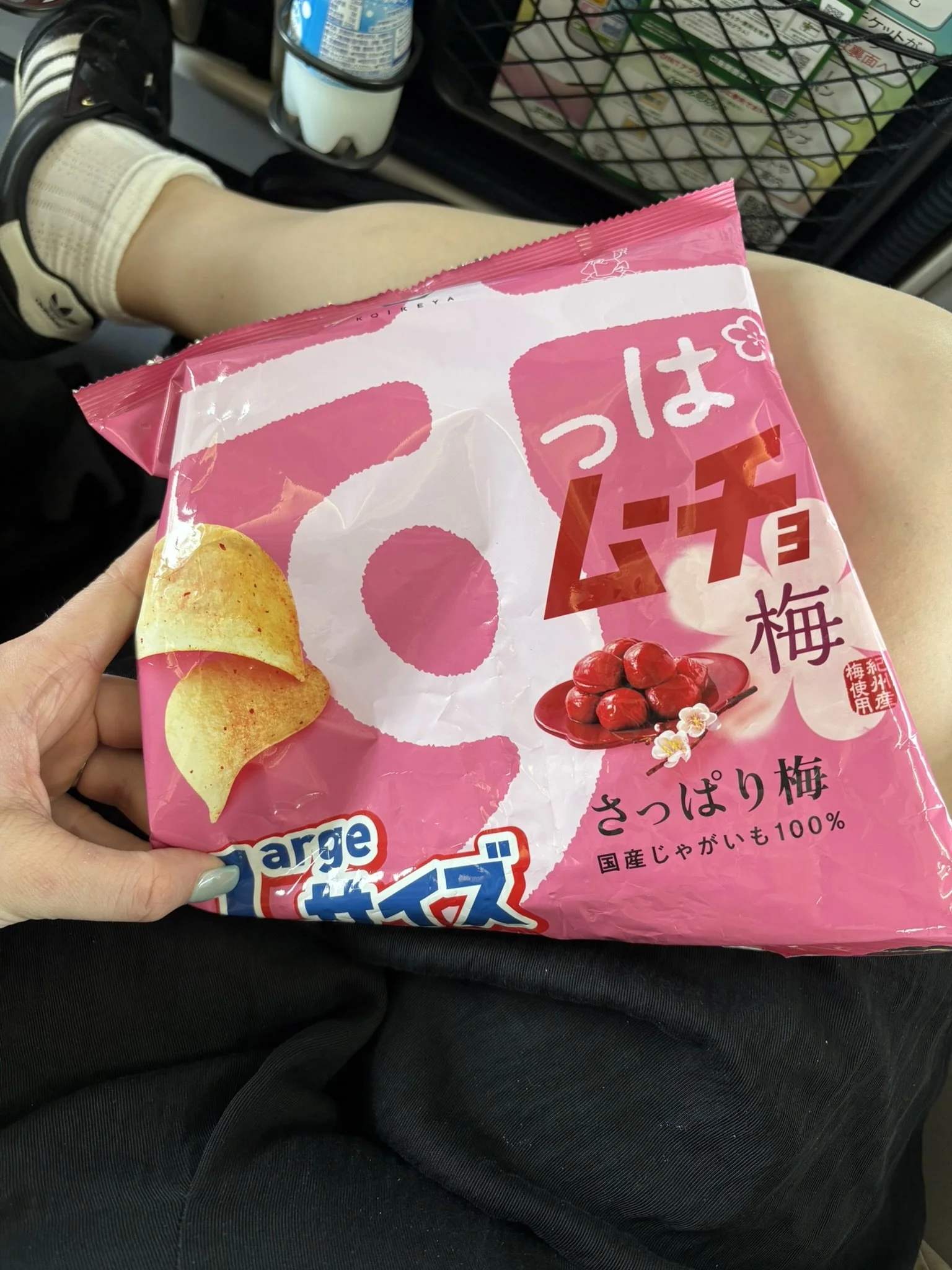
Cherry blossom potato chips. Jeff really hated them; they grew on me.
All Aboard!
Armed with our bundle of snacks from Ito Yokado, we were ready to hop on a train out of town.
Japan is famous for its train system, and it really doesn’t disappoint. The trains run on time, they’re clean and well-maintained, and there’s stations pretty much everywhere. There’s also an insane amount of options for travel—there’s local lines with stops in every town and suburb, express trains to get you around the important areas of the cities, and of course there’s also the super-fast Shinkansen bullet trains that can jet you from region to region at top speeds of 200mph.
The train system is also super well-integrated with Google maps, so you can pretty much always find a train where and when you need to get places—but sometimes you have to do a little research, because popular routes from region to region might require advance reservations to get a seat.
For our trip to Izu, we took an Odoriko train, which is a reservation-only, limited express train that connects the greater Tokyo metropolitan area to the Izu Peninsula (which is a very popular area for vacations and sightseeing). Most regional or limited express trains will be climate controlled, with wi-fi and little table trays. Typically it’s considered very rude to eat on the local trains and subways, but it seems like fair game on the regional trains, so we took some time to rest our feet, soak in some views, and just hang out for a bit.
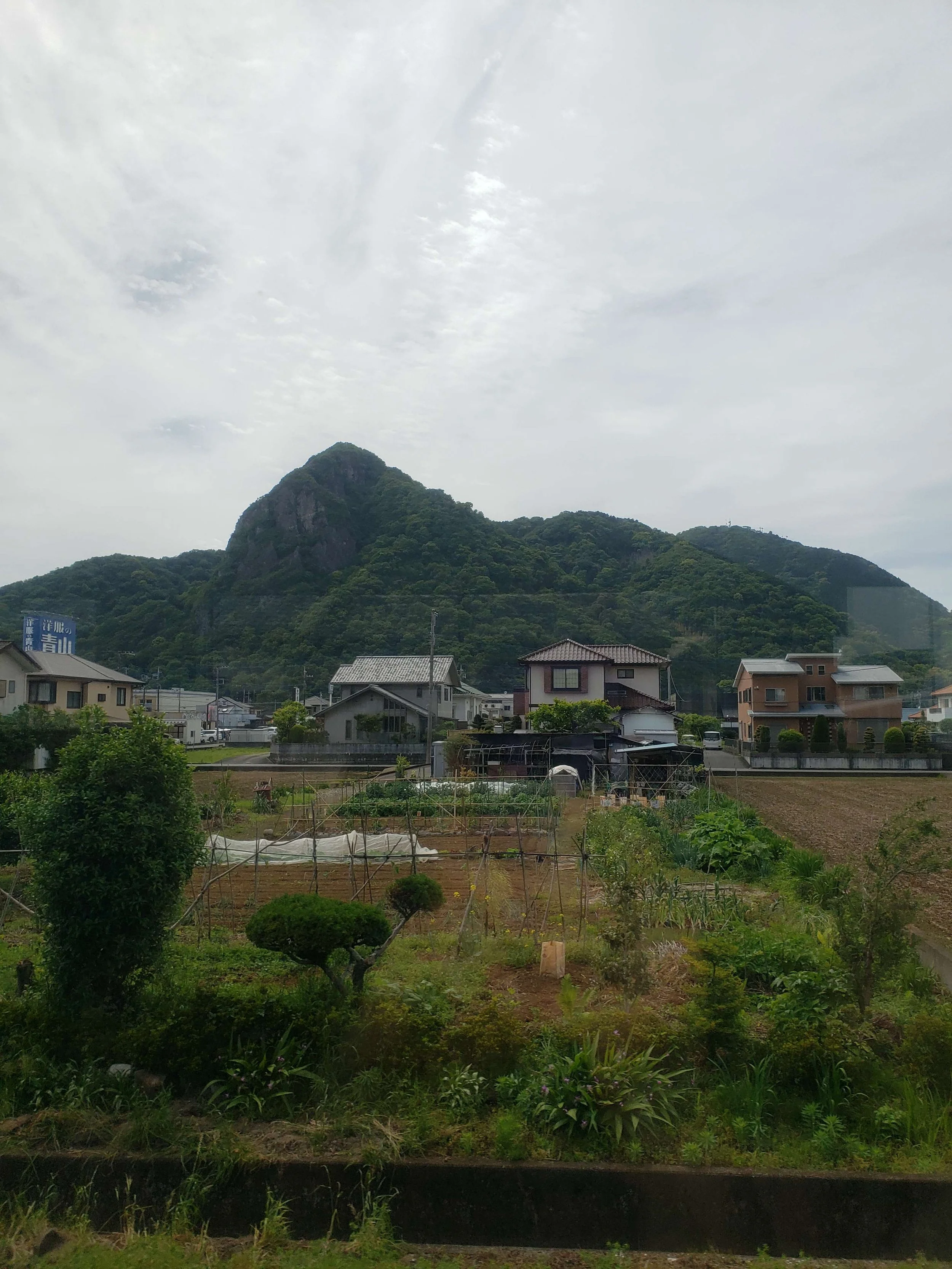
These were pretty much the only looks we got at the Japanese countryside—the areas along the Tōkaidō Line line (the route from Tokyo to Kobe) is pretty much one big developed area stretching along the entire coast.
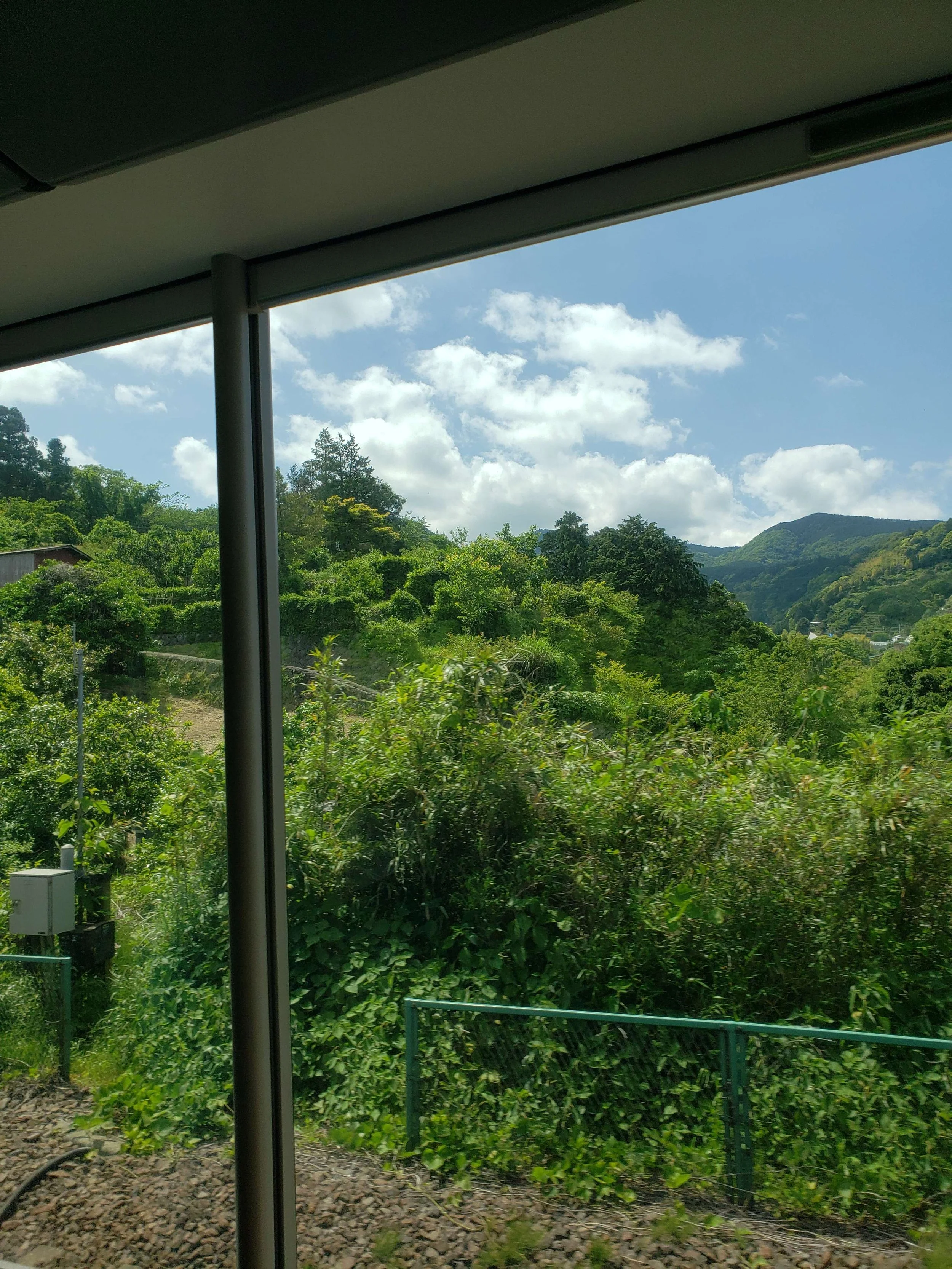
One of Jeff’s better pictures. It became a bit of a running joke that every time he’d pull out his phone to get a pic of the landscape, we’d go into a tunnel or something.
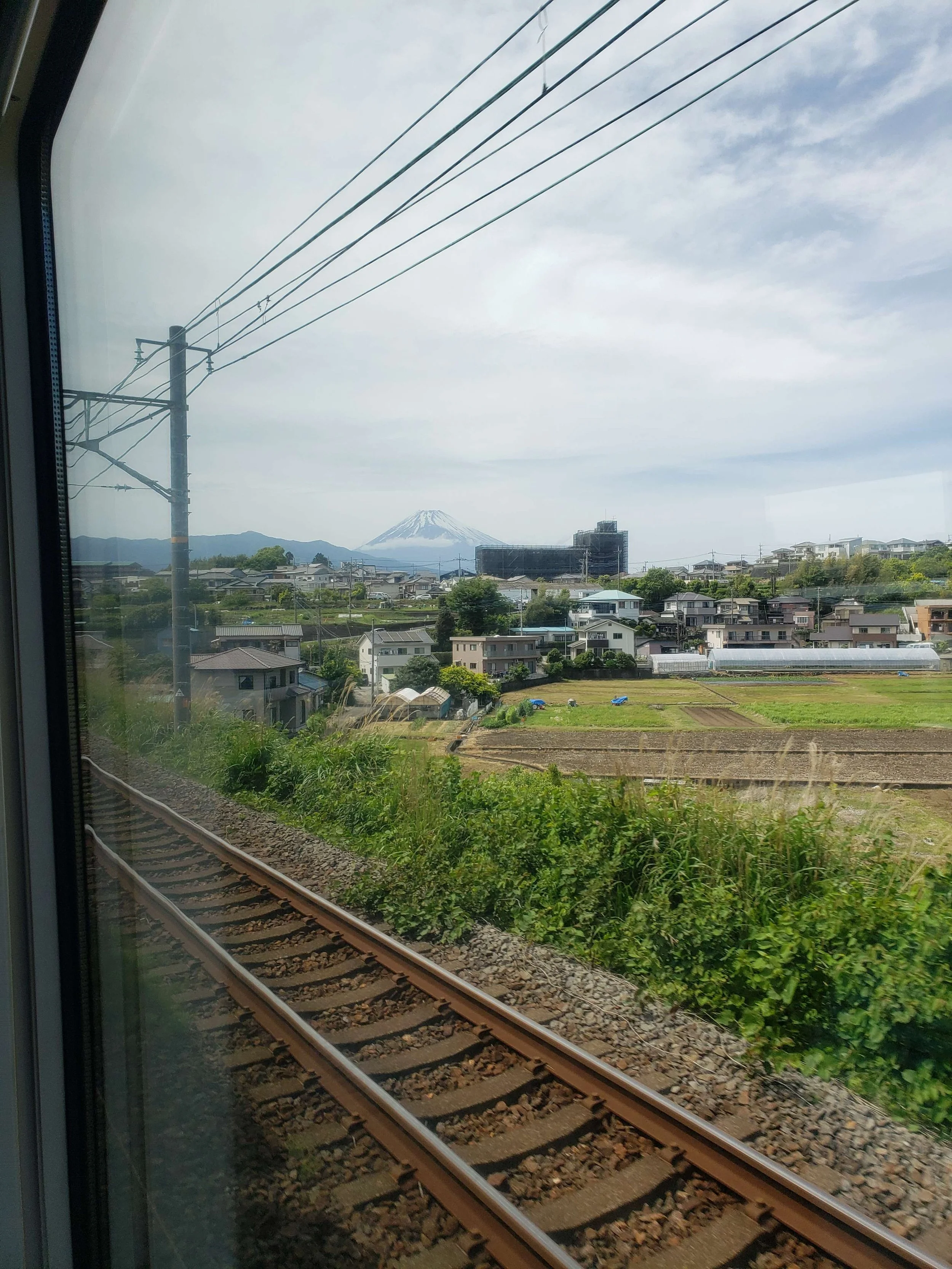
Finally catching a glimpse of Fuji-san, still with a bit of snow. The official climbing season for the mountain is only from July to September, otherwise you would’ve seen pictures of us trying to scale this 12,389 ft peak.
Arriving in Izu
Shuzenji Onsen is a natural geothermal spring system in the central Izu peninsula. The hot springs have been used for over fourteen centuries, making Shuzenji one of the oldest onsen (hot spring) resort towns in Japan. The area has a stunning natural beauty—I loved walking along the riverside as we made our way to our ryokan.
A ryokan is a traditional japanese inn that usually features furnishings you might imagine when you think of Japan—tatami mat floors, futons, and Shoji doors (the sliding doors made of paper). Booking a night at this ryokan was one of the biggest splurges of the trip, but if we were doing a ‘bucket list’ trip, I wanted to go big and get a proper cultural experience. It didn’t hurt that the ryokan I picked would also feature a multi-course meal overseen by a two-star Michelin chef (this was a bit of a treat/surprise for Jeff, who is a huge culinary enthusiast).
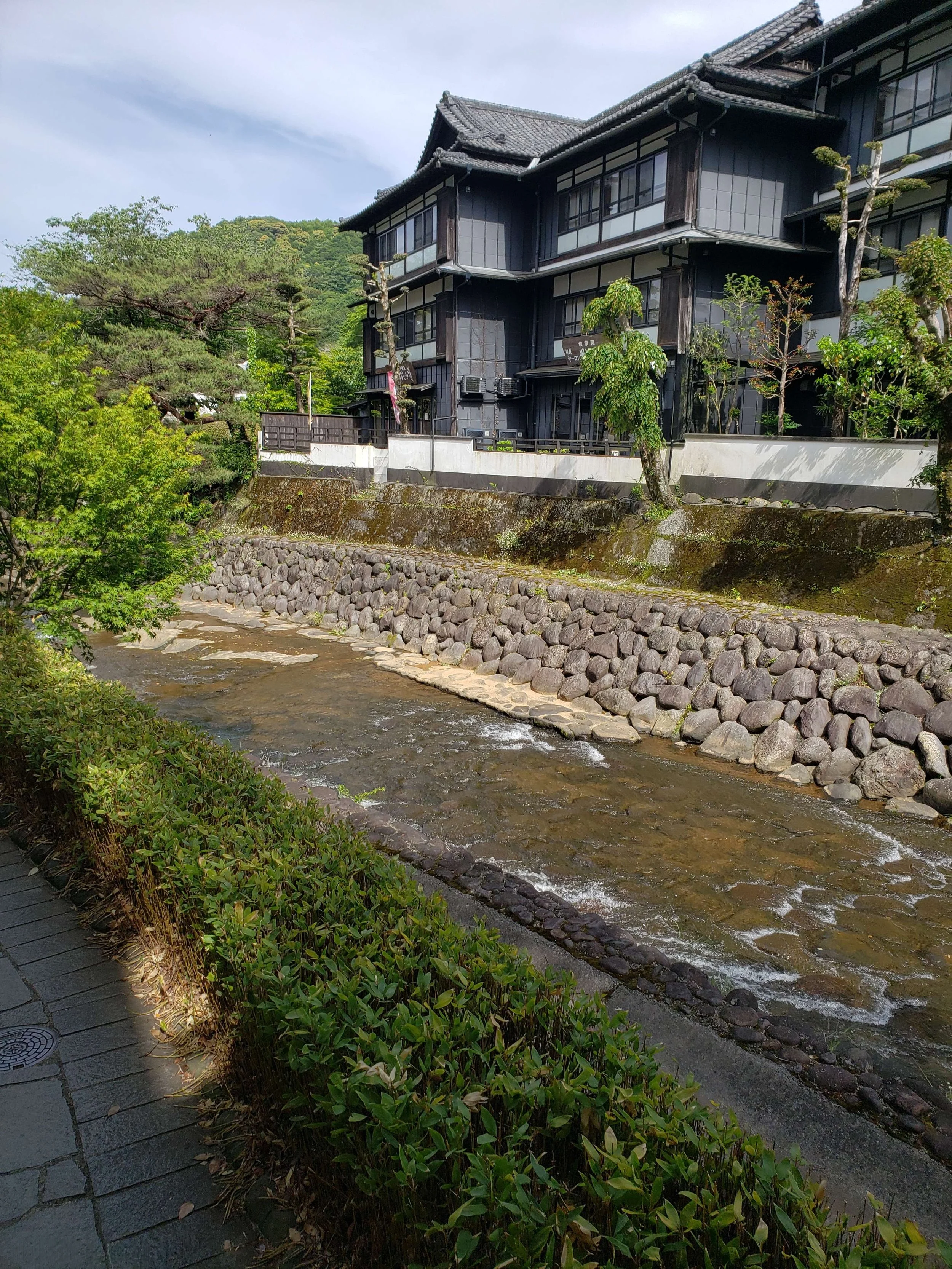
The path up to the ryokan was full of other vacation resorts. The whole place was so pretty, honestly.
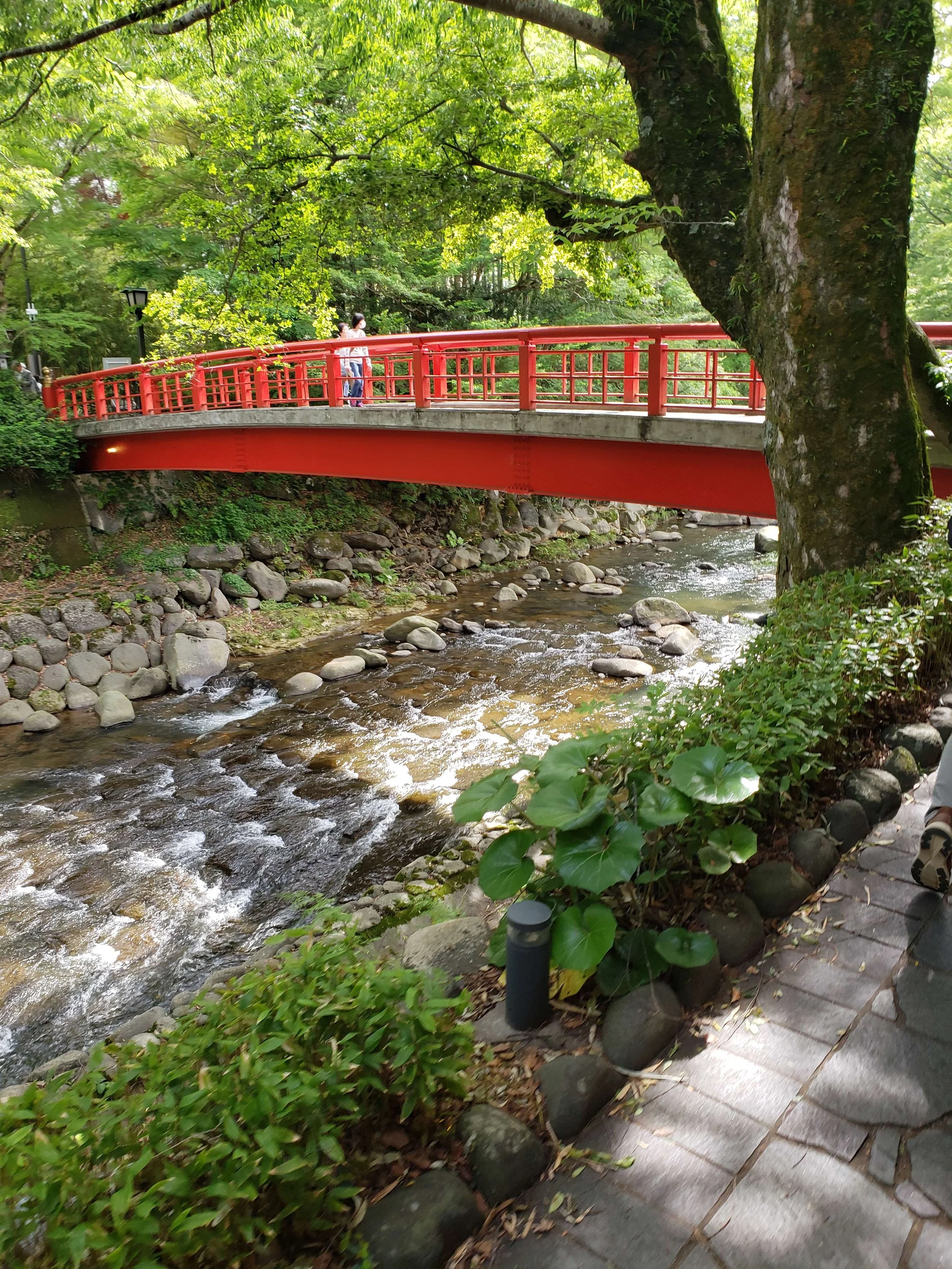
A classic vermillion bridge.
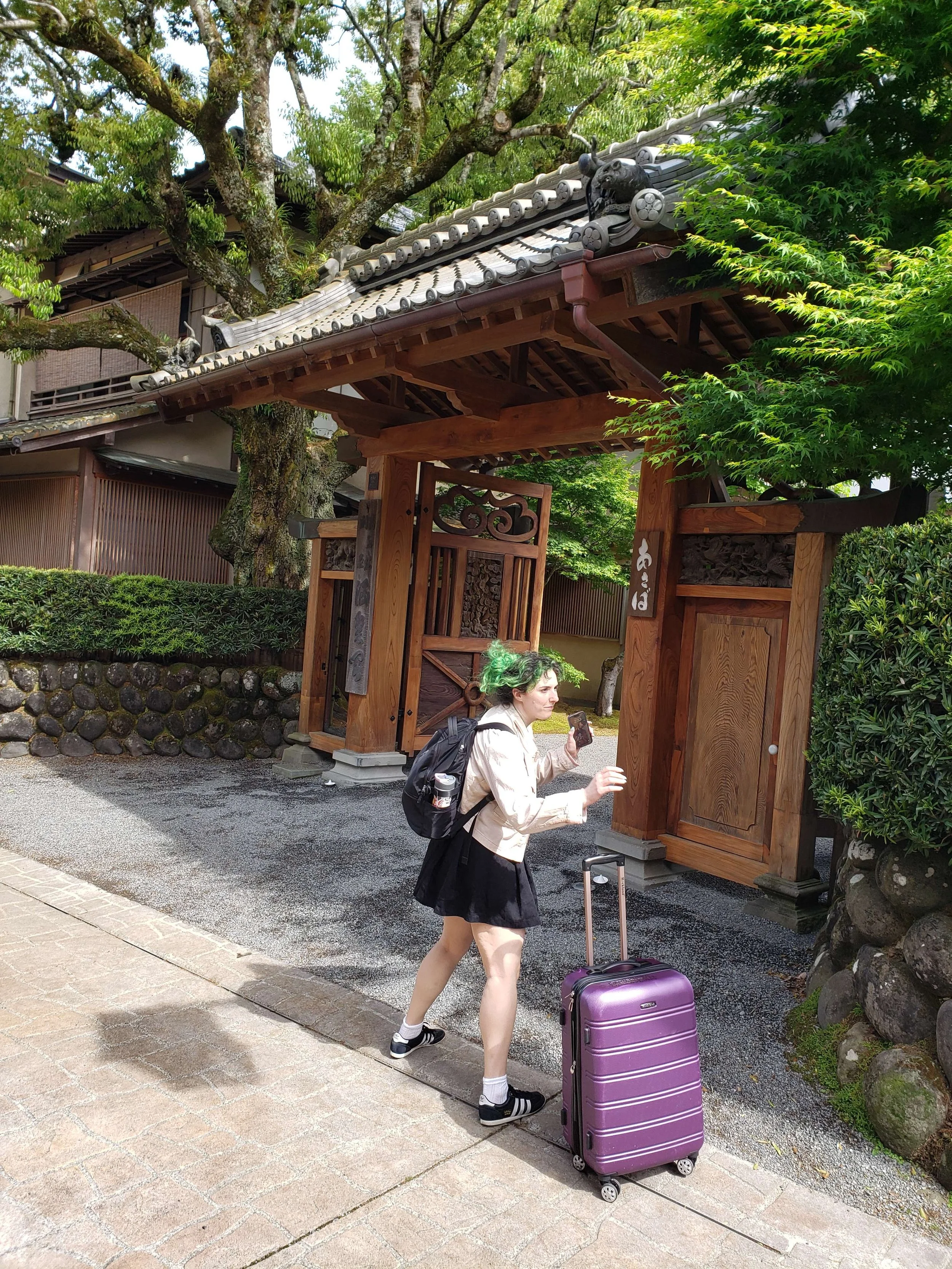
Pictured here: me trying to figure out if this is the right place (I’m illiterate). Brings us to Pro Traveler Trip #5: Sometimes it really is easier to just take a taxi places.
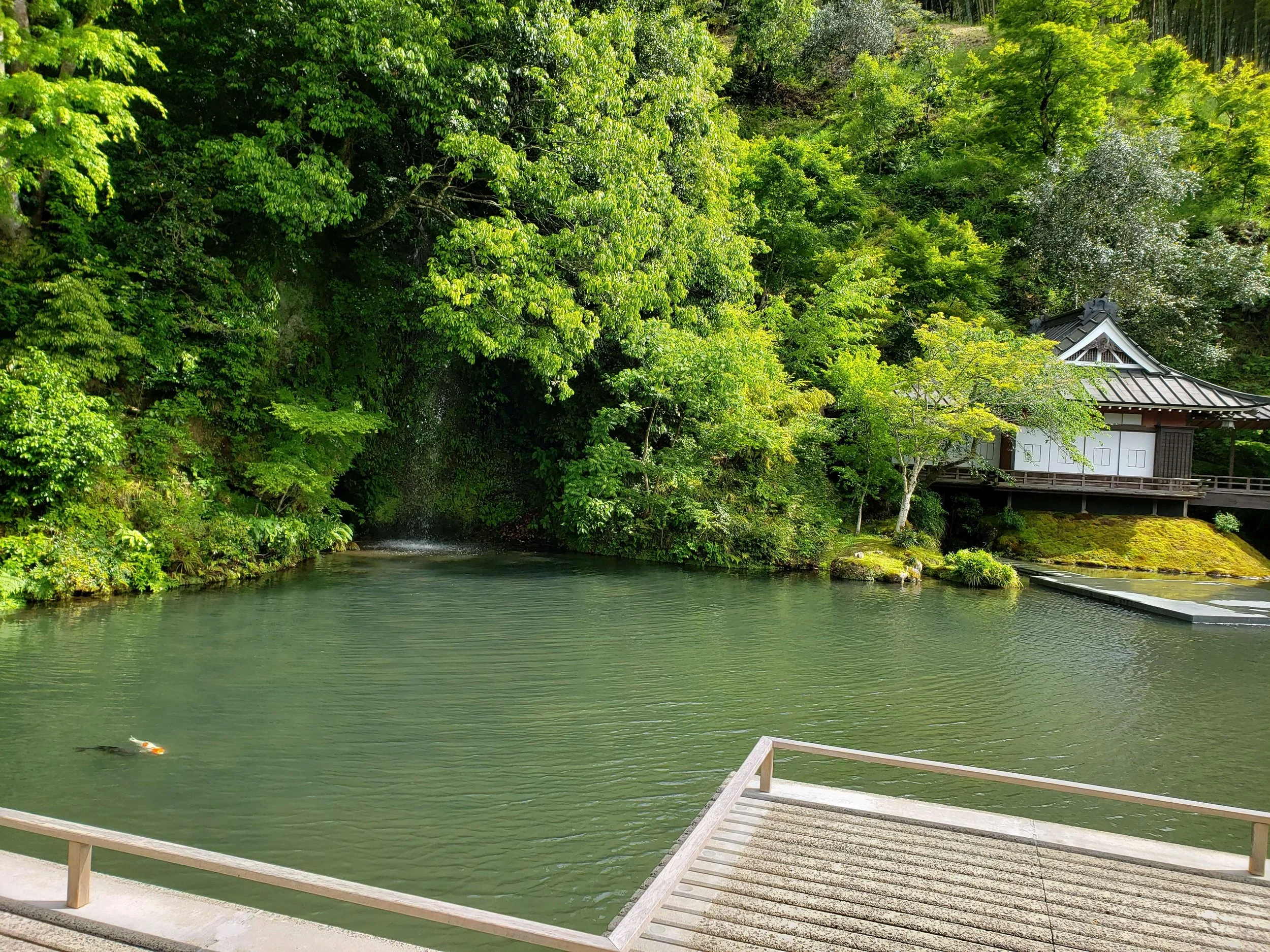
Koi!!
After walking back and forth up the same street like 2-3 times, we finally figured out this was the correct place (I think people usually arrive by taxi, but I will walk if a place seems walkable about 90% of the time).
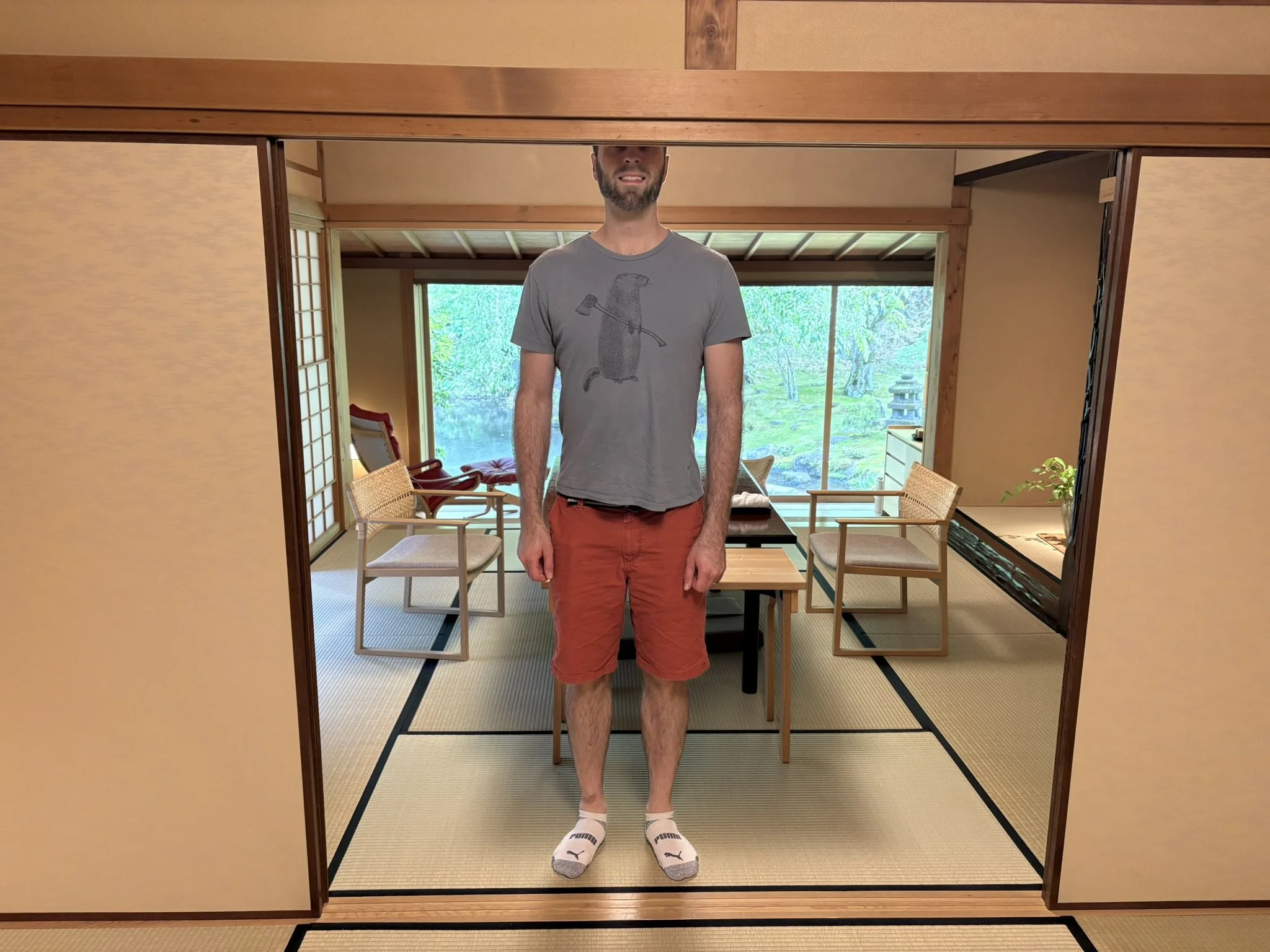
About what I expected for a 500 year-old building in Japan. Sorry Jeff!
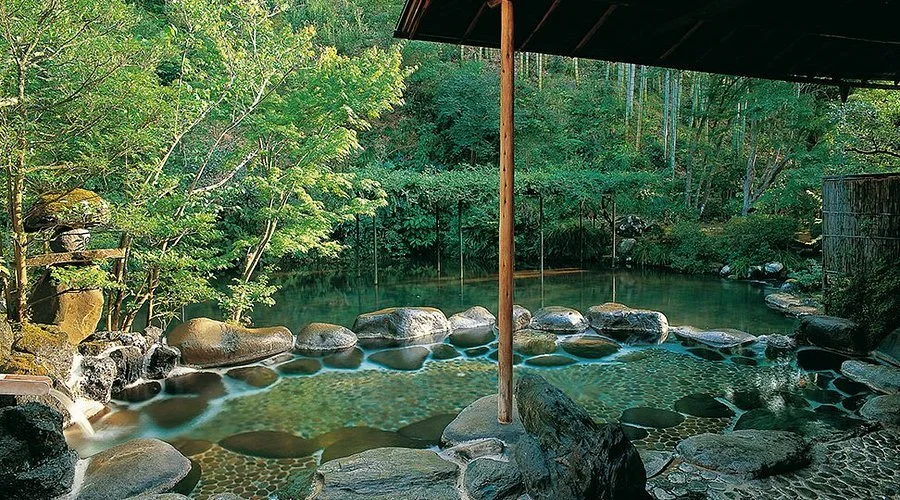
Here’s a picture of the outdoor onsen that I shamelessly stole from a travel website, since you can’t take your phone in with you (for obvious reasons).
We were greeted by our hostess and brought to our beautiful room, where she explained the onsen (hot spring) schedule, dinner, and how to make the most of our stay. We were about five minutes into the tour before Jeff hit his head on one of the doorways like Gandalf showing up to Bilbo Baggins’s house in The Lord of the Rings. Any time we went in a historical building, I could just barely walk normally through the doorways (I’m just shy of 5’10”). Jeff had to duck everywhere. I think he literally had a red mark on his head by the time we left Japan.
Anyway, after the tour of our rooms, we were left to decompress before dinner and change into our resort clothes. One of the fun things about ryokan is that they also give you your own set of comfy clothes to lounge around in. Some ‘modern’ ryokan will give the option of Western-style pajamas (boo) or jinbei, which are a side-tying top and trousers. Resort towns with hot springs will frequently give a set of nemaki, which are robes specifically for wearing around hot springs, resorts, or spas. Why do you need a bathrobe for wearing around your resort? Simple—it makes it easier to strip down to go in the onsen.
Onsen
In case you weren’t aware, when you use the hot springs in Japan, it’s typically expected you go in naked as the day you were born. Clothes or bathing suits? Not allowed. Neither are tattoos, since they have a pretty strong association with criminal activity in Japan. Onsen are sex-segregated, though, so it’s not as weird as you would think to hang out in a public bath.
The public baths aren’t exactly for ‘bathing,’ either. You’re actually supposed to shower off thoroughly, wash your hair, etc. (there are plenty of traditional Japanese showers with stools nearby) and then only enter once you’re already clean. The hot thermal water is more about relaxing and purifying yourself from the outside in. And boy, is it relaxing. The water is hot (usually like at least 104°F) and by law has to have a few mineral qualities to be classed as a proper onsen, so it leaves your skin feeling soft and smooth. It’s a good thing you can’t take your phone in, or I probably would’ve put a podcast on and happily boiled myself alive.
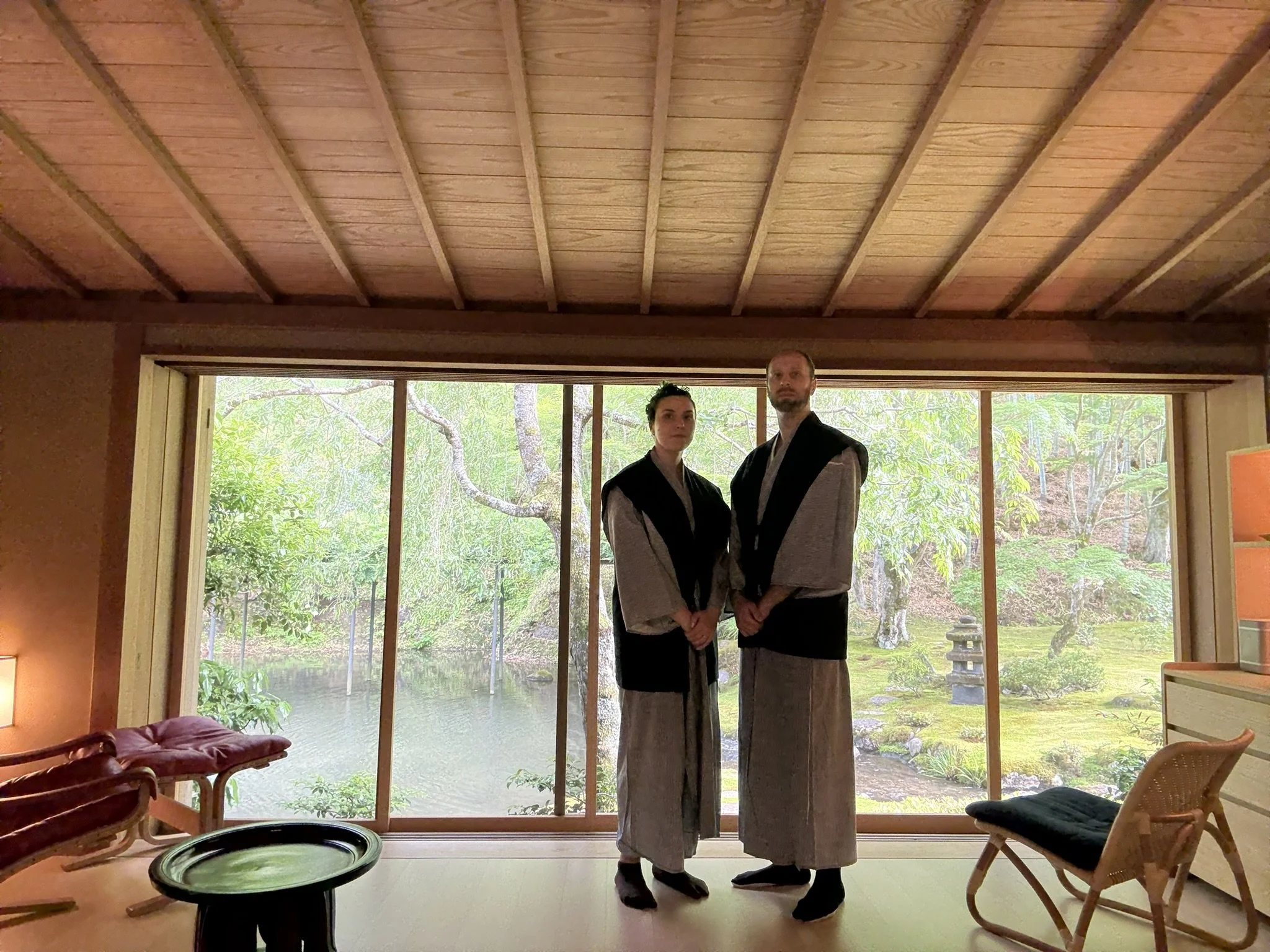
Posing for formal photos like it’s the 1800s.
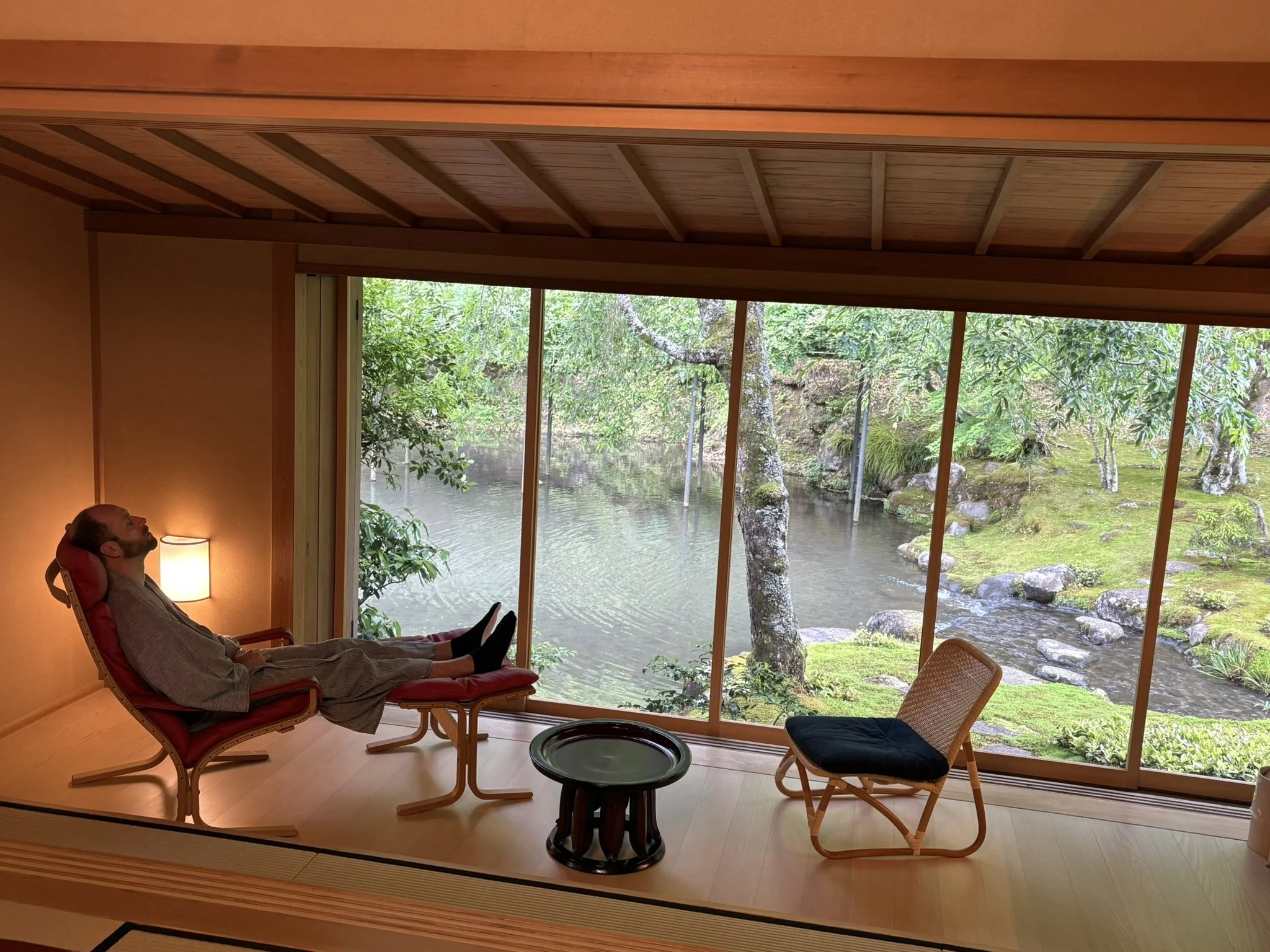
Still pretty jet-lagged at this point. A great place to relax, though.
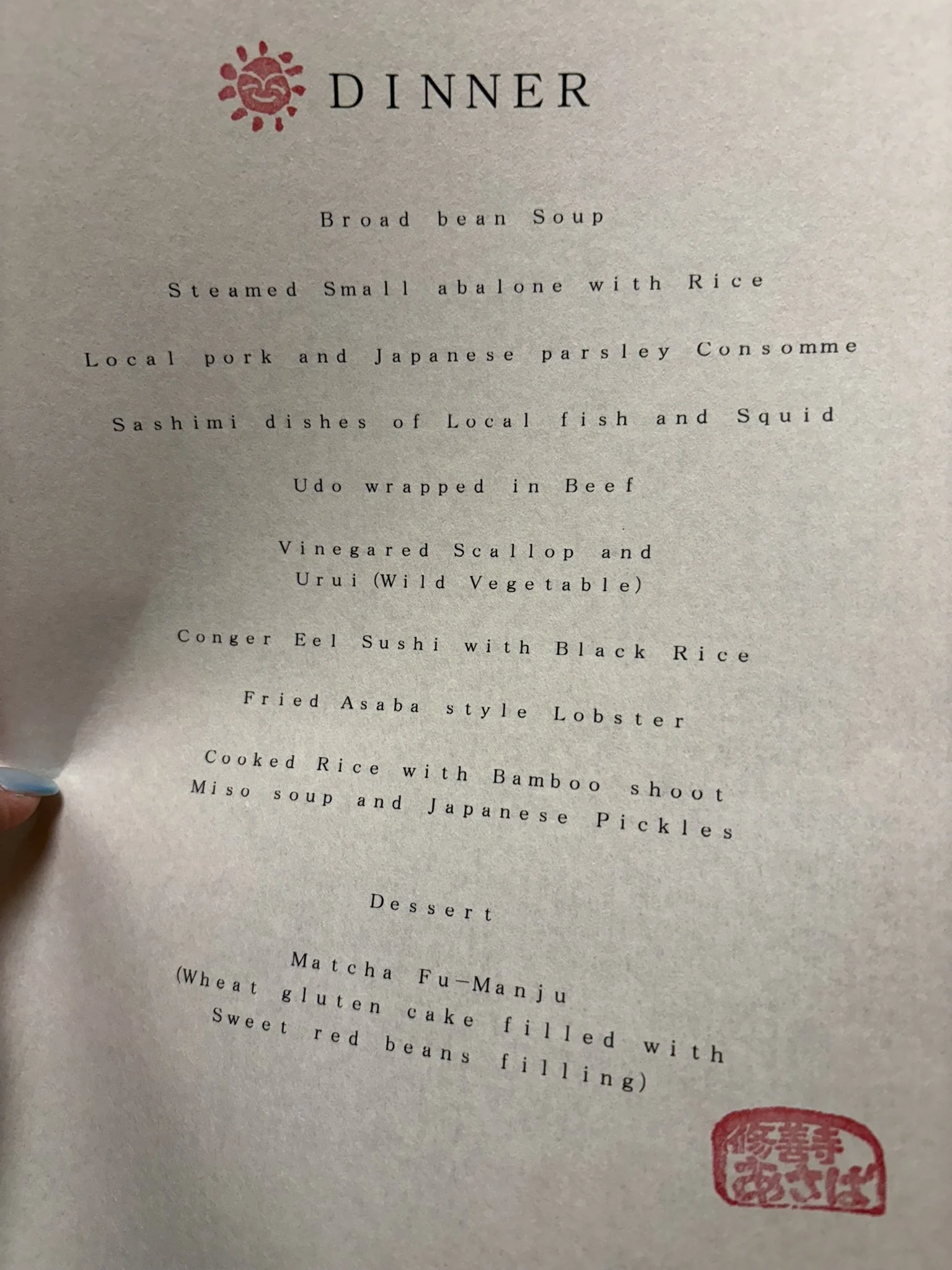
Our dinner menu.
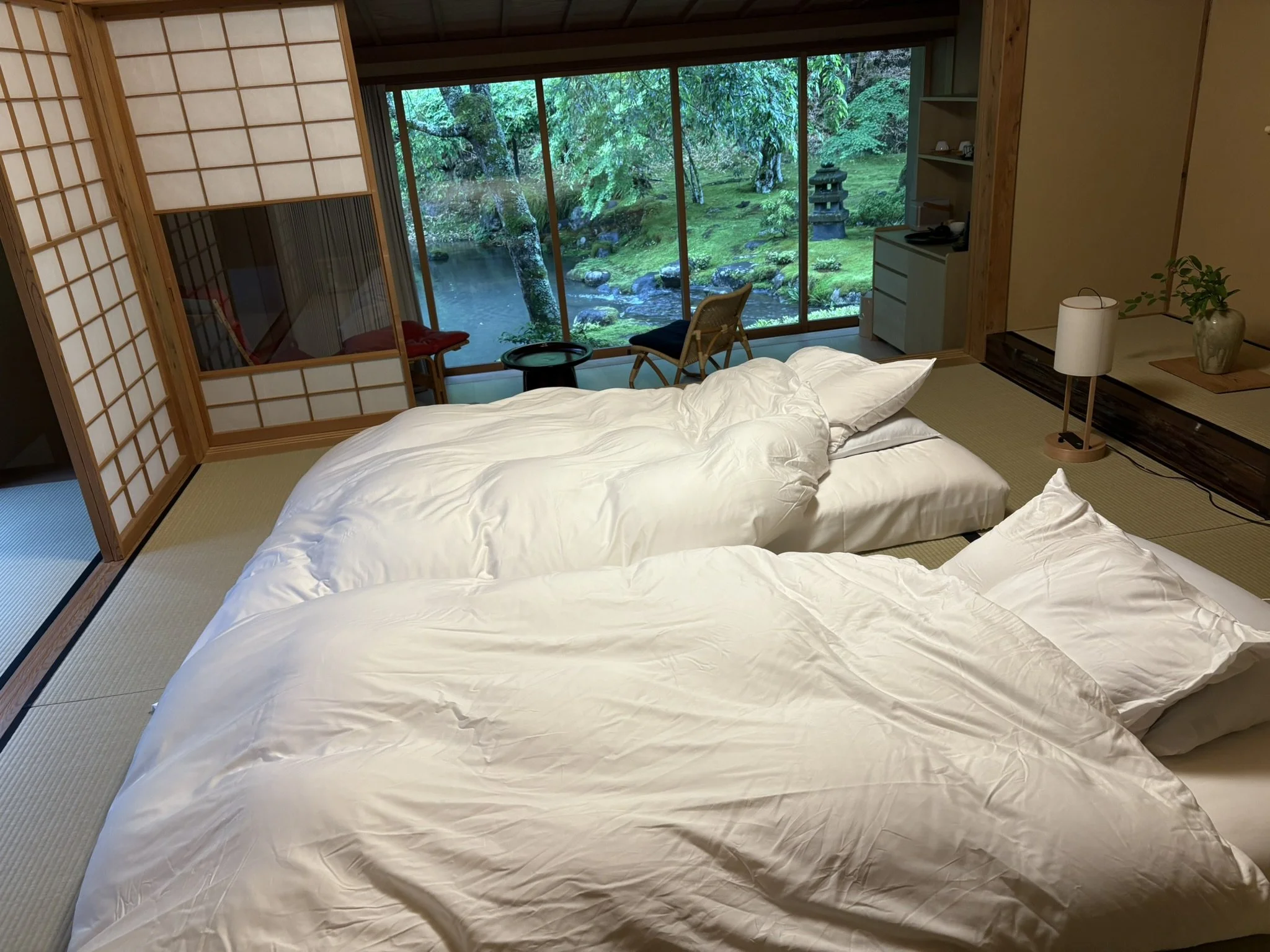
The next morning.
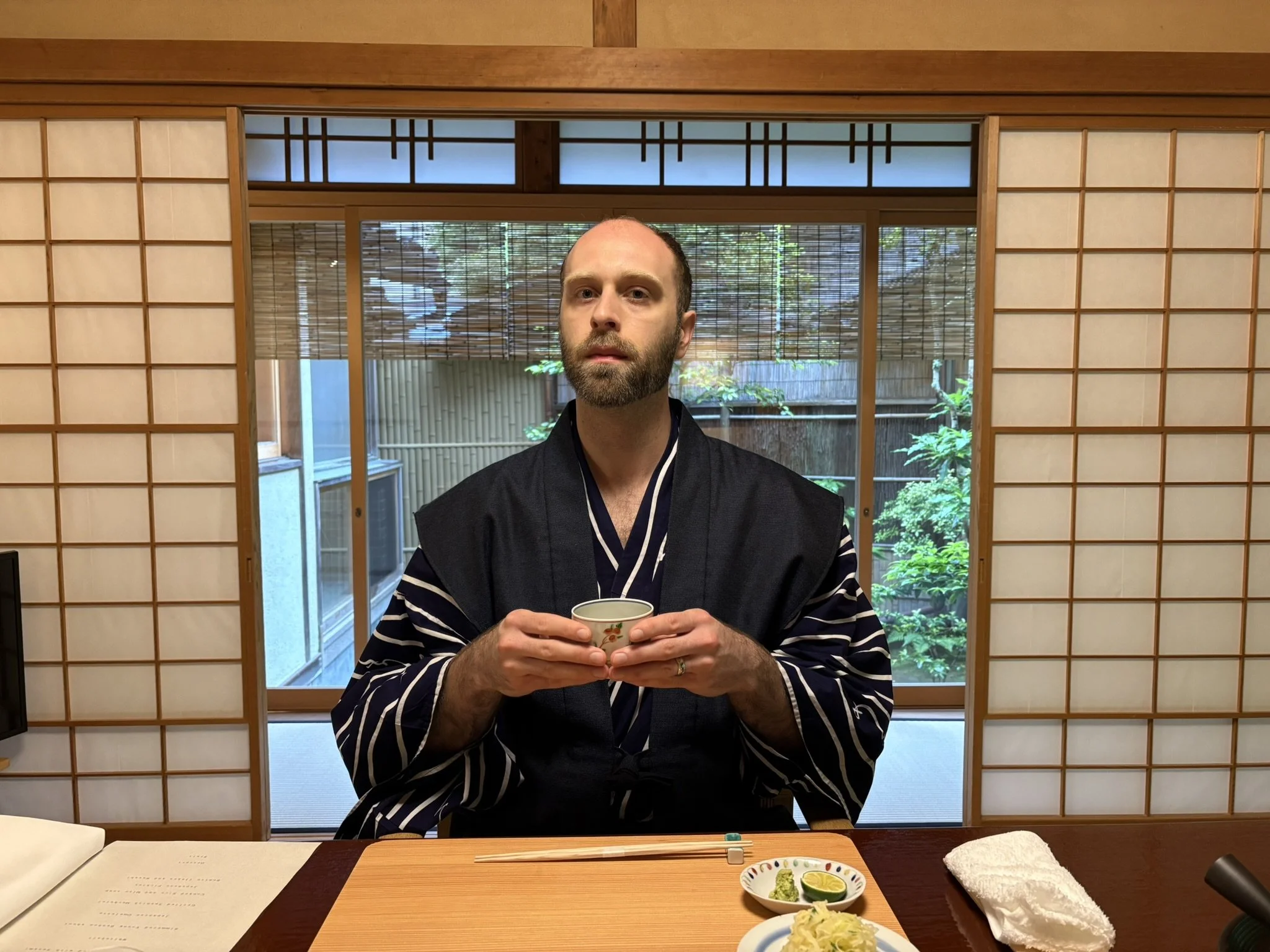
Enjoying tea as breakfast begins.
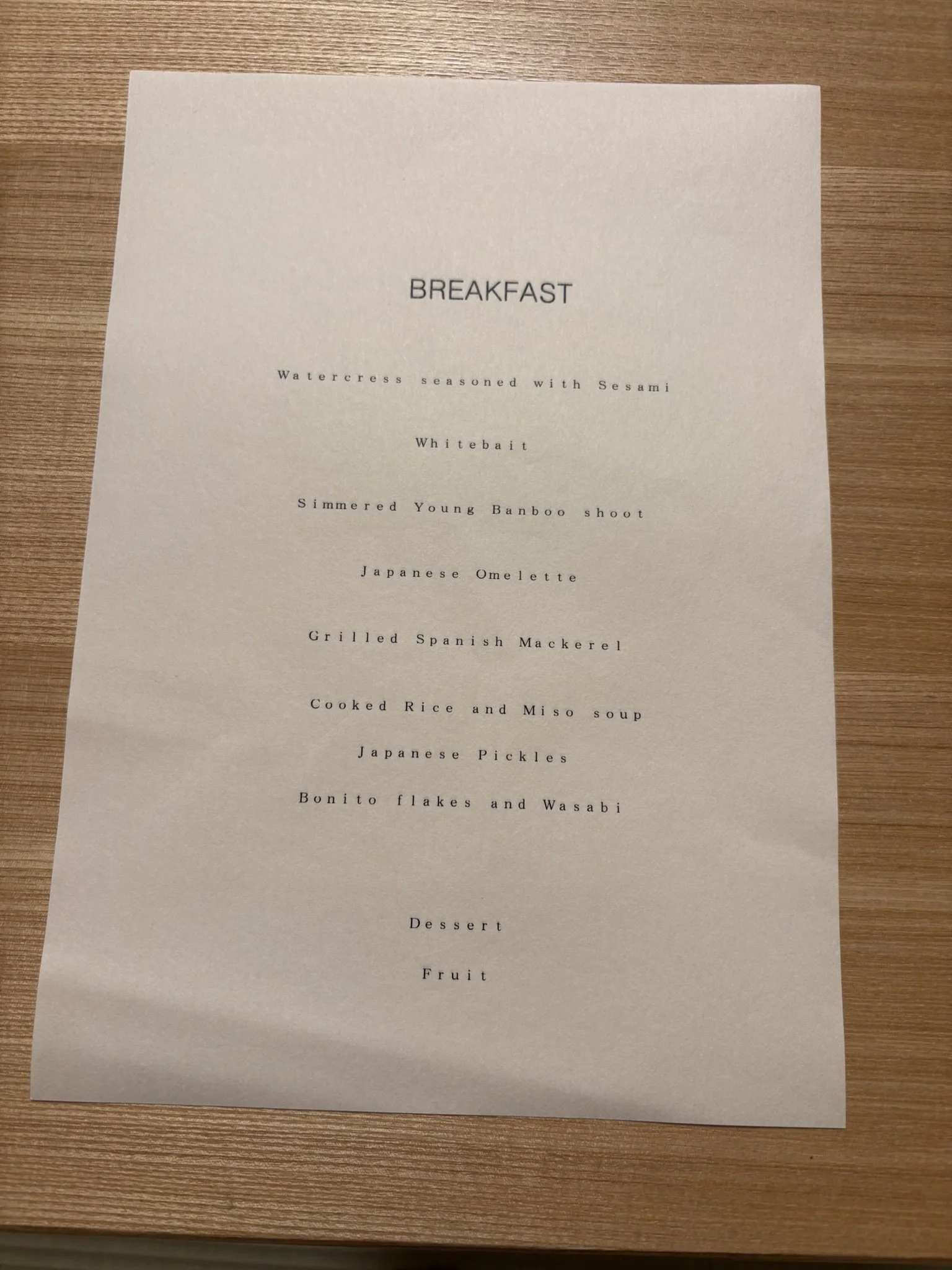
Breakfast was seven courses plus dessert.
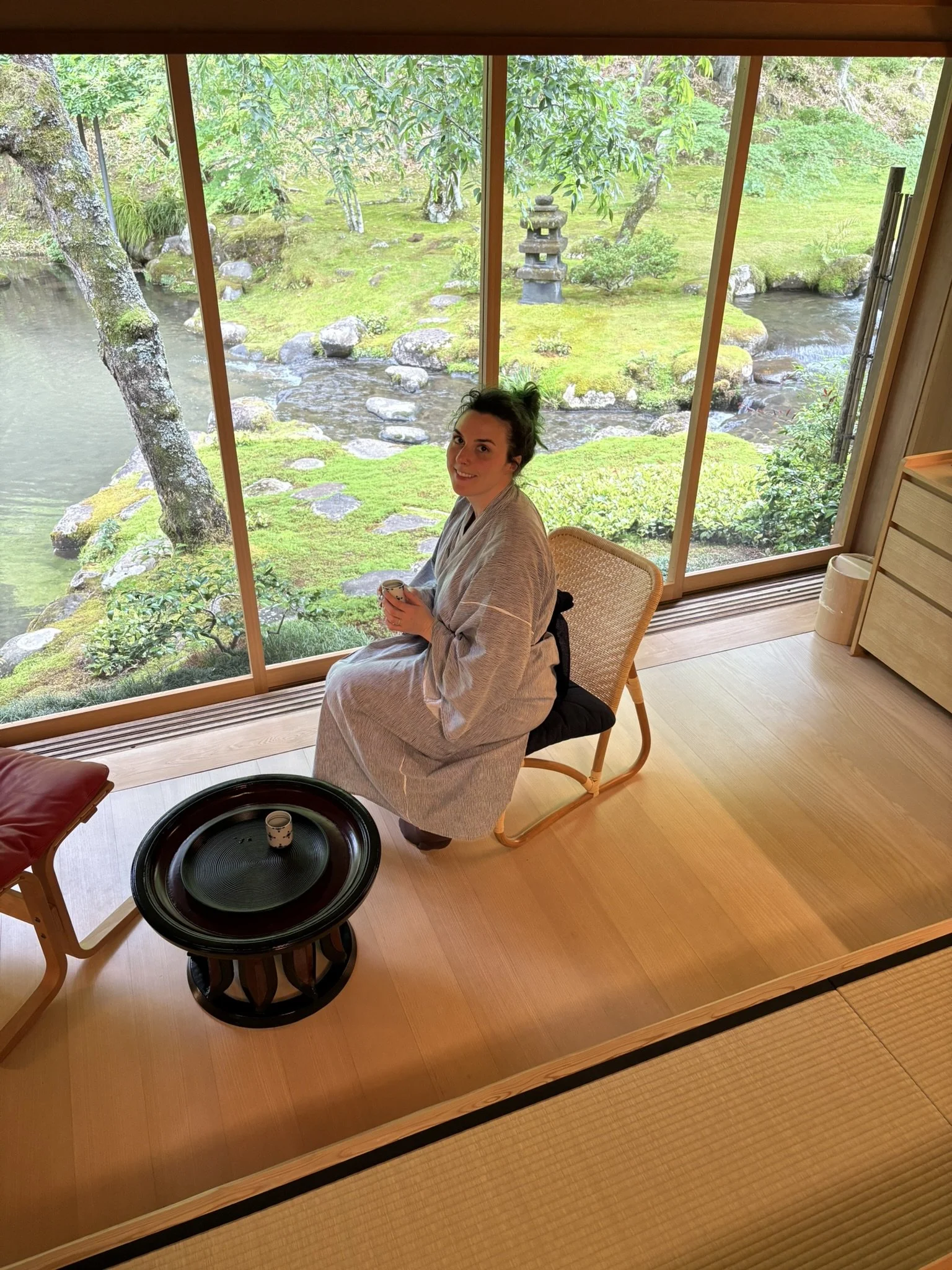
The room was stocked with tons of fresh, tasty tea.
Dinner time!
While we were relaxing and checking out the various onsen and other amenities, the lovely staff of the ryokan were changing over room and getting us ready for dinner. Dinner was a Kaiseki-style offering, a multi-course meal with an emphasis on a variety of different tastes and textures. Each course had its own set of unique dishes, cookware, and presentation, served to us by a dedicated hostess. I also noticed a focus on fresh and local ingredients. Urui (young, tender shoots of a specific kind of Japanese hosta) in particular is a delicacy—a foraged food only available in spring.
It was at this meal that I learned that raw squid coats the inside of your mouth like peanut butter (it’s not bad, though - I just wasn’t expecting it haha). I also tried conger eel for the first time. They look terrifying, but the meat is tender and has a flavor I thought was kind of similar to perch!
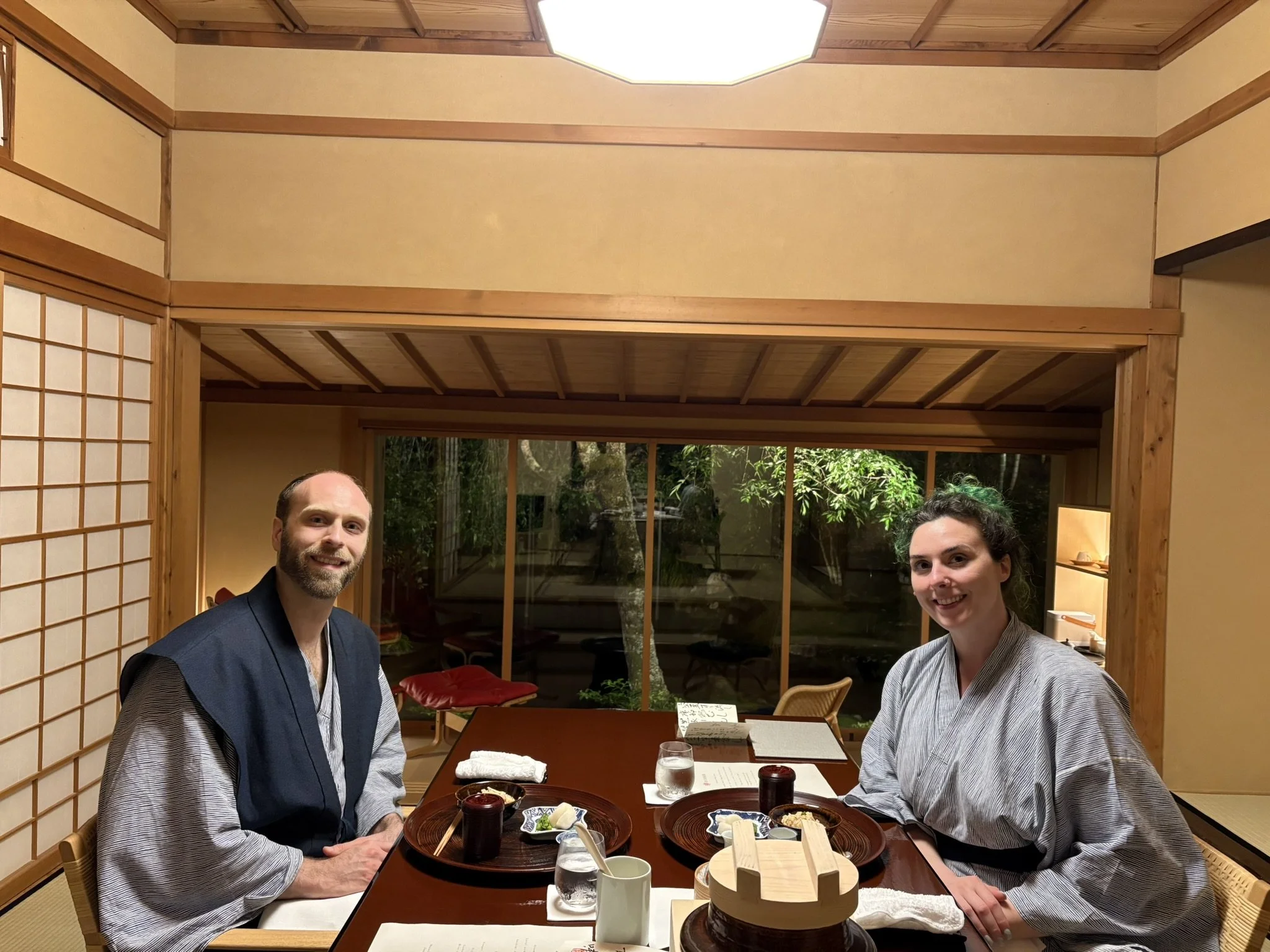
We didn’t take many photos during dinner (I was never destined to be an Instagram girlie).
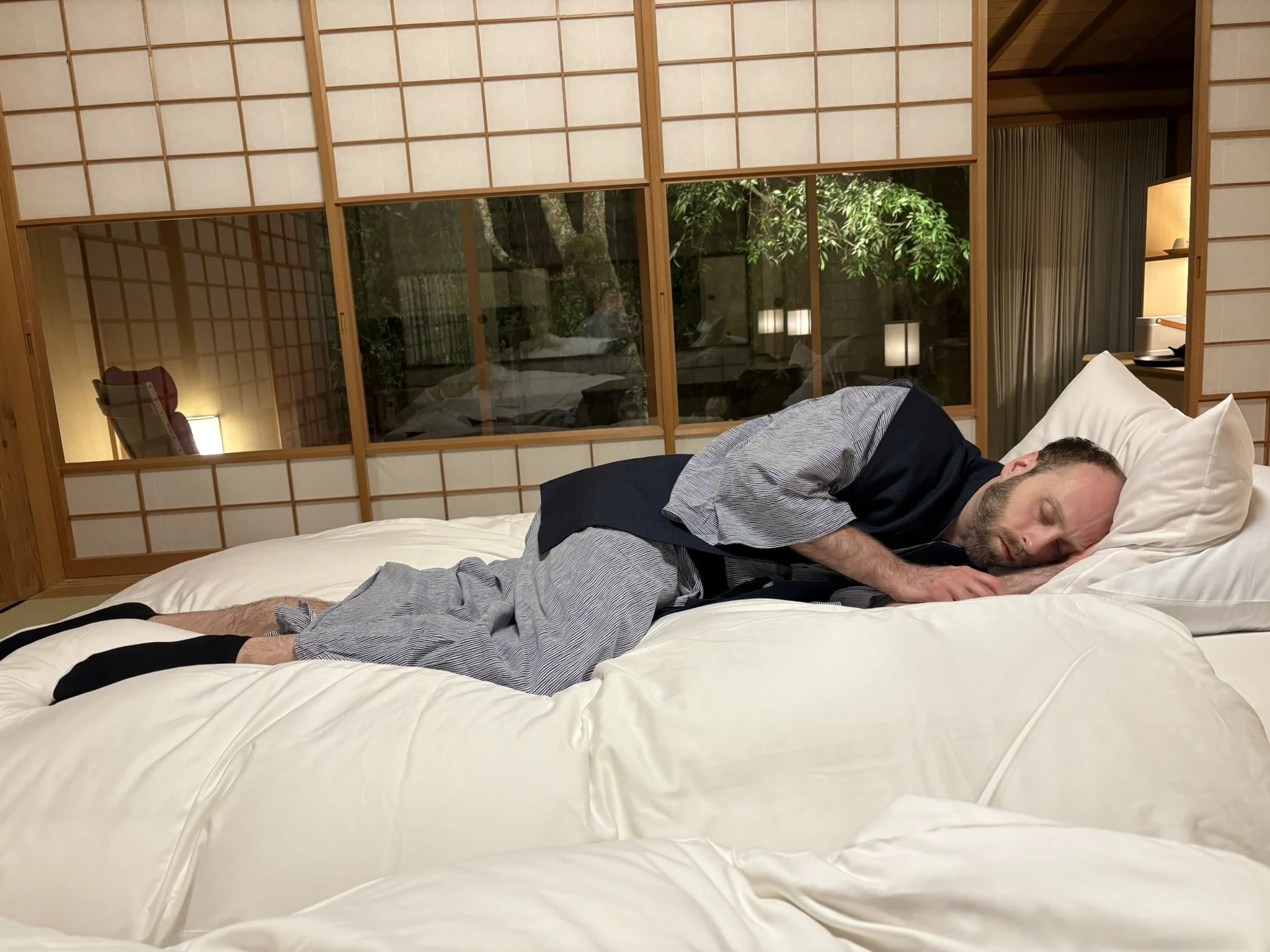
After dinner, our room was turned over and futons set up. These things felt like literal clouds. I still think about them from time to time.
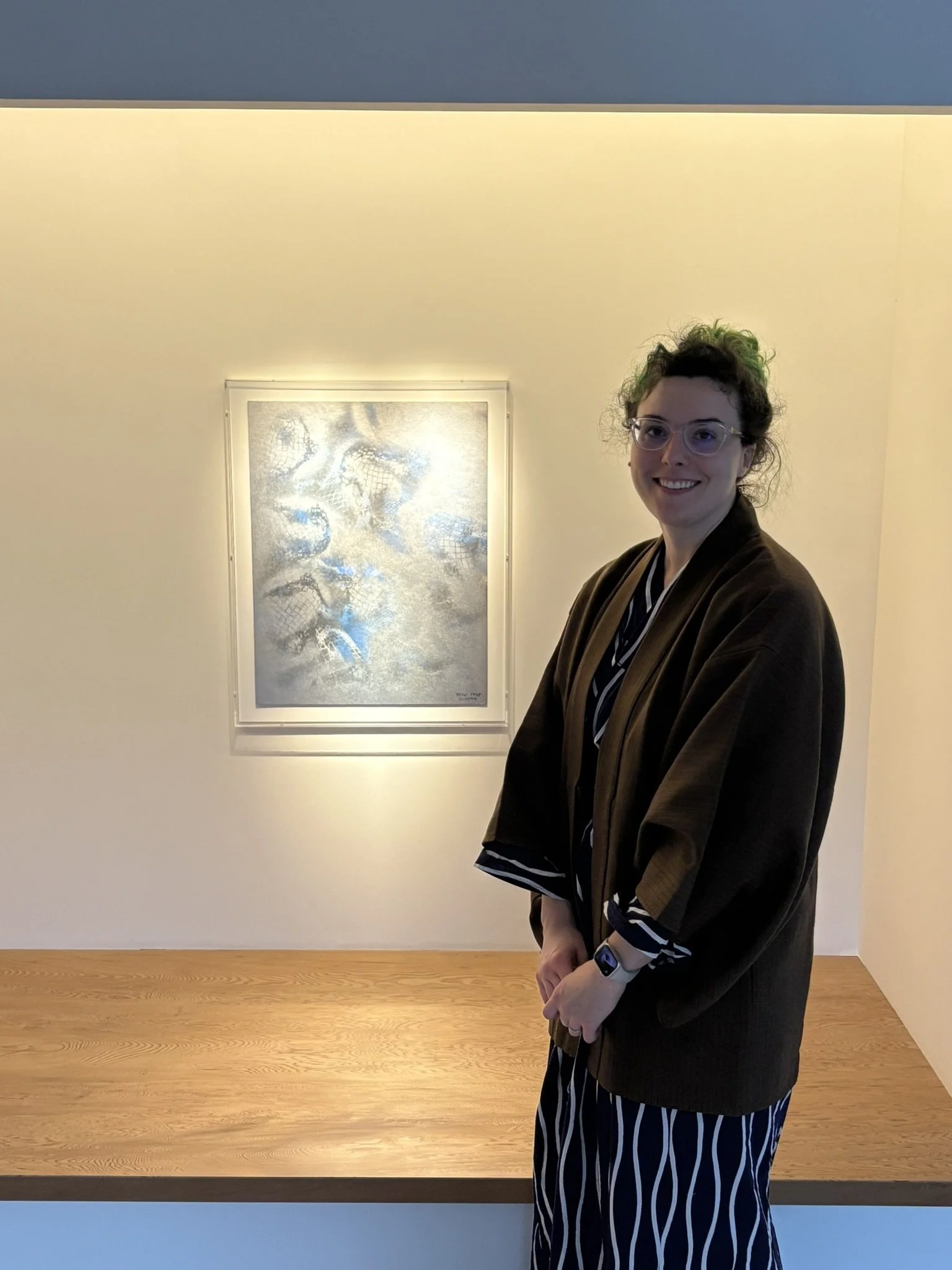
We woke up early and spent some time relaxing in the lounge. I noticed a Yayoi Kusama painting and got pretty excited (she’s a very famous Japanese artist and I learned about her in school).
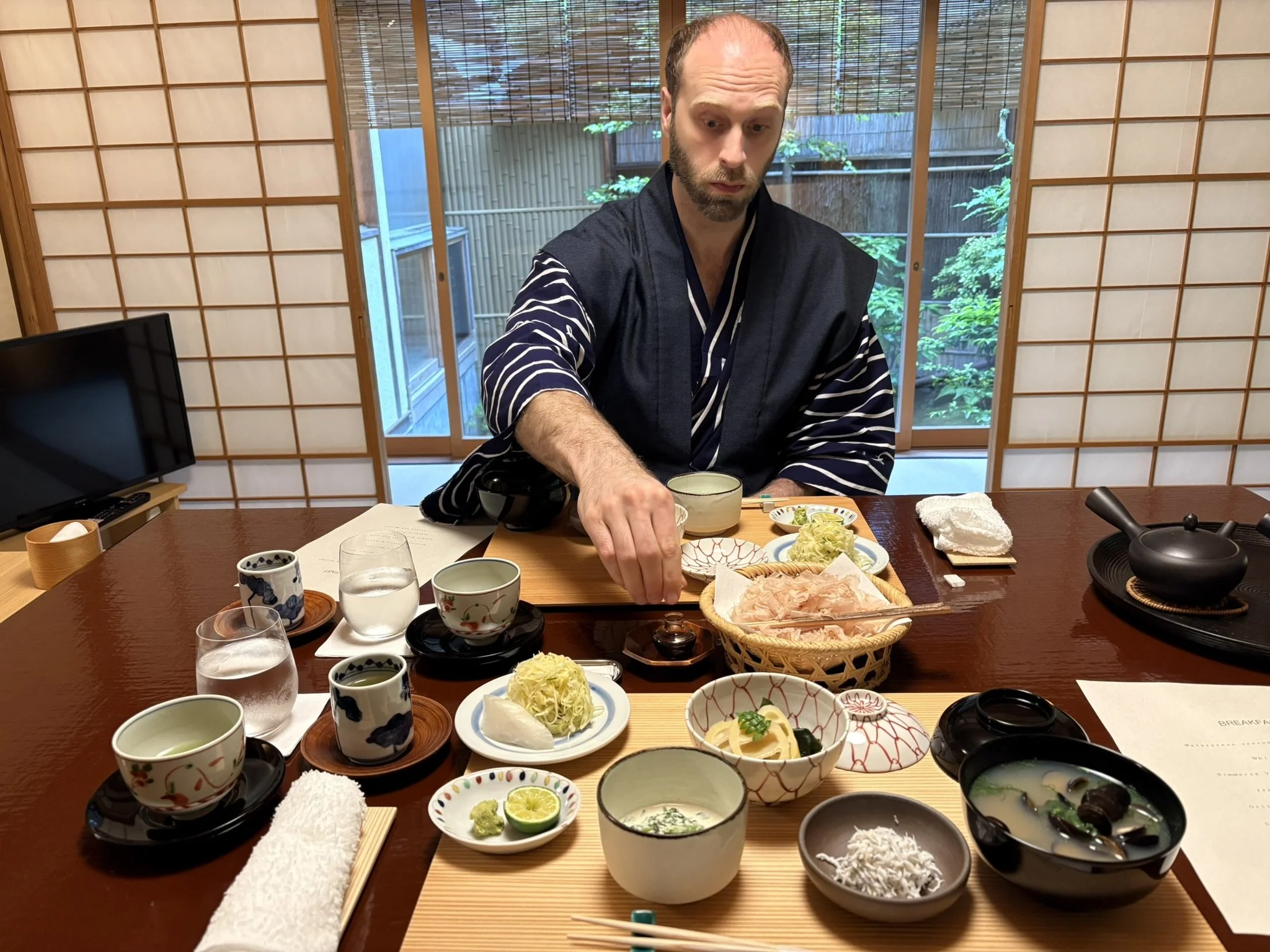
All the little dishes were so cute!
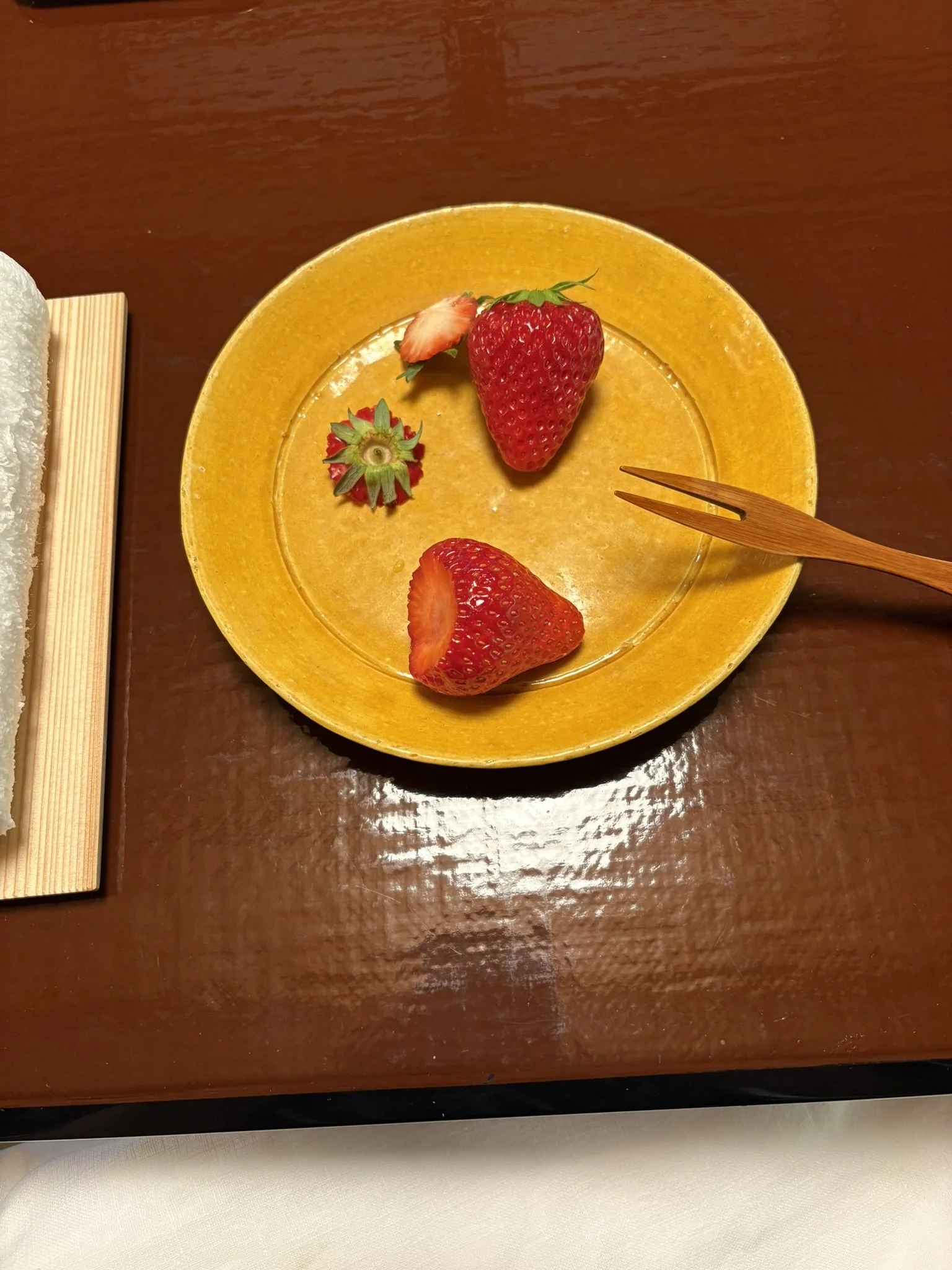
Fresh seasonal strawberries are a big deal in Japan, just like in Michigan! Some places are famous for serving them up on sticks and covered in syrup.
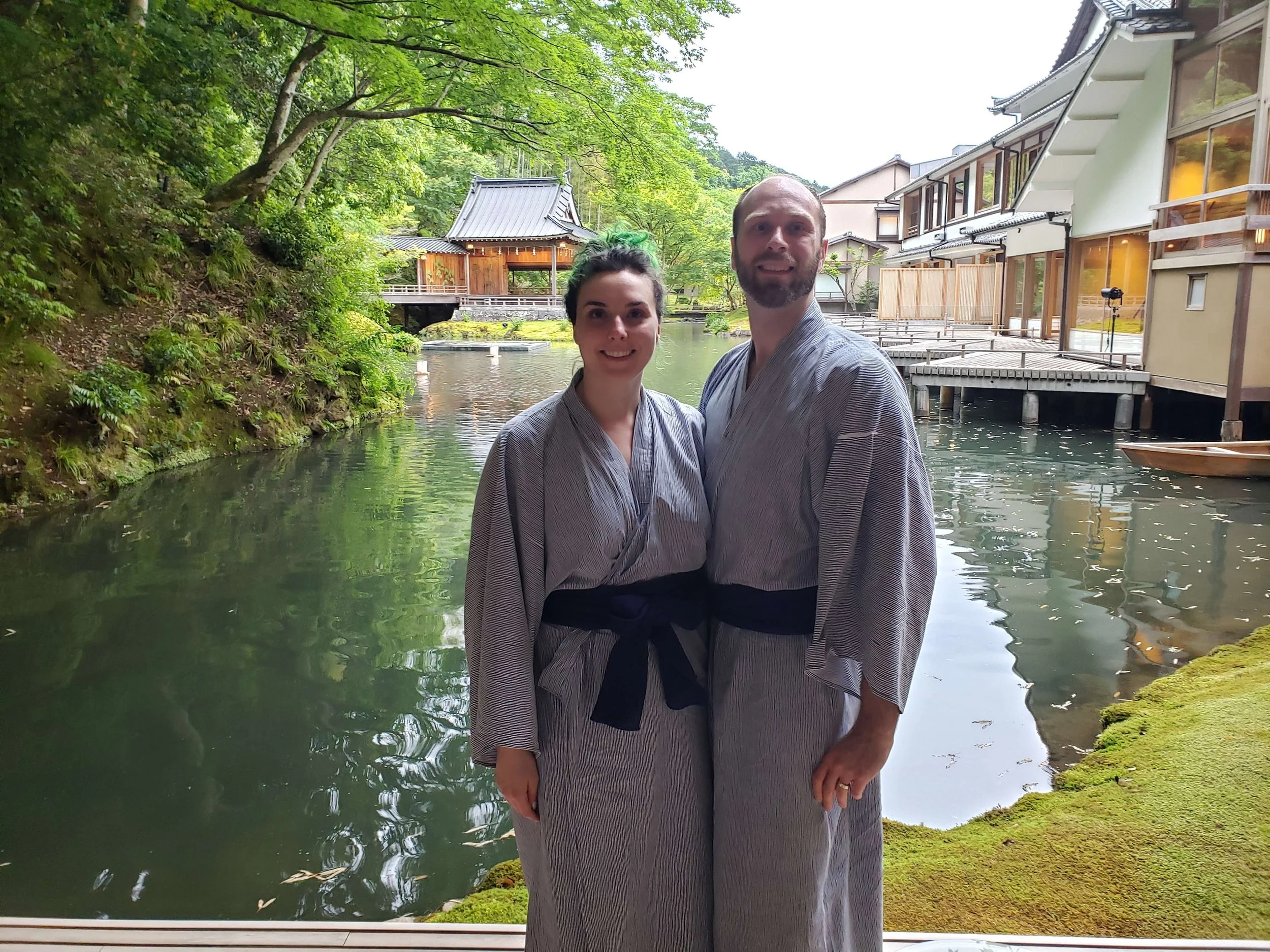
We met another couple from the US in the lounge, and they were nice enough to take a picture of us.
Onward to Kyoto!
