Locale 1: Kamakura & Enoshima
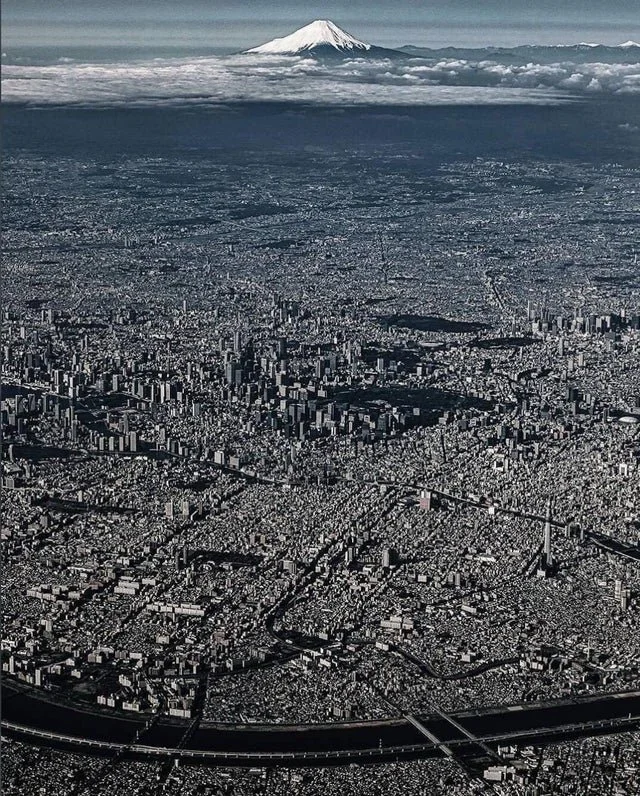
Aerial view of Tokyo (not my picture)
Somewhat ironically, vacations are the place where I am THE most organized.
I think it’s a consequence of my blue collar Midwestern upbringing — if I purchase a flight, my first concern is how I can get my money’s worth on it, lol. With this in mind, I did a LOT of research on how to make the most of our 14 days in Japan.
My first decision: to fly into Tokyo and then immediately leave it. Tokyo is widely considered the most populous city in the world (13 million residents in the city proper, and 37 million in the greater metropolitan area). It looks insane in pictures and even more insane from the air — like a city that just never ends and stretches on forever.
I figured that the last thing I’d want to do after a 13-hour flight was roll up into a crowded, busy megapolis with totally foreign customs where I was also functionally illiterate, so I opted to make our first base of operations Kamakura, a smaller city that’s about 40 minutes from the center of Tokyo by train.
(I’m about to talk a lot of travel-related and planning stuff, so if you’re like “Shut up, Morgan, I just want to see the cool pictures,” scroll to the next section)

Day 1: Arriving in Japan
May 9
Steps walked: 16,456
Flights of stairs climbed: 34 (somehow)
I have no actual pictures from this day and I actually kinda barely remember it. We flew out from Detroit at like 2PM on Thursday, May 8 and arrived in Tokyo at 4PM on Friday, May 9 after a 13-hour direct flight. Japan is 13 hours ahead of the Eastern US time zone (14 hours in winter) and it is pretty brutal. I dealt with it by opening the window shade next to my seat on the airplane and staring out into the blinding daylight every time I felt even mildly sleepy.
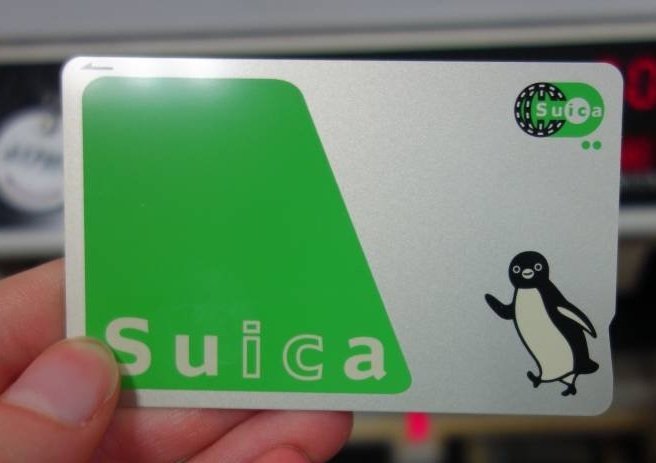
Behold, the Holy Grail of Japanese travel: the Suica card
After arriving, we waited in a customs line for like an hour, and then I had to show some paperwork from the Japanese Narcotics Control Department stating I had permission to bring my Vyvanse into the country (Note: never assume you can just take your prescriptions anywhere with you, especially Asia. Asian countries really do not mess around with their drug laws). The Japanese customs experience was also my first introduction to how much accomplishing anything in Japan relies on the use of QR codes.
Seriously, though. If you’re a QR code hater, Japan is not the country for you.
Once we were cleared for entry, my first mission was finding us IC cards, which are the second piece of technology you need to be able to do literally anything in Japan.
IC cards are these little rechargeable ‘smart cards’ that you can use for everything from public transportation fares to vending machines to shops and restaurants. If you have an iphone, you can add it to your wallet and just tap your phone at the kiosks on buses and trains to enter and pay your fares. The combo of Apple Wallet Suica and Google Maps public transit route view (which is very accurate in Japan) were probably 2 of the 3 foundational pillars that built the success of our trip. The third pillar was combini, but I’ll talk about that later.
Our first hotel: Sotetsu Fresa Inn Kamakura-Ofuna Higashiguchi
Hotels in Japan are small but also clean, safe, and very reasonably priced. We stayed in a variety of lodgings, from super upscale to budget business travel (no capsule hotels, though - you can’t share them as a couple, and Jeff and I are also literally giant by Japanese standards, so it seemed like it would be a recipe for a crappy night of sleep).
I booked most of our hotels through Delta and picked them based off two factors:
Proximity to train stations
Cheap but still at least decently rated
I’m not usually a ‘nice hotel’ person, especially on an international trip, unless there’s something truly unique and special offered. Otherwise, I’m looking for a place to shower and pass out at the end of the night.
The first place we stayed was a Sotetsu Fresa Inn in Ōfuna (a suburb of Kamakura), which is one of the major Japanese ‘business hotel’ chains. The space around the bed was essentially a one-way street — like, if one of us was trying to get to the bathroom or get dressed or something, the other had to be on the bed for us to fit through, and our suitcases took up about 80% of the available floor space. BUT it was also like $100 a night (good luck finding a hotel in the US for that price that isn’t like actually sketchy and/or disgusting), had nice amenities, and was a five-minute walk from the train station.
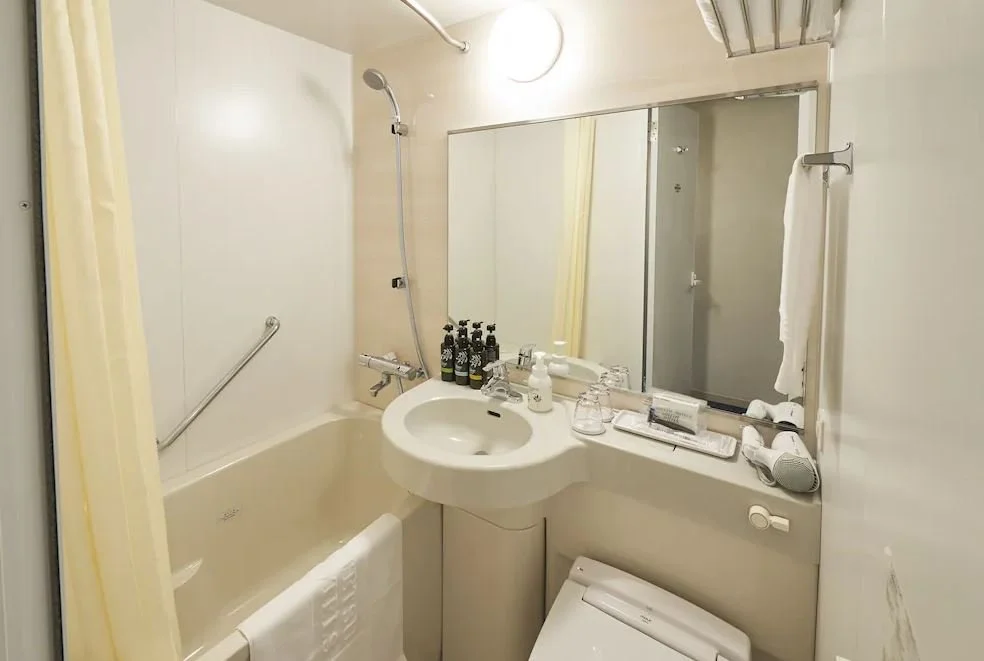
Fun fact: a lot of bathrooms in Japan are created as a complete little unit with sink, toilet, and tub/shower included together.
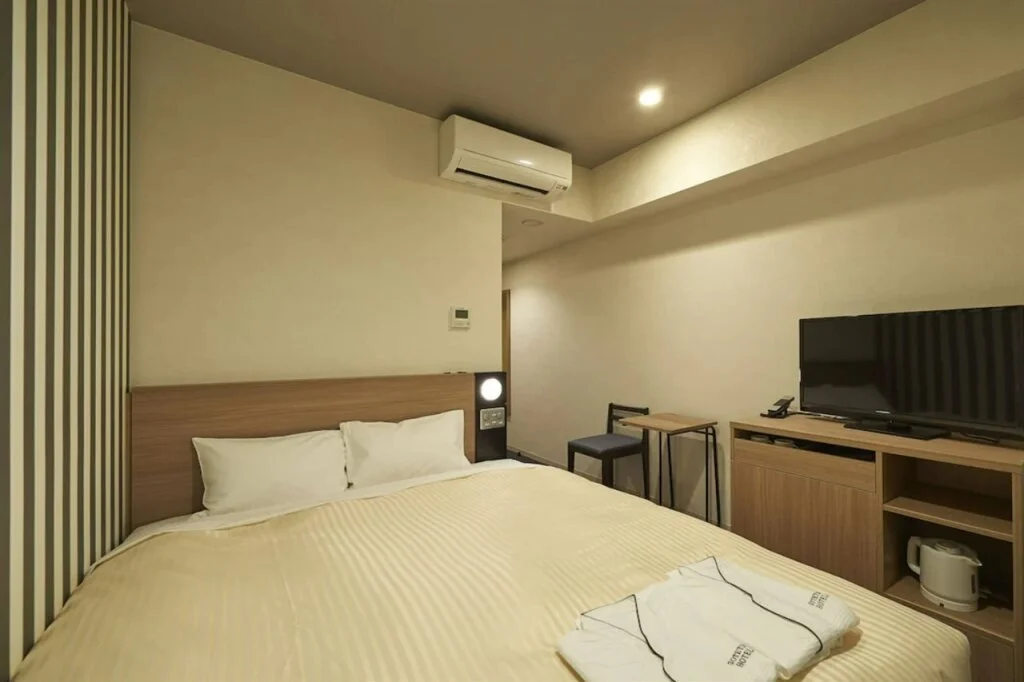
Compact but comfortable.
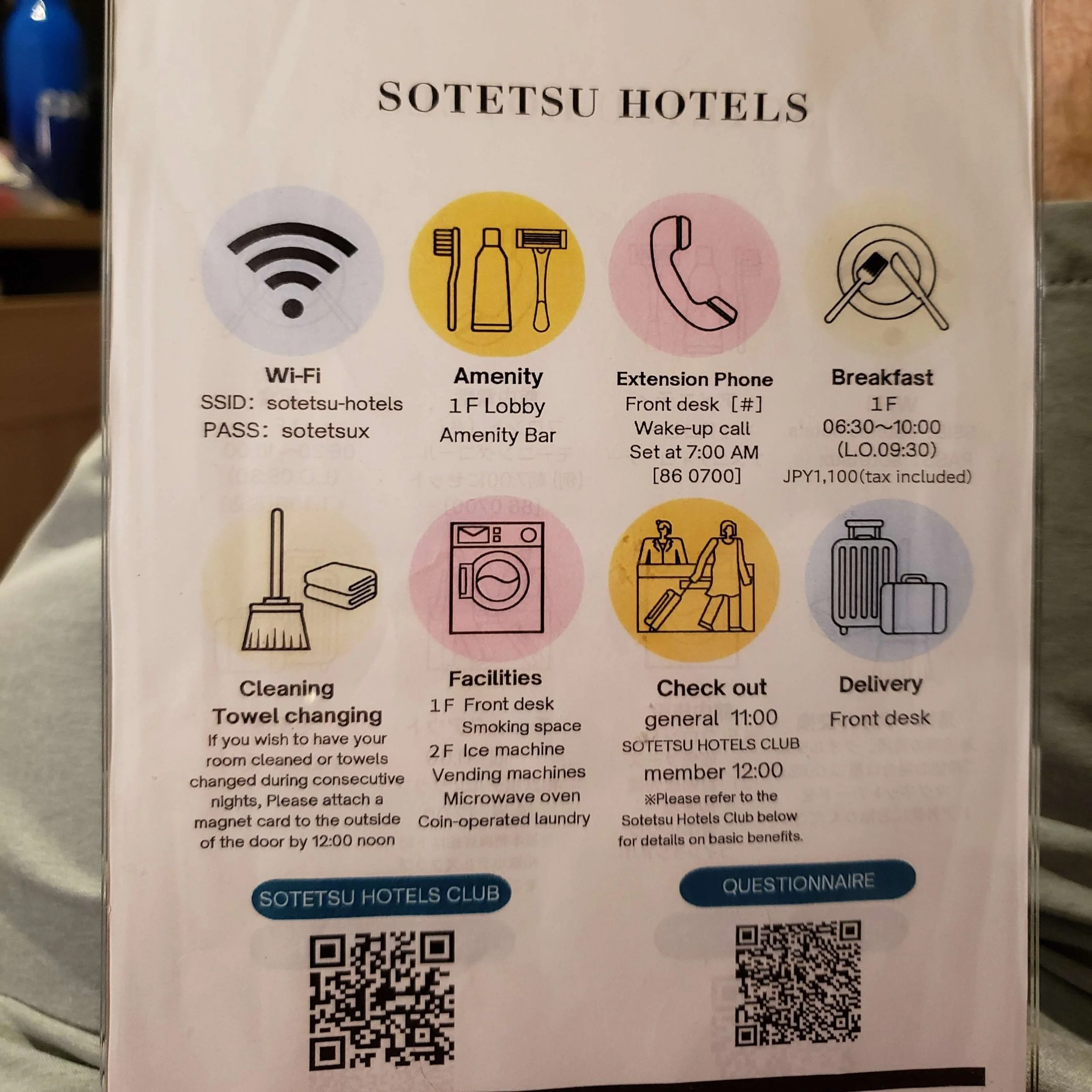
Pro traveler tip #1: Stay in places where you can do laundry, so you don’t have to pack as much!
Eating in Japan
Our first meal in Japan was from 7/11. It was not our first choice, nor our second or third, haha.
When I travel, I’m usually a person who eats on the fly — if I start to get hungry while I’m wandering around, I’ll pull up Google Maps and figure out what’s nearby. You cannot do this in Japan, at least not for dinner. A lot of non-chain restaurants can fit like 10-20 guests max, so you often need reservations to eat at popular spots (usually a few days in advance).
Dinner reservations are done either through like 9 different apps (kill me) or by begging a hotel front desk worker to call for you (again, kill me). Alternatively, you can show up right when a restaurant opens and hope for the best. I didn’t actually know this when I arrived in Japan, so our first night there was a bit of a disaster.
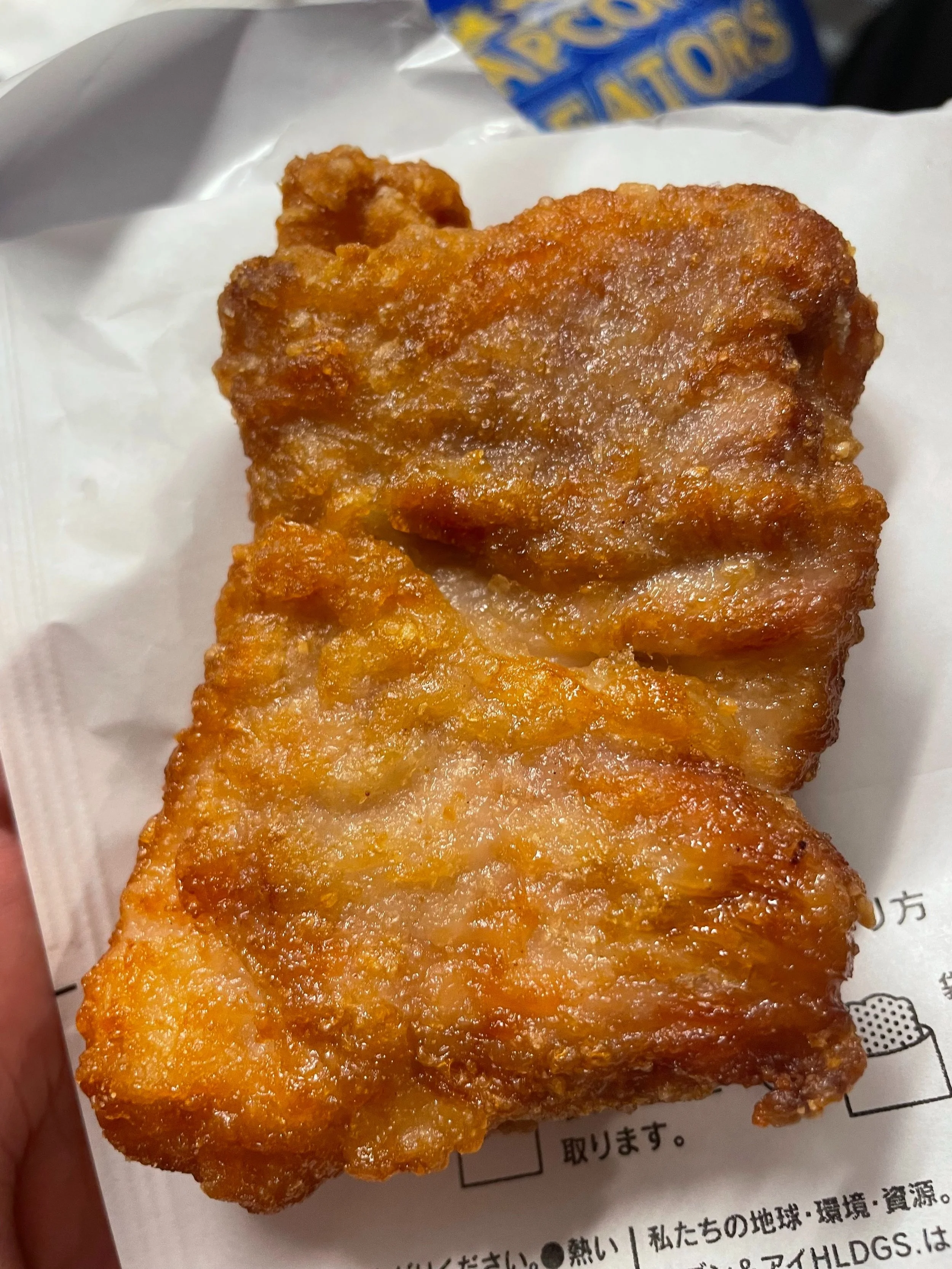
I love you, combini chicken.
The first restaurant we went to, the host apologetically held up his fingers in a little “x” sign. This generally means, “We’re full/booked up with reservations for the rest of the night.”
The second restaurant we went to was closed even though the hours listed online said it would be open until at least 10. (This is also a thing you’ll run into often in Japan — posted hours are NOT reliable for restaurants. A lot of food is made fresh, with ingredients that get delivered daily, so if they run out of those key ingredients, they’ll close. Owners will sometimes decide they’re tired and want to be done for the day and close. Slow night? You guessed it, closed early.)
The third restaurant was a ramen bar with literally 8 seats and it seemed way to overwhelming to even attempt at that point (after two failures, when we were starving and had been up for literally like 20 hours at that point).
So, we went to 7/11.
It’s important to note that 7/11 in Japan is different. The three main combini (convenience) store chains in Japan (7/11, Family Mart, and Lawson) all sell cheap and good-quality cold and hot food, and they were frequently there for us in times of great need. 7/11 is famed for its egg sandwiches and Family Mart for its fried boneless chicken thighs, but I never really ate anything for a combini that I didn’t like.
I cannot overstate how delicious that chicken was. Also, it’s like 280 yen, which is roughly $2 USD. Can’t beat it in a pinch.
After buying like $20 of convenience store food, we returned to our hotel and passed out at like 8:30 PM.
Day 2
May 10
Steps walked: 18, 630
Flights of stairs climbed: 55
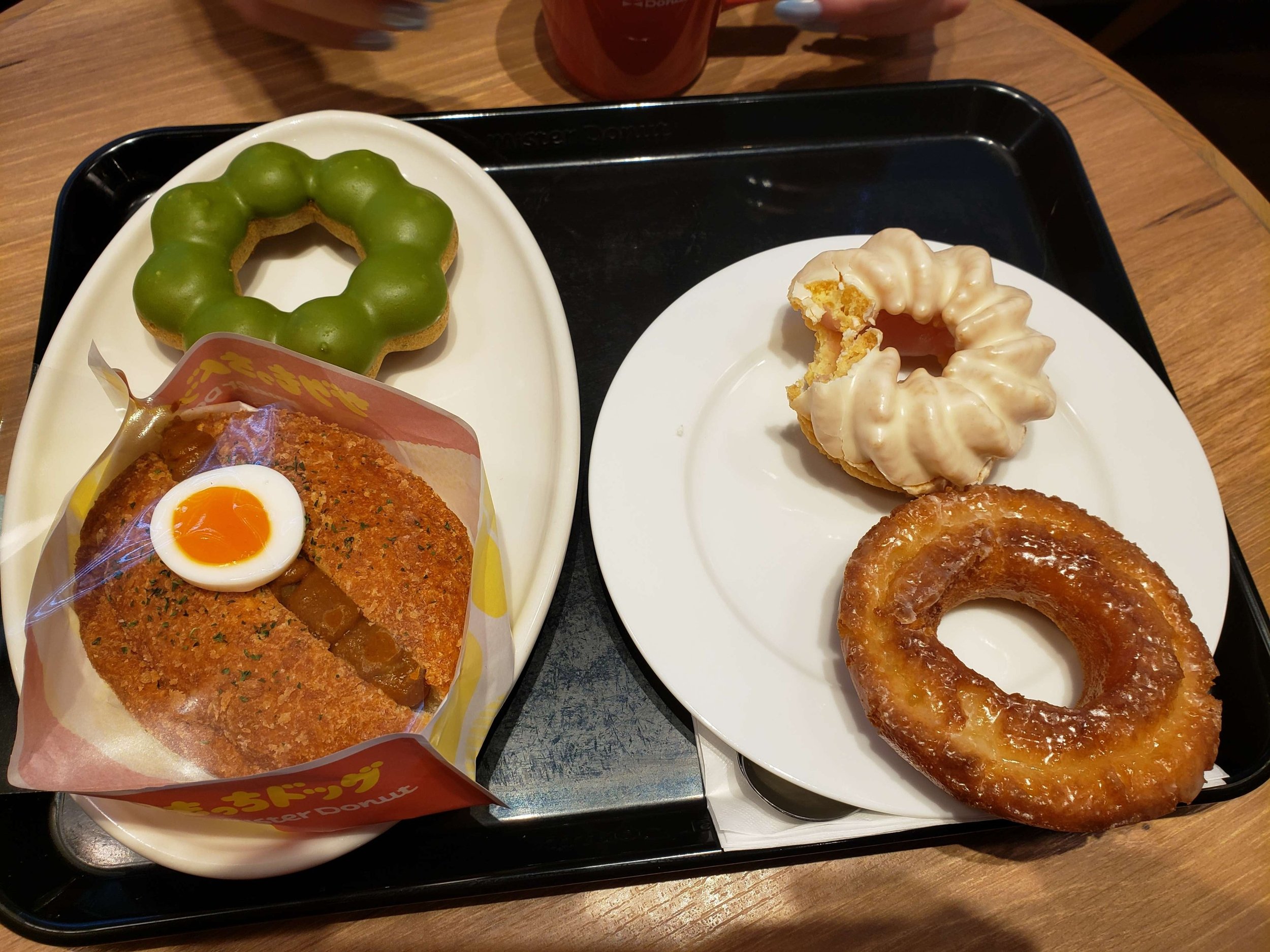
“Oh, I should take a picture of this!” — Me, when the food is already in my mouth.
My first full day in Japan began at 2AM, which is about the time Jeff and I both woke out of a dead sleep. I was able to will my confused and jet-lagged body back to sleep until about 6; Jeff was not (rip, Jeff).
We left our hotel about 8AM and, after a bit of walking around in a drizzly rain, learned that most cafes and shops don’t open until around 10 or 11. What was open was this little chain called Mister Donut, so we went there.
We tried donuts with matcha topping and red bean filling, which were good, but Jeff also got this wild ‘donut’ that was actually also a hot dog topped with curry sauce and a slice of egg.
I like traditional Japanese food a LOT, but to be honest, I had a lot of fun eating Western-style food on this trip because you’ll come across some pretty creative fusions.
After breakfast, we hopped on a local train to Enoshima, which is an island with a shrine, park, observation tower, and caves. There’s some really nice beaches along the coast in that area as well, but it was a little early in the season for that, so the only people in the water were surfers.
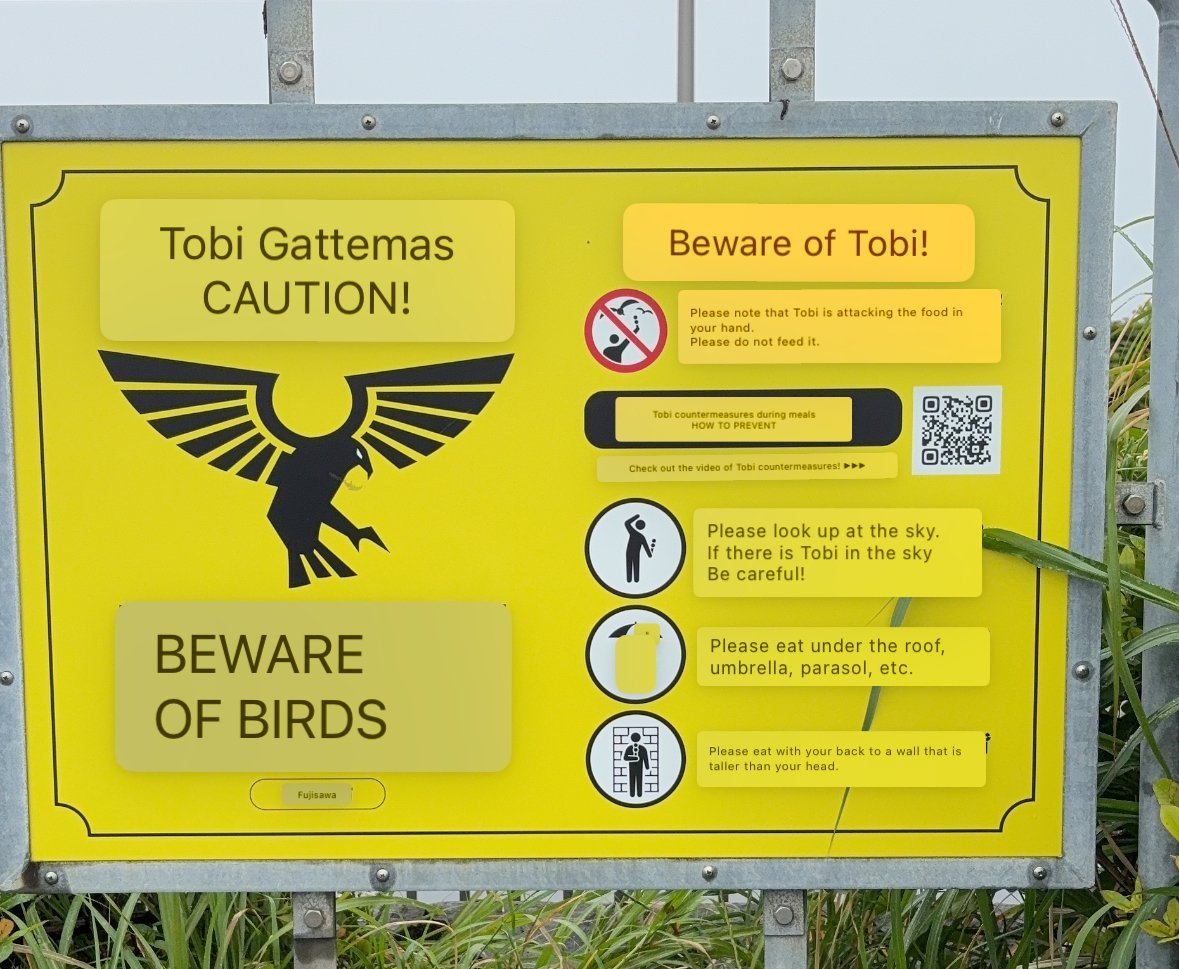
Pro Traveler Tip #2: Beware of Tobi. Tobi is a jerk.
A sidenote: if you have an iPhone 16 or newer, there’s a little button on the bottom right side of your phone that brings up “Apple Visual Intelligence,” which lets you take a picture of something and either translate it, ask a question about it, or search it on Google. I found it VERY useful for translating signs and menus.
Google Translate has a similar feature for translation, but you really can’t beat the convenience of having a dedicated button for combating your illiteracy.
Arriving at Enoshima Island
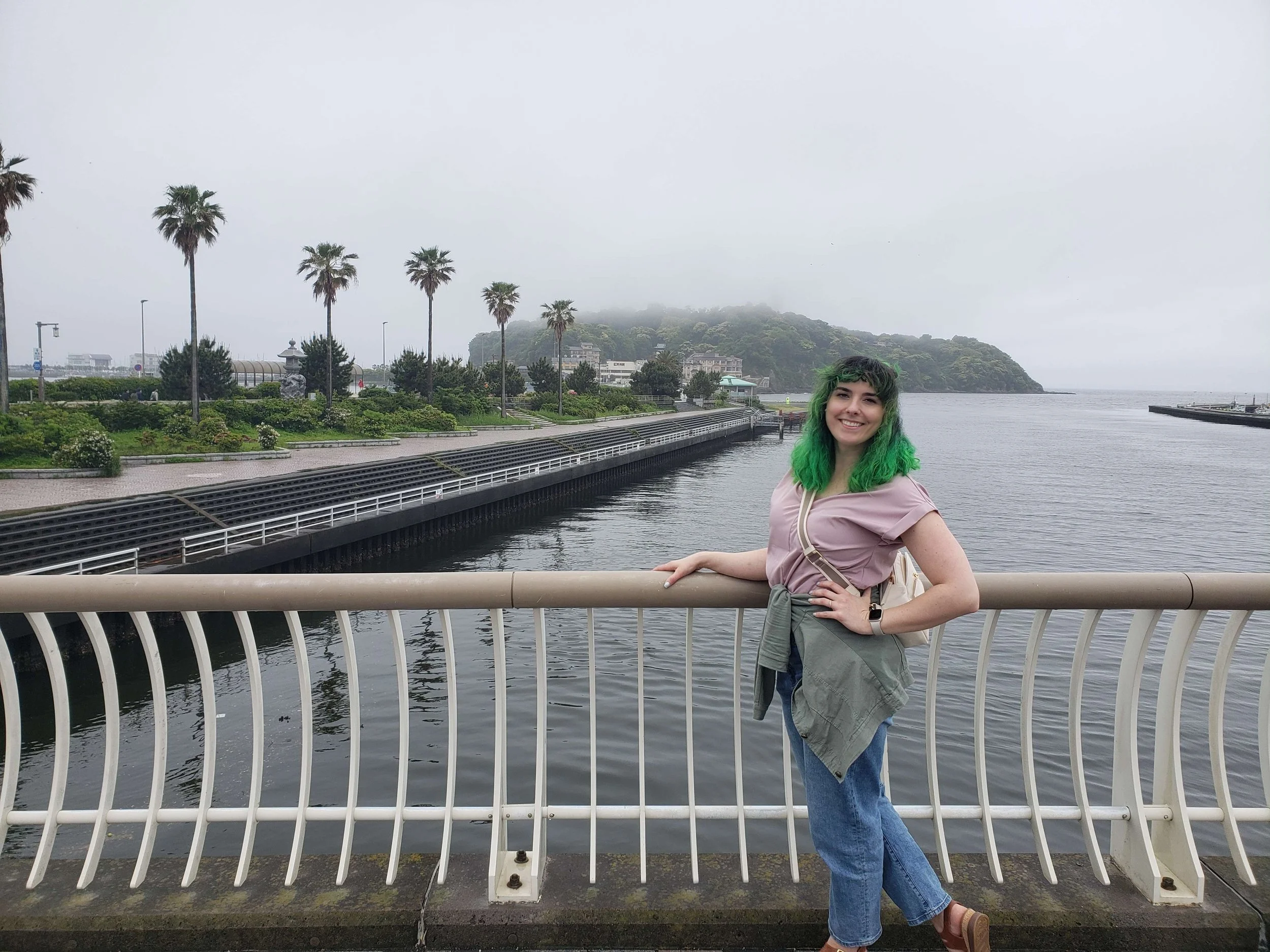
It was kind of cool visiting it when the weather was a little foggy and rainy because the island disappearing into the mist made it seem super mysterious.
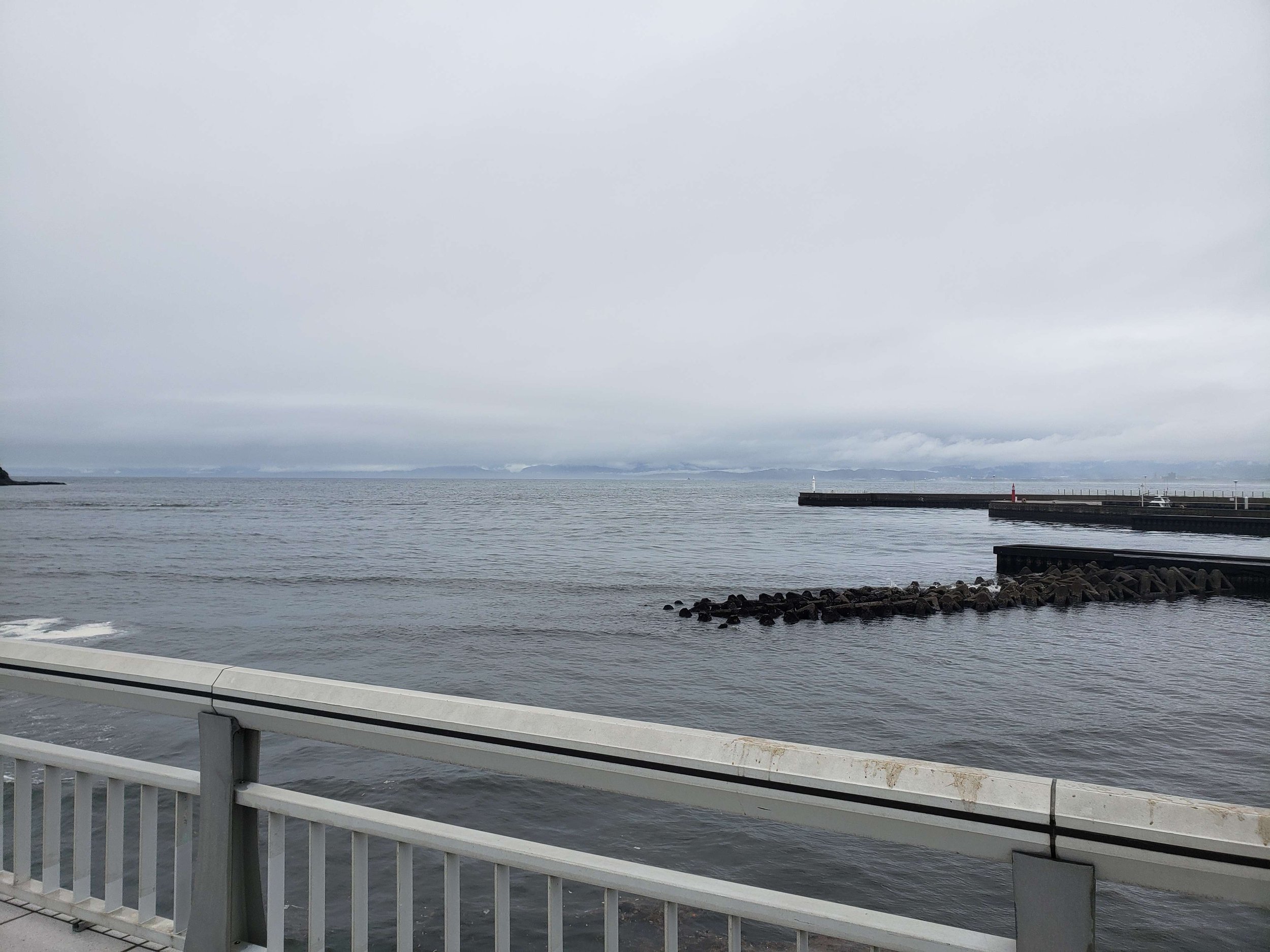
A choppy day in the Sagami Bay.
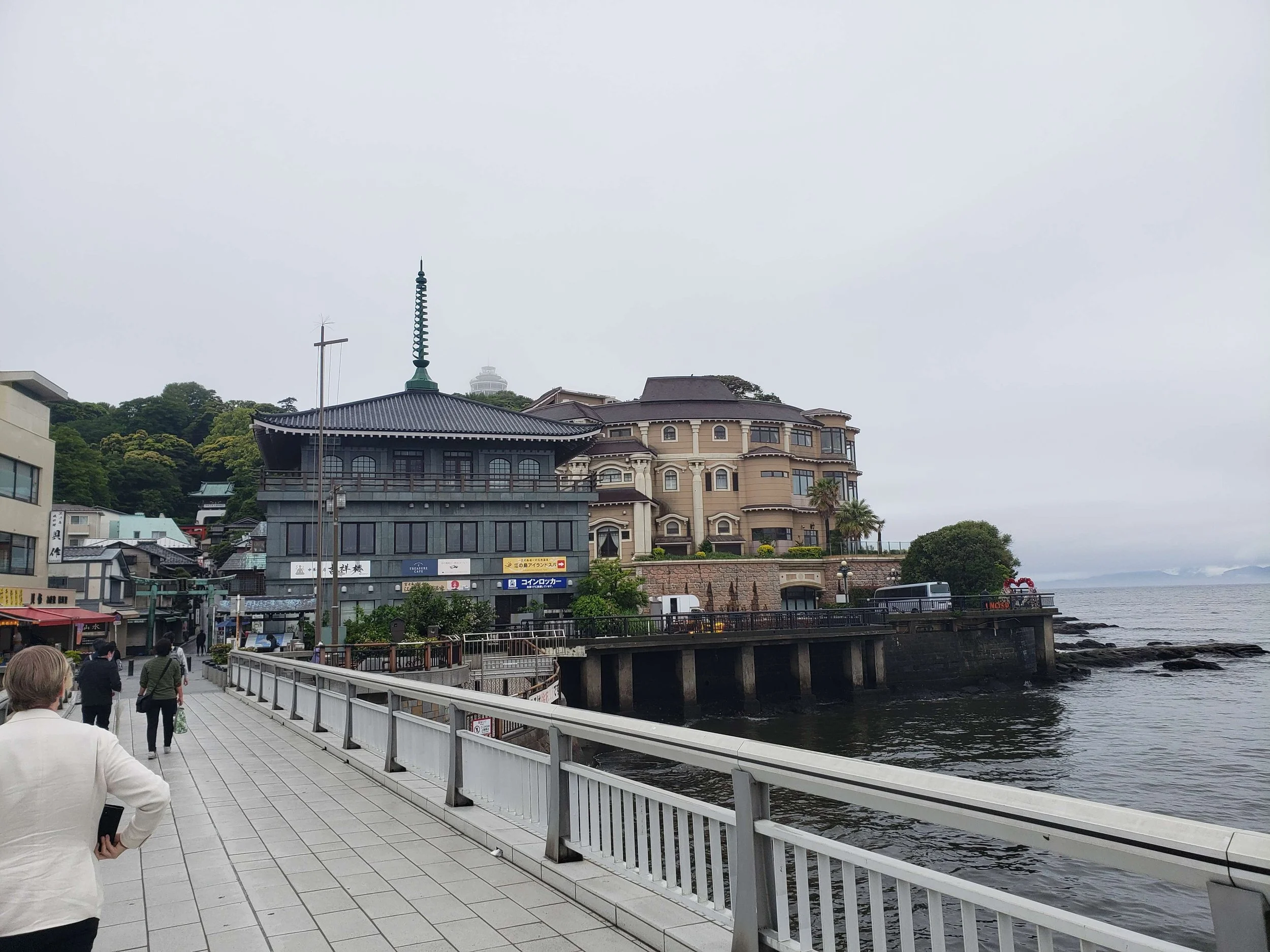
The island has a lot of resorts and hotels — it kind of gave me a Mackinac Island vibe!
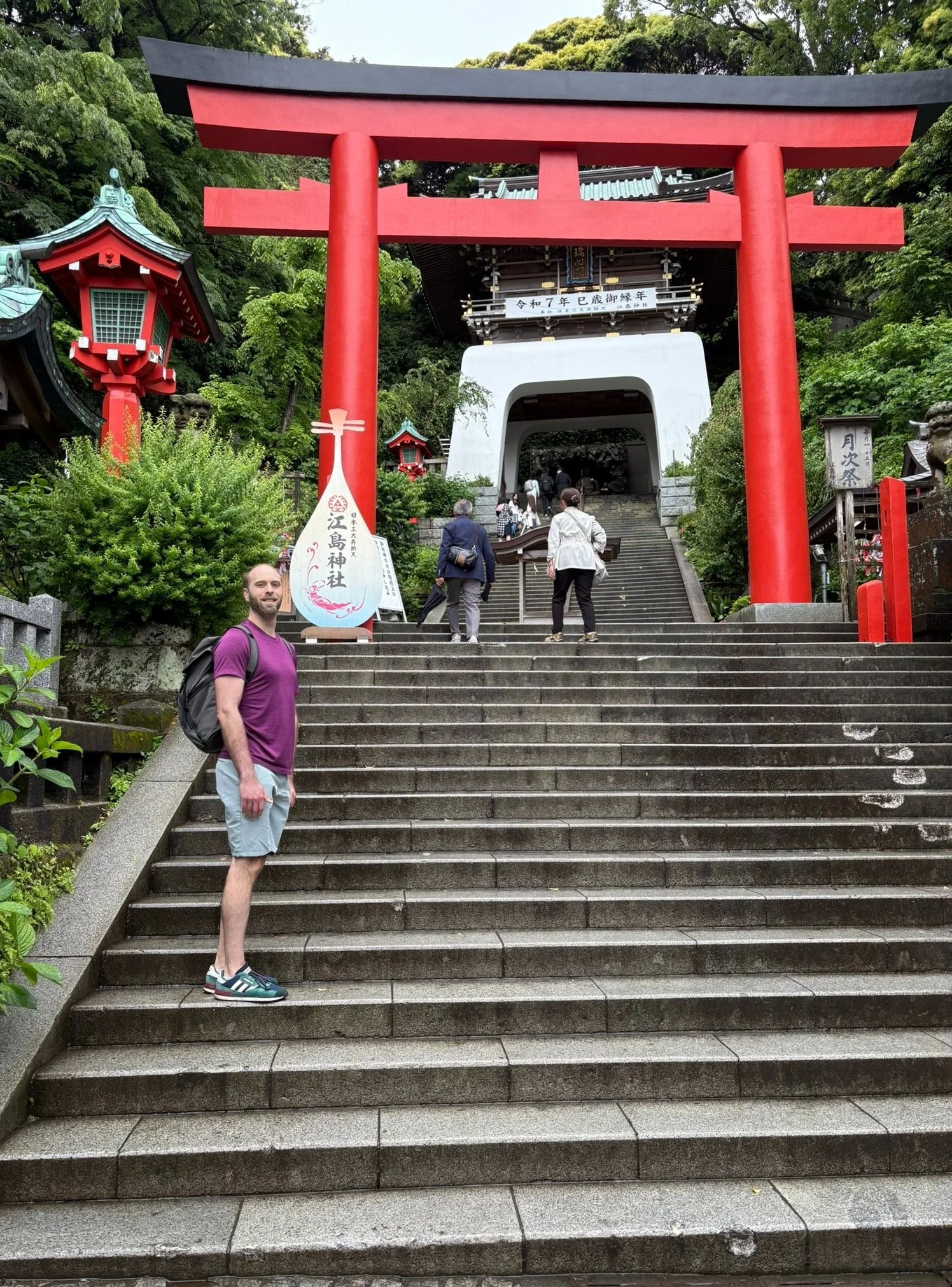
This was the first of like 25 flights of stairs.
After walking through a narrow street of shops that hadn’t yet opened, we arrived at our first Torii gate of our trip.
On Torii Gates
Torii gates are iconic traditional Japanese architecture that mark the entrance to sacred spaces. They’re typically associated with the Japanese Shinto religion, but you’ll see them in Buddhist spaces as well — in Japan, the two religions are kind of practiced side by side, with a lot of traditions intermixed (this was frequently confusing to me, but that’s probably just because I was raised Catholic and Christianity works VERY differently from either of these religions).
The gates represent the boundary between our mundane physical world and that of the divine realm. In Shinto belief, the world is populated by supernatural or spiritual entities (kami) that inhabit the same physical space we do but are ‘hidden’ from us. Mountains and rivers can hold the spirits of kami. Roads can have kami. Even people can become kami upon death if they are powerful or virtuous (like the emperor or a very respected clan leader).
Some kami are associated with particular locations or shrines, but in general they are understood to be constantly moving around the world just as we do. For this reason, it’s considered good etiquette to walk through Torii on either the left or right, leaving the space in the middle of the path for kami.
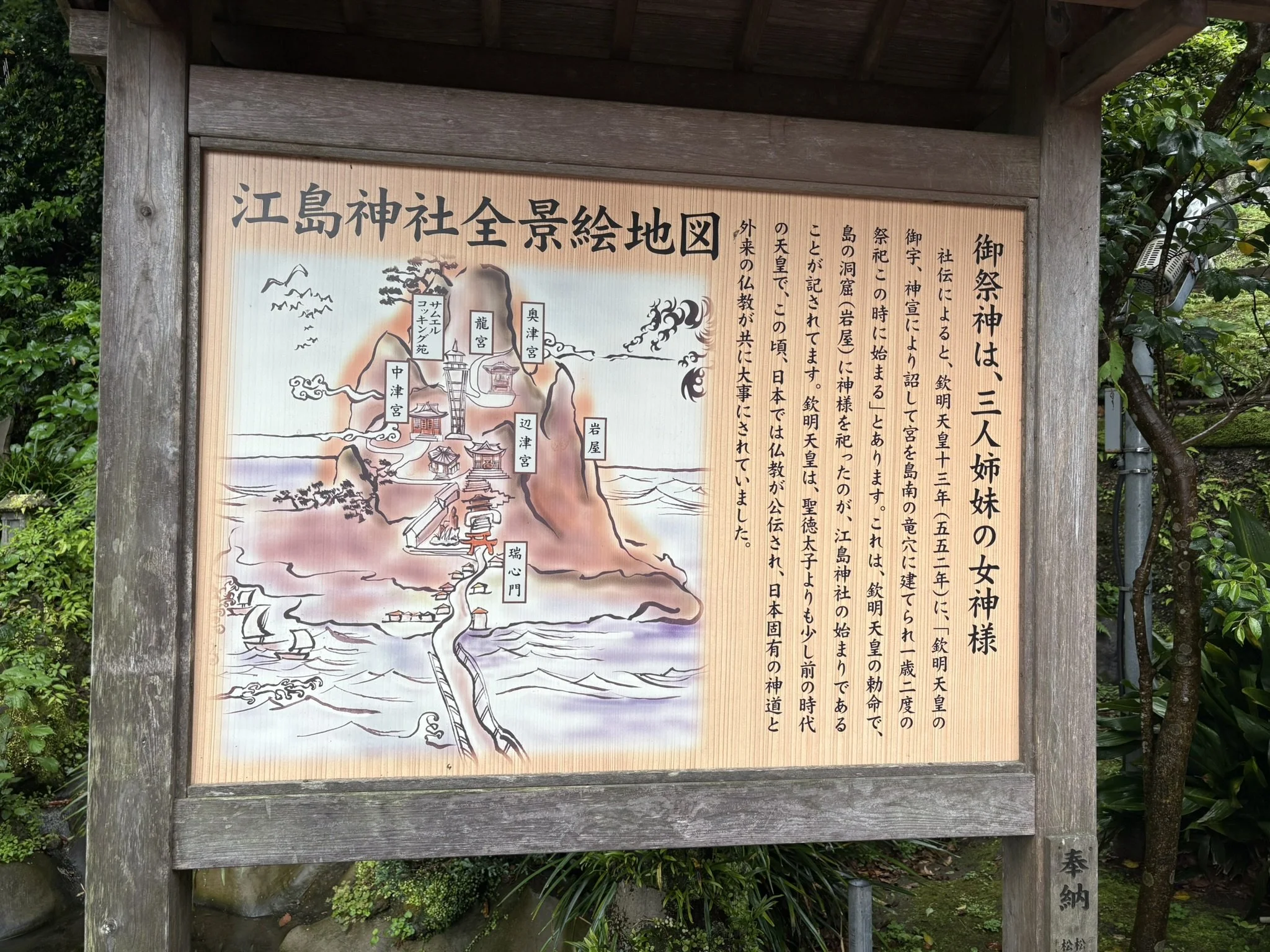
A map and description of the places around the island. I caught myself thinking, “Man, I wish I could read,” SO many times on this trip.
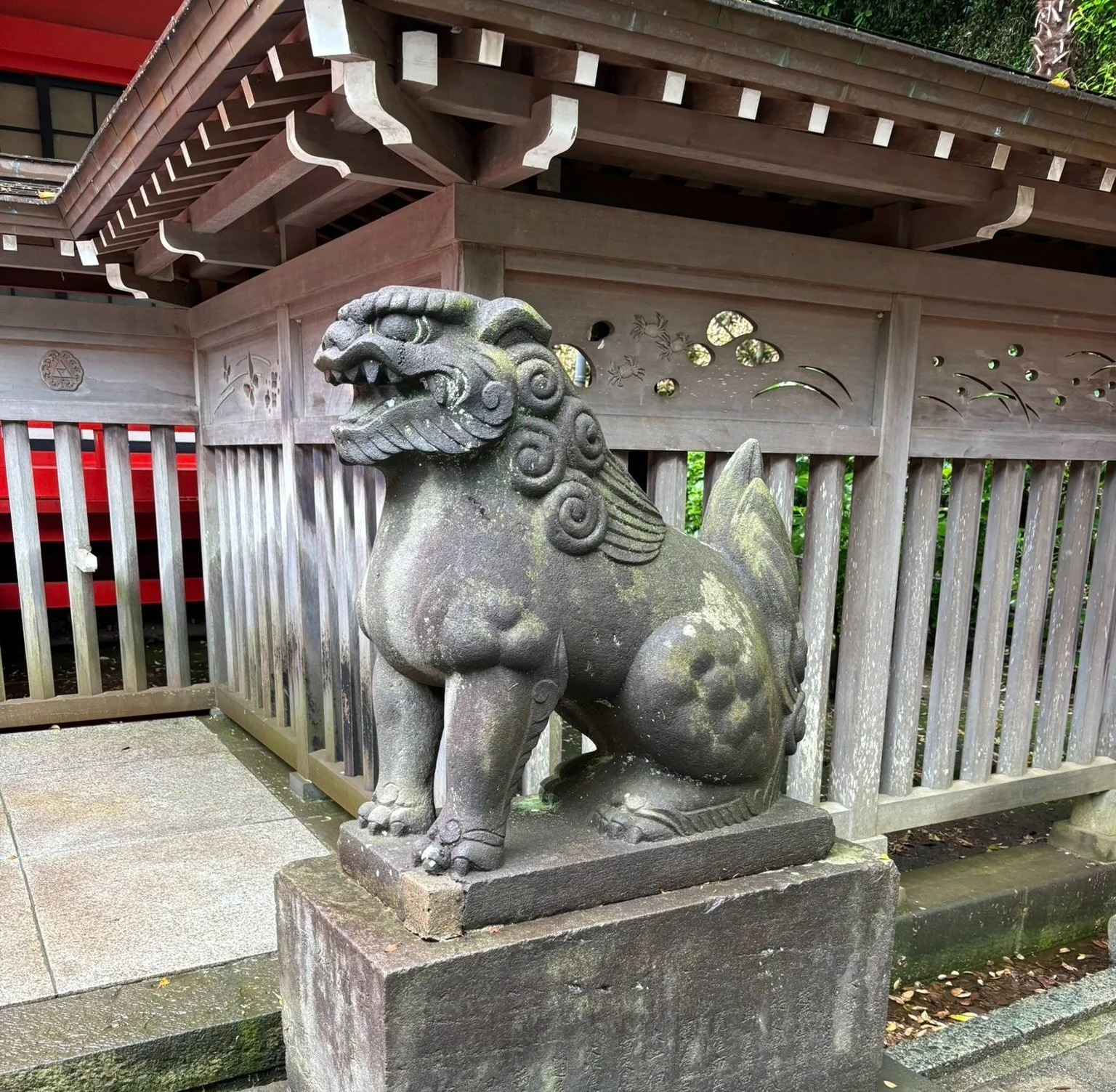
A pair of guardians are traditionally placed at shrines to ward off evil spirits.
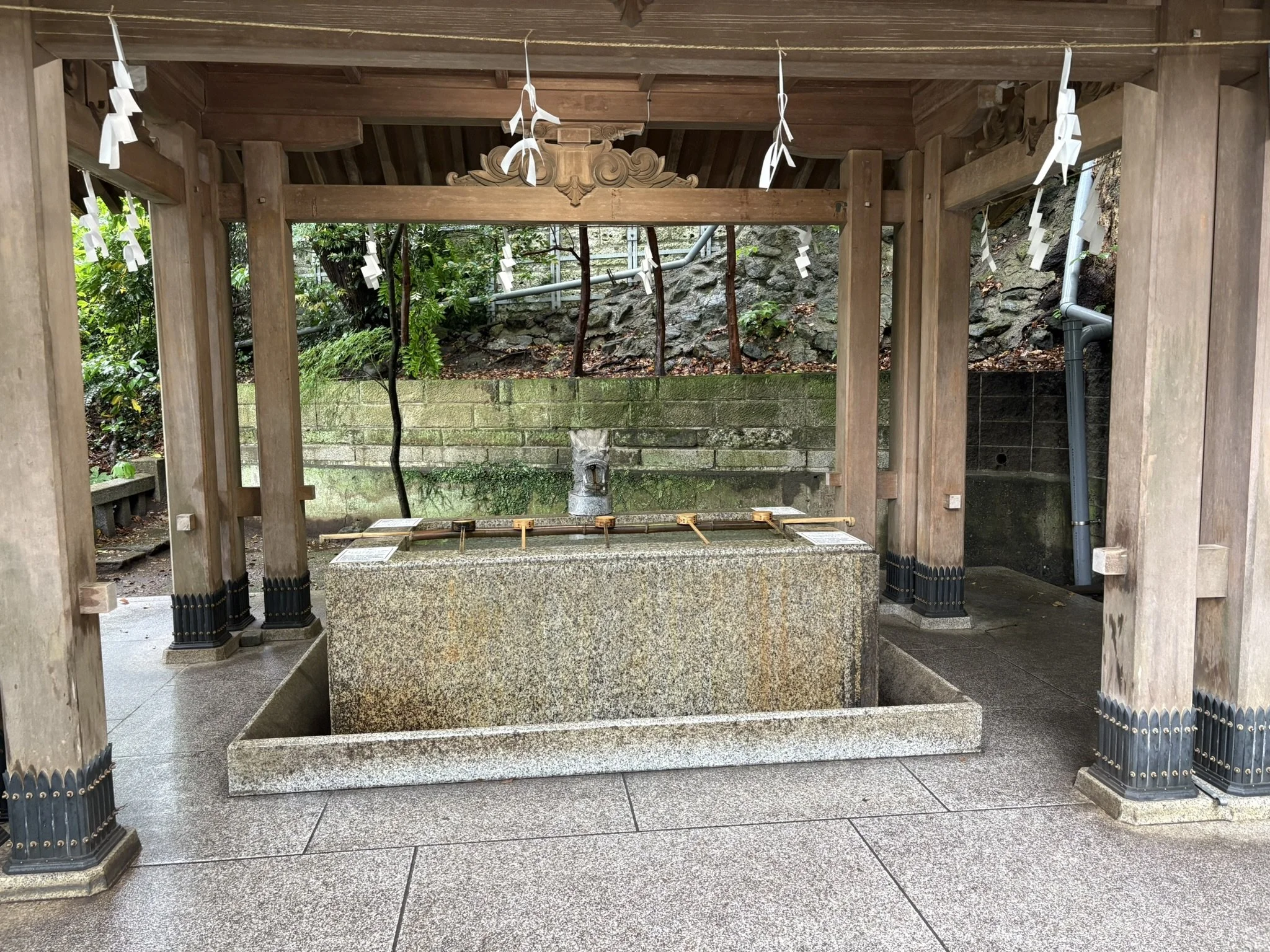
A place to purify your hands before entering the shrine. Purification (with water, fire, or salt) is a big part of Shinto practice.
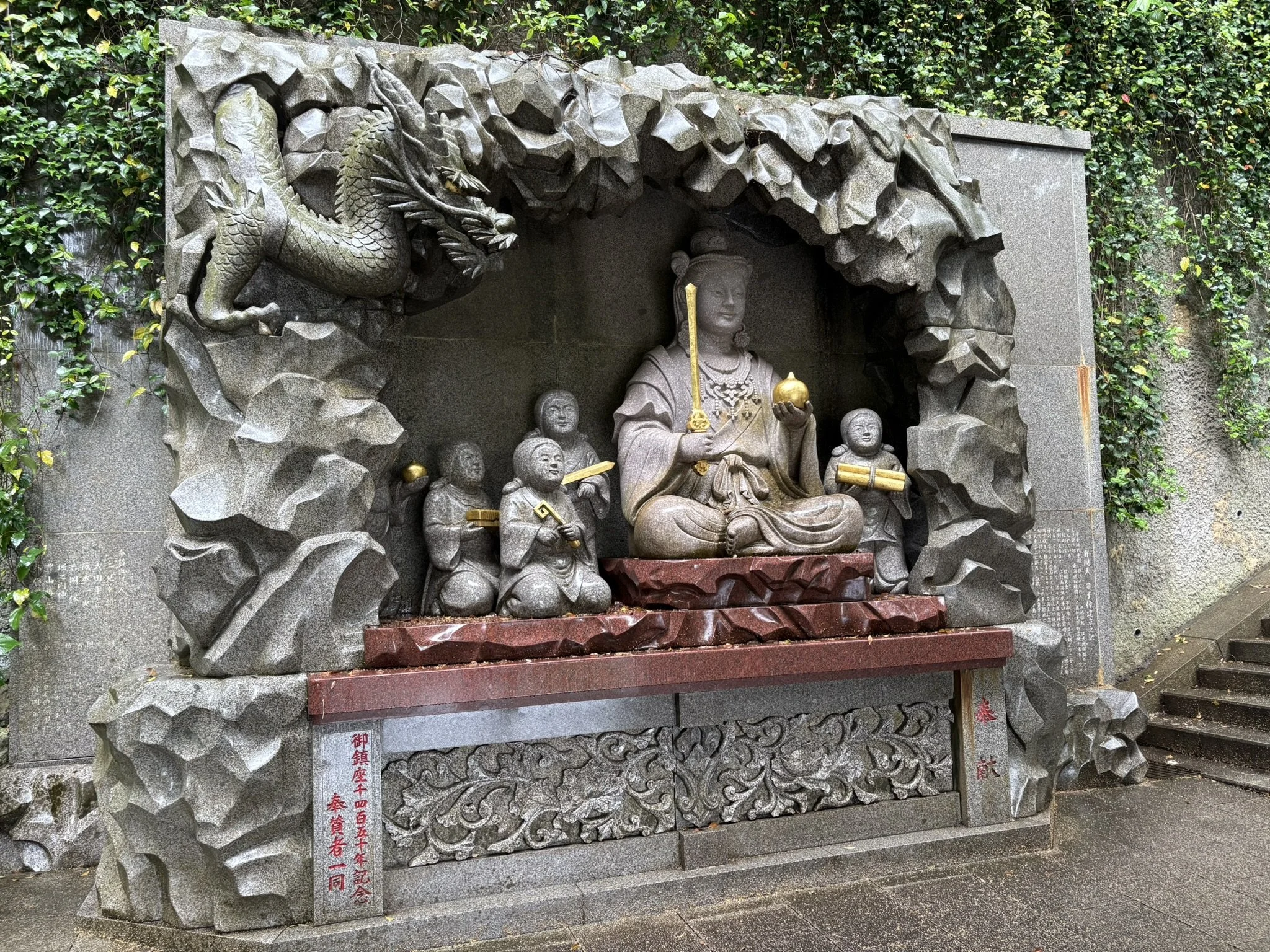
The shrine at Enoshima is dedicated to the kami Benten (a Buddhist goddess), depicted here.
Omikuji
One of the first things I noticed coming up to the shrine was these clotheslines full of tied-off papers. At first I thought they were like offerings or wishes to the spirits or something (remember, I can’t read, so if translate can’t figure out what something is saying, I definitely can’t), but eventually we figured out they’re actually fortunes! Fortunes, or o-mikuji, are one of the most common things you’ll find at Shinto and Buddhist shrines in Japan. You make a small offering (usually about 100-250 yen) and pull a random fortune. If it’s good luck, you take it with you. If it’s bad luck, you tie it off at the shrine so the bad luck stays there instead of going with you.
I had no idea how they worked the first time so I just tied mine to the line to feel included, haha. I can only assume it was a bad fortune, because we had a pretty great trip!
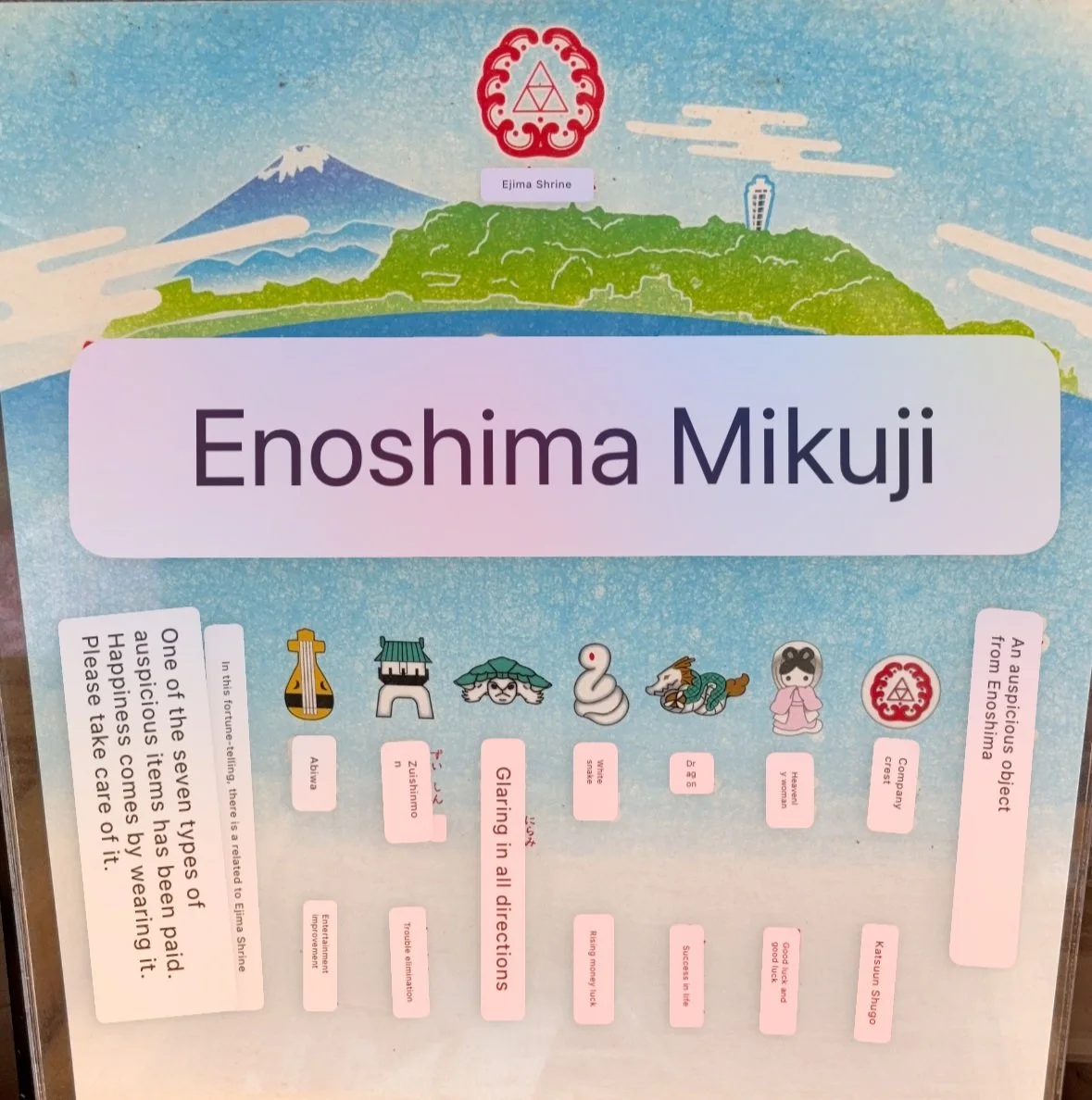
The only thing Apple Intelligence was really confident about here was “Glaring in all directions.” Surely you can understand my confusion.
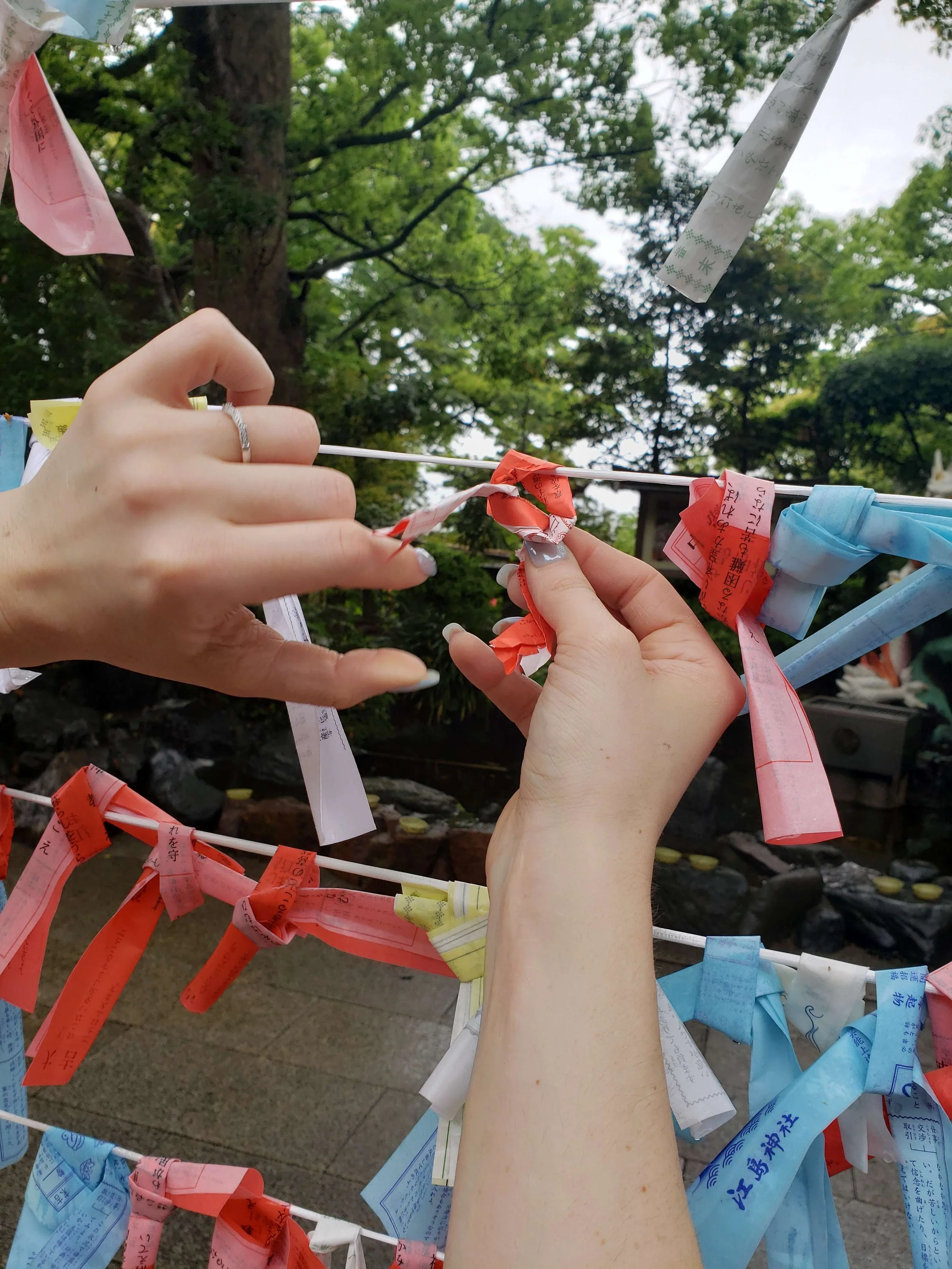
Pictured here: me tying off my fortune that probably has winning lottery numbers written on it, all because I’m illiterate in Japan.
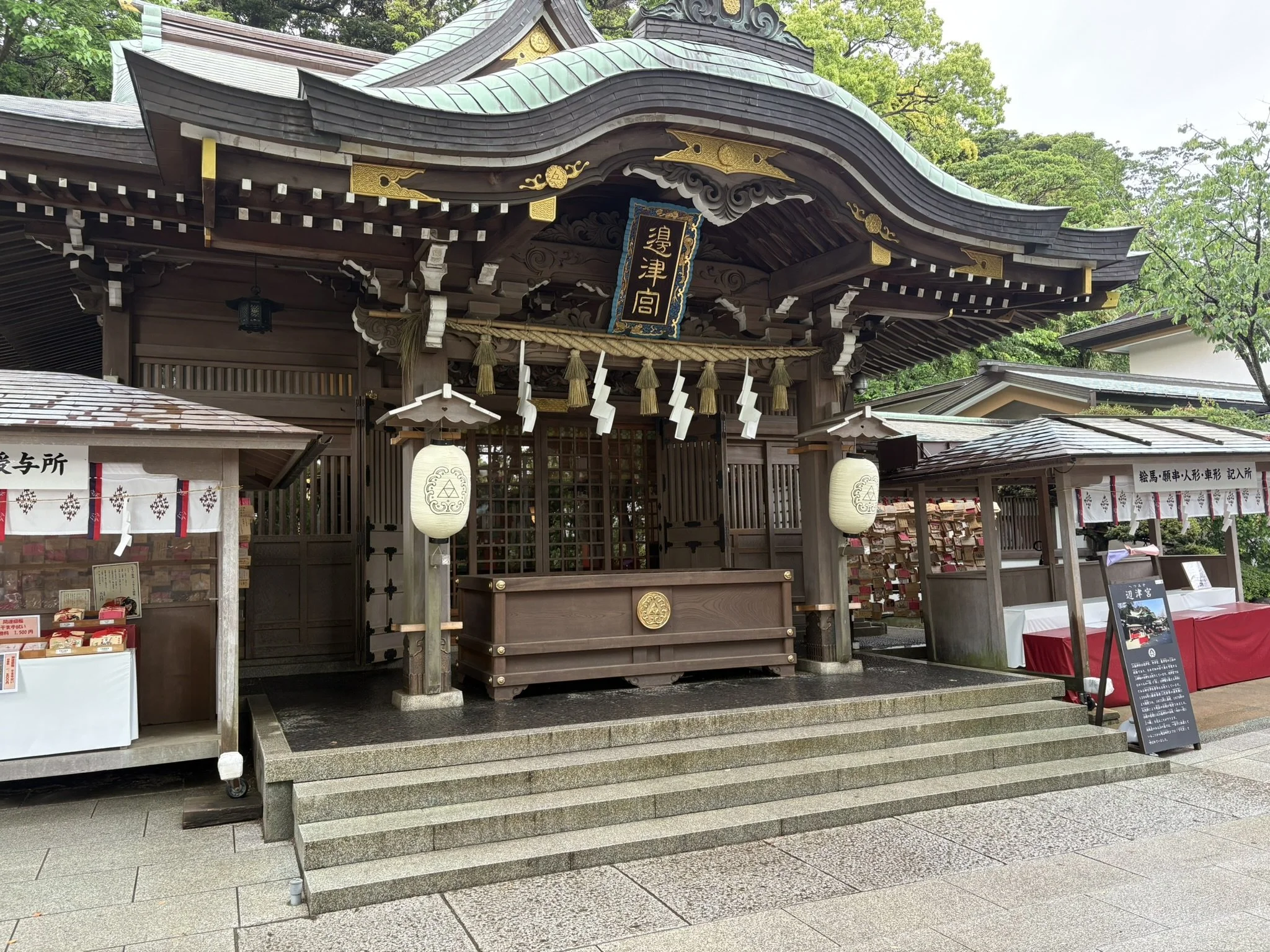
Enoshima Shrine! There were triforce symbols everywhere, which I didn’t figure out until later in the trip—they’re actually the symbol of the Hōjō clan, which ruled over the Kamakura shogunate for years.
I am not good at filming, especially when I get excited.
Continuing Up The Mountain
We kept continuing up the main path, past an observatory and to Samuel Cocking Garden, which was established by a British merchant (I’ll let you guess his name) in the late 1800s. He built a greenhouse and cultivated plants from all over the world, and the garden itself is a fun mix of Japanese and European gardening styles.
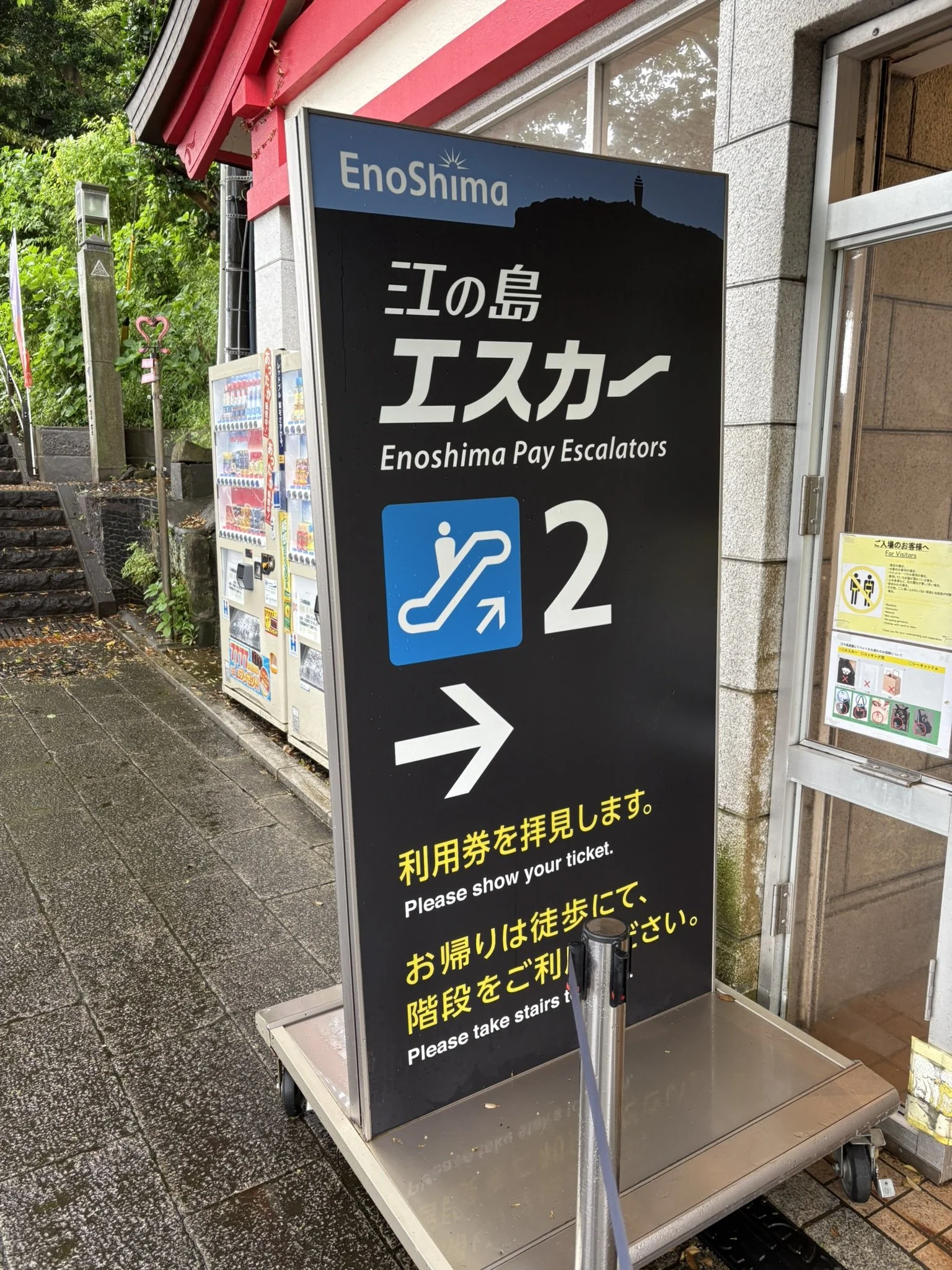
There were escalators, but you had to pay to use them. Classic Japan.
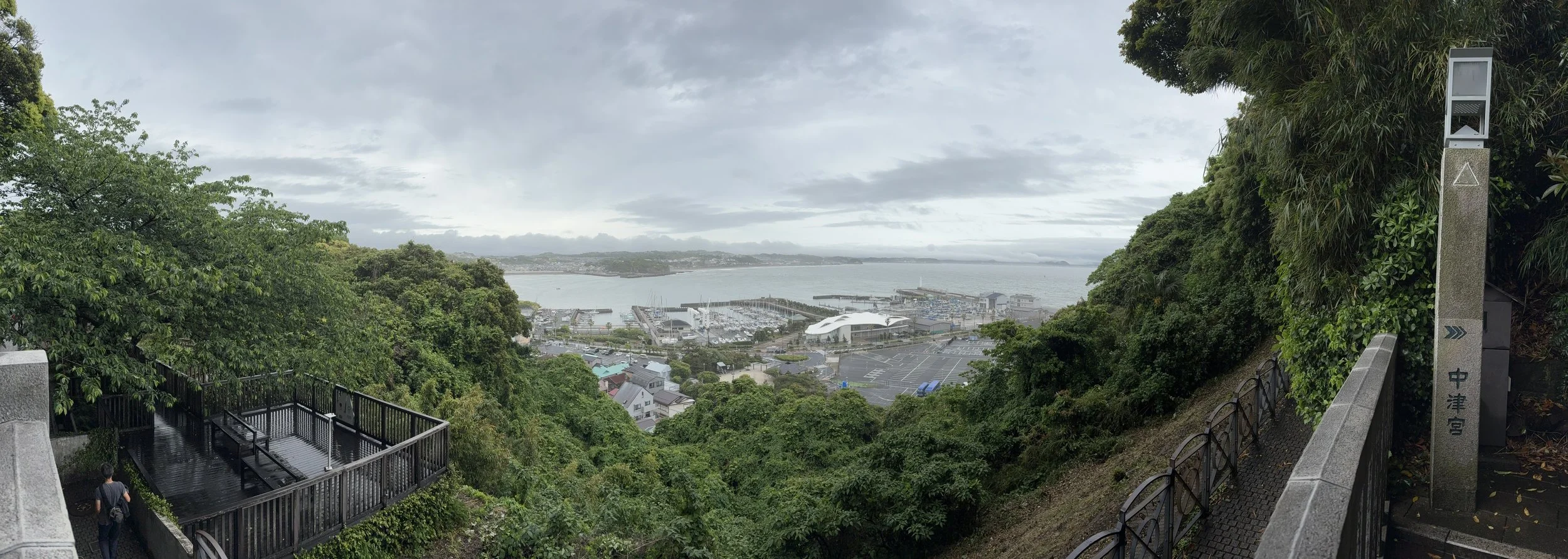
Really nice views of the coast, even on a cloudy day. :)
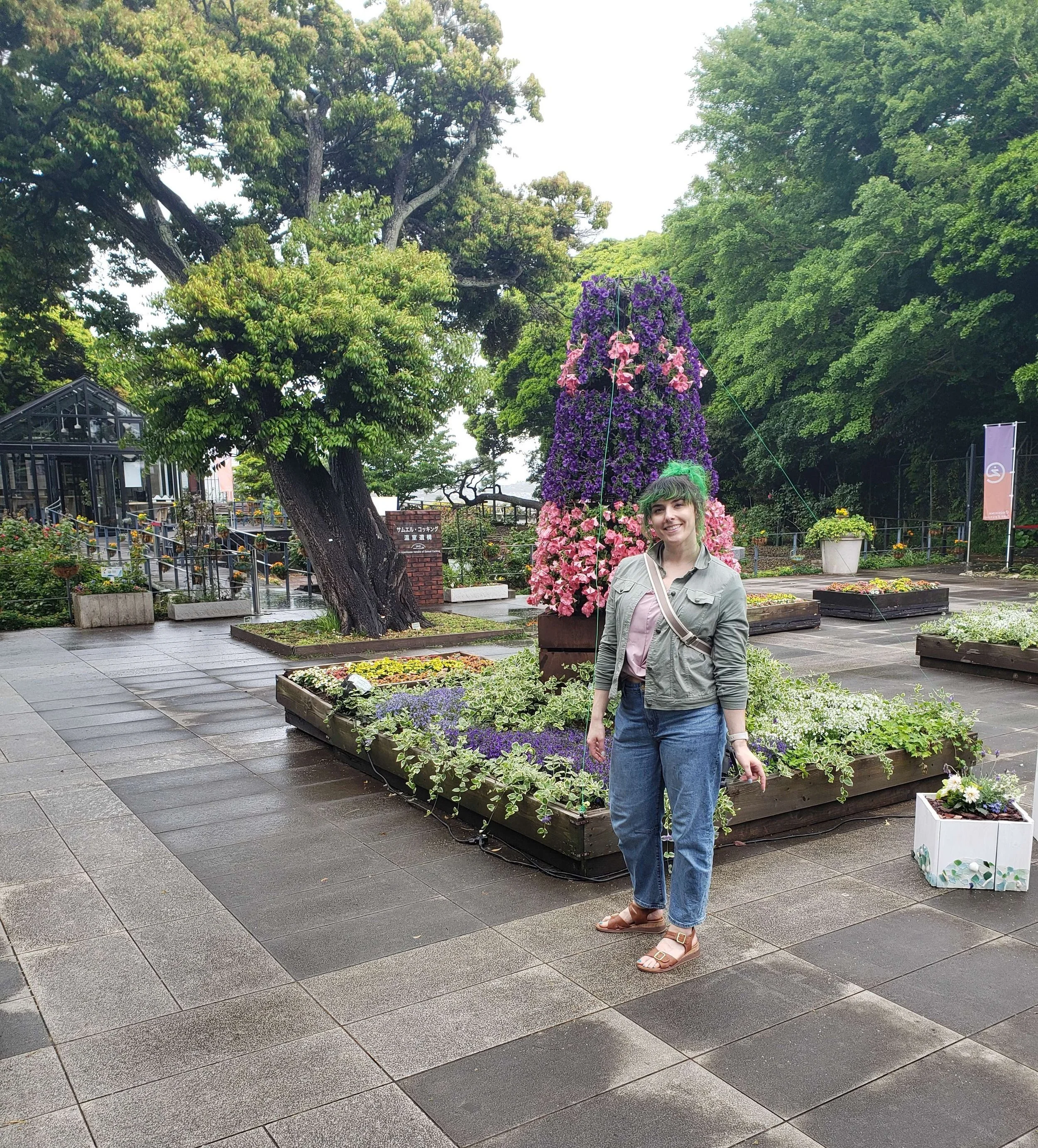
Too late for cherry blossoms, but there’s always plenty of flowers blooming in Japan.
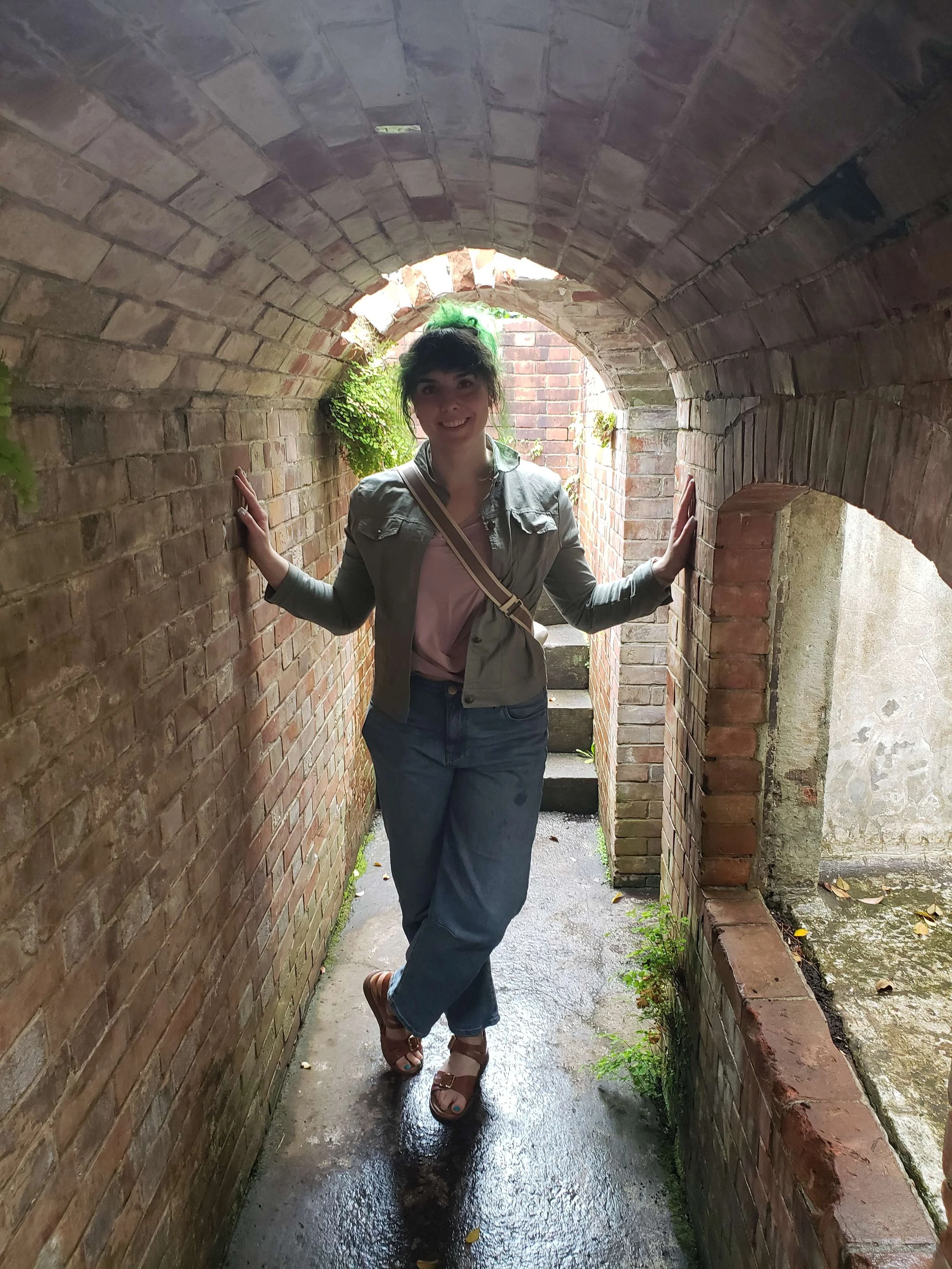
This little tunnel between the areas of the garden was the perfect size for a cute picture.
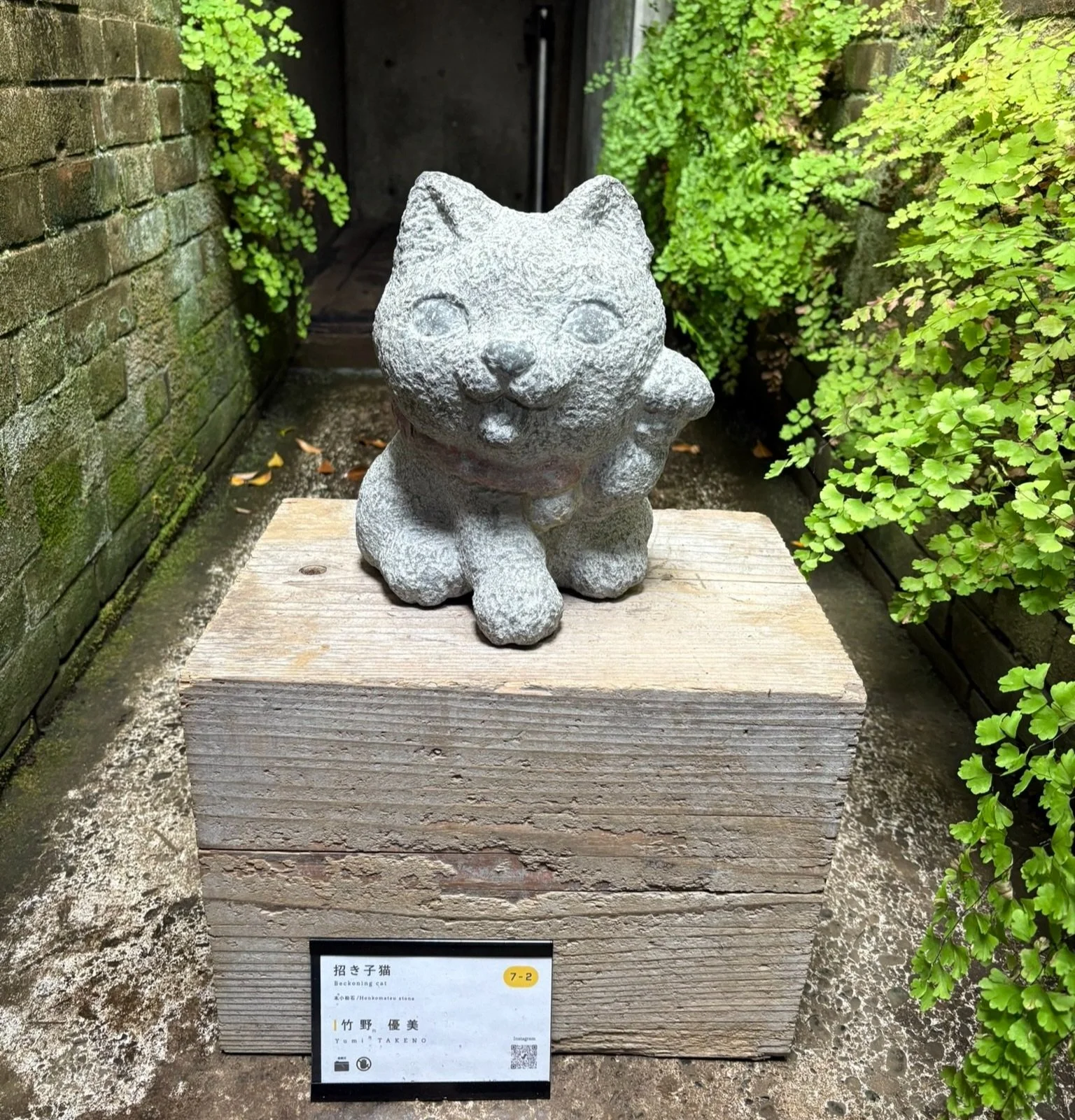
A statue of a beckoning cat hidden in the tunnels.
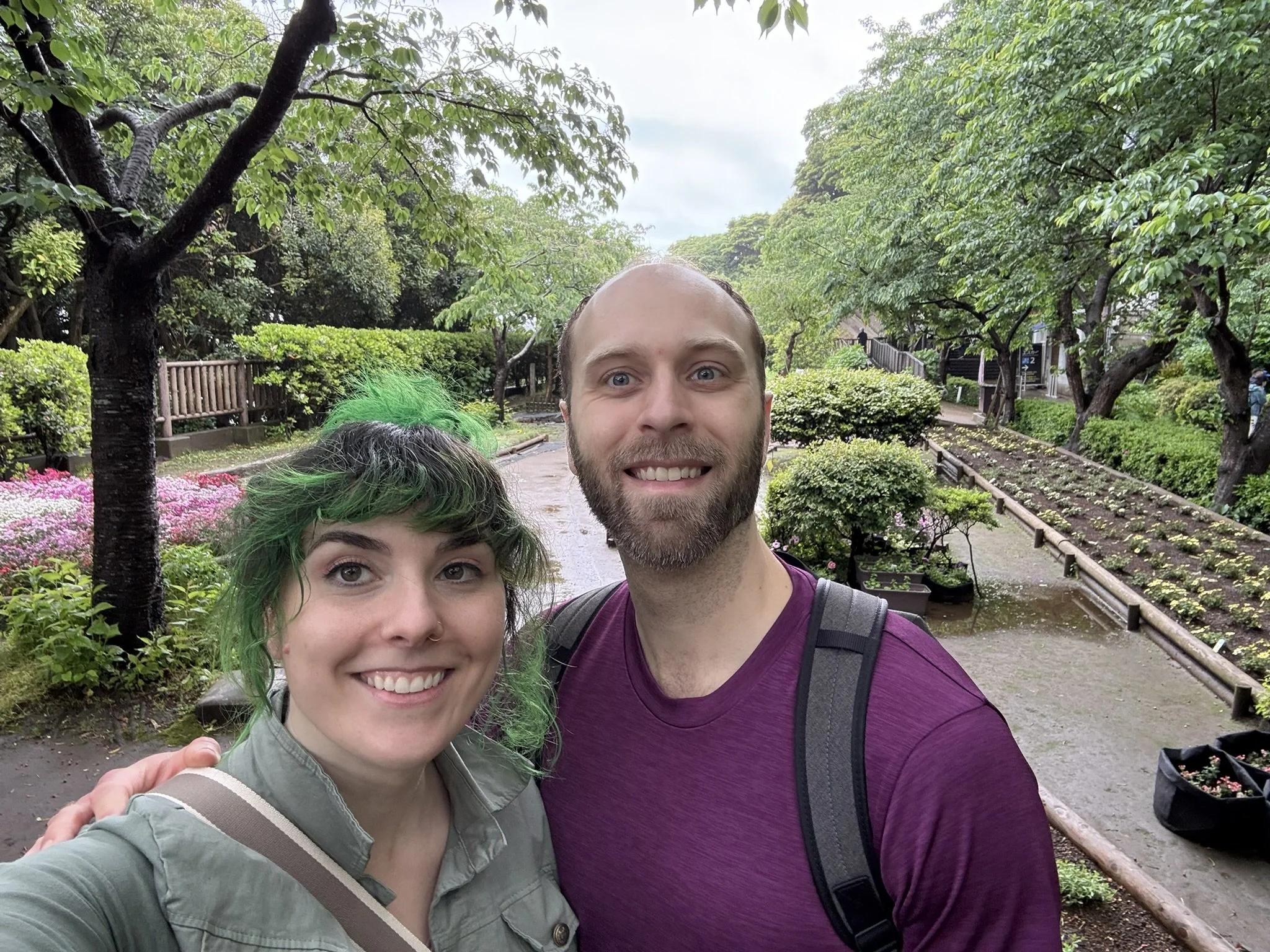
The garden gets quite busy, but since it was early and a little drizzly, we almost had the place to ourselves!
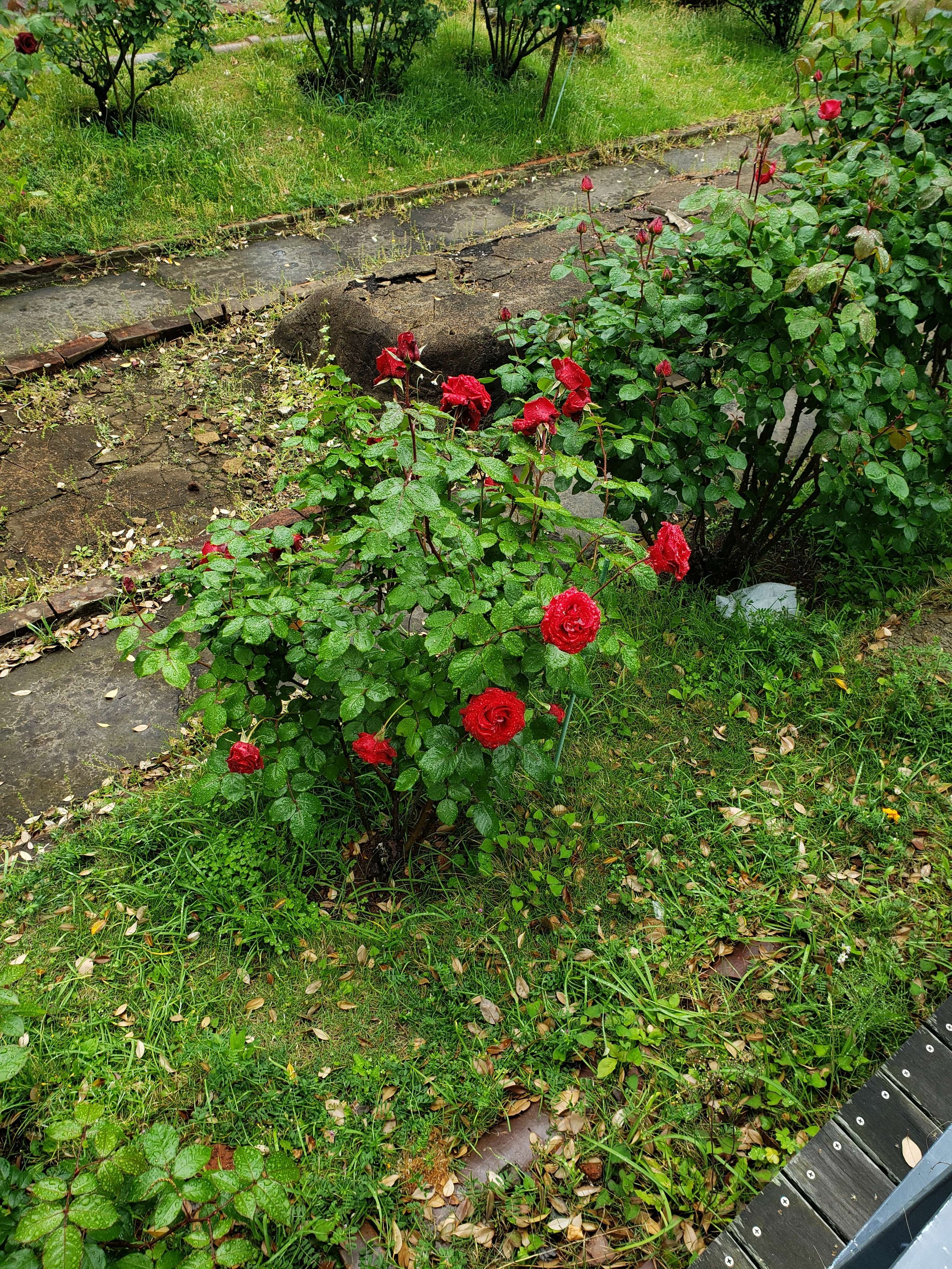
This picture doesn’t show how absolutely massive these roses were - I swear they were the size of my head!
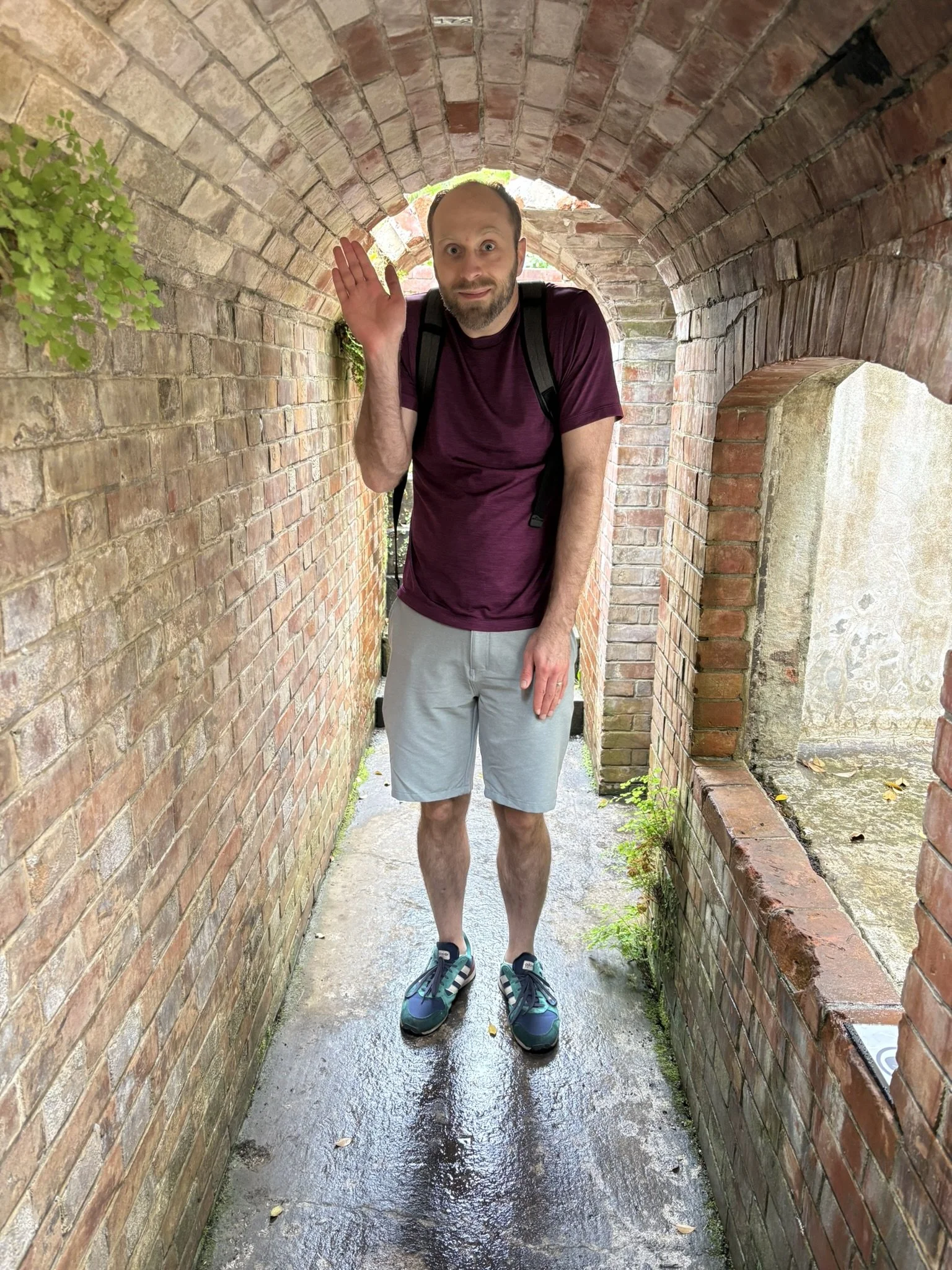
(The tunnel’s results may vary for people over 6’)
The Top of Enoshima Island
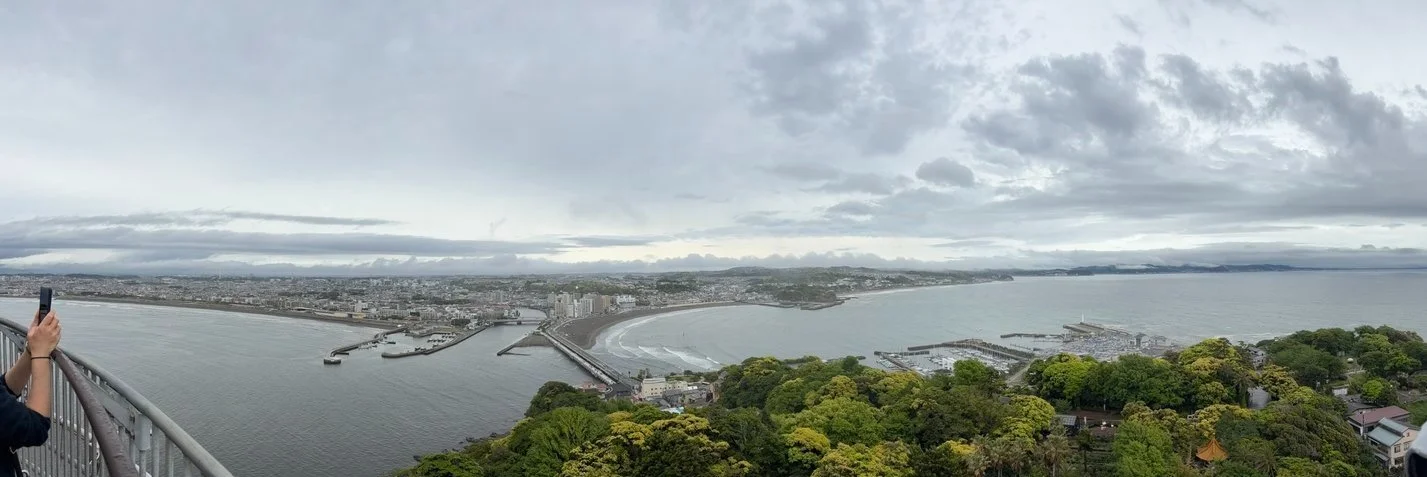
Coastal views disappearing into mist and cloud.
The highlight of the Samuel Cocking garden is the Enoshima Sea Candle, a lighthouse observatory tower that gives panoramic views of the coastline and Sagami Bay. There’s both an indoor and outdoor observation area—the outdoor observation area was closed when we arrived, but I noticed some staff brushing water off the steps, so we assumed it was due to the rain. We decided to hang out and see if they’d open up the outside upper observation area, and it was certainly worth the wait!
Allegedly, you can see Mount Fuji on a clear day from this observatory. We obviously couldn’t see it on this misty Saturday, but I knew we’d get a good look at Japan’s most iconic mountain peak at some point, so I wasn’t worried.
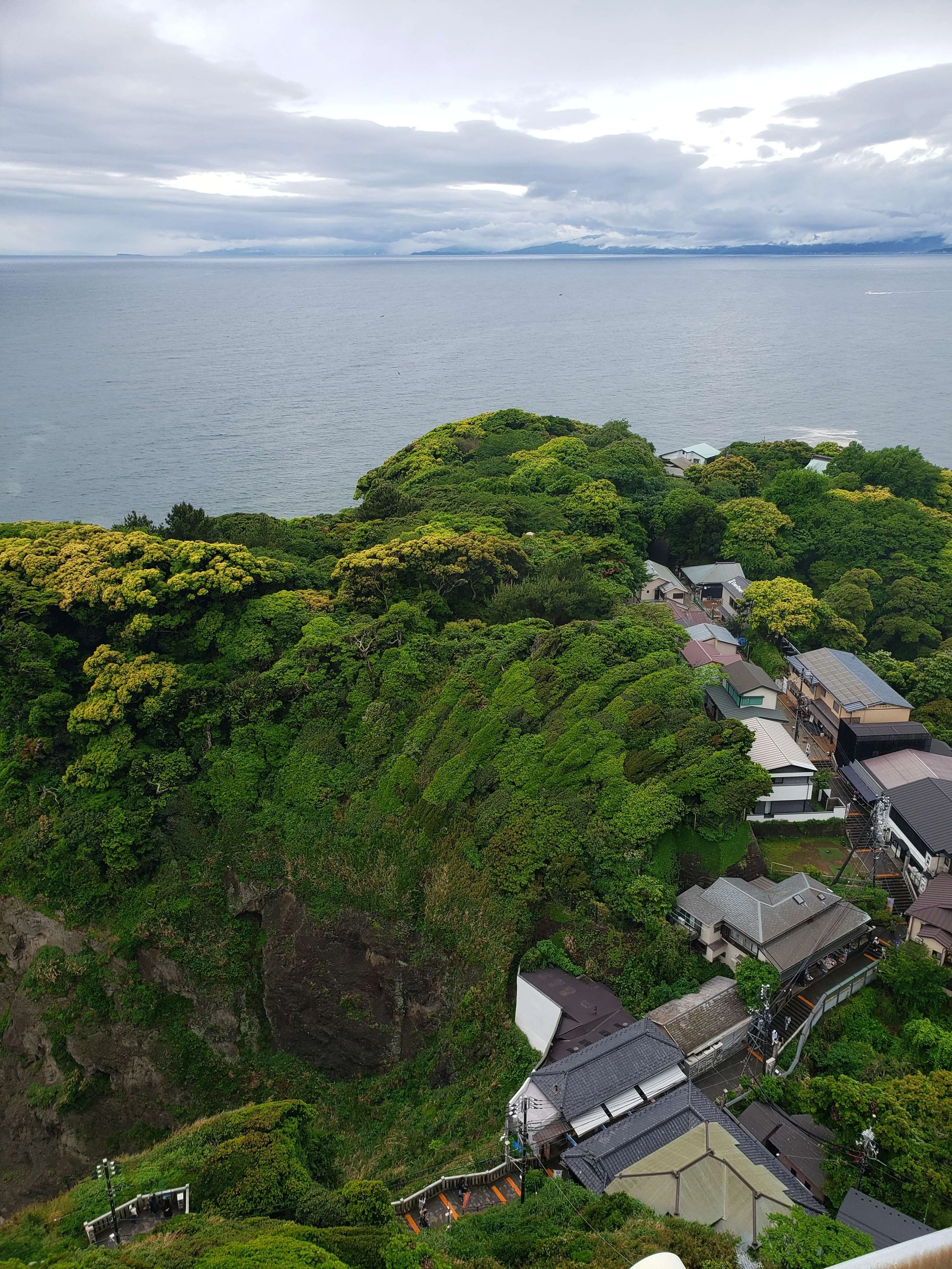
Some of these buildings are actually vacation homes!
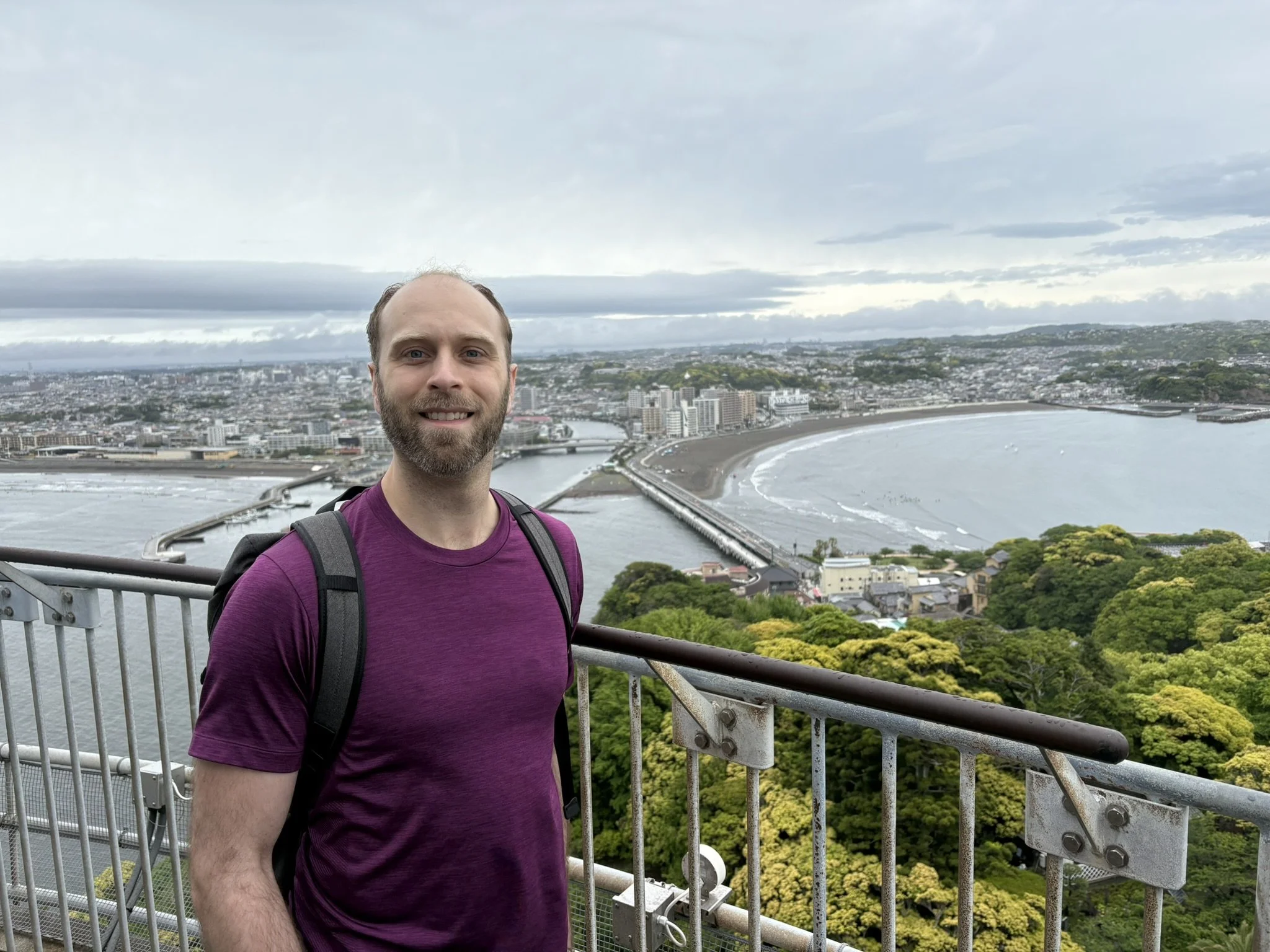
All the pictures of me on the observatory are hilarious because of the strong sea breezes. Jeff, luckily, did not have the same problem.
From the observatory, we could see a path down the other side of the island we hadn’t explored. Enoshima is also famous for its sea caves, so we made a path there next.
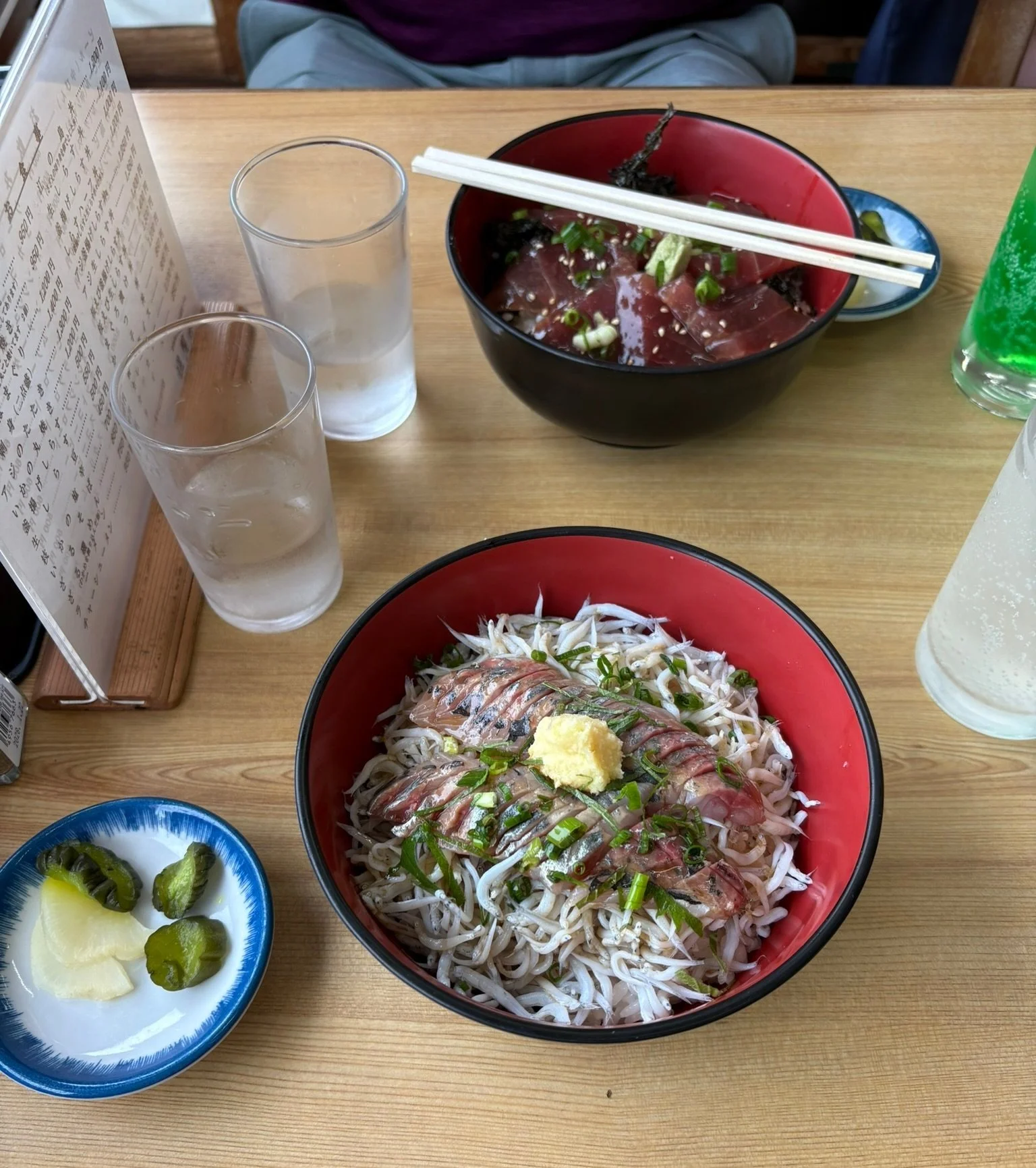
Donuts for breakfast, boiled baby anchovy for lunch.
But first: lunch!
I had been reading the Kamakura prefecture is well-known for a seasonally available fish dish called Shirasu-don, which is boiled whitebait over rice. It is highly sought after in the area because the shirasu in Kamakura comes right from the Sagami Bay. It’s fresh, high-quality fish.
I remember reading online that whitebait are baby sardines or anchovies. That seemed fine in theory—but I’m not going to lie, I had a little bit of a hard time with the hundreds of little eyeballs staring up at me while I ate. It tasted really good, though! I ordered a bowl that also had horse mackerel served on top.
Jeff ordered a simple bowl of raw tuna and seaweed over rice.
Most dishes like these also come with a side of some kind of pickled vegetable (tsukemono). Japan is definitely all about the pickles—radish, eggplant, ginger, cucumber, rice bran, lotus root, bamboo, and more—all bringing a variety of textures, tastes, and colors to your meal. Plus they’re good for you!
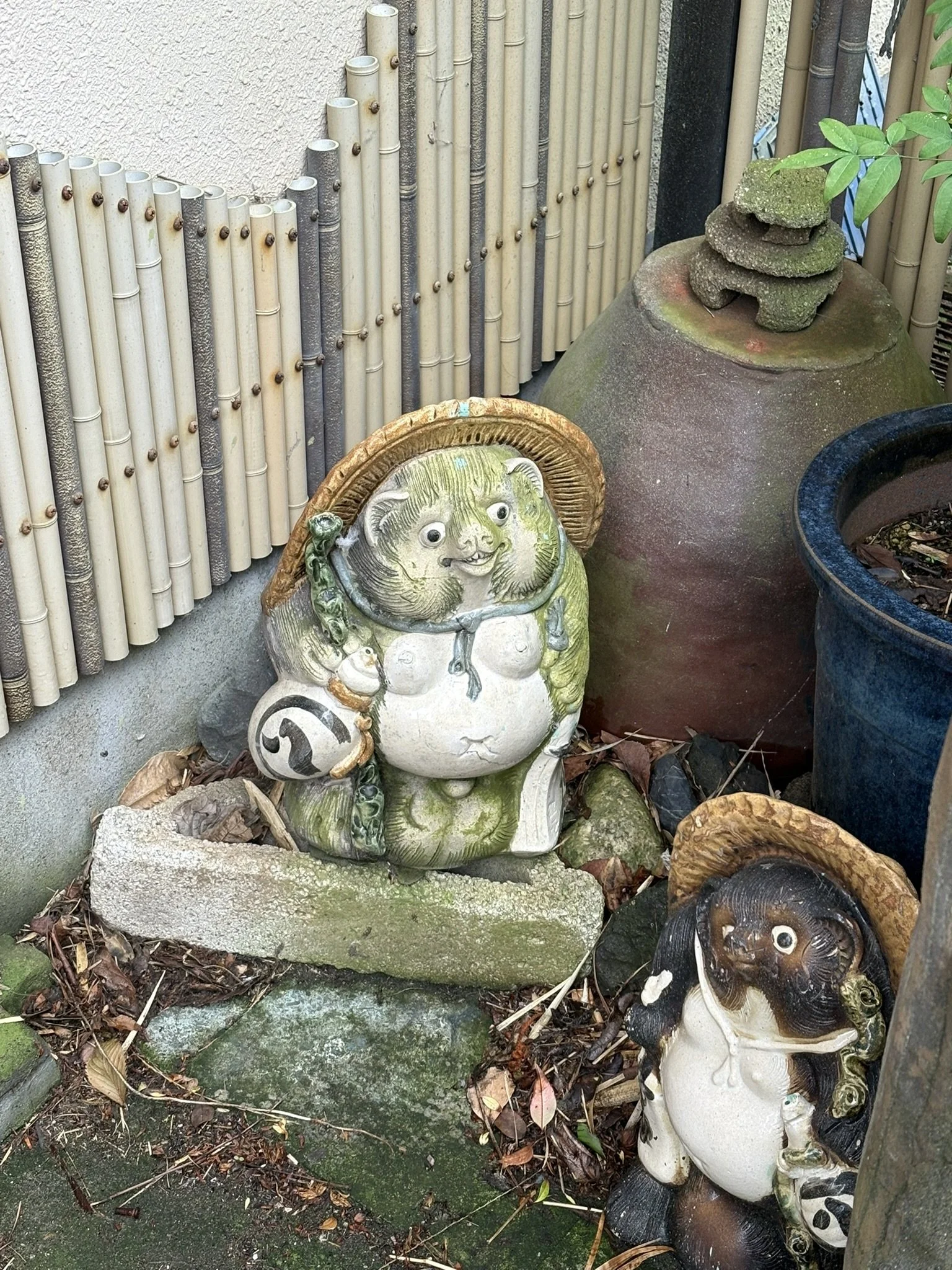
This is a tanuki (Japanese raccoon dog) statue. The oversized testicles are said to bring good fortune. These goofy little guys took me OUT every time I saw them.
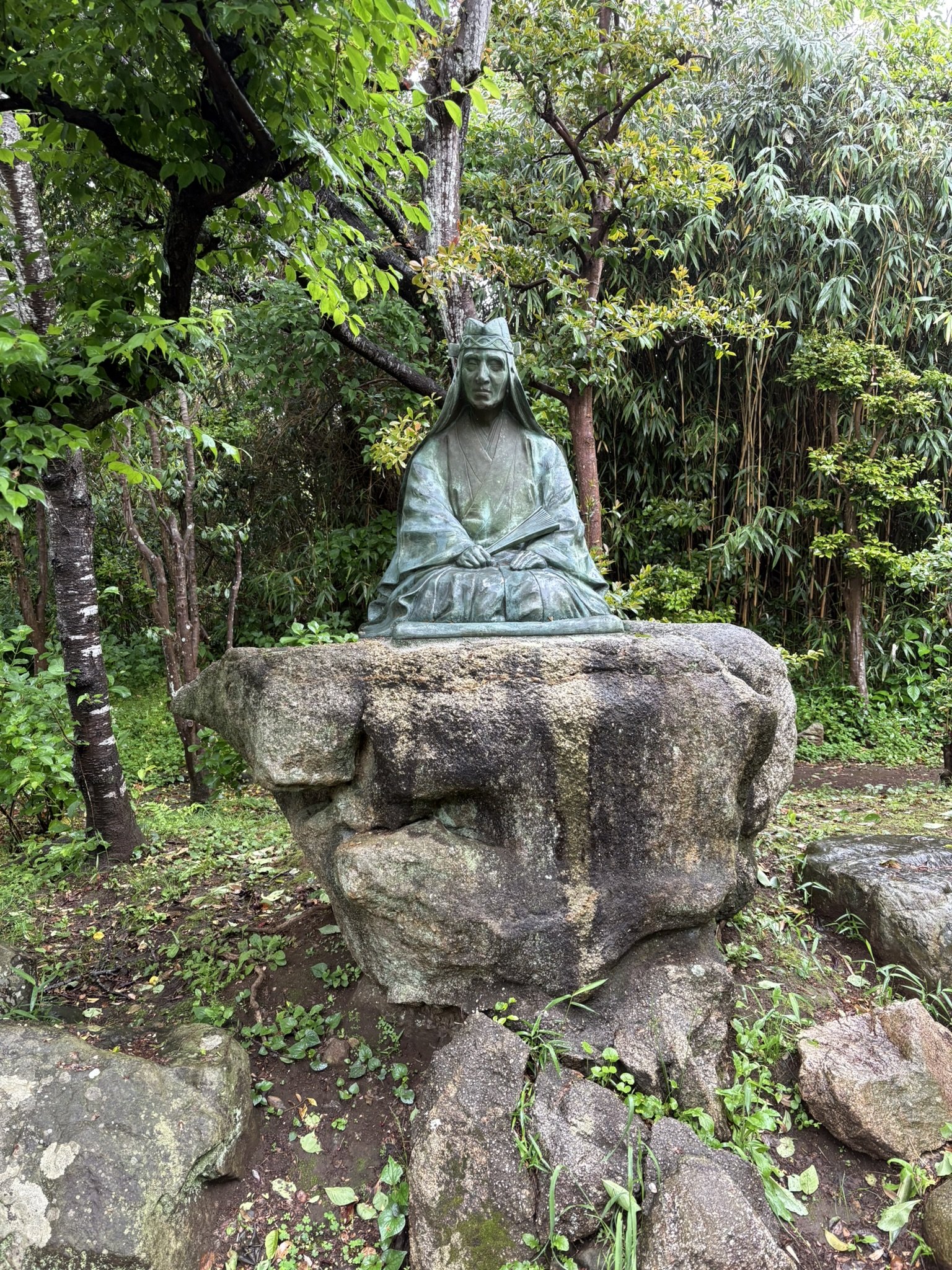
A statue of Yamada Kengyo, who learned to play the koto and became a composer after losing his sight at a young age.
Back Down the Mountain
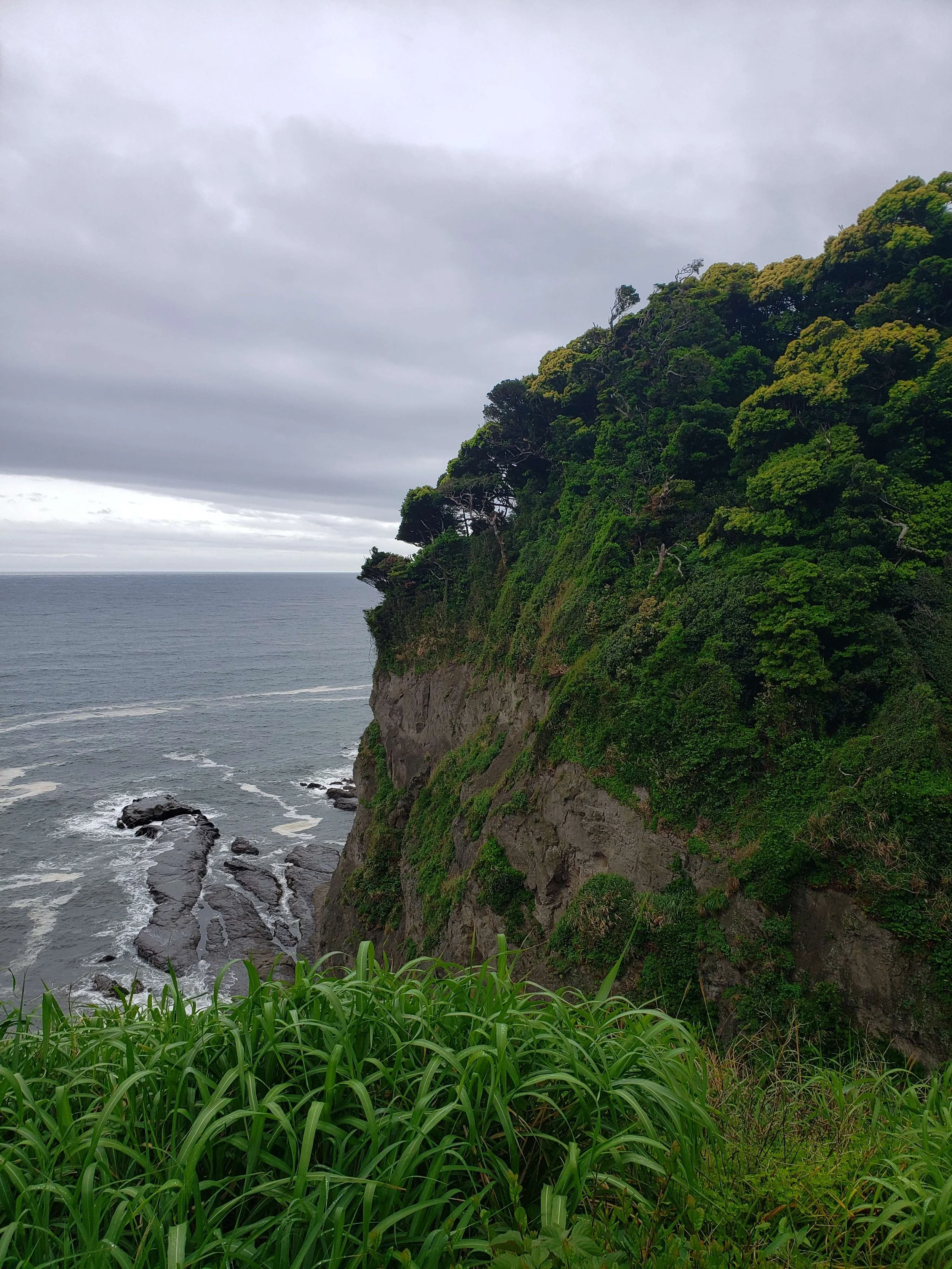
A view heading down the mountain.
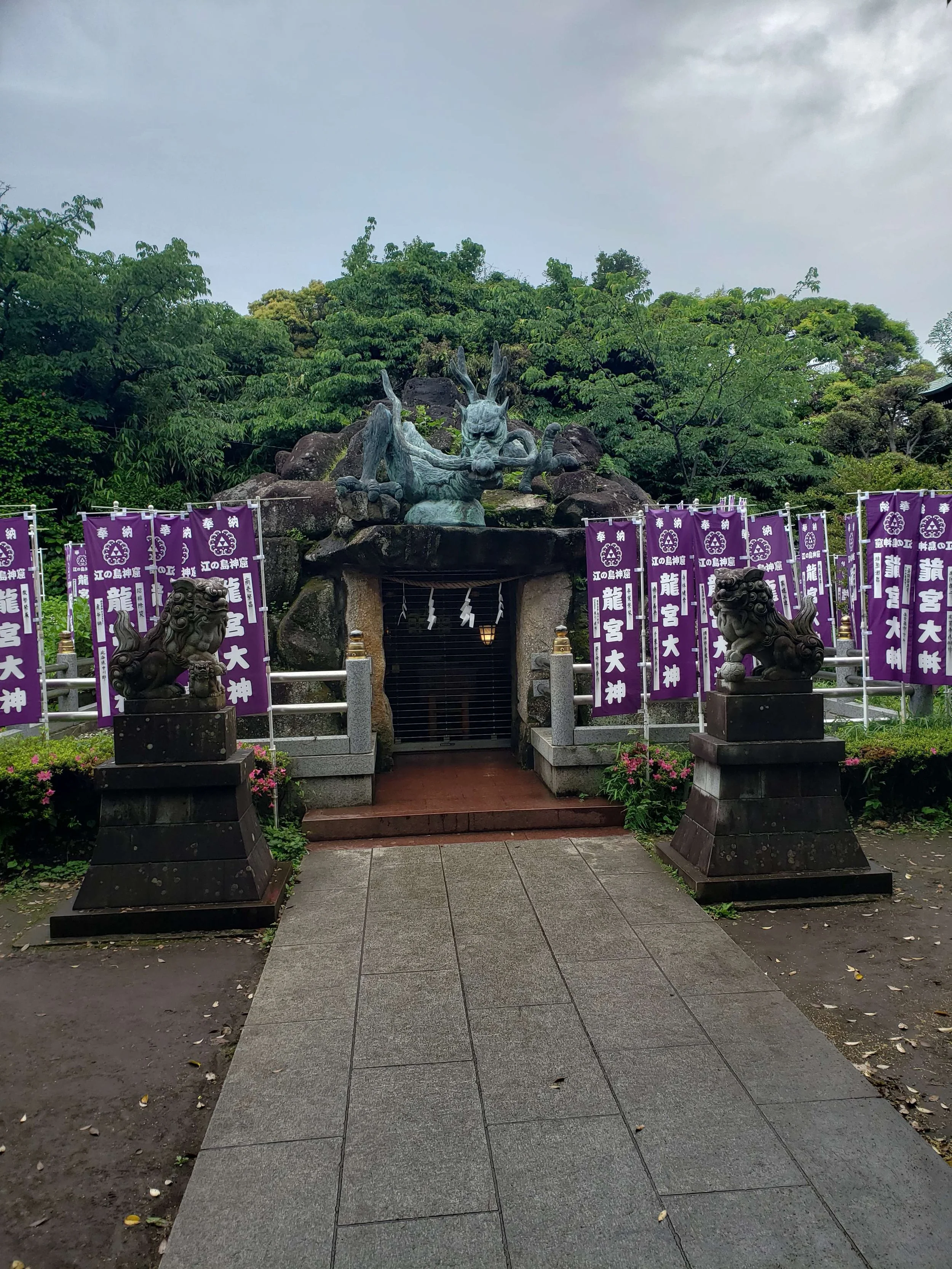
The dragon of Enoshima
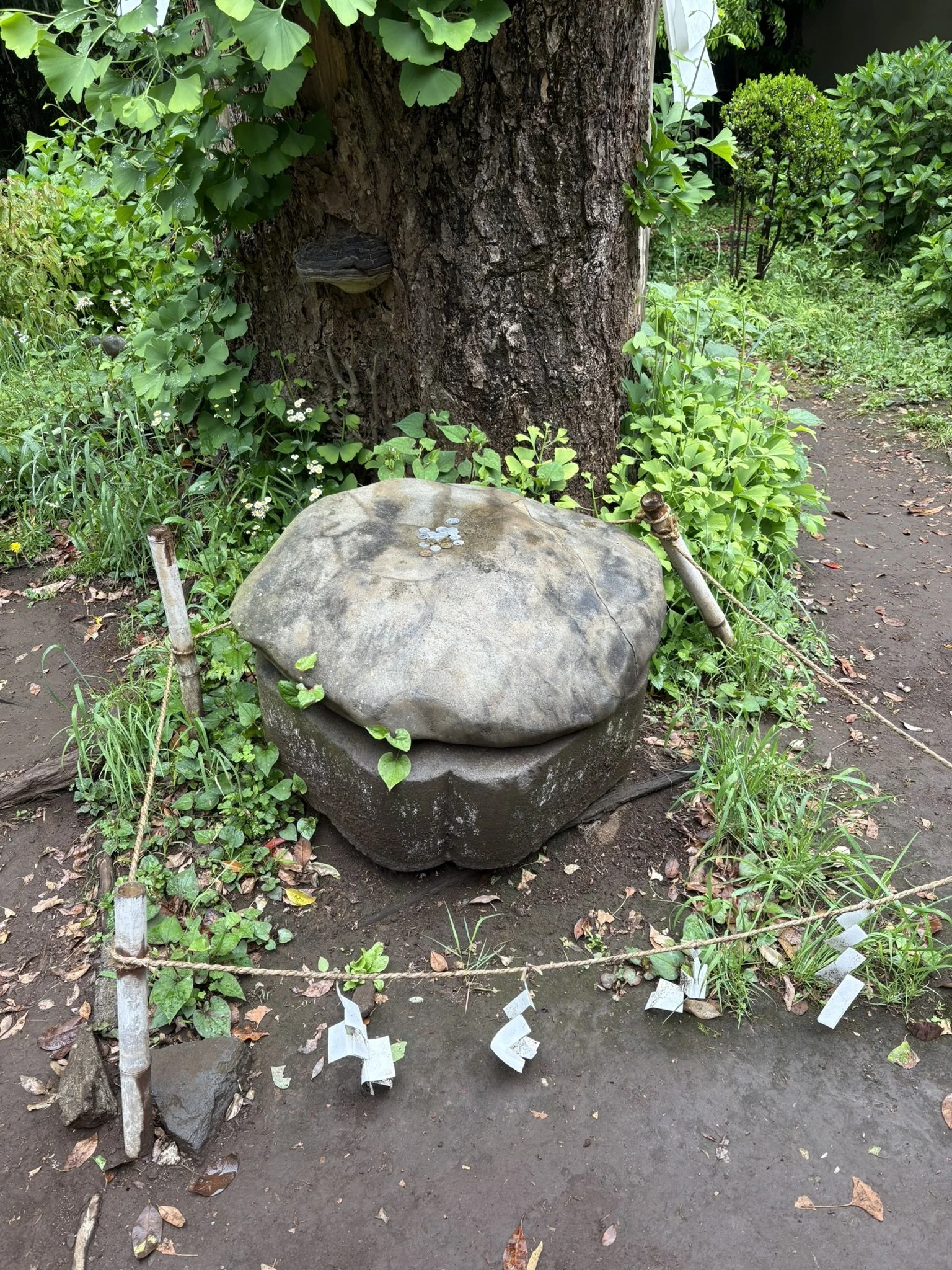
Kameishi (Turtle Stone)
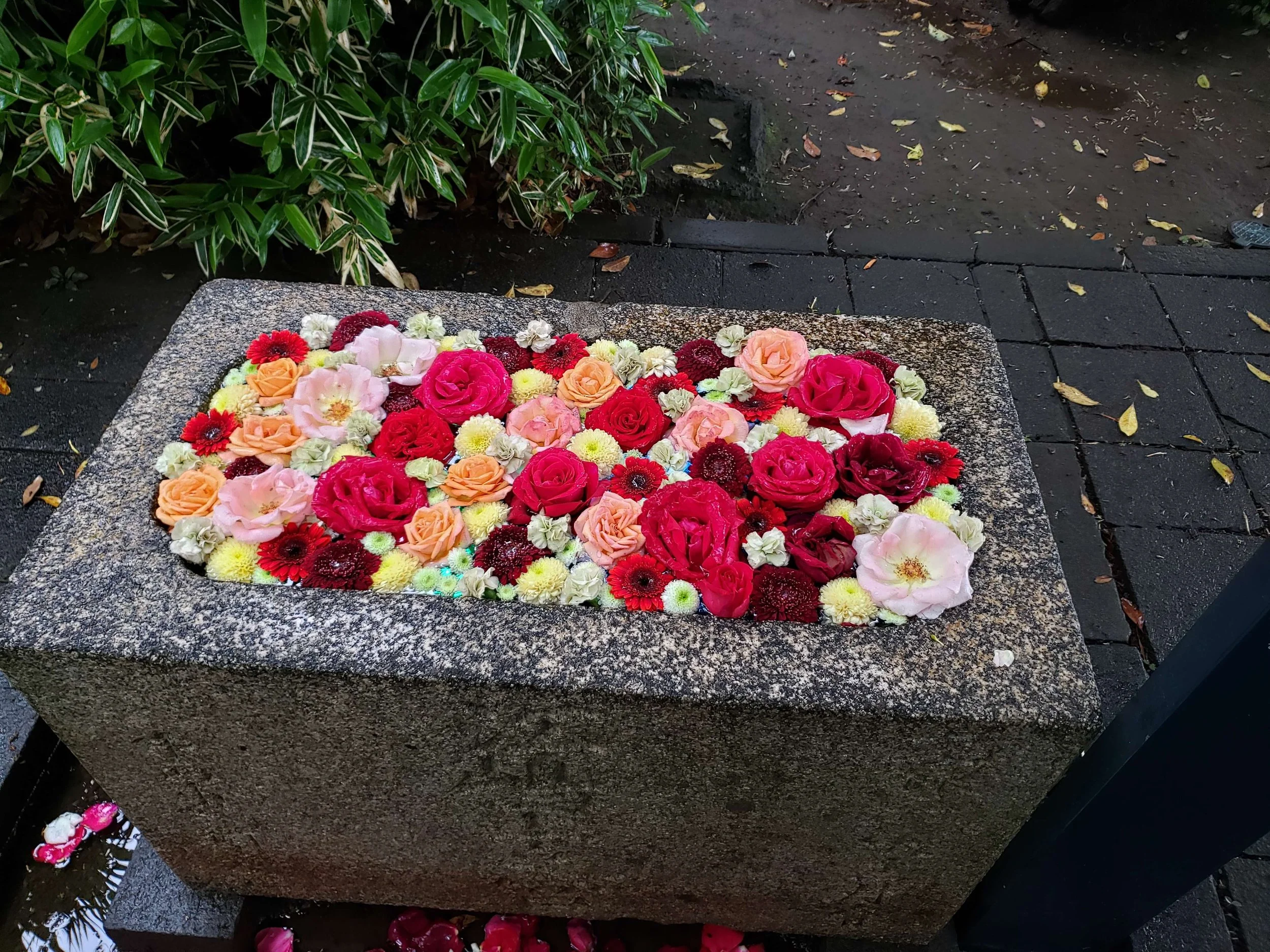
A Hanachōzu flower display.
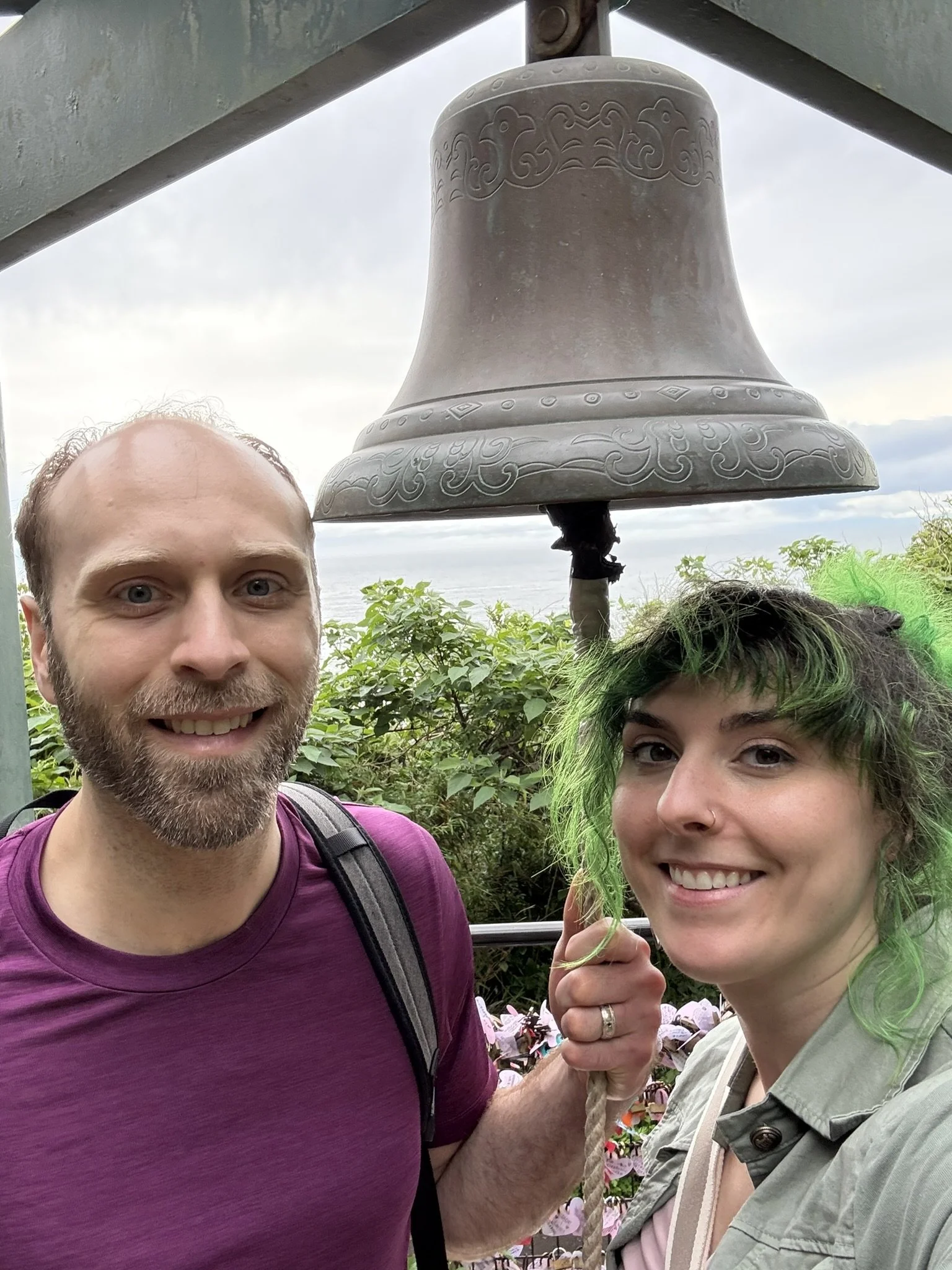
Dragon Love Bell—it is said that if two people ring it together, their love will last forever. I can only assume this is because you’ll be half-deaf after you ring it.
The Legend of Enoshima
On the way, we started coming across more images of dragons and signs about the myths of Enoshima. I pieced together the folklore of “The Maiden and the Five Headed Dragon” from translated signs as we got closer to the caves:
The people in the villages on the coasts went through a period of strife and suffering, plagued by earthquakes and storms and even a five-headed dragon, Gozuryu, that ate their children. This allegedly went on for about a thousand years, until the goddess Benzaiten descended from the heavens and touched the waters of the Sagami Bay, creating Enoshima island to be her home.
The dragon immediately fell in love with her and asked for her hand in marriage, but she told him she wouldn’t ever consider it unless he got his act together and started helping the villagers instead of terrorizing him. Surprisingly, he did—and the area began to prosper under the protection of both the goddess and the dragon.
The legends say Gozuryu laid down near Kamakura for his final rest so he could continue to watch over the goddess, and it’s his body that gives the land in this area its shape. You can kind of see it from the view of the observatory—the bumpy hills in the area definitely remind me of the back of a dragon!
The Sea Caves
One of my favorite things about Enoshima Island were these sea caves on the back side of the island. To reach them you had to walk along a path near the crashing waves of the shore. I think people are allowed to walk down on the rocks and tide pools if the conditions are favorable, but it was pretty choppy when we visited, so no such luck (I’m sure the water was freezing anyway).
It was in Enoshima that I discovered that I really like caves and think they’re cool, and Jeff is mildly uncomfortable in caves at basically all times.
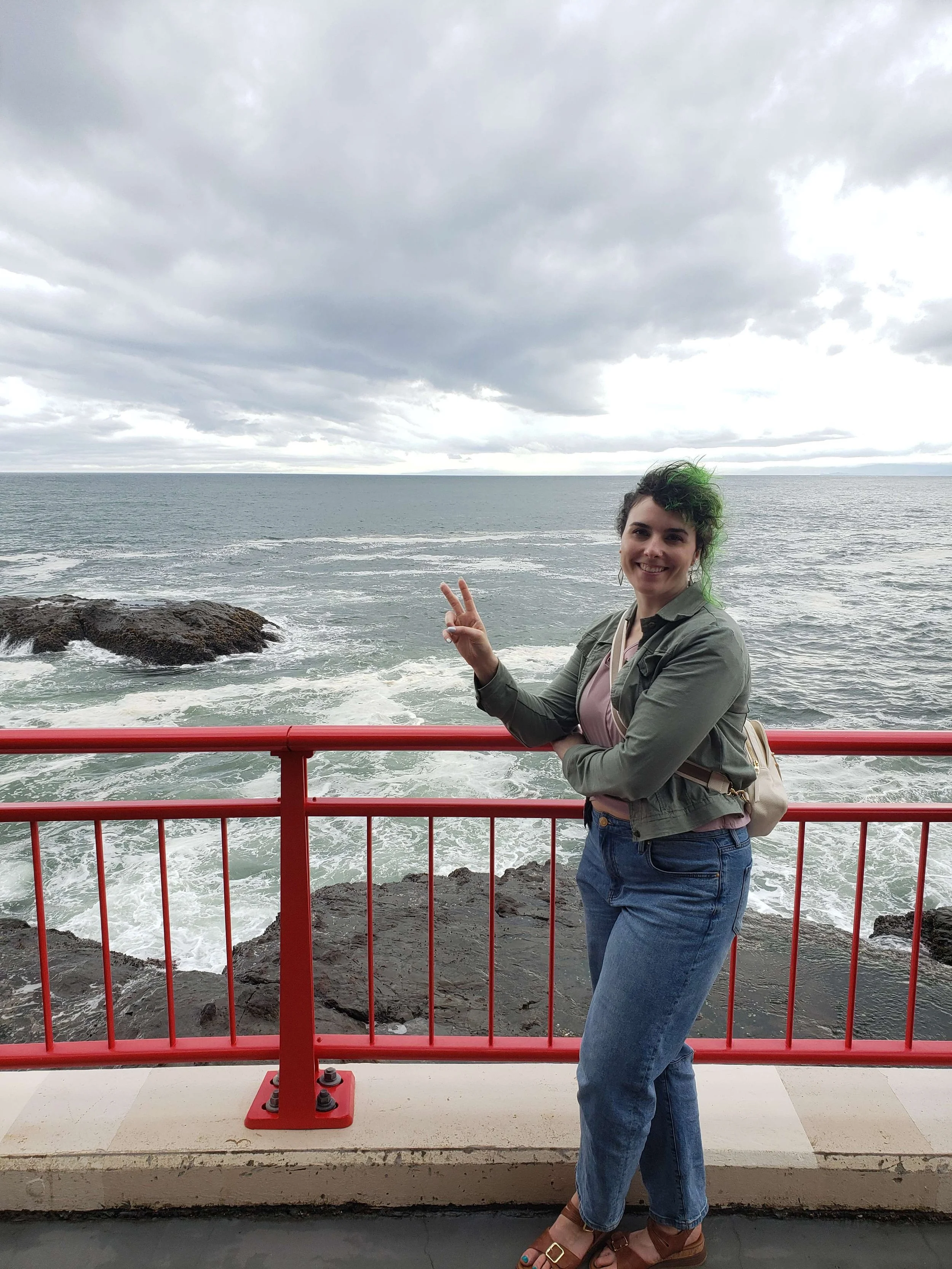
Pro Traveler Tip #3: Always remember when you hike DOWN you have to hike back UP later.
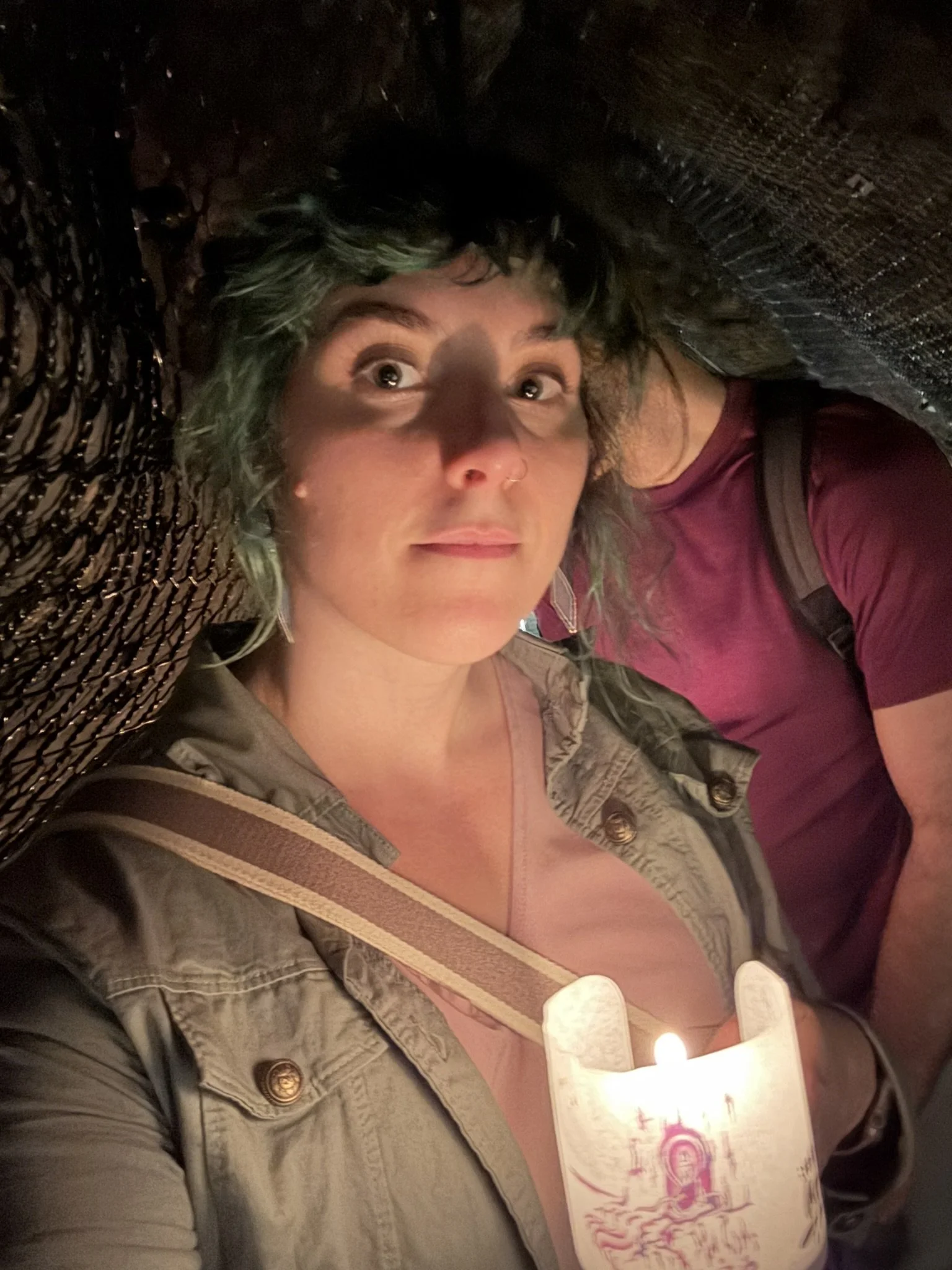
They hand out candles in the caves. Allegedly they’re for kids who might be scared of the dark, but you can take one just for the vibes.
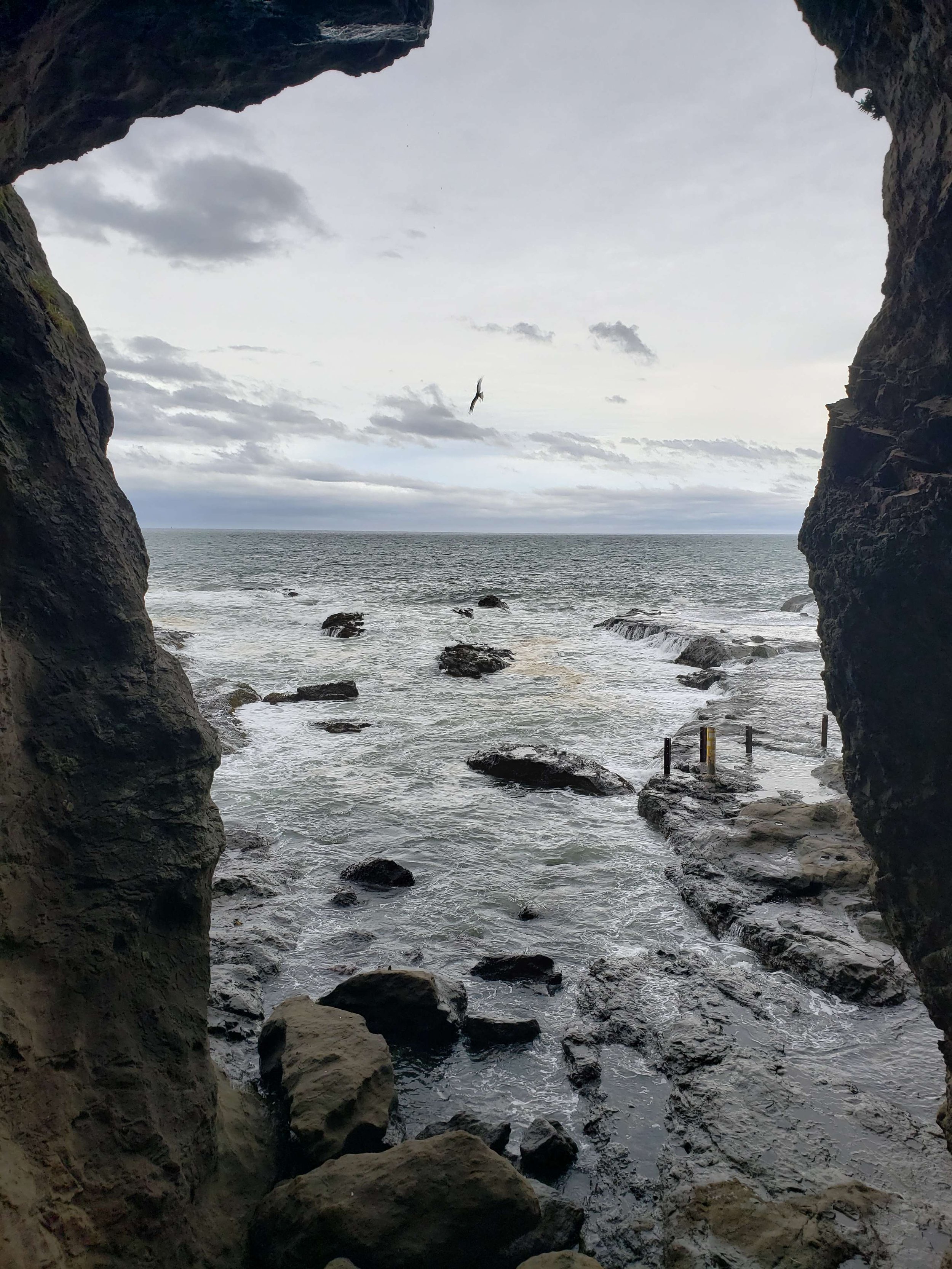
The tides in Japan are pretty mild, even on the Pacific.
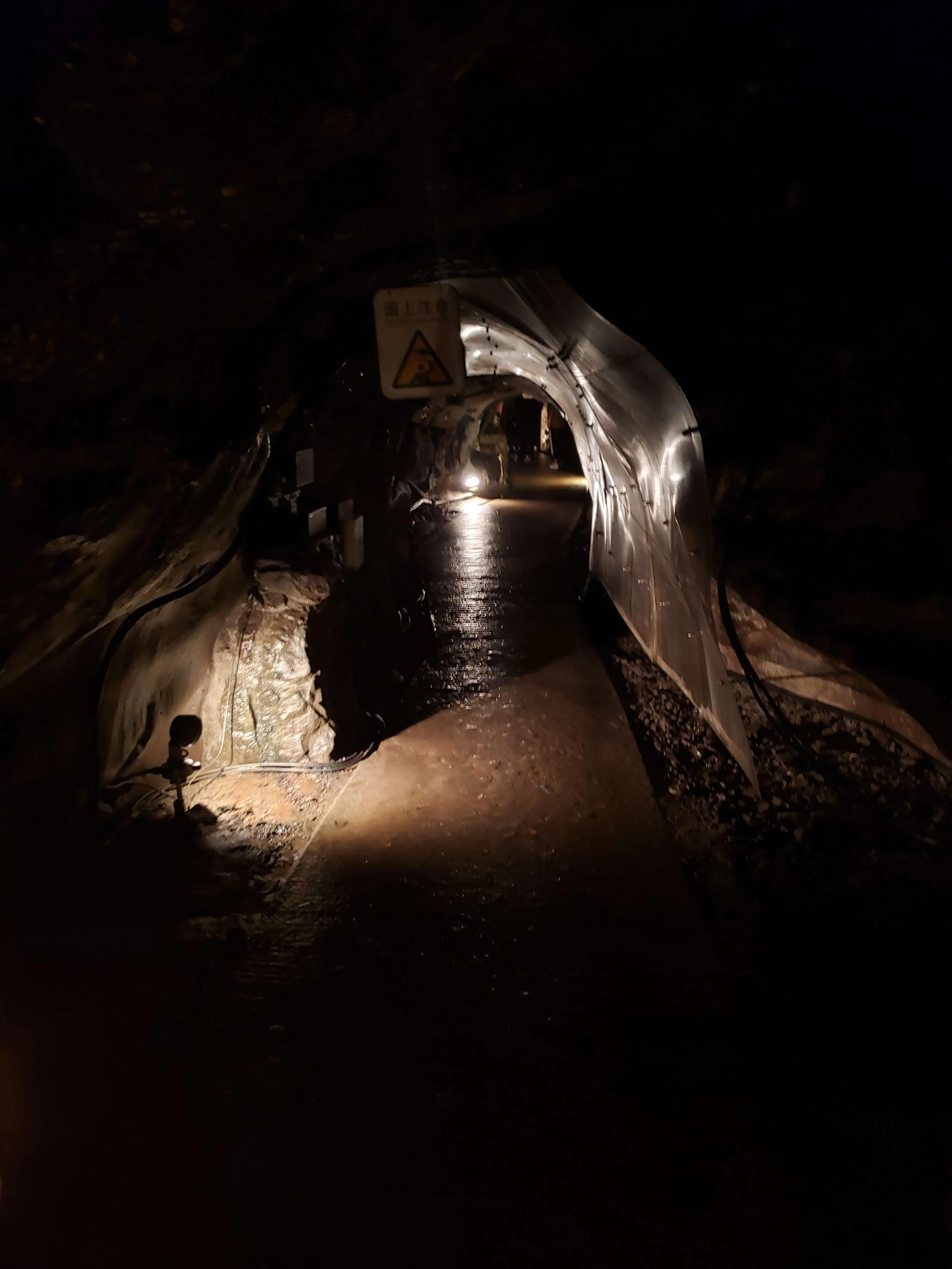
The sea caves in the dark.
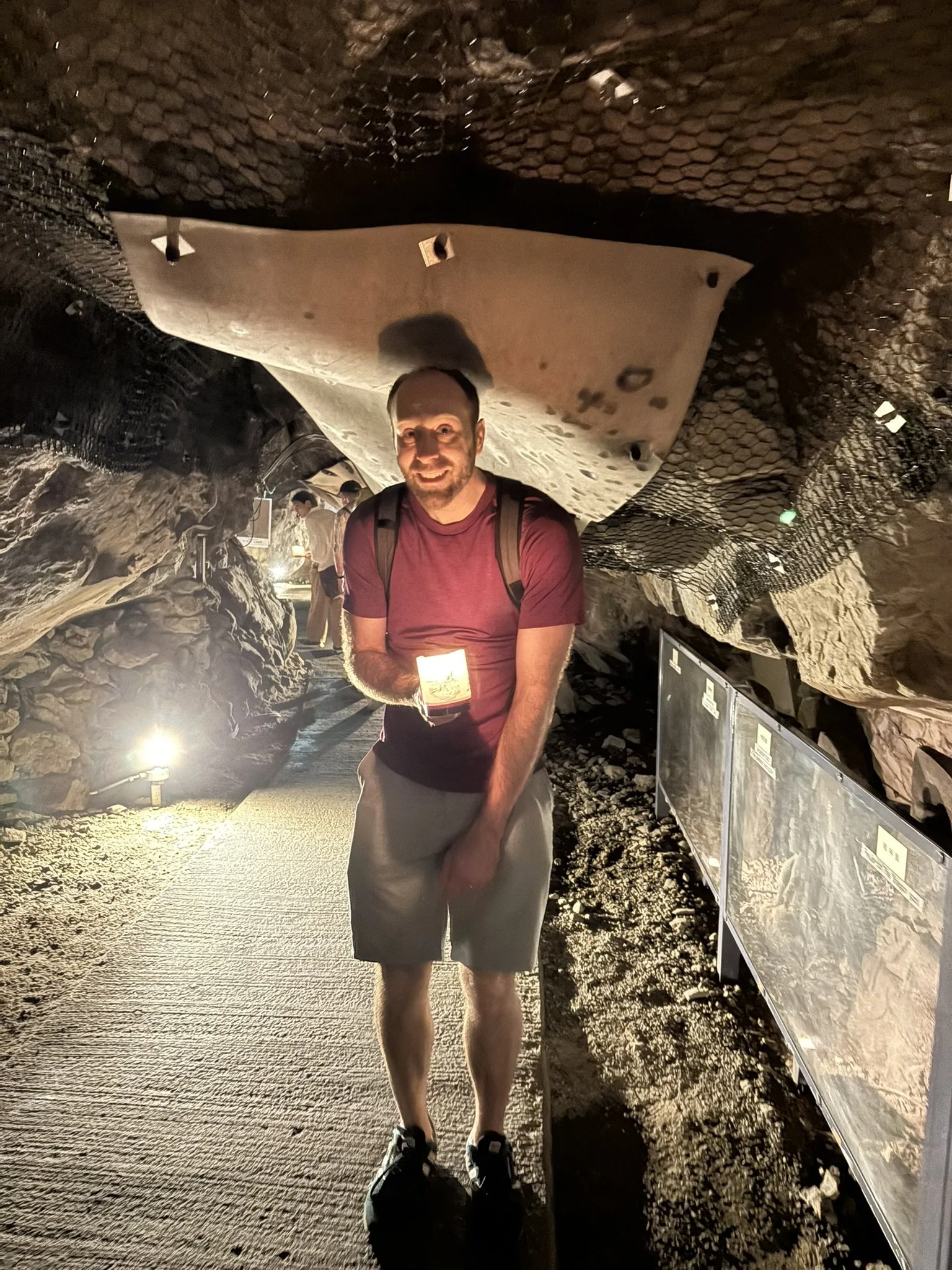
I think Jeff managed not to hit his head here. Maybe.
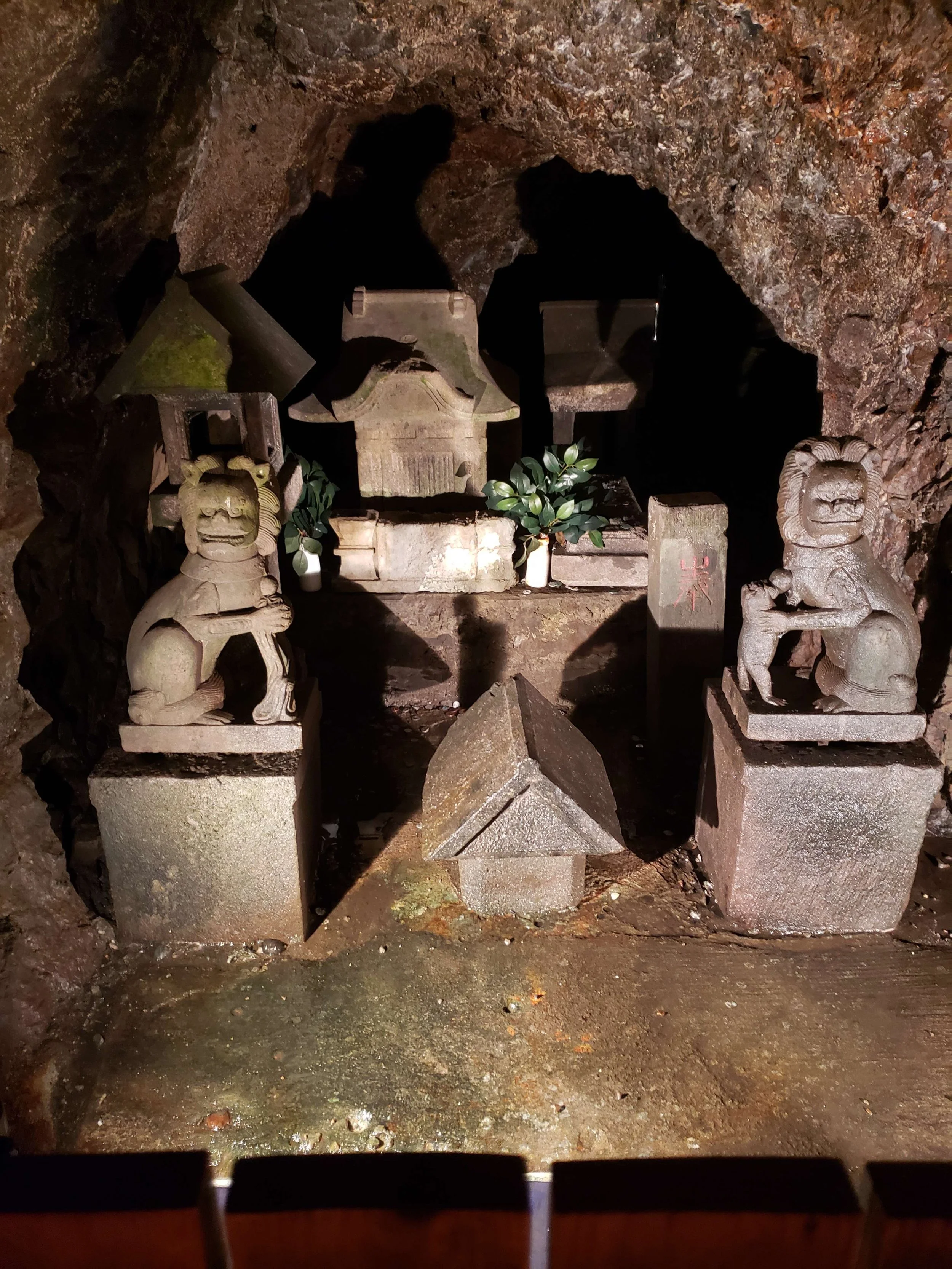
One path’s end has this cool little shrine.
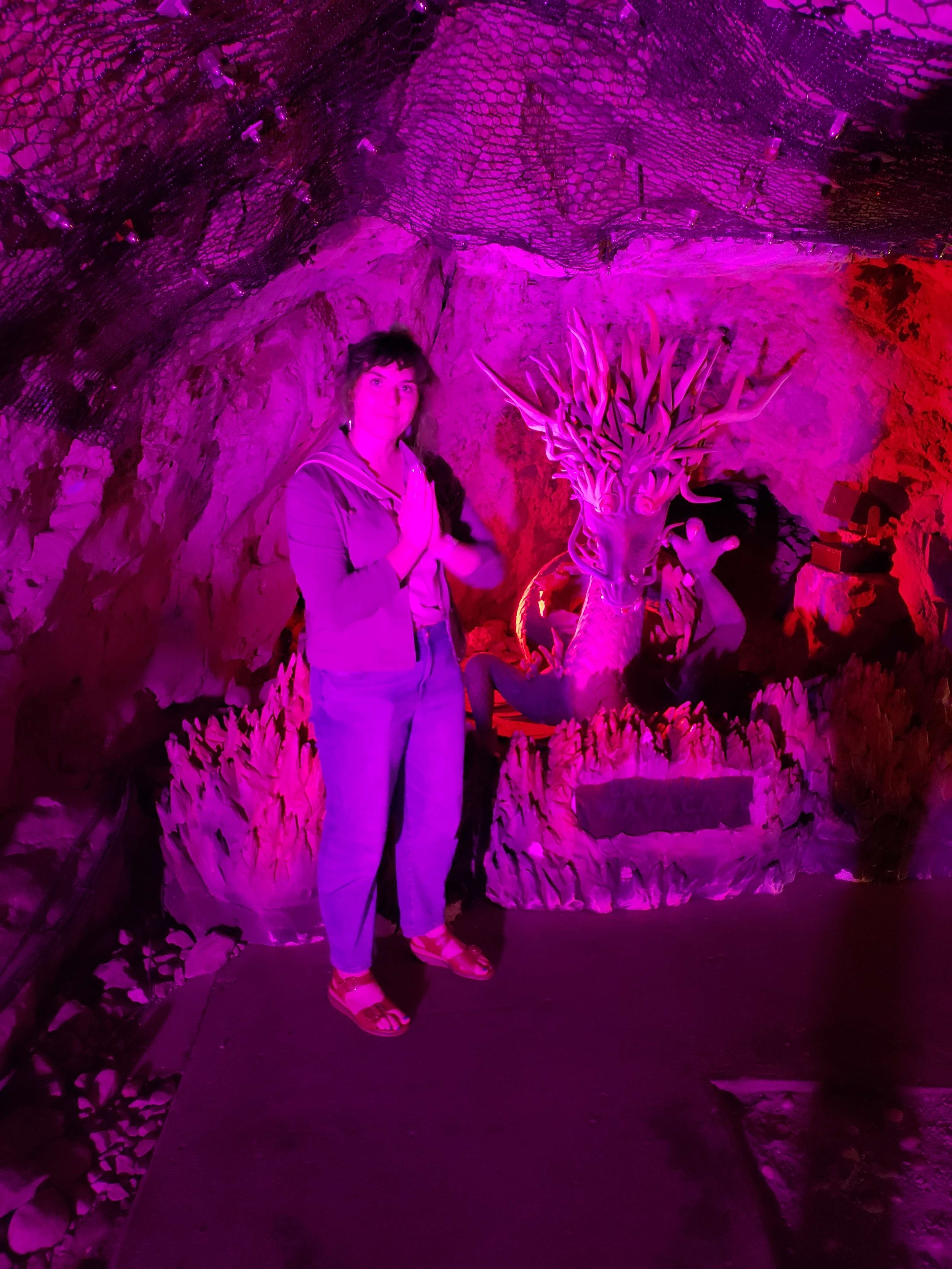
The other has this statue of a dragon! If you clap your hands it will summon the dragon’s spirit and it will roar.
Headed to Kamakura City
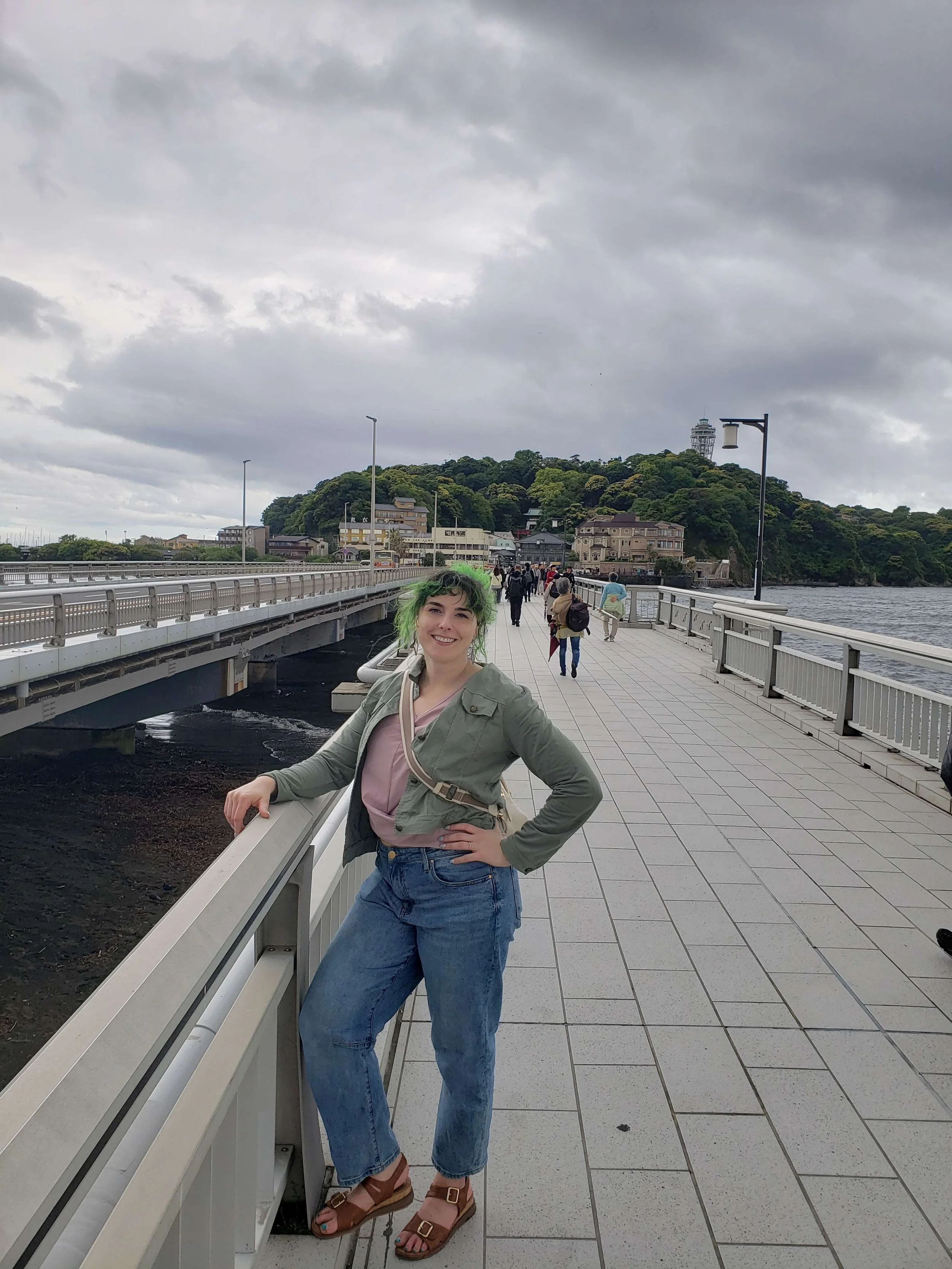
The mists had cleared by now, and we could see the entire island!
It was much busier on the way out than on the way in.
Pro Traveler Tip #4: If you want to beat the crowds at shrines and temples, it pays to be an early bird (or a night owl, depending).
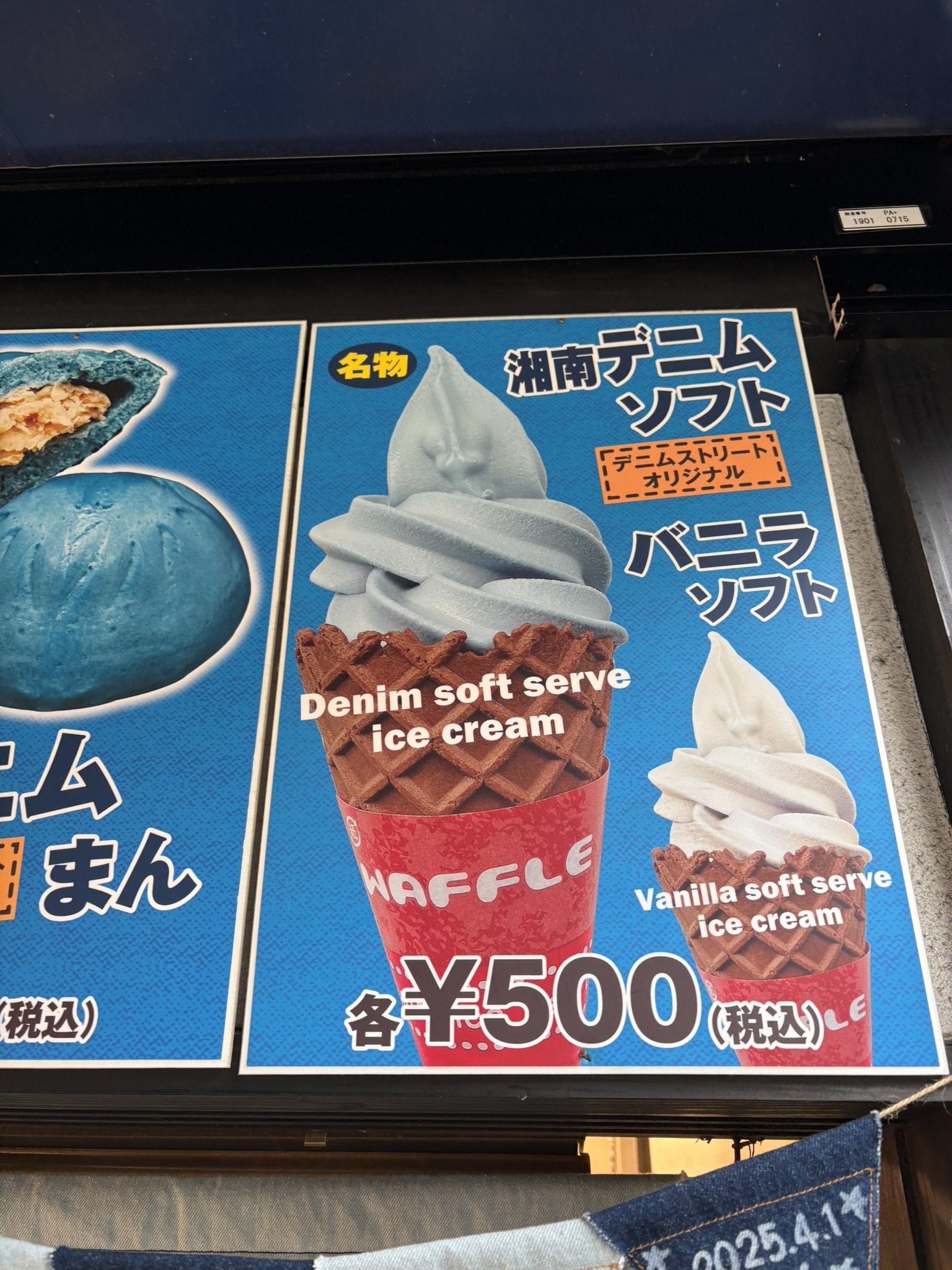
We’d pretty thoroughly explored Enoshima Island at this point, so we grabbed a cone of blue jeans-flavored ice cream (kidding, it’s named for the color) and hopped on a train to Kamakura City to check out one of the most famous landmarks in Japan: the Great Buddha of Kamakura.
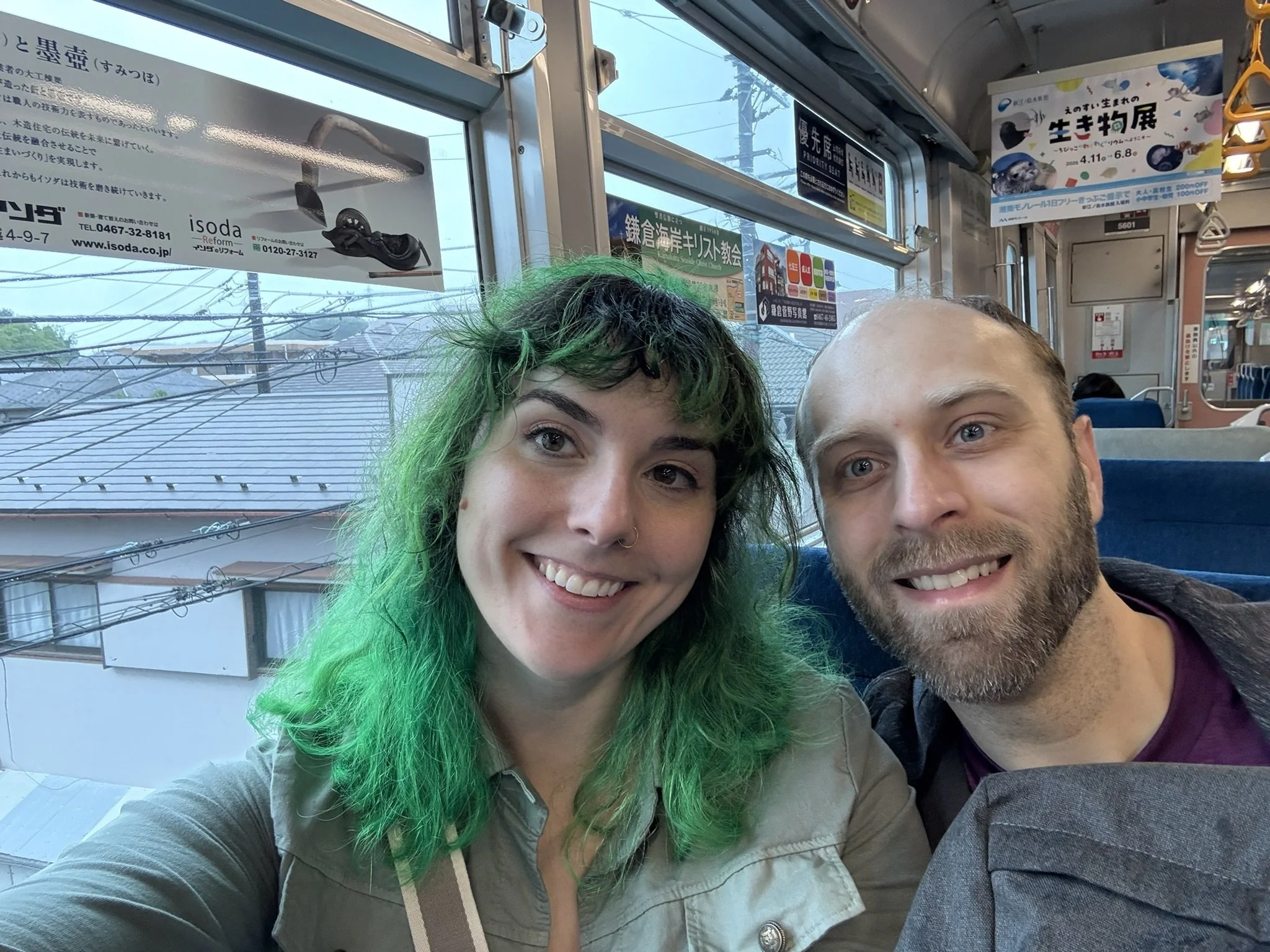
I’ll be totally honest: I did not have many good hair days in Japan.
Kamakura Daibutsu
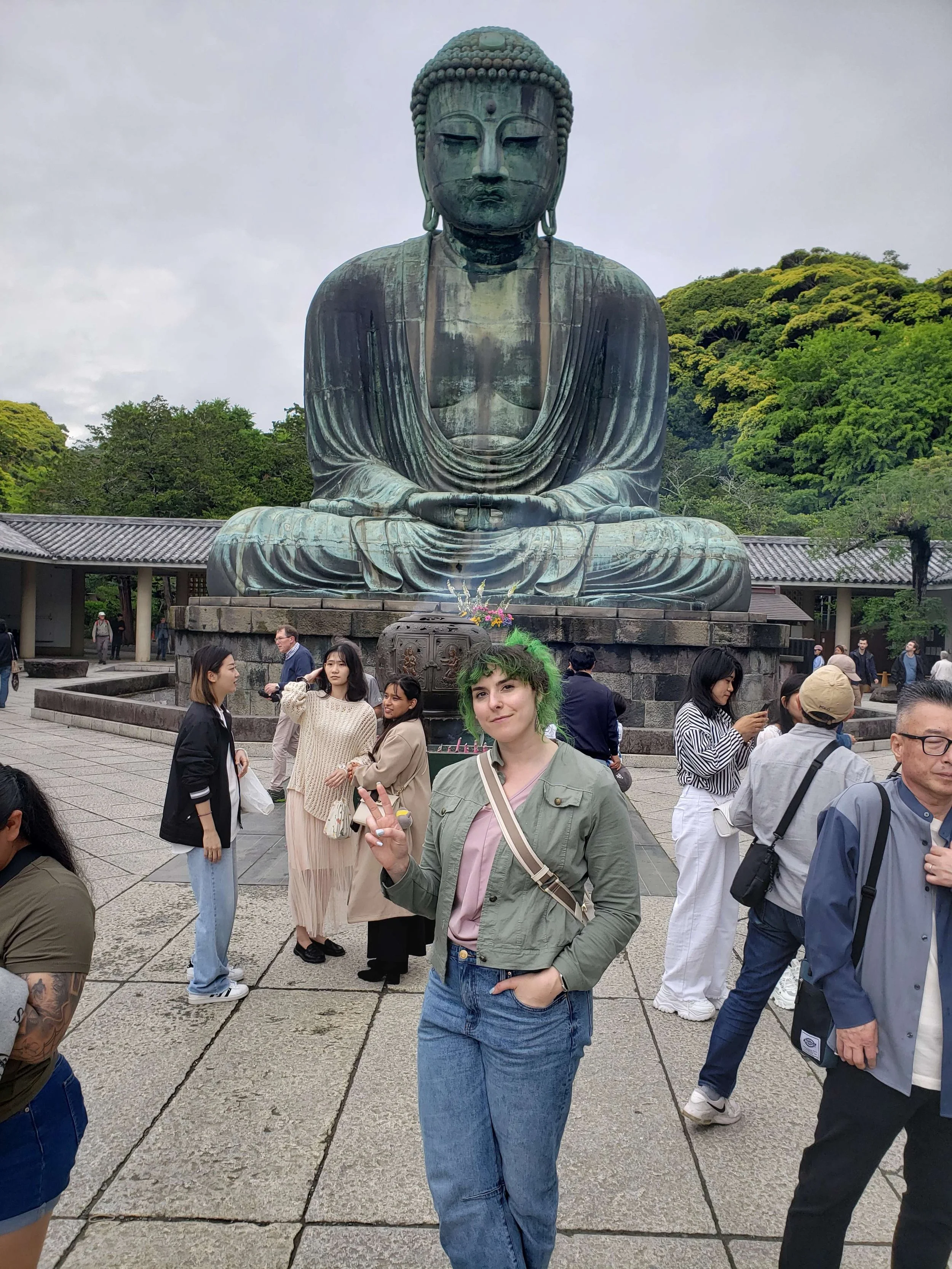
It’s really big. Big enough that you can actually wak around inside.
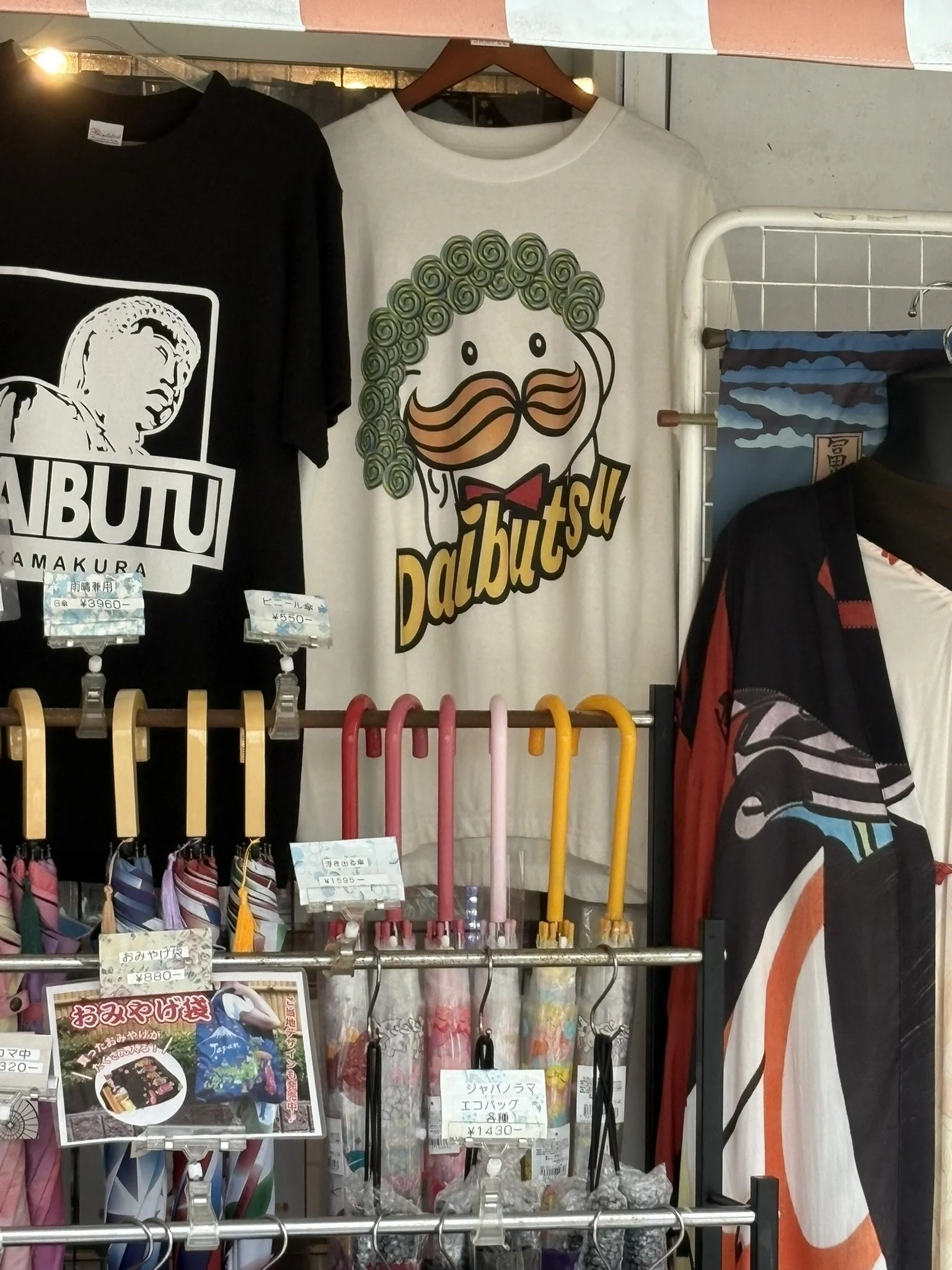
(The questionable merch)
The Great Buddha of Kamakura (or Kamakura Daibutsu) has weathered the elements for over 500 years. It’s 121 tons and almost 40 feet tall.
Apparently it used to be housed in a building, but the buildings (plural) kept getting destroyed by fires and earthquakes. This is a VERY common story thread in Japanese castles and temples, by the way. I swear every famous building landmark in the country has burned down at least twice.
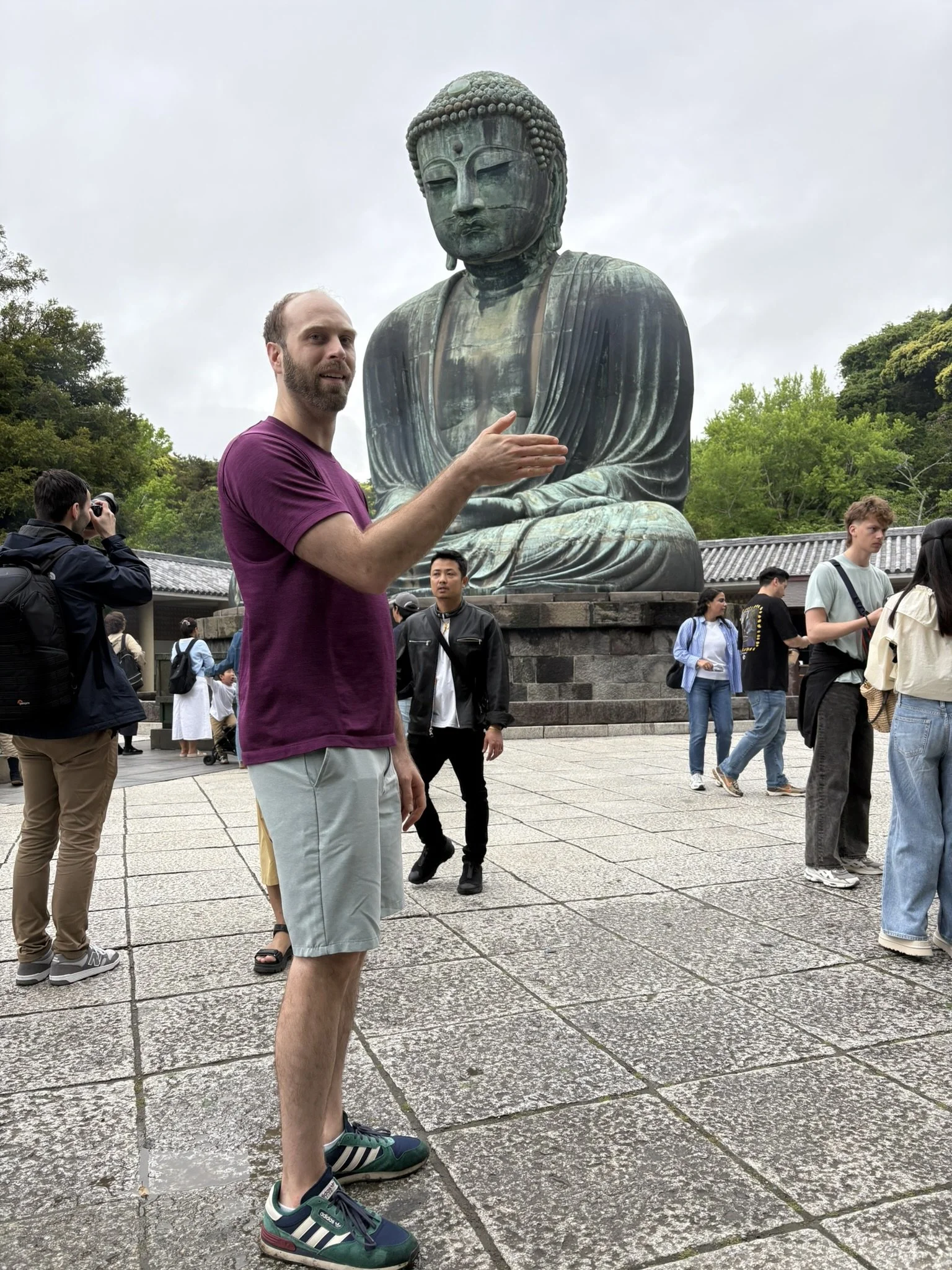
At first I worried this might be a tad disrespectful, but then I saw some pretty questionable merch on the way back down down the train station and figured it was fine.
Not Done Yet: On to Hasedera (Hase Temple)
Our last stop of the day was the Hase Temple, which is famous for its massive, gilded statue of the goddess Kannon. I don’t have any pictures of it because we weren’t allowed to take any inside the actual temple, so just look up “Hasadera Kannon” to see what it looks like.
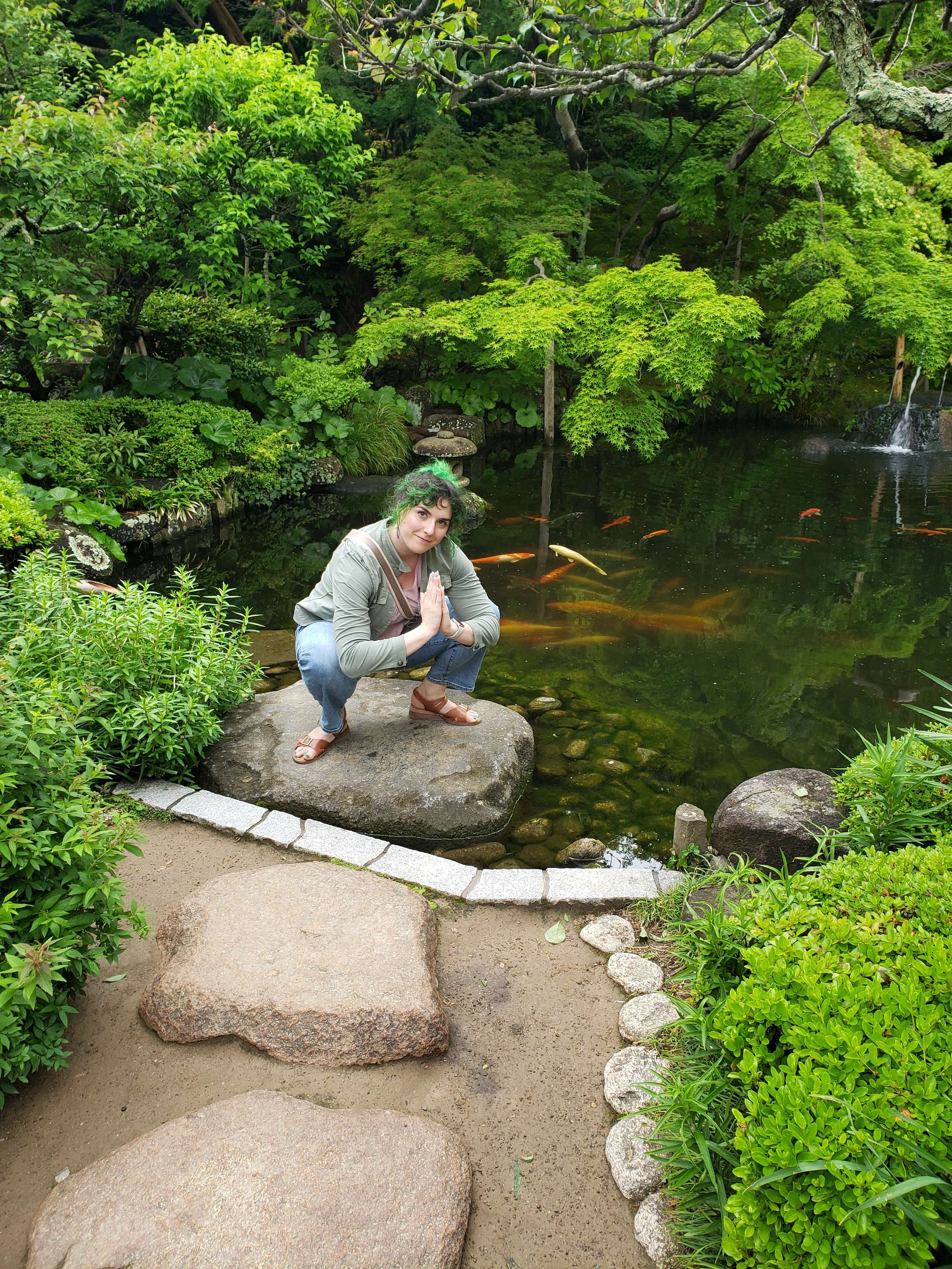
Pictured here: me copying the pose of a 10 year-old boy whose exasperated parents had failed to get a serious photo out of him.
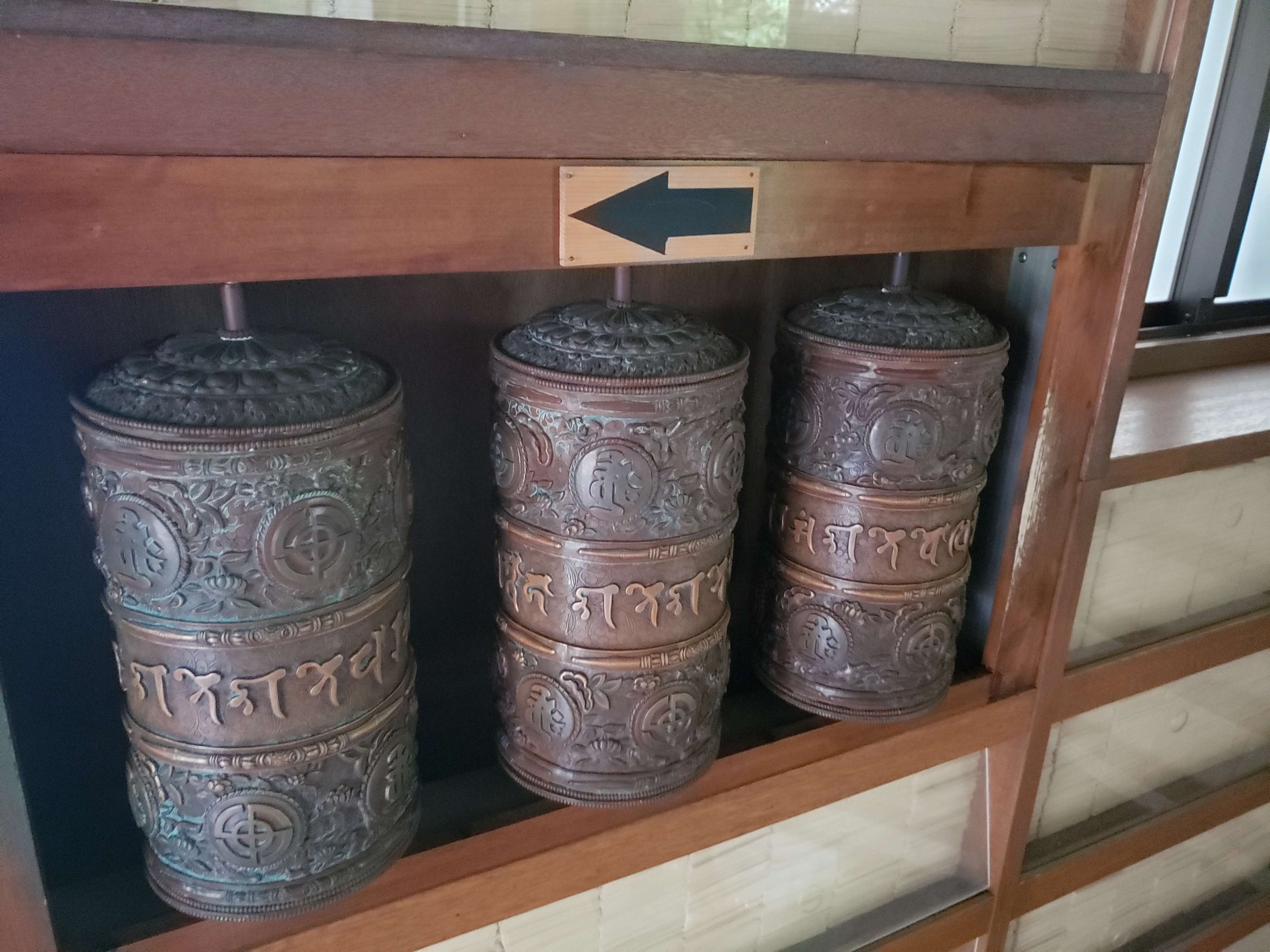
Buddhist prayer wheels. You can actually spin them around to read them (if you’re literate, which I’m not).
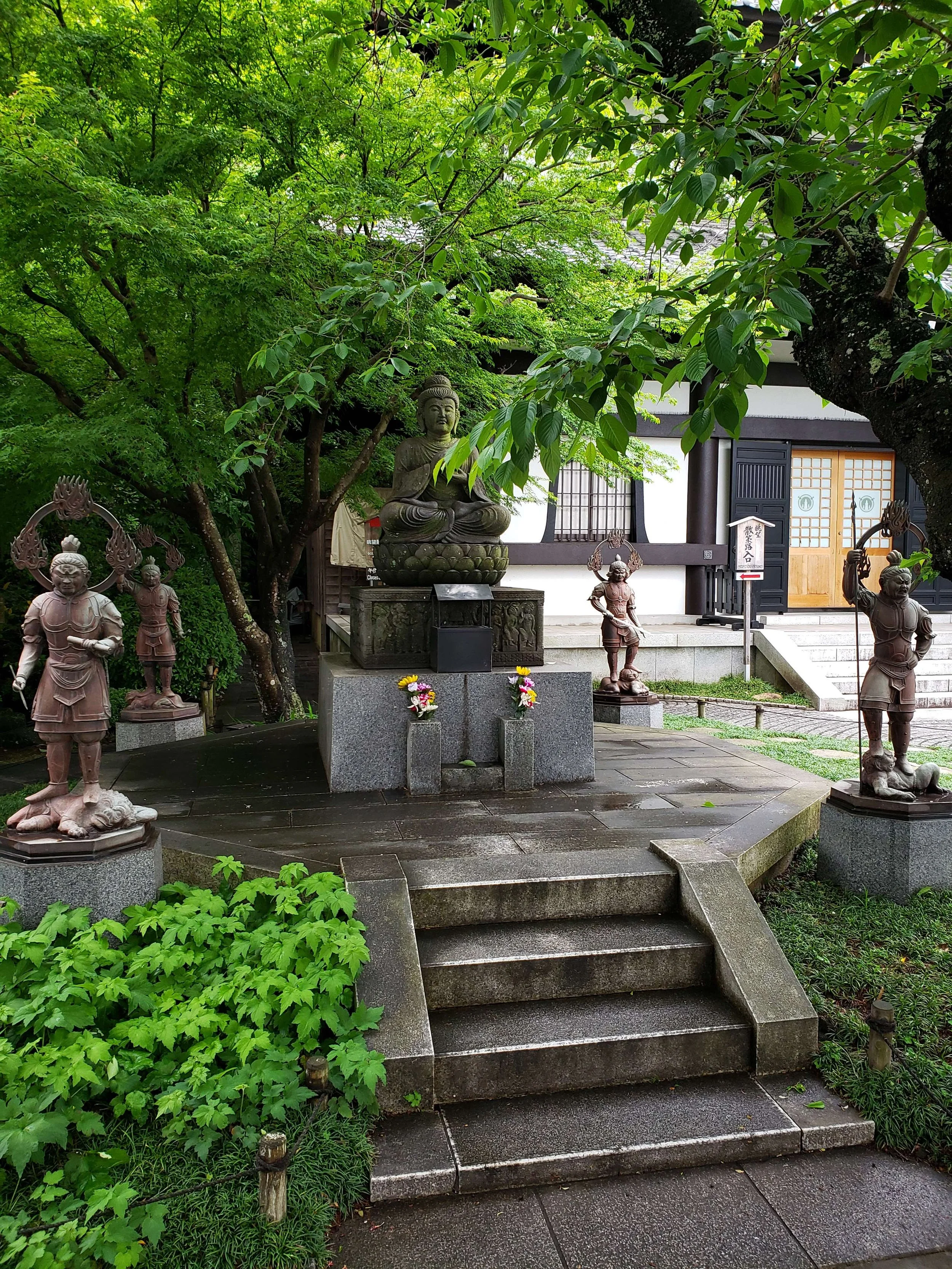
The Four Heavenly Kings (this post is getting WAY too long, so I’ll talk about them later. You see them in many places.
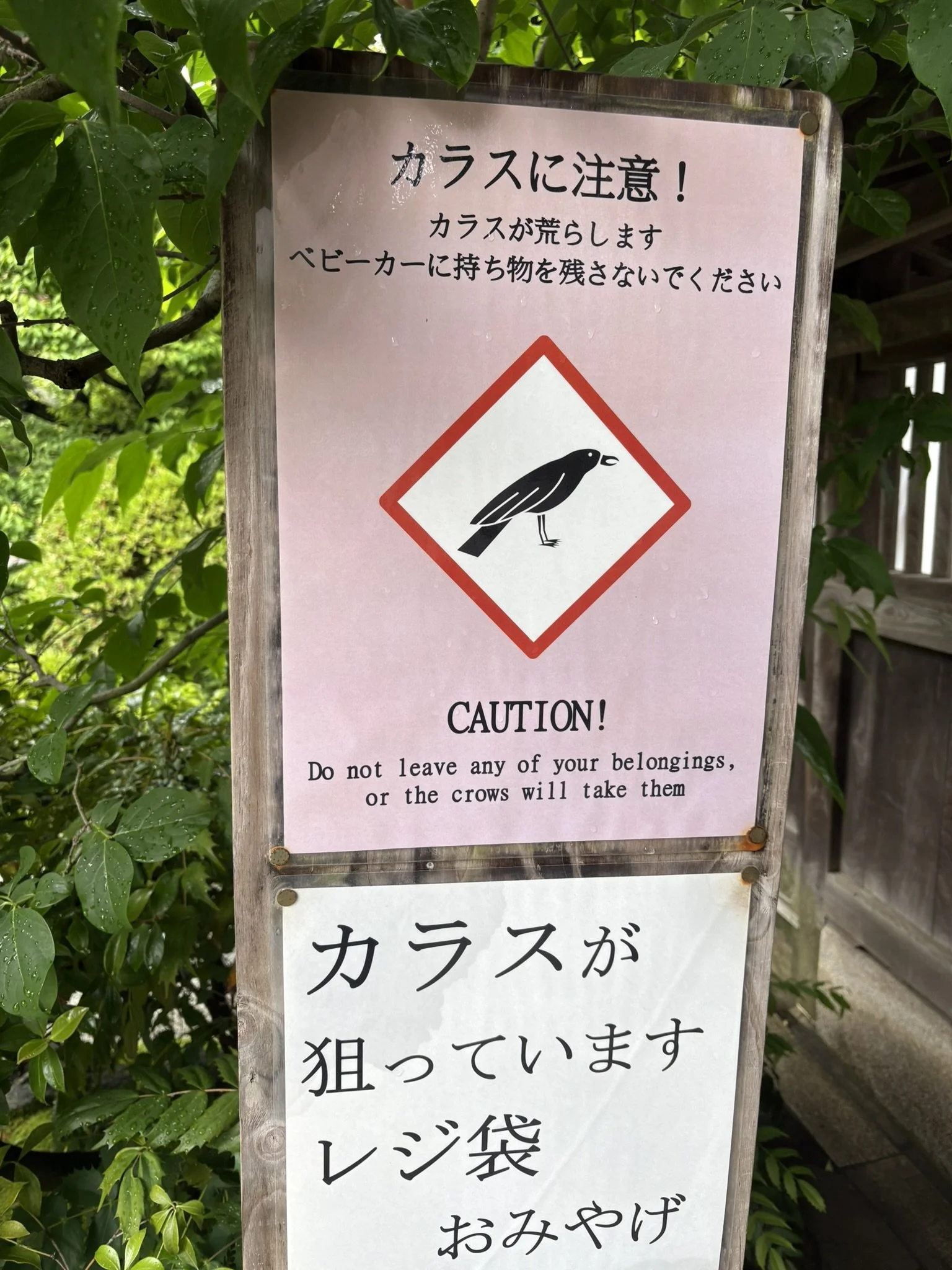
The fact that this one was written in English convinced me that birds are a serious problem in Japan.
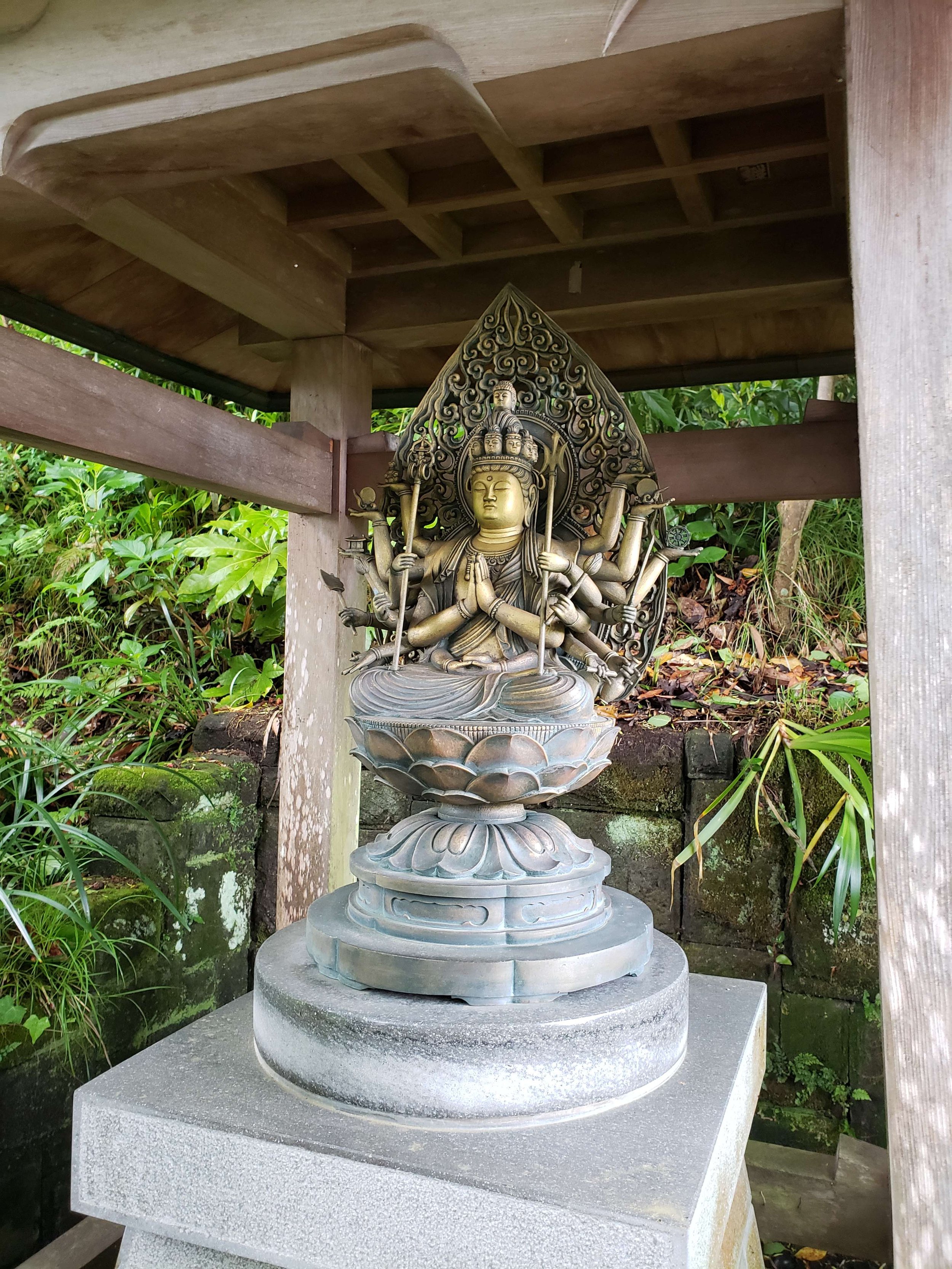
A statue of Kannon. The multiple arms of deities emphasize their power and ability to reach out and help many people in many ways.
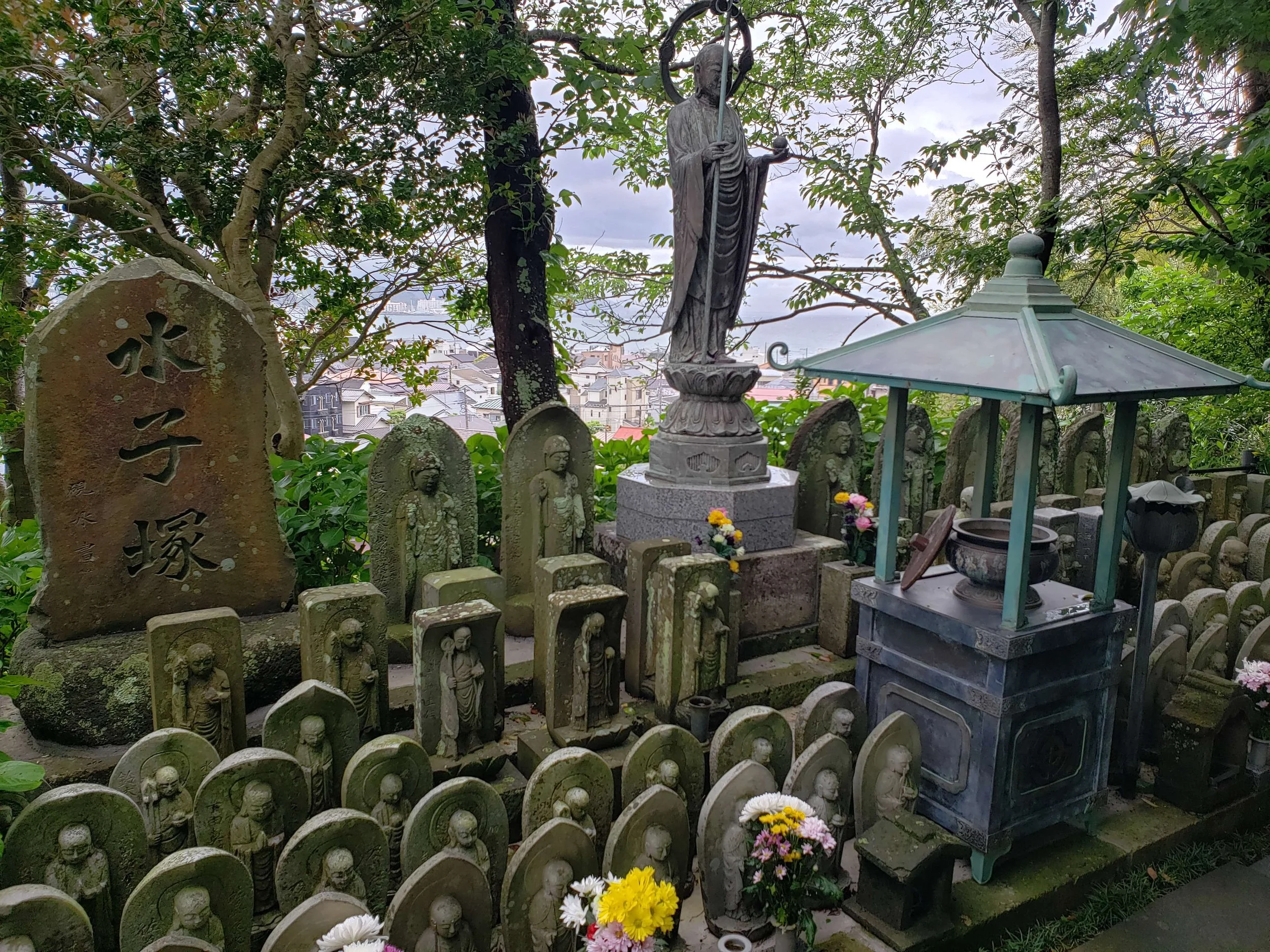
Kannon is the Buddhist goddess of compassion. In Japanese tradition she is also associated with miscarriage, stillbirth, and those who die in infancy. Statues and other offerings are placed in the hopes the deity will comfort the spirits of these lost children.
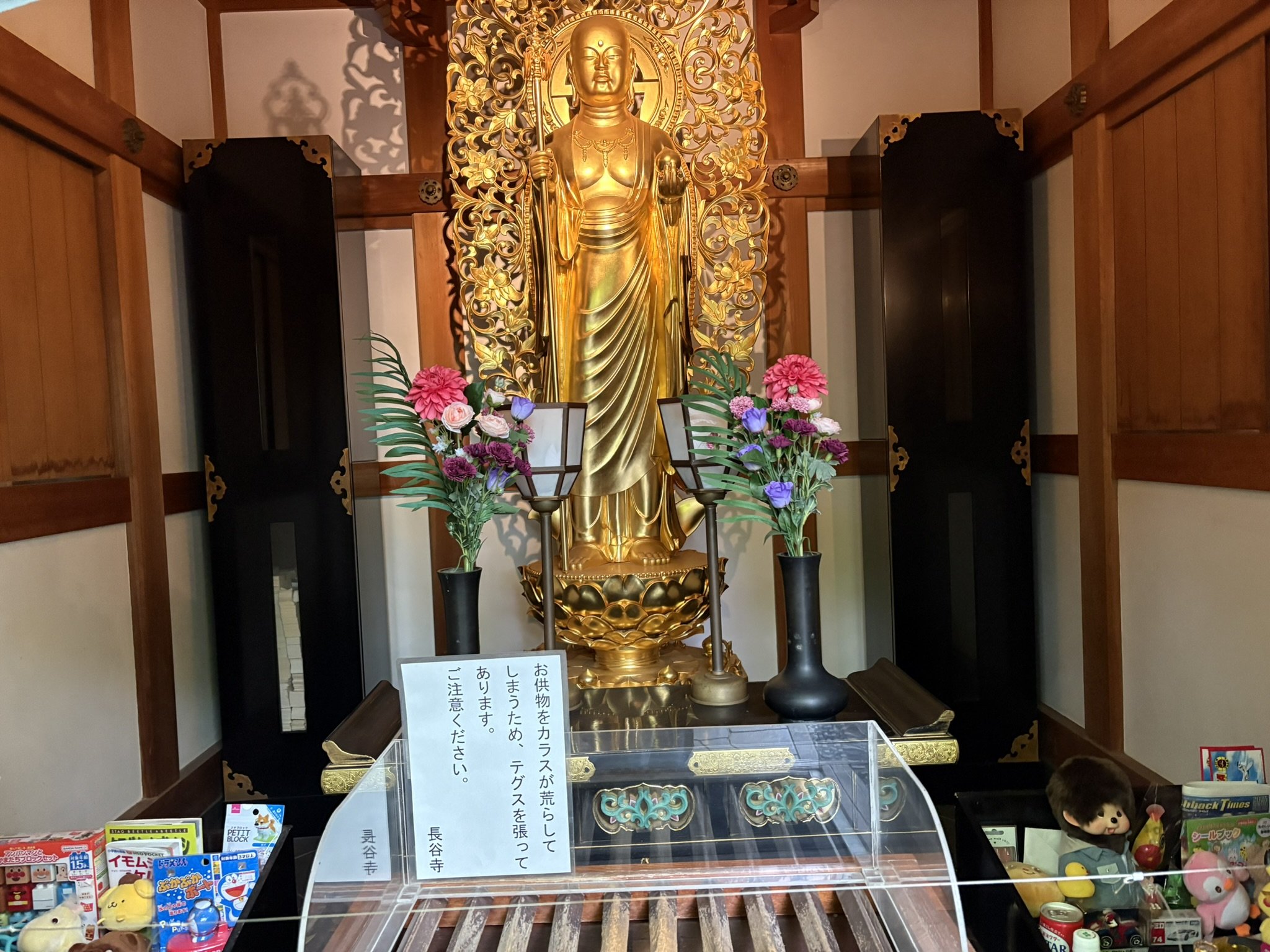
Offerings left inside a little building, protected from dastardly crows.
Benten-Kutsu Cave
This first day made me think there were a lot more caves in Japan than there actually maybe are. Unlike the sea caves at Enoshima, these caverns were literally carved into the side of the hill.
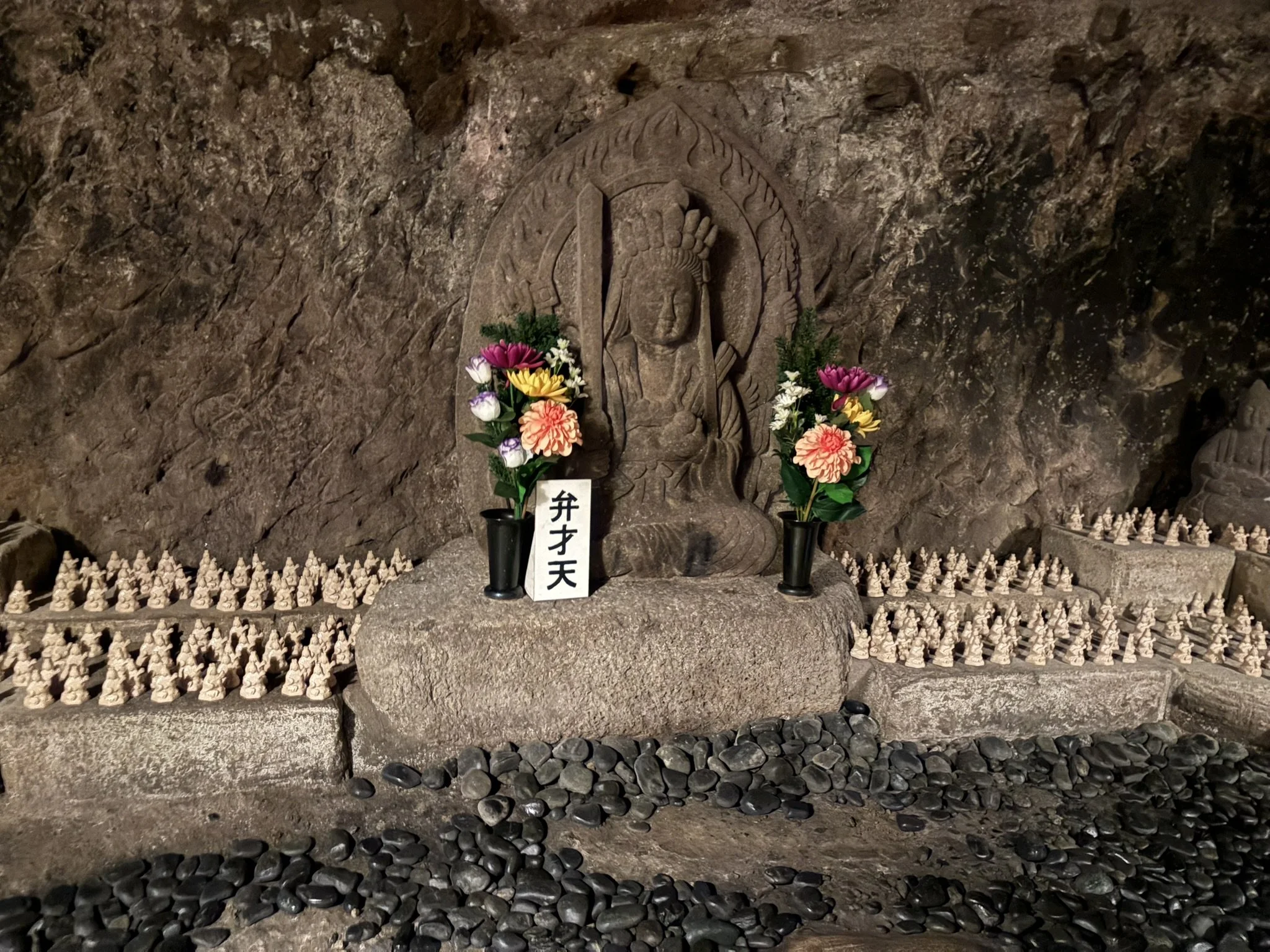
One of the altars found at the end of a passage of the caves.
And that’s our first full day in Japan!
I honestly have very few memories of the evening of this day because we really hit the pavement hard, and we were totally exhausted by the time we got back to Ōfuna. Genuinely I think we just ate the other half of our 7/11 food from the previous night for dinner and passed out around 9PM after a bit of Japanese TV.
The excitement of a new place can keep you up and on your feet through jet lag, but that 13 hour time difference still doesn’t play!
Next up: headed to Izu for some scheduled relaxation.